

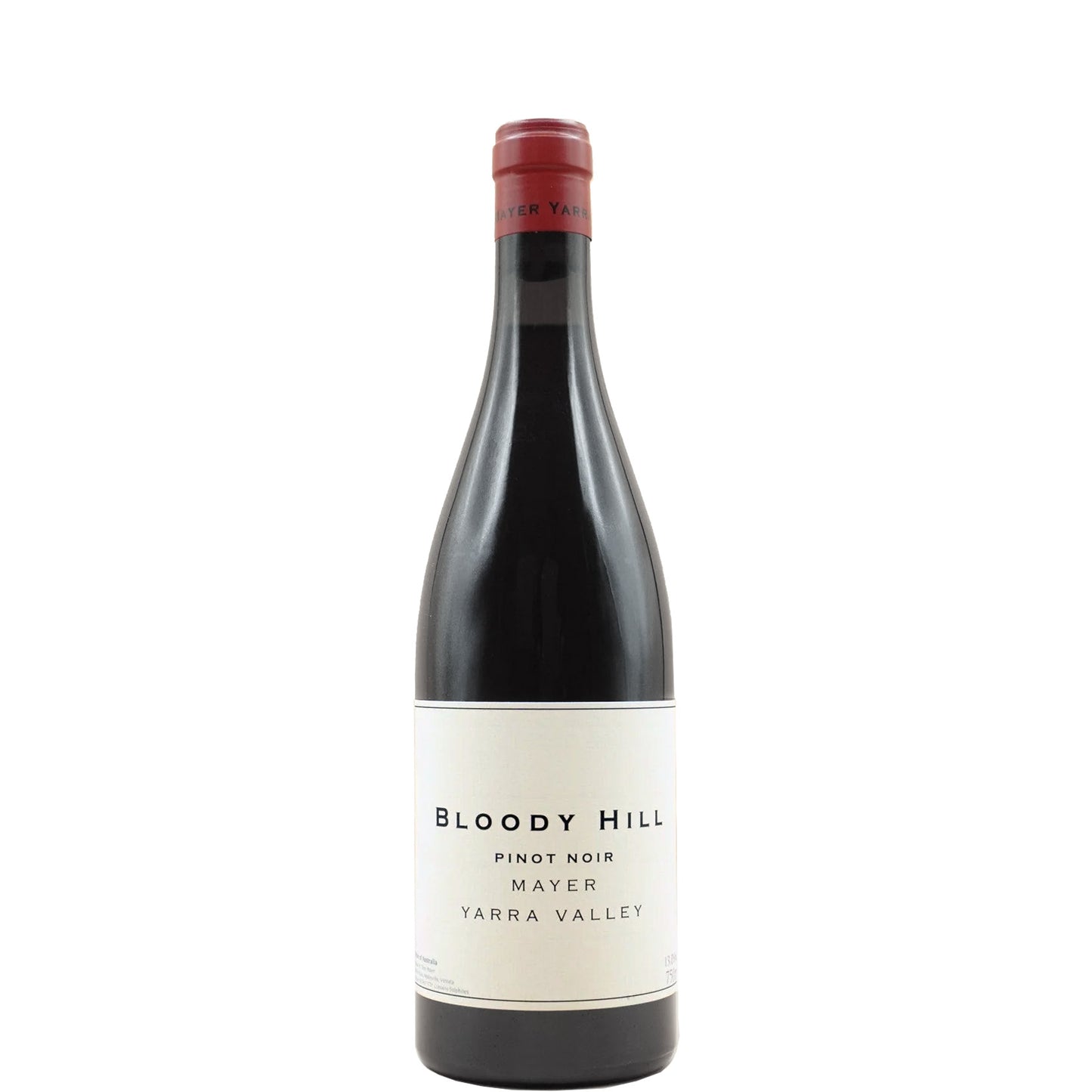
Timo Mayer, 'Bloody Hill' Pinot Noir, 2017
Timo Mayer, 'Bloody Hill' Pinot Noir, 2017
- 75cl
- 13%
- Red Still
- Pinot Noir
- Organic
- Biodynamic
Couldn't load pickup availability

Optimal drinking window: Now - 2032
"What is left to say about Timo Mayer, aside, he keeps on making outstanding, fascinating, wonderful wines. There's the howling at moon, baying at the wind, shirt tearing and pant splitting stuff, of course, and his incredible, unique site"
Winefront Australia
Timo grew up in the village of Fellbach, near Stuttgart (the same village as our rock star pinot winemaker Rainer Schnaitmann) and learned his craft there before emigrating to Australia in the 1990's. The Bloody Hill 'it's called that 'cause it's bloody steep, Nathan' is a 6 acre plot on rocky soils. Timo likes to use a proportion of whole bunch to give his wines a particular stalky savouriness, which is very much a trademark of his Pinots. His production is in line with organic practices, and the wines are bottled without fining or filtration.
The 2017 vintage gave the Yarra good fruit ripeness without losing its nerve, and that balance shows here: there's warmth and generosity, but the wine never lets go of its spine. Wild cherry, iron, dried herbs, a streak of something almost Burgundian in its restraint.
At nine years old, the 2017 Bloody Hill is in a genuinely satisfying drinking window — the primary fruit has softened and integrated, and secondary complexity of earth, dried herbs, and iron is well established. We would not hold back; this is the wine doing what it was made to do. Over the next two to three years it will continue to deepen and grow more savoury, but by around 2030 the fruit will begin to recede and the wine will start trading on structure alone. Drink it before 2032 for the best of what it has to offer.
What the critics say:
"All de-stemmed grapes, which are picked a little earlier to get greener tannins and that savoriness. A very light, lithe and energetic wine with strawberries and wild cherries. A succulent palate with juicy tannins and a crunchy finish. Terrific wine. Elegant and pure. Drink now or hold."
Tasting Notes
AppearanceMedium ruby with a softening, slightly translucent rim that speaks to nine years of gentle evolution.
NoseWild cherry and dried raspberry sit alongside something more earthy and ferrous — volcanic soil made aromatic. There's a whole-bunch lift of dried herbs and a faint smokiness that gives the wine its wild, almost feral character.
PalateMedium-bodied with fine, now-integrated tannins and a seam of bright acidity that keeps everything honest. The fruit is darker than the nose suggests — black cherry, damson — wrapped in savoury, umami-rich depth. There's a structural precision here that feels very deliberate.
FinishLong and mineral, fading slowly through iron-tinged earth and a whisper of spice.
Overall impressionUpper Yarra Pinot at its most self-assured — wild, precise, and genuinely hard to put down.
Food Pairings
In the Yarra Valley, this sort of Pinot Noir tends to end up on the table alongside wood-roasted duck or free-range chicken with herb stuffing — the kind of relaxed Sunday cooking that suits a wine with this much character. Grilled lamb backstrap with chimichurri works brilliantly, as does a simple charcuterie spread with strong hard cheese. The wine's savoury, earthy depth also makes it a natural match for mushroom dishes, particularly anything involving porcini or truffle.
We think this wine would go well with
Serve at around 16°C — cool enough to keep the acidity lively, warm enough to let the aromatic complexity open up. A 30-minute decant is worth the patience; the wine has knitted together over nine years but still benefits from a little air. Use a large-bowled Burgundy glass to give those whole-bunch aromatics room to breathe.
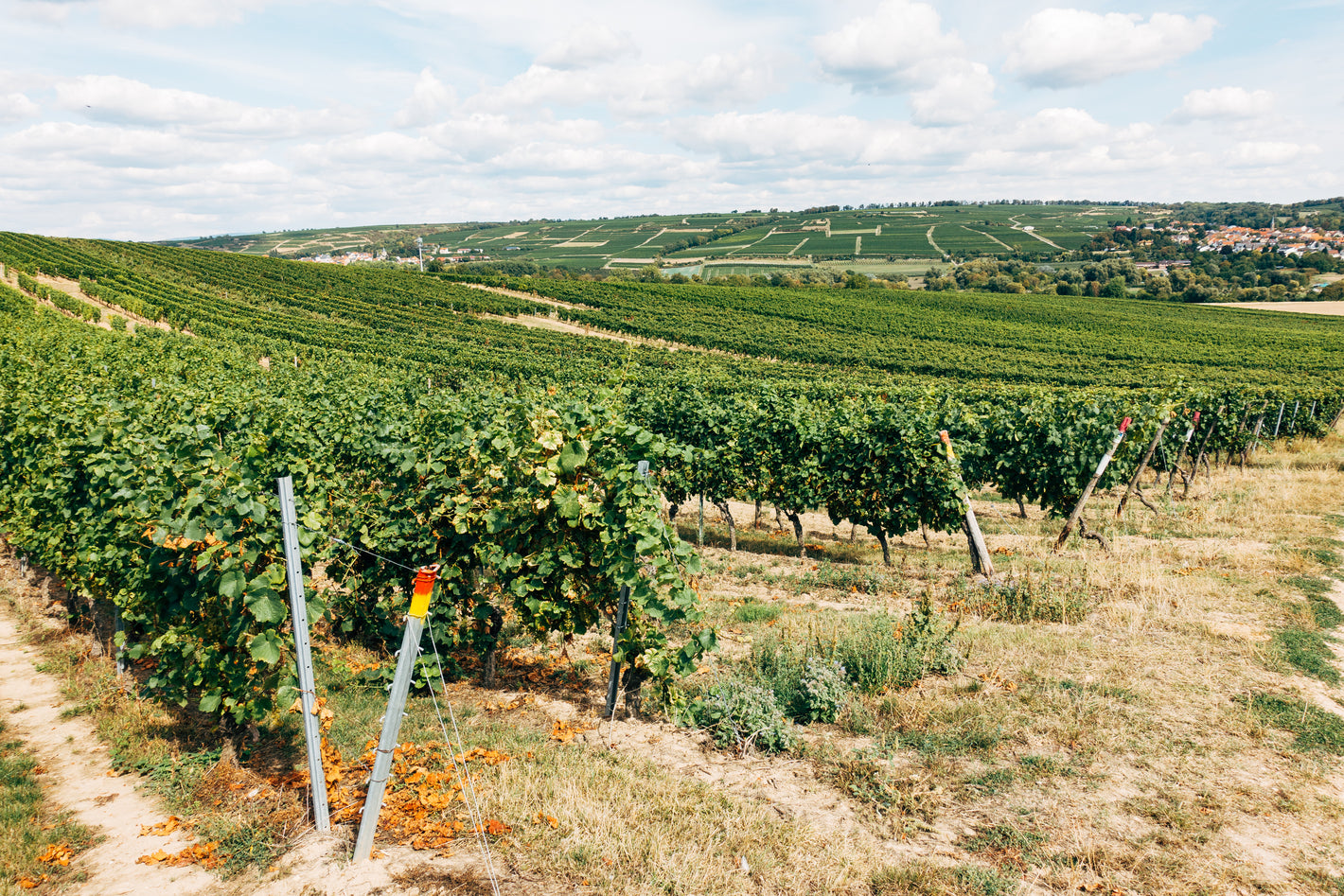
The Bloody Hill vineyard sits on the upper slopes of Hoddles Creek in the coolest part of the Yarra Valley, at elevations that push ripening later into autumn and preserve the acidity that gives the wine its tension. Soils are red volcanic clay-loam over deep basalt, which lend an iron-inflected, earthy character quite distinct from the grey silts of the valley floor. The steep gradient forces the vines to work hard, keeping yields low and concentration high without sacrificing freshness.
The Yarra Valley is Victoria's most celebrated cool-climate wine region, sitting in the ranges east of Melbourne. It divides informally into a warmer Lower Yarra and a cooler Upper Yarra, with Hoddles Creek firmly in the latter camp. Pinot Noir and Chardonnay are the benchmarks, though the region's best producers make wines with a distinctly savoury, European restraint that sets them apart from warmer Australian styles. There is no strict appellation system in place, but the GI designation Yarra Valley is widely used on labels.
The 2017 growing season in the Yarra Valley was defined by warmth and relative dryness, with grapes arriving at harvest in good health and with strong concentration. Ripening conditions were generally even across the season, without the dramatic heat events that have troubled some other recent Australian vintages, which gave growers the time to pick at genuine flavour maturity rather than racing against the thermometer. The result was a vintage that rewarded those who farm carefully and pick with precision.
Across the board, 2017 produced wines with real substance and brightness in equal measure — the Pinot Noirs have the kind of structural grip and depth of fruit that suggest they are only now hitting their stride, while the Chardonnays have filled out without losing their characteristic cool-climate tension. These are not wines to rush. Most serious examples are drinking well now but have plenty ahead of them, and we would hold the best Pinots until at least 2025 to 2028 before pulling the cork.
FAQs
What does Bloody Hill Pinot Noir taste like?
Wild cherry, dried herbs, iron-rich earth, and a savoury, coiled energy that makes it feel more like a wine from the Côte de Nuits than the Australian ranges. It is medium-bodied, precise, and unmistakably the work of someone with a very clear idea of what they want.
When should I drink the 2017 vintage?
Now is ideal. Nine years of age have done exactly what you would hope — tannins are silky, secondary complexity is well developed, and the wine is in full stride. We would drink it before 2032 to catch it at its best.
What food should I serve with this wine?
Duck, lamb, or free-range chicken cooked simply and boldly. Mushroom dishes with depth — porcini risotto, wild mushroom tart. Good hard cheese and charcuterie if you want something more relaxed. Avoid anything too sweet or heavily sauced.
Should I decant it?
Yes, briefly. Thirty minutes in a decanter will open it up nicely. Serve in a large Burgundy-style glass at around 16°C.
Is Timo Mayer a well-known producer?
In the right circles, extremely. Mayer is a cult figure among Australian Pinot lovers — German-born, Upper Yarra-obsessed, and making wines that are as much a statement of philosophy as they are of place. His wines are made in small quantities and have a devoted following.
Is this wine worth the price?
Cult Australian Pinot from a serious producer with nearly a decade of age — yes, we think so. Wines at this level from Burgundy would cost considerably more. The Bloody Hill name alone has become a marker of quality in the Upper Yarra, and the 2017 vintage is one of the better recent years for the region.

Explore related wines


What are you looking for tonight? Tell me the occasion, a grape, a region — or just try a suggestion below.
Your recommendations will appear here.
-
-
Speak to one of our Wine Gurus
Speak to a Wine GuruWith years of experience, our team can help you with all your wine buying and selling needs