

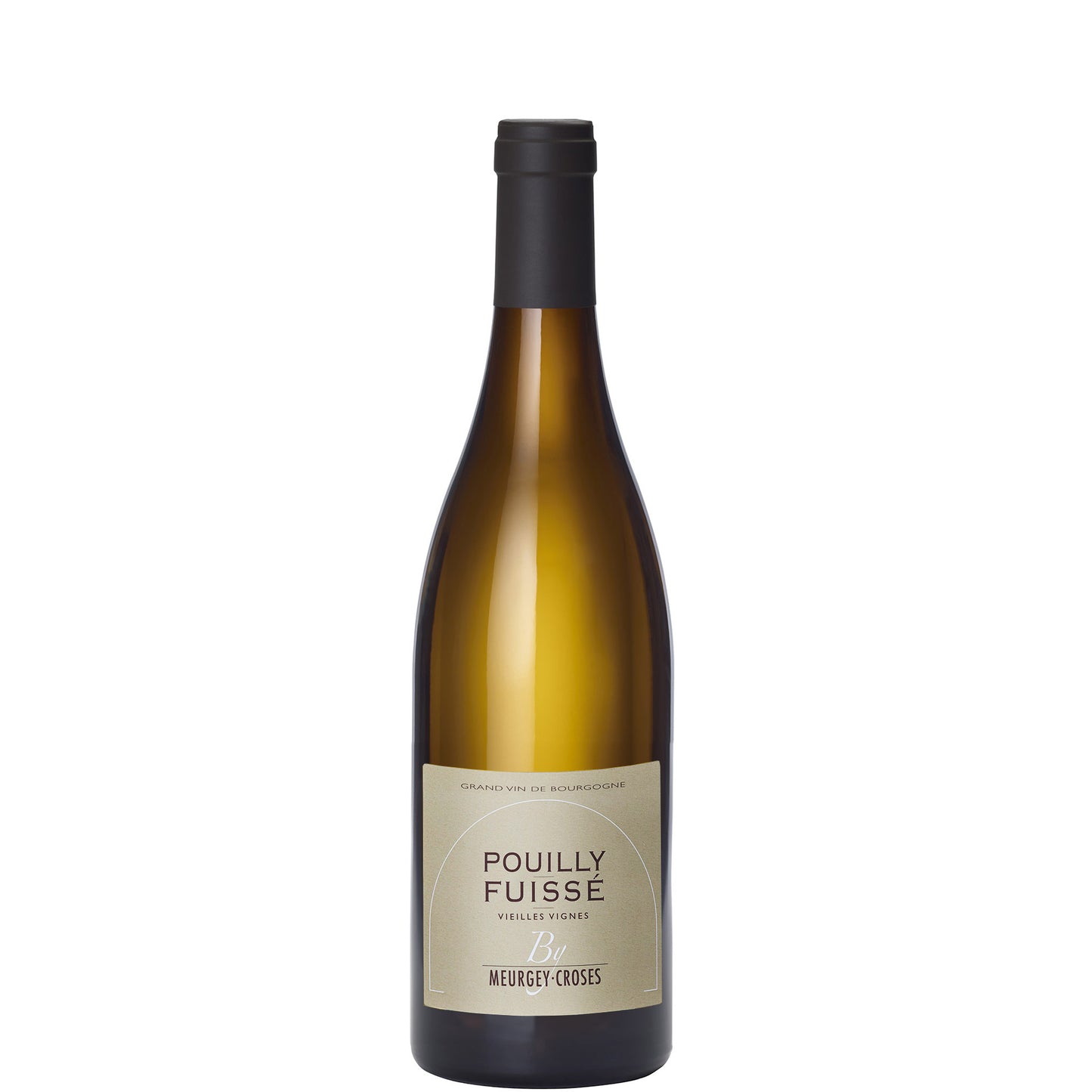
Pouilly-Fuissé Vieilles Vignes, Meurgey-Croses, 2021
Pouilly-Fuissé Vieilles Vignes, Meurgey-Croses, 2021
- 75cl
- 13.5%
- White Still
- Chardonnay
Couldn't load pickup availability

Optimal drinking window: 2026 - 2032
Pouilly-Fuissé Vieilles Vignes 2021 from Meurgey-Croses is a clean, finely cut Mâconnais white. Ripe citrus, peach and a hint of hazelnut lead into a poised, mineral-driven palate with just enough old-vine depth to give it quiet gravitas.
Meurgey-Croses, run by Paul Meurgey, specialises in crisp, terroir-led wines with minimal fuss and smart, restrained oak. The 2021 vintage was cool and low-yielding, but it delivered the kind of fresh, finely etched Chardonnay that suits this cuvée perfectly.
Right now the 2021 is in an appealing early window, with the primary fruit forward and the oak well integrated. Over the next two to three years, the white peach and pear will settle into something more honeyed and nutty, and the chalky mineral quality will become more pronounced and expressive. By around 2028-2030 it should be at its most complete, with fruit, texture, and minerality in good balance.
Tasting Notes
AppearanceBright, pale gold with a faint green edge and good clarity.
NoseWhite peach, ripe pear, and warm brioche open things up, followed by a subtle struck-flint quality that speaks clearly to the limestone soils. There is a gentle toasted hazelnut note from careful oak use, integrated rather than dominant.
PalateMedium-full bodied with the creamy texture you expect from old-vine Chardonnay, but the 2021 acidity keeps it lifted and precise rather than heavy. Flavours of poached quince and warm almond shift toward a chalky, almost saline minerality as the wine opens up.
FinishClean and focused, with the mineral edge lingering comfortably well past the fruit.
Overall impressionA Pouilly-Fuissé that earns its old-vine label — generous without being soft, and precise without being austere.
Food Pairings
In the Mâconnais, this kind of wine would land alongside a simple roast chicken with tarragon and cream, the sort of dish every village bistro does without fuss and without apology. Freshwater fish — pike quenelles in a Nantua sauce, or pan-fried perch from the Saône — would be another local instinct, the creaminess of the sauce meeting the wine's texture perfectly. A local Époisses or Comté at the right age would also work, though the Comté is probably the safer bet if the Époisses is at full pungency. Escargots with garlic and parsley butter are not wrong either.
We think this wine would go well with
Serve at 11-13°C — cold enough to keep the acidity bright, but not so cold that you lose the texture and the toasted notes. No need to decant, though giving it 15-20 minutes in the glass to open up is worth the patience. A wide-bowled white Burgundy glass — a Bourgogne Blanc shape rather than a narrow Chablis glass — will let the wine breathe and show its fuller character.
The old vines in Pouilly-Fuissé are typically rooted in shallow limestone and clay soils over Jurassic rock, often on slopes angled south and southeast beneath the dramatic volcanic rock faces of Solutré and Vergisson. This combination of well-drained limestone and significant diurnal temperature variation gives the wines their characteristic tension between ripe fruit and stony, chalky mineral definition. Old vines here push roots deep into fractured bedrock, drawing complexity that younger plantings simply cannot replicate.
Pouilly-Fuissé is the flagship white wine appellation of the Mâconnais, producing Chardonnay on a cluster of villages — Fuissé, Solutré-Pouilly, Vergisson, Chaintré, and Davayé — each with subtly different exposures and soil profiles. Elevated to its own AOC in 1936, it received a long-overdue Premier Cru classification in 2020, finally giving the best sites official recognition. Compared to its neighbour Saint-Véran, it tends to be richer and more structured; compared to the Côte de Beaune, it offers a rounder, more generous style, though the best examples rival village-level Meursault for depth and length.
The 2021 growing season in Burgundy started badly and got worse before pulling off one of wine's great escapes. Spring frost in April devastated vineyards across the Côte d'Or, followed by a summer that alternated between biblical downpours and scorching heat. Many producers lost 50% or more of their crop to the frost alone, then watched hail batter what remained in some unlucky villages. By August, with rot creeping through rain-soaked vineyards, even the most optimistic vignerons were writing off the vintage.
What emerged from this chaos surprised everyone: wines with remarkable freshness and purity, if you can find them. The tiny yields meant those grapes that survived were intensely concentrated, while the September sunshine saved the day with perfect ripening conditions. We find the reds show beautiful fruit clarity without heaviness, drinking with an immediacy that makes them irresistible now but promising a decade or more of evolution. The whites are particularly stunning, with a mineral intensity that cuts through their richness. Yes, there's not much 2021 Burgundy about, and yes, it's expensive, but this is one of those vintages where disaster bred greatness.
FAQs
What does this Pouilly-Fuissé taste like?
White peach, warm brioche, and toasted hazelnut with a chalky, saline-edged finish. It has the creamy texture of old-vine Chardonnay but the 2021 vintage gives it real precision and lift, so it never feels heavy.
When is the best time to drink this wine?
It is drinking well now in 2026 and will continue to improve until around 2028-2030, when fruit, texture, and mineral character should be at their most integrated. We would drink it before 2032.
What food should I pair with this wine?
Roast chicken with cream and tarragon is the classic local match. It also works very well with pan-fried fish, pike quenelles in a rich sauce, escargots with garlic butter, or a well-aged Comté. Essentially, anything where richness and acidity need to meet in the middle.
How should I serve this wine?
Serve at 11-13°C in a wide-bowled white Burgundy glass. No decanting is needed, but give it 15-20 minutes in the glass to open up and show its full character.
Is this worth cellaring?
Yes, for a few years. The 2021 vintage has good natural acidity that gives it genuine ageing potential. Hold until 2028-2030 for peak complexity, but do not push it much beyond 2032.
How does this compare to Côte de Beaune Chardonnay?
Pouilly-Fuissé tends to be rounder and a touch more generous than village-level Meursault or Puligny, with a slightly warmer, more peachy fruit character. The best examples, like this old-vine bottling, can get close in terms of depth and mineral focus, while typically offering better value.
Explore related wines


What are you looking for tonight? Tell me the occasion, a grape, a region — or just try a suggestion below.
Your recommendations will appear here.
-
-
Speak to one of our Wine Gurus
Speak to a Wine GuruWith years of experience, our team can help you with all your wine buying and selling needs