

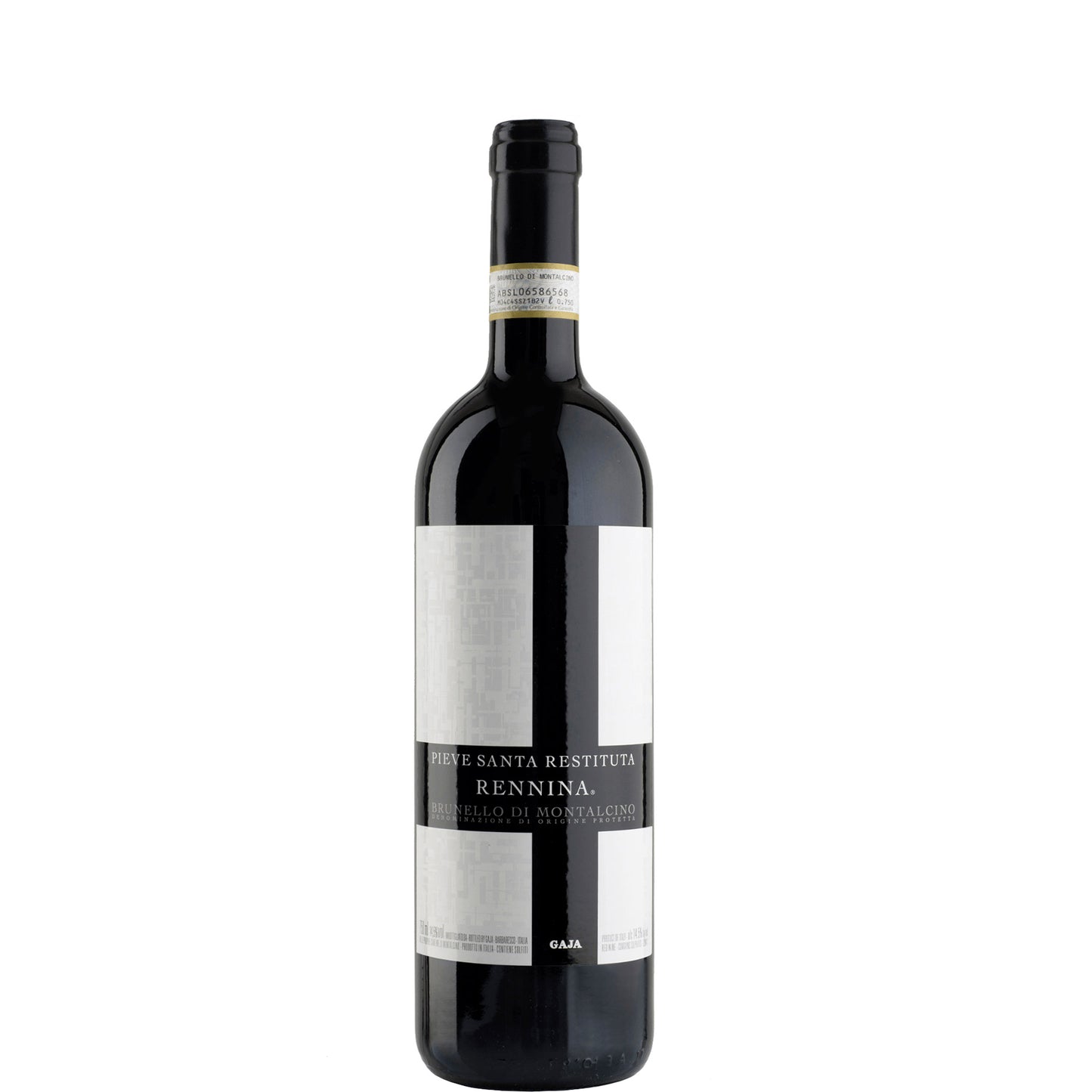
Pieve Santa Restituta 'Rennina', Brunello di Montalcino, Gaja, 2020
Pieve Santa Restituta 'Rennina', Brunello di Montalcino, Gaja, 2020
- 75cl
- 14.5%
- Red Still
- Sangiovese
Couldn't load pickup availability

Optimal drinking window: 2026 - 2045
Gaja's Pieve Santa Restituta sits right next to the stunning hilltop town of Montalcino, surrounded by rolling hills and dense woodlands. With its mix of rich soils, high altitude, and lush landscape, this area is a dream location for Sangiovese.
The 2020 Rennina is in a slightly awkward adolescence right now — the fruit is generous and the tannins are rounder than many Brunello vintages, but the wine's secondary complexity is still forming beneath the surface. From around 2026, the primary cherry fruit will begin to integrate more fully, and the earthy, dried-herb and iron-mineral notes that define great Brunello will start to emerge more clearly. The mid-2030s look like the sweet spot, when the structure and fruit are in genuine harmony. A well-stored bottle should hold comfortably until 2045, and the very best examples from this estate have shown they can go further still. Patience here is not suffering — it is just good sense.
What the critics say:
"Aromas of dark fruit, mushrooms and rich earth follow through to a full body with creamy, round tannins that are long and beautiful. Deep fruit and a polished, velvety texture. Excellent depth and intensity to this. Drink after 2027."
"Made with a blend of fruit from across the estate, the Pieve Santa Restituta 2020 Brunello di Montalcino Rennina offers excellent integration with soft spice and sweet cherry fruit. The wine packs textural richness, and you don't get the dry or desiccated tannins and phenolic pinch that is common in hot growing seasons. Indeed, the tannins here are sweet and well hydrated. There is plenty of fruit to round off a long finish. Rennina ages in oak barrel for 24 months, and 14,000 bottles were created."
Tasting Notes
AppearanceDeep ruby with a garnet core, still quite opaque for its age and showing real density in the glass.
NoseDark cherries and dried plum give way to forest floor, dried mushroom, and a whisper of sweet spice from the oak. There is an earthy, almost iron-like depth that is very much Sangiovese speaking clearly. It is open and inviting already, though the full picture is still assembling itself.
PalateFull-bodied but not heavy, with tannins that are plush and well-knit rather than grippy — a real achievement for 2020, which was a warm year. Sweet cherry fruit sits alongside dried herbs and a savoury, umami-edged core that gives the wine real personality. The oak is present but properly integrated, adding texture rather than flavour.
FinishLong and persistent, finishing on dried fruit and a fine mineral thread that pulls the whole thing together.
Overall impressionA Brunello that flatters now but has the architecture to reward genuine patience.
Food Pairings
In Montalcino, Brunello is poured alongside bistecca alla Fiorentina — a thick-cut T-bone charred over oak embers, barely rested, and absolutely nothing else on the plate. Locally, pici al ragù is a favourite match: the thick hand-rolled pasta with a slow-cooked wild boar sauce has the richness to meet the wine's structure without overwhelming it. Cinghiale in umido, wild boar braised with juniper and red wine, is another regional classic that plays beautifully to the earthy, savoury register of a wine like Rennina. Aged Pecorino di Pienza — sharp, crumbly, with that grassy lanolin edge — is what you pour the last glass over at the end of the evening.
We think this wine would go well with
Serve at around 17-18°C — any warmer and the alcohol starts to dominate; any cooler and the tannins close up. Decanting is not optional here: give it at least 90 minutes, ideally two hours, to allow the wine to open fully and the tannins to soften. A large-bowled Burgundy-style glass works well, giving the nose room to unfurl. If you are opening a bottle now rather than cellaring it, decanting generously is the single most important thing you can do.
Pieve Santa Restituta sits on the southwestern slopes of Montalcino, where the altitude tempers the warmth of the Tuscan sun and the soils shift between galestro schist and clay-rich limestone. This combination gives the wines both freshness and structural grip — the kind of tension that defines the best Brunello. The dense surrounding woodlands moderate temperatures further, preserving acidity even in hotter growing seasons like 2020. It is one of the estate's most distinctive sites, and the wine wears that origin clearly.
Brunello di Montalcino is one of Italy's most serious and strictly governed appellations, requiring 100% Sangiovese Grosso — locally called Brunello — aged for a minimum of five years before release, including at least two in oak and four months in bottle. The result is a wine built for the long haul: structured, tannic, and capable of extraordinary complexity over decades. Compared to its Tuscan neighbour Chianti Classico, Brunello is more austere in youth and far more age-worthy; compared to Barolo, it trades some aromatic wildness for a more aristocratic, fine-boned frame. Montalcino's southern Tuscan heat means ripeness is rarely a problem — restraint and balance are the harder achievements.
The 2020 growing season in Tuscany threw everything it had at the vines, then delivered one of those dramatic turnarounds that makes wine people believe in providence. A cold, wet spring delayed budbreak and kept everyone on edge about flowering, whilst summer brought punishing heat that had producers reaching for shade nets and irrigation systems. Just when the vintage looked destined for mediocrity, September arrived with cooling temperatures and crucial rainfall that allowed the grapes to recover their composure and ripen properly rather than simply desiccate on the vine.
What emerged from the cellars shows Tuscany's resilience in fine form. The Sangiovese displays more immediate charm than we often see from the variety, with bright cherry fruit that doesn't sacrifice the underlying structure that makes Chianti and Brunello age so gracefully. Super Tuscans from the coastal areas fared particularly well, where Cabernet Sauvignon and Merlot thrived in the maritime influence and produced wines with both power and freshness. Most 2020s are drinking beautifully now, offering accessibility without compromising their long-term prospects, and we suspect the best will reward cellaring for another decade or more.
FAQs
What does the Rennina taste like?
Dark cherries, dried plum, forest floor, and sweet spice, with full-bodied structure and tannins that are rounder and more polished than you might expect from a warm vintage. There is real savoury depth here — dried herbs, mushroom, a mineral thread — and the oak is present without being dominant. It is serious Brunello with genuine generosity.
When should I drink this wine?
James Suckling suggests drinking after 2027, and we would not argue with that. The wine is approachable now with extended decanting, but it will genuinely reward cellaring into the early-to-mid 2030s when its secondary complexity really begins to emerge. We would plan to open the last bottle no later than 2045.
Should I decant it?
Yes, and generously. Give the Rennina at least 90 minutes in a decanter, ideally two hours. The tannins are rounder than many Brunello vintages, but the wine still needs air to show its full range. A large-bowled glass makes a real difference here.
What food works well with this wine?
Think in terms of the Montalcino table: wild boar ragù, chargrilled beef, slow-braised lamb with herbs, or aged Pecorino. The wine's savoury, earthy register wants rich, simply prepared meat dishes more than it wants anything fussy or heavily sauced.
Is this worth cellaring?
Absolutely, yes. The 2020 vintage produced unusually generous, well-hydrated tannins in Montalcino, and Gaja's winemaking at Pieve Santa Restituta has a track record of ageing gracefully. Buy it, put it somewhere dark and cool, and do not touch it until at least 2028. You will thank yourself.
How does this compare to other Brunello producers?
Gaja is an outsider's name in Montalcino — the family's reputation was built in Piedmont, and their arrival in Tuscany in the 1990s raised a few eyebrows. The Rennina tends to sit on the more polished, structured end of the Brunello spectrum rather than the wild, oxidative old-school style. Think precision and fruit clarity rather than rustic authority. For those who know Gaja's Barbaresco, there is a recognisable house character: everything is very well made, and nothing is left to chance.

Explore related wines


What are you looking for tonight? Tell me the occasion, a grape, a region — or just try a suggestion below.
Your recommendations will appear here.
-
-
Speak to one of our Wine Gurus
Speak to a Wine GuruWith years of experience, our team can help you with all your wine buying and selling needs