

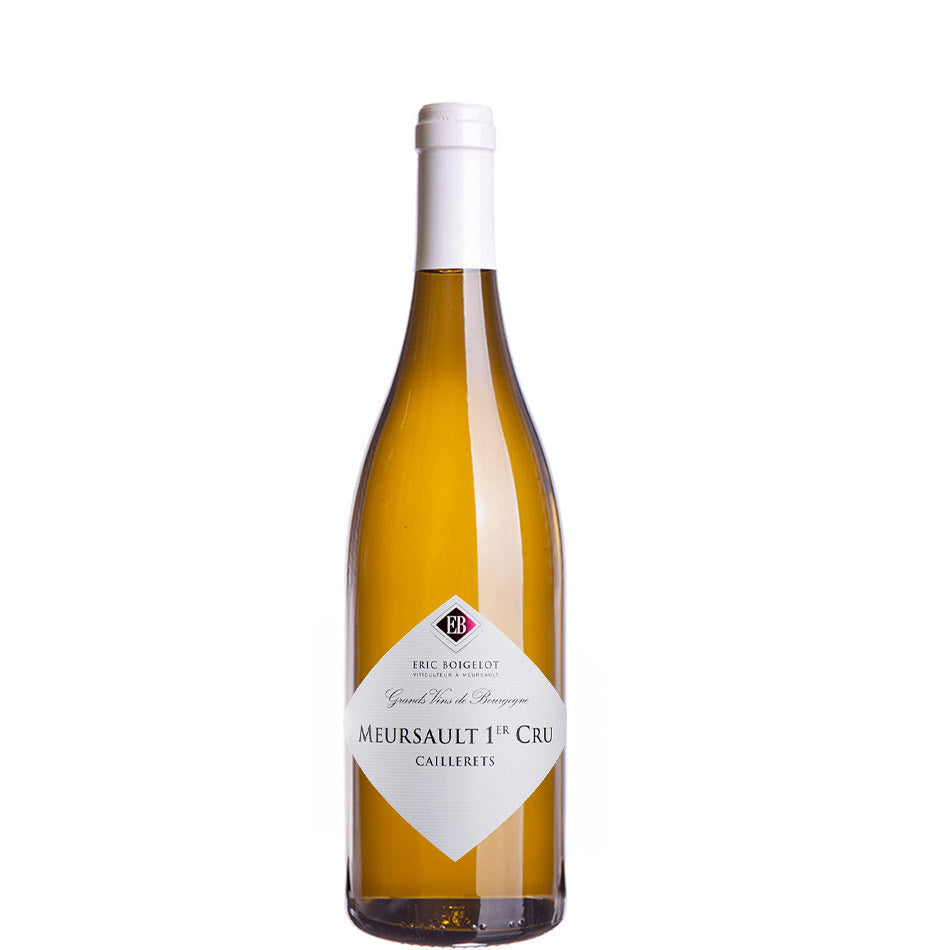
Meursault Premier Cru 'Caillerets', Domaine Éric Boigelot, 2018
Meursault Premier Cru 'Caillerets', Domaine Éric Boigelot, 2018
- 75cl
- 13%
- White Still
- Chardonnay
Couldn't load pickup availability

Optimal drinking window: Now - 2035
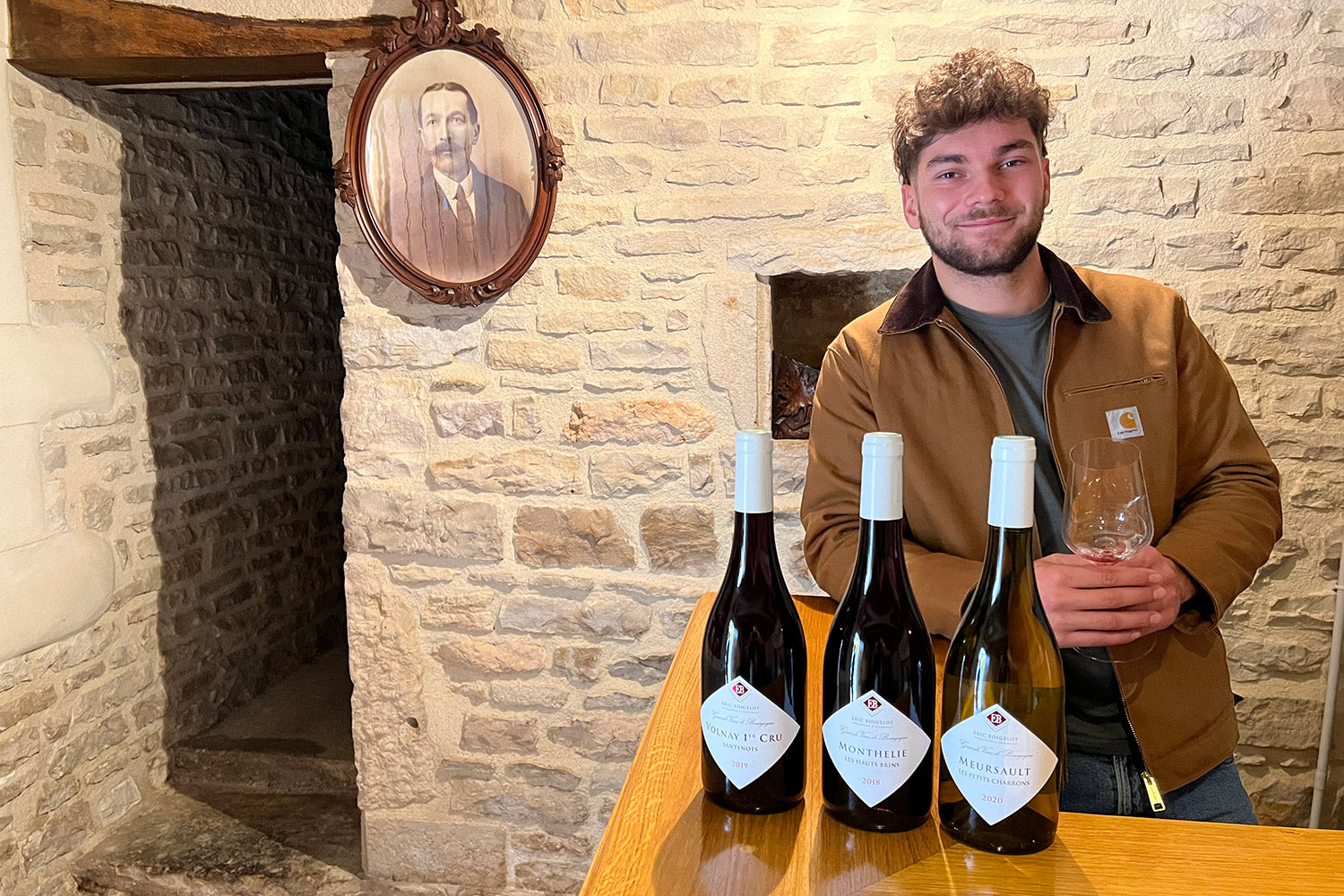
We're always keeping our eyes peeled for top value producers in Burgundy, and certainly Domaine Éric Boigelot is one of the most exciting we've found to date.
The domaine is next door to Raphael Coche Dury - to whom Charles at Boigelot is selling grapes, including all his Narvaux (sadly!). Coche no longer writes domaine on the label because of the need to source fruit externally – an amount of which comes from Charles.
Recently William Kelley visited Charles for the first time in the Wine Advocate's history, noting that the whites are "already accomplished, particularly the ... concentrated Caillerets. And given Charles's youth, it's only the beginning: this is very much an address to watch."
The expression 'hidden gem' is hideously overused in wine writing, but in the case of Boigelot, we think it's very much justified.
Tasting Notes
AppearanceBright, pale gold with a faint green edge — the colour of a wine that hasn't yet let itself go.
NoseWhite peach and roasted hazelnut are there from the off, but what's striking is the chalky, almost flinty lift that cuts through the richness. 2018's warmth shows in a certain ripeness and weight, but Caillerets keeps it from feeling heavy. There's a hint of white flowers and lanolin that marks this out as something more serious than a simple ripe Meursault.
PalateFull-bodied but not at all blowsy — the acidity is holding everything in place with quiet authority. Grilled almonds, ripe citrus, and a stony mineral core run through to the mid-palate; the oak integration is seamless, adding texture rather than flavour. There's real concentration here, that 'concentrated Caillerets' William Kelley singled out, and it's earned rather than extracted.
FinishLong and saline, with that chalky mineral quality reasserting itself right at the end.
Overall impressionA Meursault with genuine ambition — generous enough to seduce now, structured enough to make waiting worthwhile.
Food Pairings
In Burgundy, a Caillerets of this quality would be opened without much ceremony alongside a poulet de Bresse roasted with butter and tarragon — the fat in both wine and bird finding a natural equilibrium. Locals might also reach for it with a quenelle de brochet in a rich cream sauce, or simply a wedge of Époisses at the right moment of ripeness. Scallops baked with shallots and crème fraîche are another natural partner, the wine's acidity cutting through the cream without losing any of its own richness. If you want something simpler, a good gratin dauphinois and some sharp conversation will do the job perfectly well.
We think this wine would go well with
Serve at around 12-13°C — cool enough to keep the acidity lively, warm enough to let the texture and complexity open up in the glass. No need to decant, but give it 20-30 minutes in a large Burgundy glass to breathe: the nose is markedly more giving with a little air. A wide-bowled glass is the right choice here, giving the wine space to show both its richness and its mineral lift at the same time.
Caillerets is one of Meursault's most prestigious premiers crus, sitting on the southern edge of the appellation where it borders Volnay. The soils here are relatively shallow limestone and white marl over Bathonian bedrock, which drains freely and keeps yields naturally in check. The elevation and south-southeast exposure give the vines plenty of sun without sacrificing freshness, producing wines with more structural backbone than many of Meursault's other premiers crus. That combination of lime-rich soils and good drainage is precisely what drives the mineral tension that sets Caillerets apart from the richer, fleshier character you find lower on the slope.
Meursault is the beating heart of white Burgundy — the village more associated with Chardonnay than perhaps anywhere else on earth. Unusually for a Côte de Beaune village of its stature, Meursault has no grands crus, which makes its premiers crus the top of the hierarchy: Perrières, Charmes, Genevrières, and Caillerets among the most celebrated. The AC rules are those of standard Burgundy — low yields, hand harvesting encouraged among serious producers, barrel ageing the norm at this level. What distinguishes Meursault from neighbouring Puligny-Montrachet is typically a richer, nuttier, more textured character; Meursault tends toward generosity where Puligny reaches for precision, though the best examples — Caillerets included — manage both.
Burgundy growers will tell you that 2018 was the vintage that reminded them why they fell in love with their vineyards in the first place. A glorious summer of sustained warmth without the punishing heat that can strip freshness from Pinot Noir, followed by cool nights that preserved the acidity. The flowering went smoothly, fruit set was generous, and harvest arrived early but without panic—exactly the sort of classical growing season that becomes rarer each decade.
What landed in the cellars was Burgundy at its most seductive: Pinot Noir with real depth of colour and fruit concentration, yet still dancing on its toes rather than plodding along. The Chardonnays show beautiful ripeness balanced by that crucial mineral backbone, particularly from the better sites in Chablis and the Côte de Beaune. We're drinking these wines now with enormous pleasure—they hit that sweet spot where primary fruit hasn't faded but the tannins have softened into silk. The top cuvées will cellar beautifully for another decade, but frankly, why wait?
FAQs
What does this wine taste like?
Think roasted hazelnut, white peach, and citrus with a stony, chalky mineral quality running through it. 2018 gives it a certain richness and weight, but the structure from Caillerets keeps everything in balance. It's a serious, concentrated Meursault — generous but not soft.
When is the best time to drink this?
We think the window from 2026 until around 2034 will be the sweet spot — when the secondary complexity really starts to come through and the fruit has had time to deepen. That said, if you want to open one now to see where it's headed, no one's going to stop you.
What food should I serve this with?
Roast chicken with cream and tarragon is the classic Burgundian move, and it works for good reason. Scallops in a cream sauce, gratin dauphinois, or a quenelle de brochet are all natural partners. If you're keeping it simple, a piece of good roast fish or a ripe Époisses at the end of a meal will do the wine justice.
Who is Domaine Éric Boigelot and why does it matter?
The domaine is run by Charles Boigelot, whose vineyards sit next door to the legendary Domaine Coche-Dury — to whom Charles actually sells some of his fruit. William Kelley visited for the first time in the Wine Advocate's history and called it an address to watch, noting Charles's youth and the accomplished quality of the whites. It remains one of Burgundy's genuinely undervalued names, which means the prices still make sense while the quality does not.
How should I serve this wine?
Serve at around 12-13°C in a large Burgundy glass. You don't need to decant it, but give it 20-30 minutes in the glass before you start drinking — the nose opens up considerably with a little air, and the full complexity of the wine takes a few minutes to show itself properly.
Explore related wines


What are you looking for tonight? Tell me the occasion, a grape, a region — or just try a suggestion below.
Your recommendations will appear here.
-
-
Speak to one of our Wine Gurus
Speak to a Wine GuruWith years of experience, our team can help you with all your wine buying and selling needs