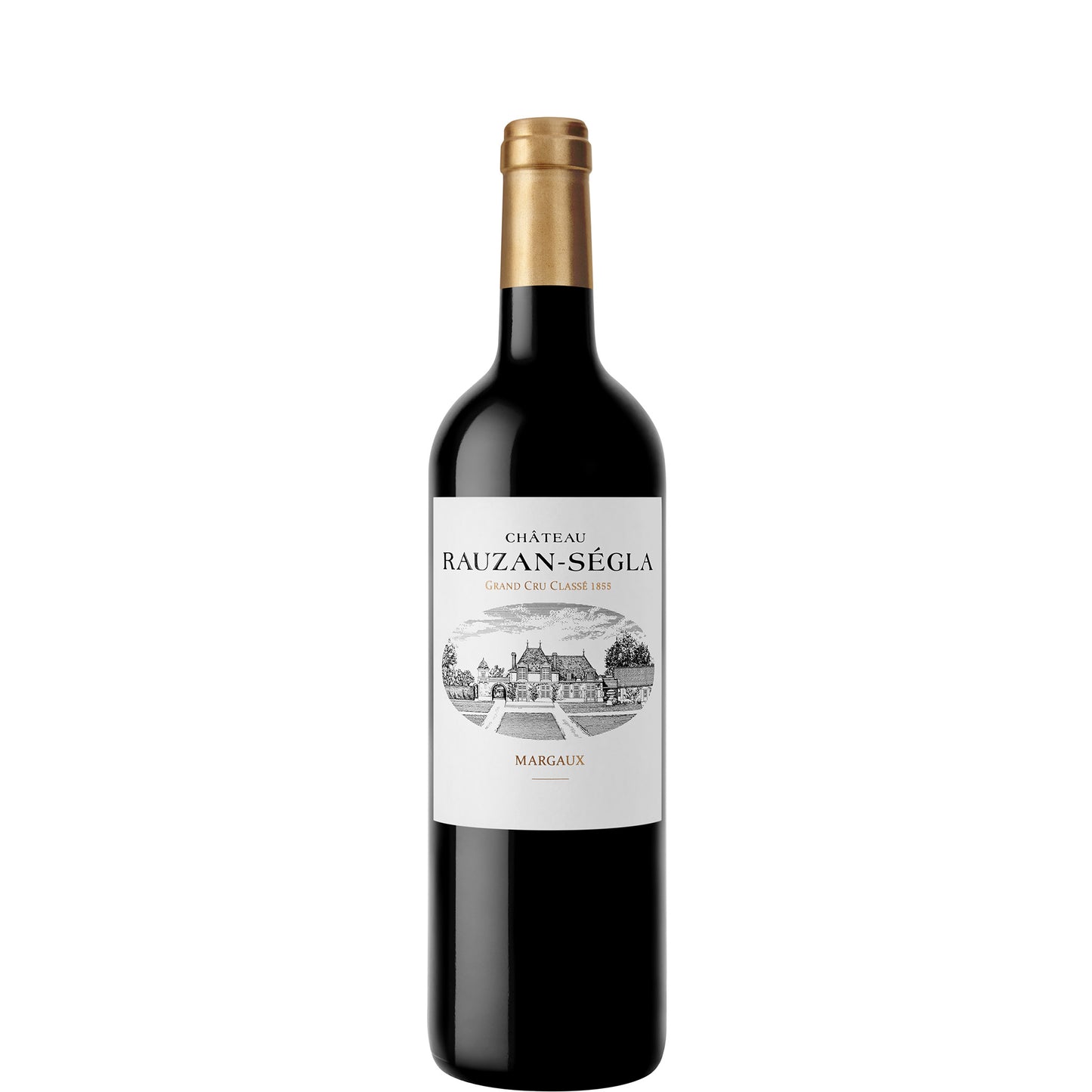

Château Rauzan-Ségla, 2025
Château Rauzan-Ségla, 2025
- 75cl
- 13.5%
- Red Still
- Cabernet Sauvignon, Merlot, Petit Verdot
- Organic
Please note, en primeur wines are not available for delivery until they arrive in the UK
Couldn't load pickup availability
Enquire about this item
Est. delivery in 2028
Château Rauzan-Ségla represents Margaux at its most graceful yet powerful. This second growth estate has been quietly cementing its reputation as one of the Left Bank's most compelling properties, combining the appellation's signature elegance with impressive depth and structure.
What the critics say:
"Deep dark ruby garnet, opaque core, violet reflections, delicate rim brightening. Candied violets, cassis, blackberry confit, delicate precious wood nuances, multifaceted, suggestive bouquet. Complex, after heart cherries, strawberries, extract-sweet texture, silky tannins, highly elegant, mineral, great length, great promise for the future, secure development potential."
"Showing a depth of color, at first, you are almost overwhelmed by the violets, cherries and tobacco in the perfume. The initial sip shows off its character with elegance, vitality, and purity. Everything is in balance and harmony here. The silk and velvet finish is almost too much of a good thing. From start to finish, the wine is seamless, and even though there is intensity and serious concentration, the wine feels almost weightless, making this deceptively easy to drink. Yet, don't be fooled. It has all the goods needed to age and evolve for decades. The wine blends of 65% Cabernet Sauvignon. 33% Merlot, 1.5% Petit Verdot and .5 Cabernet Franc. 13.5% ABV. 3.67 pH. Harvesting took place September 2 - September 24. Yield were 29 hectoliters per hectare. Drink from 2030-2070."
"Cassis, assorted red and black fruits, spicy wood, tobacco, and graphite all emerge from the 2025 Château Rauzan-Ségla, a blend of 65% Cabernet Sauvignon, 33% Merlot, 1.5% Petit Verdot, and 0.5% Cabernet Franc that's being raised 18 months in 60% new French oak. It's concentrated on the palate, has a pure, layered mouthfeel, flawless balance, and a great finish. Checking in at 13.5% alcohol with a pH of 3.7, it's rockingly good and clearly up with the finest wines in the appellation, as well as the vintage."
"Divine violet, rose petal and peony floral fireworks accompany the shimmeringly beautiful dark berry and, predominently, cherry fruits. This is a little closed perhaps at first, even more so when tasted at the UGCB press tasting but much less so when re-tasted a third time at Cannon where it just sings! This exudes class and finesse with the most gorgeously soft, svelte, cashmere mouthfeel. It's quietly understated, though much more exuberant 10 days later, incredibly harmonious, and is a star of the appellation, even if it now faces very stiff competition from others."
The 66-hectare vineyard sits on Margaux's famous Günzian gravel over a clay-limestone base, with some parcels reaching depths of 8 metres of stones. This free-draining terroir forces vines to dig deep, creating wines with natural concentration and mineral complexity. The plateau location provides excellent drainage whilst retaining enough clay to give the wines their distinctive Margaux finesse and longevity.
Margaux produces some of Bordeaux's most elegant wines, prized for their perfumed aromatics and silky tannins. The appellation's deep gravel soils favour Cabernet Sauvignon, which forms the backbone of most blends. Unlike the power of Pauillac or Saint-Julien's structure, Margaux wines seduce with finesse - though the best estates like Rauzan-Ségla prove that elegance and concentration aren't mutually exclusive.
The 2025 Bordeaux vintage emerged from one of the most demanding growing seasons in recent memory — the earliest budbreak since 1989, June temperatures second only to 2003 since records began, and an unusually early harvest beginning in August for the whites. Conditions that should have produced heavy, overripe wines. They didn't. Decanter's Georgie Hindle, who tasted close to 200 wines ahead of the formal campaign, describes "exceptional concentration, aromatic purity and a freshness that contradicts the record-breaking heat.
The early critical consensus places 2025 stylistically between the precision of 2020 and the structure of 2016, with the brightness of 2023 — a combination that suggests a very serious vintage indeed. Yields are dramatically low, the smallest crop since 1991, with production across the Gironde running around 15% below the five-year average. The quality is here. There simply isn't very much of it.