

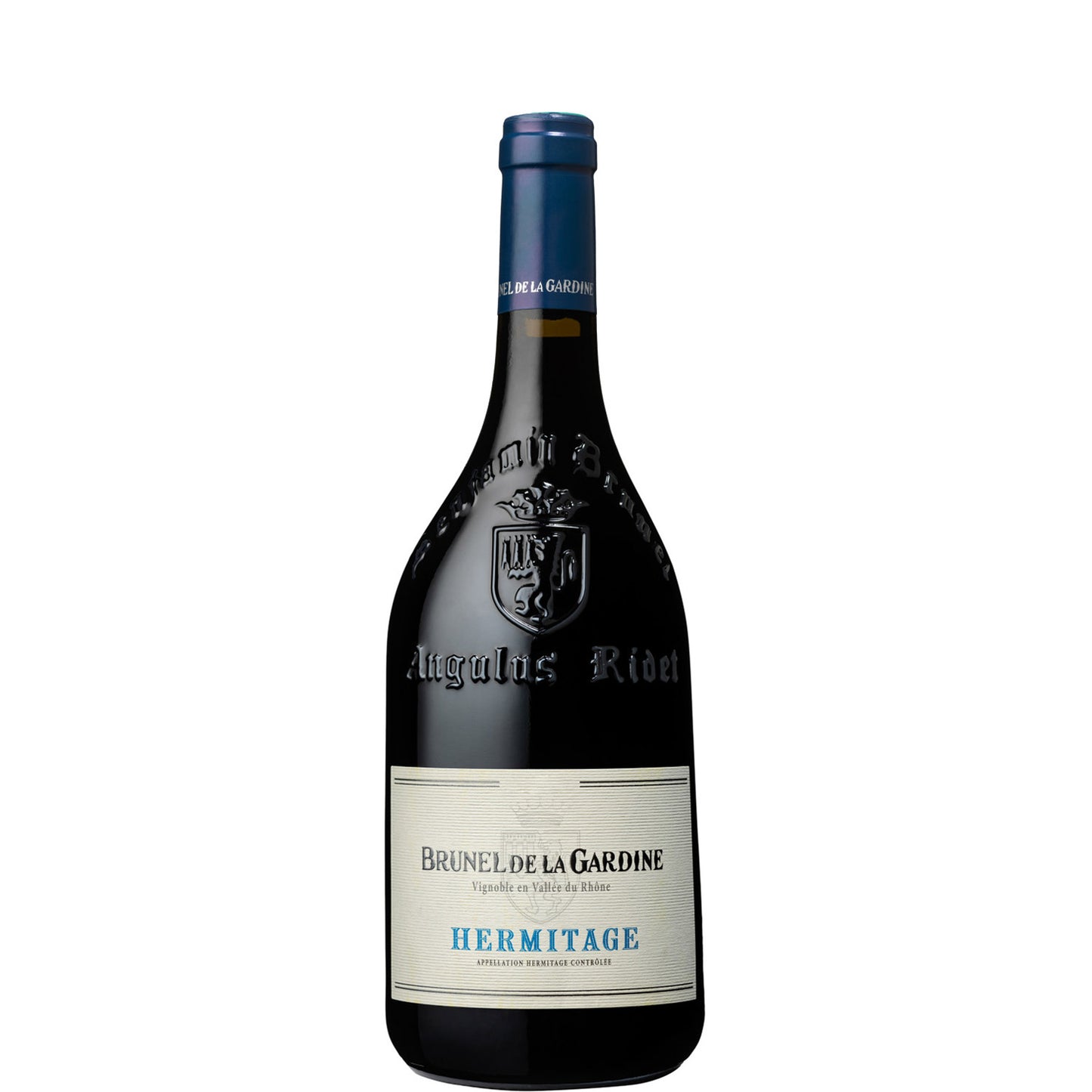
Château De La Gardine, Brunel de la Gardine Hermitage, 2021
Château De La Gardine, Brunel de la Gardine Hermitage, 2021
- 75cl
- 13%
- Red Still
- Syrah
- Organic
Couldn't load pickup availability

Optimal drinking window: 2026 - 2040
From the storied granite slopes of Hermitage comes this pure Syrah, an expression of power tempered by poise. The 2021 Brunel de la Gardine carries the hallmarks of the appellation: deep, dark fruit, graphite minerality, and that unmistakable Hermitage muscle, all delivered with a supple, modern finesse. It’s a serious wine built to age gracefully, yet already offers great pleasure alongside grilled lamb or a rich winter stew.
Château De La Gardine is best known for its Châteauneuf-du-Pape, but the Brunel family’s northern Rhône ventures show equal ambition and class. The bottle itself is a conversation starter, its distinctive shape modelled on an antique, mouth-blown bottle unearthed by Gaston Brunel in the 1960s.
From around 2026, expect the fruit to begin integrating, the graphite minerality to move into sharper focus, and secondary notes of leather, dried herbs, and cured meat to start emerging. The window of peak complexity likely runs from 2028 through to the late 2030s, when the wine should be showing everything Hermitage can do at its most eloquent. By the early 2040s, the fruit may begin to dry out on the most forward bottles, though well-cellared examples with low ullage could hold until 2042 without trouble.
Tasting Notes
AppearanceDeep, almost opaque ruby-purple with a narrow, bright violet rim that hints at the wine's relative youth.
NoseBlackberry, cured black olive, and smoked meat sit at the front, with a compelling graphite and iron undercurrent that is unmistakably Hermitage. Given air, there's a suggestion of violet and cracked black pepper — the Syrah signature asserting itself without shouting.
PalateFull-bodied but not heavy, with ripe, dark fruit held in check by taut, fine-grained tannins and lively acidity that keeps everything moving. The texture has a polished quality that speaks to careful extraction — powerful, yes, but not a wine that bludgeons. The granite mineral quality carries through from nose to mid-palate.
FinishLong, savoury, and mineral, with a persistent iron and dark-fruit echo that lingers well past the swallow.
Overall impressionSerious northern Rhône Syrah at a stage where it rewards patience more than it rewards impatience.
Food Pairings
In the northern Rhône, Hermitage is the wine that comes out for the table's most serious moments — a slow-roasted leg of lamb with garlic and herbes de Provence, or a daube of beef braised with olives and orange peel, the kind of dish that takes all afternoon. Locals might also reach for it alongside a platter of aged sheep's cheeses from the nearby Ardèche, or a thick slice of pâté en croûte from one of the Lyon charcuteries just up the valley. Game is a natural fit too: roast partridge or wild boar cooked with wine and juniper would match the wine's earthy, mineral depth without overwhelming it.
We think this wine would go well with
Serve at 17-18°C — too warm and the alcohol takes over, too cool and the tannins close up. At this stage of its life, decanting is not optional: give it at least 90 minutes in a wide-bottomed decanter to let the wine breathe and the structure soften. A large Burgundy-style glass works well here, giving the more aromatic, floral top notes room to open up alongside the wine's darker, earthier core.
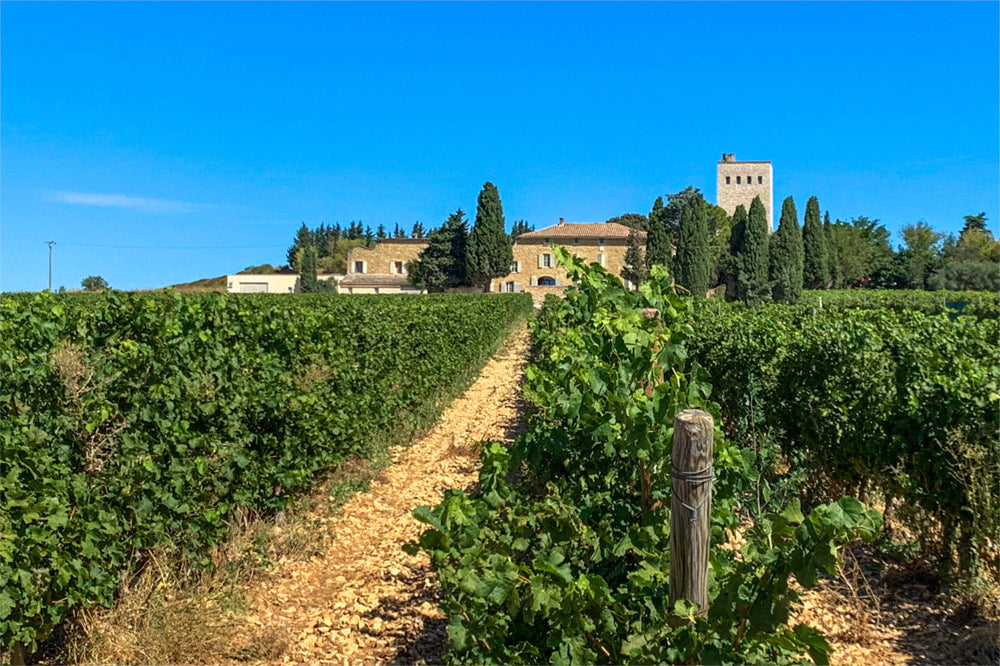
Hermitage's vineyards sit on steep granite hillsides rising above the town of Tain-l'Hermitage on the left bank of the Rhône, facing due south and capturing maximum sun in what is already a warm continental climate. The decomposed granite soils drain freely, concentrate root systems deep into the rock, and contribute the iron, graphite, and mineral tension that define the appellation's best wines. The hill acts as a natural amphitheatre, sheltering vines from the worst of the Mistral while the Rhône below moderates temperature extremes. These conditions push Syrah to its most structured, longest-lived expression anywhere in France.
Hermitage is a single-hill appellation in the northern Rhône, one of France's smallest and most prestigious, producing red wines exclusively from Syrah and white wines from Marsanne and Roussanne. It sits apart from its northern Rhône neighbours — Côte-Rôtie to the north, Crozes-Hermitage encircling it — in reputation and price, with a history of producing wines that rival Burgundy's grands crus for longevity and complexity. Unlike Côte-Rôtie, co-fermentation with white varieties is not permitted for the reds. The appellation's relatively tiny production and fierce demand mean prices reflect its status, though wines like this from smaller négociant-growers offer a more accessible entry point than the top domaines.
The 2021 Rhône had drama written all over it from the start. Spring frost knocked back yields across the valley, followed by a wet summer that kept growers on edge about disease pressure. When September finally arrived with warm, dry weather, those who'd managed their vineyards carefully through the challenging months found themselves with concentrated, healthy fruit that ripened beautifully in the sunshine.
What emerged defied the difficult growing season: wines with real energy and freshness, particularly impressive in the Northern Rhône where Syrah shows lovely spice and pepper alongside its dark fruit. The Southern Rhône produced Châteauneuf-du-Papes and Côtes du Rhônes with more restraint than the blockbuster years, but we rather like that - there's a liveliness here that makes them brilliant with food. The reds are drinking well now and will continue to develop until 2030 or beyond for the best cuvées, while the whites - often overlooked but particularly successful this year - are singing right now.
FAQs
What does the Brunel de la Gardine Hermitage 2021 taste like?
Dark and structured, with blackberry, cured olive, smoked meat, and a mineral, iron-flecked quality that is the hallmark of Hermitage Syrah. The tannins are firm but fine, and the finish is long and savoury. It's a serious wine, not a plush one.
When is the best time to drink this wine?
It's approachable now with generous decanting, but the real complexity — leather, dried herbs, earthy depth alongside that dark fruit — will only emerge with a few more years in the cellar. Best until around 2040.
What food should I serve with it?
Think slow-cooked, earthy, and rich. Roast lamb with garlic and rosemary, a braised daube of beef, or game birds would all be superb. Aged hard cheeses work well too, particularly sheep's milk varieties.
Should I decant this wine?
Yes, and generously. At this stage of its life, 90 minutes minimum in a wide decanter will make a meaningful difference to how the wine shows. It opens up the aromatics and takes the edge off the tannins.
Is this worth cellaring?
Absolutely, if you have the patience. Hermitage from good vintages is built to age, and the 2021 has the structure and fruit concentration to reward 10-15 years in the cellar.
How does this compare to other Hermitage wines?
The Brunel de la Gardine sits in the modern, polished camp rather than the old-school, tannic-and-austere tradition. It's more approachable in its youth than some of the grandes maisons, without sacrificing the appellation's characteristic mineral depth and muscle. A strong introduction to the hill for those not yet ready to spend at the top level.


What are you looking for tonight? Tell me the occasion, a grape, a region — or just try a suggestion below.
Your recommendations will appear here.
-
-
Speak to one of our Wine Gurus
Speak to a Wine GuruWith years of experience, our team can help you with all your wine buying and selling needs