

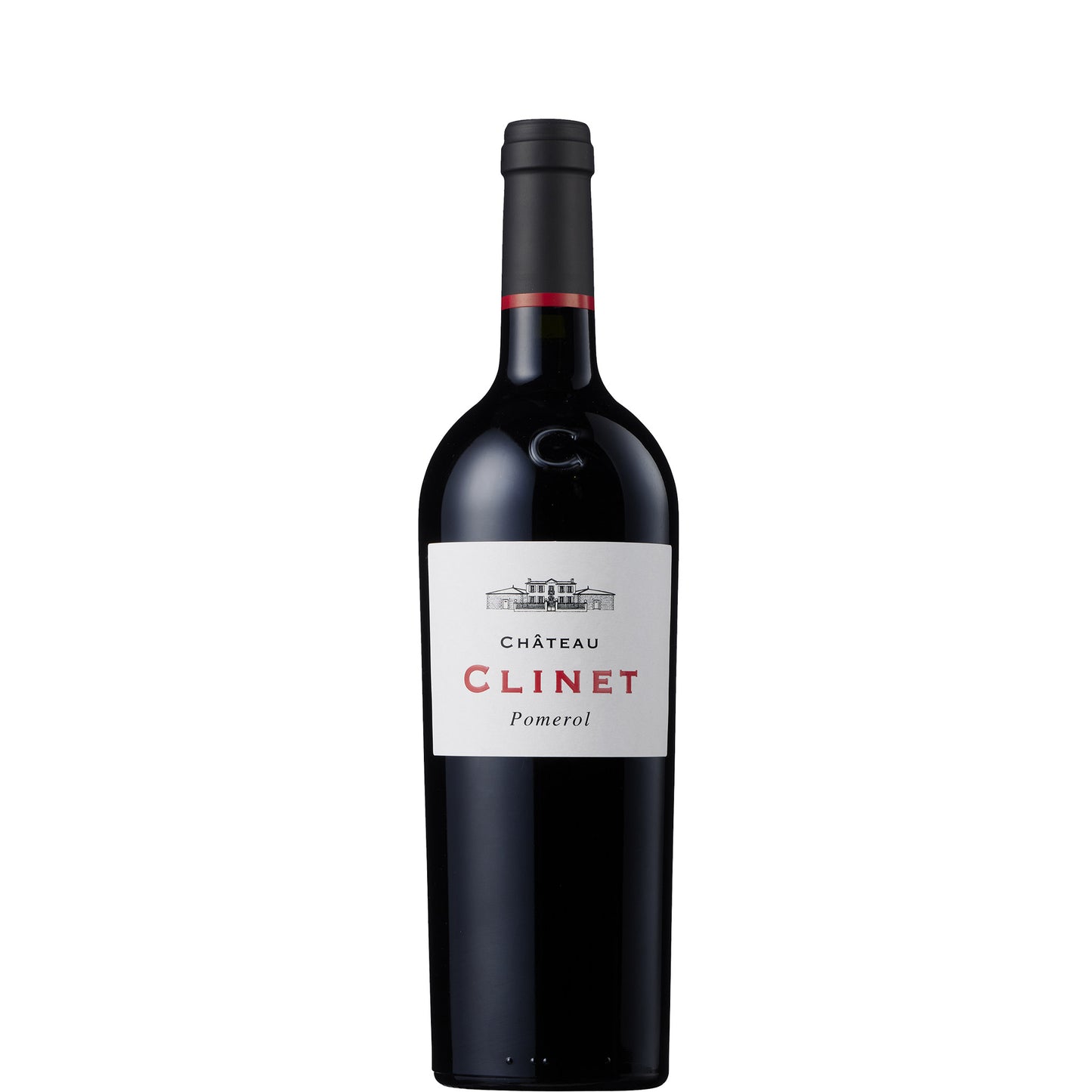
Château Clinet, 2025
Château Clinet, 2025
- 75cl
- 14%
- Red Still
- Merlot, Cabernet Sauvignon
Please note, en primeur wines are not available for delivery until they arrive in the UK
Couldn't load pickup availability
Est. delivery in 2028.
Château Clinet sits on Pomerol's famous clay-gravel plateau, where the Guinaudeau family have been crafting some of the Right Bank's most powerful wines since 1999. This is Merlot-driven Pomerol with serious muscle — think dense plum and dark chocolate wrapped in firm tannins that demand patience.
What the critics say:
"Dense purple-hued, the 2025 Château Clinet is a ripe, sumptuous, and seamless beauty with so much to love. Ripe red, blue, and black fruits, violets, smoky tobacco, and chocolate all shine on the nose, and it's full-bodied on the palate, with a pure, layered, graceful mouthfeel, ultra-fine tannins, and a great finish. It shows just how successful the more clay-dominant soils of Pomerol were in this vintage, and it's unquestionably up with the crème de la crème of the vintage."
"Deep in color, the wine exudes aromas of licorice, flowers, black cherries, espresso, plums, herbs, and chocolate with a single swirl. The palate is even better, with waves of opulent, lush, soft, polished, expressive, and fresh fruit. The balance among depth, sweetness, flesh, and lift is exactly where it needs to be. The finish is defined by the intensity of the vibrant fruit on the palate, depth of flavor, and purity. The wine blends 80% Merlot with 20% Cabernet Sauvignon. 14% ABV, 3.65 pH. Harvesting took place September 4 September 17. This is the earliest harvest in the history of the estate. Yields were 34 hectoliters per hectare."
"The 2025 Clinet was the earliest picking ever, from September 4, and aged in 60% new oak plus 40% one-year-old barrels. Vintages now have a little more Cabernet Sauvignon, as a hectare of Merlot was uprooted. Now this has a delightful nose, perhaps the most elegant and refined that I have encountered at this stage: vivid red cherry, raspberry and wild strawberry scents, neatly embroidered oak, more floral in style. The palate is medium-bodied with chiselled, fine tannins, bright and tensile, exquisite focus, with a peacock's tail on the finish. Quite crystalline on the finish, this is a Clinet that I would like in my cellar. Or at the dinner table. Or in my glass."
Clinet's 11 hectares sit on Pomerol's famous buttonhole of clay over iron-rich crasse de fer, the same geological formation that underpins Pétrus. This deep clay retains moisture during dry spells whilst the iron oxide provides natural drainage, creating ideal conditions for Merlot. The slight elevation and southern exposure maximise ripening potential, whilst the clay's heat retention extends the growing season. This terroir produces wines with remarkable concentration yet maintains the silky tannin structure that makes Pomerol so distinctive.
Pomerol remains Bordeaux's most enigmatic appellation, covering just 800 hectares on the Right Bank with no official classification yet commanding some of the region's highest prices. The clay-dominant soils favour Merlot over Cabernet Sauvignon, creating wines that are more immediately appealing than their Médoc counterparts. Unlike Saint-Émilion next door, Pomerol eschews grand château architecture for modest farmhouses, letting the wines speak for themselves. The appellation's small size and fragmented ownership mean most properties produce tiny quantities, making genuine Pomerol increasingly rare.
The 2025 Bordeaux vintage emerged from one of the most demanding growing seasons in recent memory — the earliest budbreak since 1989, June temperatures second only to 2003 since records began, and an unusually early harvest beginning in August for the whites. Conditions that should have produced heavy, overripe wines. They didn't. Decanter's Georgie Hindle, who tasted close to 200 wines ahead of the formal campaign, describes "exceptional concentration, aromatic purity and a freshness that contradicts the record-breaking heat.
The early critical consensus places 2025 stylistically between the precision of 2020 and the structure of 2016, with the brightness of 2023 — a combination that suggests a very serious vintage indeed. Yields are dramatically low, the smallest crop since 1991, with production across the Gironde running around 15% below the five-year average. The quality is here. There simply isn't very much of it.


-
-
Speak to one of our Wine Gurus
Speak to a Wine GuruWith years of experience, our team can help you with all your wine buying and selling needs