

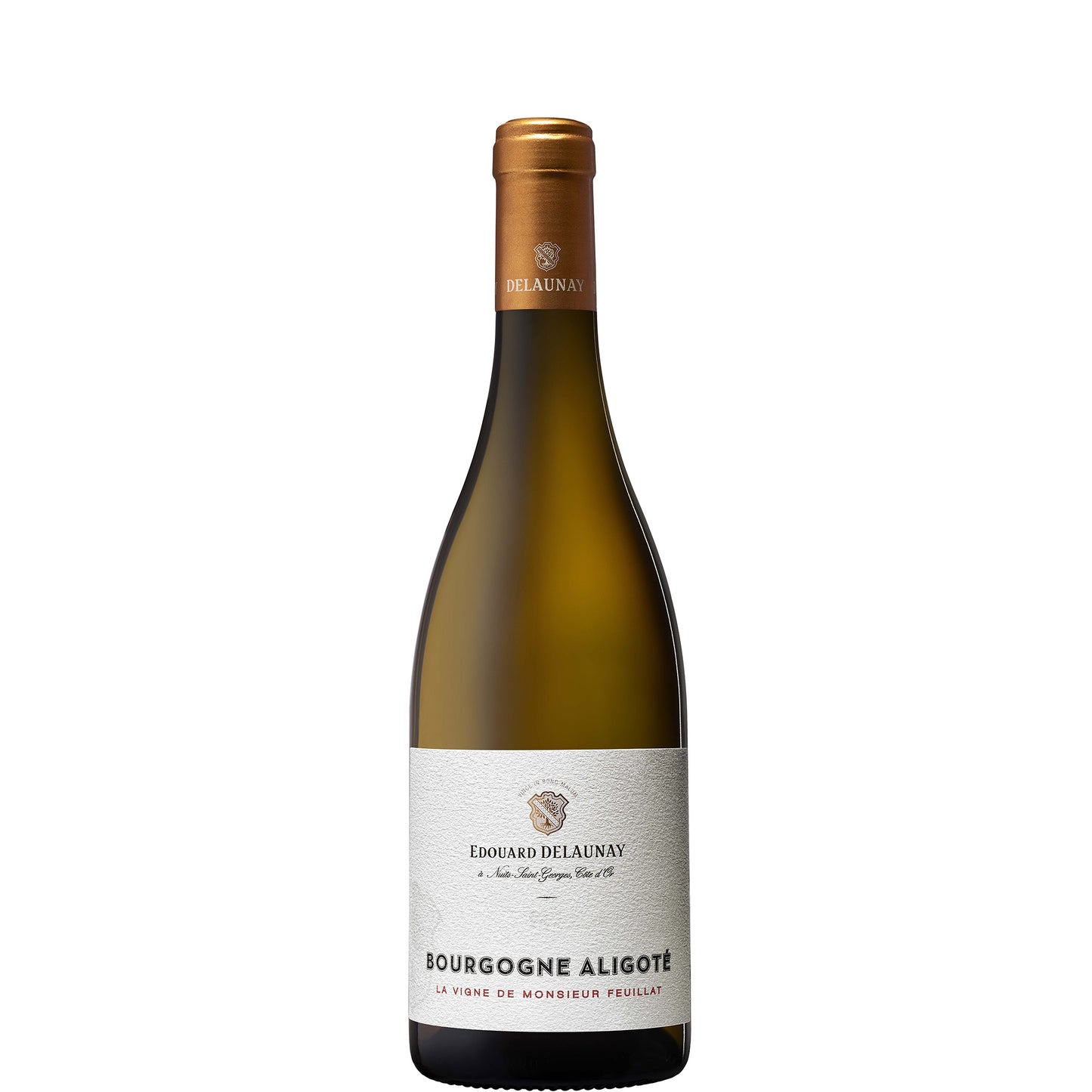
Bourgogne Aligoté 'La Vigne du Professeur Feuillat', Edouard Delaunay, 2023 - Exclusive Barrel
Bourgogne Aligoté 'La Vigne du Professeur Feuillat', Edouard Delaunay, 2023 - Exclusive Barrel
- 75cl
- 14%
- White Still
- Aligoté
Couldn't load pickup availability

Optimal drinking window: 2026 - 2029
For our latest Club Exclusive we've teamed up again with our dear friend Laurent at Maison Edouard Delaunay to bring you a sumptuous single vineyard 2023 Aligoté. A grape variety that is truly enjoying its time in the limelight (or sunlight), we were so smitten with the 2023 whilst tasting in Burgundy that we bought the entire production on the spot for Club Members - a mere 50 cases!
We've loved every vintage of this, as have critics such as Tim Atkin and French publication Bettane & Desseauve, the latter characterising the wine as “a thousand times more interesting than the mediocre famous villages". Under the wing of new winemaker Capucine Haroun, we feel the 2023 is the best yet, with more precision and tension. It's an exceptional, fascinating white Burgundy and represents cracking value too.
"A tribute to Laurent Delaunay's viticulture professor, this Aligoté offers floral aromas and citrus notes. It’s crisp, fresh, and beautifully balanced with a nice minerality and a touch of salinity on the finish. Aligoté’s energy and raciness make it a very drinkable wine, distinct from Chardonnay."
Our note
Delaunay features as one of the Top 15 Négociants & Cooperatives in Tim Atkin's Burgundy 2023 Special Report.
The 2023 is drinking beautifully now, showing all that primary citrus energy and floral lift that makes great young Aligoté so compelling. Over the next year or two, we expect the mineral backbone to integrate further while retaining that essential freshness. By 2028, the wine will have developed more textural complexity whilst the citrus notes evolve towards stone fruit, but the saline finish should remain intact. Unlike Chardonnay, Aligoté's charm lies in its youthful vigour rather than aged complexity, so we'd recommend enjoying this before 2030 whilst it still has that distinctive raciness.
Tasting Notes
AppearancePale gold with brilliant clarity and a hint of green at the rim.
NoseDelicate white flowers mingle with citrus blossom and a subtle mineral lift. There's a lovely purity here, with lime zest and a whisper of wet stone. The aromatics are precise rather than showy, building complexity with time in the glass.
PalateCrisp and focused with excellent tension between the citrus fruit and mineral backbone. The texture is clean and precise, with lemon and lime flavours supported by that distinctive saline quality. There's real energy and raciness here that sets Aligoté apart from Chardonnay, with wonderful balance throughout.
FinishLong and mineral-driven with a distinctive saline note that lingers beautifully.
Overall impressionThis is Aligoté at its most compelling, showing real terroir expression and winemaking precision.
Food Pairings
In Burgundy, locals would reach for this with a plate of escargots swimming in garlic butter, the wine's acidity cutting through the richness perfectly. It's equally at home with jambon persillé, the traditional Easter terrine of ham and parsley, or alongside fresh Chaource cheese from neighbouring Champagne. The Burgundians also love it with simple preparations of local river fish like pike or perch, where the wine's minerality echoes the limestone streams. For a true regional pairing, try it with gougères, those airy cheese puffs that are practically mandatory at Burgundian tastings.
We think this wine would go well with
Serve well-chilled at 8-10°C to preserve that essential Aligoté raciness and citrus precision. No need to decant, but do give it a few minutes in the glass to open up those floral aromatics. Use a medium-sized white wine glass that concentrates the delicate nose while allowing the mineral complexity to develop. This wine rewards proper temperature control more than most.
La Vigne du Professeur Feuillat sits on Burgundy's classic limestone and clay soils, providing the mineral backbone that makes Aligoté sing. The vineyard's elevation and exposure create the tension between ripeness and acidity that defines great Burgundian whites. These conditions allow Aligoté to express its natural salinity and citrus precision while developing the floral complexity that elevates it beyond a simple aperitif wine.
Bourgogne Aligoté represents the regional appellation for Burgundy's second white grape, often overshadowed by Chardonnay but increasingly appreciated for its bright acidity and mineral drive. The appellation allows fruit from across Burgundy, but the best examples like this single vineyard bottling show the grape's potential for genuine complexity. Unlike Chablis or Côte d'Or appellations, Bourgogne Aligoté rewards producers who focus on vineyard selection and precise winemaking rather than relying on prestigious geography.
The 2023 growing season in Burgundy unfolded like a cautionary tale about climate change, then pulled off a last-minute redemption that left everyone rather stunned. After a warm, early spring pushed budbreak ahead of schedule, the vines endured a thoroughly miserable summer of persistent rain and cool temperatures that had growers muttering darkly about rot and dilution. Just when things looked dire, September arrived with glorious sunshine and dry winds that concentrated the fruit and saved the harvest—though not without some frantic sorting in the cellars.
What emerged from this meteorological rollercoaster are wines that wear their vintage on their sleeve: Pinot Noirs with bright, singing acidity and red fruit that feels almost crystalline in its purity, whilst the Chardonnays show remarkable tension and mineral drive. The reds are drinking beautifully now if you fancy immediate pleasure, but we suspect the better villages and premiers crus will reward patience over the next decade. It's not a powerhouse vintage, but there's something genuinely charming about these wines—they remind us why we fell for Burgundy in the first place.
FAQs
What does this Aligoté taste like?
Crisp and mineral-driven with citrus zest, white flowers, and a distinctive saline finish that sets it apart from Chardonnay.
When should I drink this wine?
It's perfect now and over the next few years whilst it retains that youthful energy and precision that makes Aligoté so appealing.
What food pairs well with this wine?
Classic Burgundian dishes like escargots or gougères, fresh goat's cheese, or simply grilled fish where the wine's minerality can shine.
How should I serve this wine?
Well-chilled at 8-10°C in a medium white wine glass to concentrate those delicate floral and citrus aromatics.
Is this worth cellaring?
Aligoté is best enjoyed for its youthful freshness rather than aged complexity, so we'd drink this over the next 3-4 years whilst it's at its most vibrant.
How does this compare to Chablis or white Burgundy?
More citrus-driven and saline than most Chardonnay, with a raciness and energy that's distinctly Aligoté, offering excellent value for single vineyard Burgundy quality.


What are you looking for tonight? Tell me the occasion, a grape, a region — or just try a suggestion below.
Your recommendations will appear here.
-
-
Speak to one of our Wine Gurus
Speak to a Wine GuruWith years of experience, our team can help you with all your wine buying and selling needs