


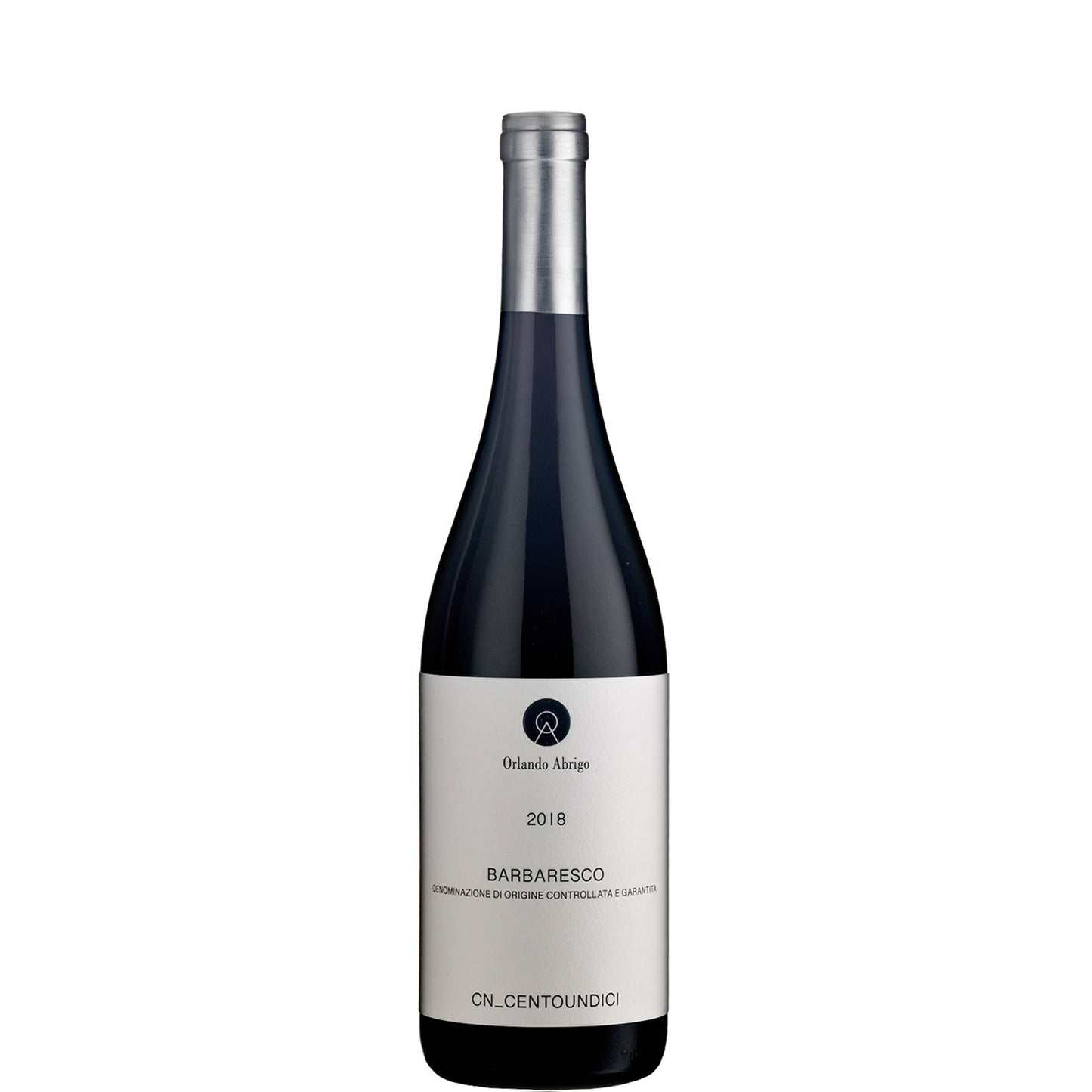
Barbaresco CN Centoundici, Orlando Abrigo, 2018
Barbaresco CN Centoundici, Orlando Abrigo, 2018
- 75cl
- 14%
- Red Still
- Nebbiolo
Couldn't load pickup availability

Optimal drinking window: Now - 2034
The Orlando Abrigo Barbaresco CN Centoundici 2018 is the kind of wine that quietly commands attention—elegant, precise, and full of personality. It’s a polished expression of Nebbiolo that captures everything we love about Barbaresco: that fine-boned structure, haunting aromatics, and a graceful depth that unfolds beautifully in the glass.
This cuvée is the work of the Abrigo family—modest in scale but rich in tradition and detail. The name “Centoundici” (Italian for one hundred and eleven) tips the hat to the vineyard parcel number, but there’s nothing bureaucratic about what’s in the bottle. This is Nebbiolo at its most charming—lifted and floral, with notes of wild cherry, rose petal, sweet spice, and a whisper of earth.
There’s enough structure to cellar for a few more years, but it’s drinking beautifully now, especially with the right plate—think truffle risotto, slow-roasted lamb, or a wedge of aged cheese.
For Club Members who appreciate Nebbiolo with finesse and clarity—this one’s a bit of a gem. It’s Barbaresco with both roots and polish.
The 2018 vintage in Barbaresco produced wines with real freshness and structural balance, and the Centoundici is tracking well in 2026 — the primary fruit is still vivid, but the tannins have softened enough to make this genuinely enjoyable now. Over the next two to three years, the rose and cherry notes will begin to integrate further, and secondary complexity — dried herbs, leather, tar — will start to emerge more clearly. The wine should reach a satisfying plateau somewhere around 2028 to 2030, where primary and secondary characters will be in conversation rather than competition. Hold it past 2034 and you're into territory where only the most structured 2018s will have enough fruit left to justify the wait.
What the critics say:
"I tasted this wine last year (from a bottle with a temporary label), but I was confused by the identity of the wine and its appellation. The Orlando Abrigo 2018 Barbaresco CN-Centoundici is named after the clone of Nebbiolo used in this case, the rosé clone CN 111. This is a mild and elegant expression with cassis, white cherry and wild plum. Those tart and elegant primary notes are followed by mild tones of spice, licorice and dusty earth."
Tasting Notes
AppearanceTranslucent ruby with a pale, almost garnet rim — the hallmark of Nebbiolo's deceptively light pigmentation.
NoseLifted and perfumed from the first pour: dried rose, wild cherry, and a thread of sweet spice — star anise and a faint dried violet. There's a background whisper of iron-tinged earth and something faintly savoury, like dried mushroom, that deepens with a little air.
PalateFine-grained tannins — present but polished — frame a mid-weight palate of tart plum, white cherry, and cassis, with a flicker of licorice and dry spice on the mid-palate. The acidity is Nebbiolo-bright and keeps everything taut; this isn't a wine of obvious weight, but it has real presence.
FinishLong and mineral, with dusty earth and dried cherry skin lingering well after the glass is empty.
Overall impressionA wine of genuine finesse — the CN 111 clone doing exactly what it promises: perfume, precision, and a silkiness that Barbaresco does better than almost anywhere.
Food Pairings
In the Langhe, Barbaresco is the natural partner to the region's most revered ingredient: white truffle, shaved generously over tajarin pasta with butter. Braised beef dishes — particularly brasato al Barolo, though Barbaresco works just as well — are another natural fit, the wine's acidity cutting through the richness of long-cooked meat. Locals would happily pour this alongside a risotto al Barolo or a plate of finanziera, the old Piedmontese offal stew that rewards a wine with real structure. Aged Castelmagno or Bra cheese, crumbled and eaten with a little honey, is about as good a match for Nebbiolo as you'll find.
We think this wine would go well with
Serve at around 17°C — any warmer and the aromatic delicacy of the CN 111 clone starts to blur. Decanting for 30 to 45 minutes will help open the wine up without losing its freshness; a longer decant risks flattening the perfume that makes this particular cuvée worth buying. A large-bowled Burgundy-style glass works well here, giving the aromatics room to express themselves without the dilution of an oversized Bordeaux glass.
The Centoundici parcel sits in Treiso, where soils tend towards compact Helvetian marl and Tortonian limestone — the same calcareous clay mix that gives Barbaresco its signature floral lift and fine-grained tannin. Treiso sits at higher elevation than much of the Barbaresco zone, which brings cooler nights and a longer growing season, allowing Nebbiolo to develop aromatic detail without losing freshness. The CN 111 clone used here is the rosé clone, known for producing lighter-coloured, particularly perfumed expressions of the grape.
Barbaresco DOCG sits in Piemonte's Langhe hills, just a short drive northeast of Barolo, and the two appellations are forever being compared — usually to Barbaresco's slight disadvantage in terms of fame, which is entirely undeserved. Where Barolo tends towards power and structure, Barbaresco is finer-boned, more aromatic, and often more approachable in youth. The DOCG requires a minimum of 26 months' ageing, at least nine of which must be in oak, giving producers real flexibility in style. Treiso is one of three communes permitted to produce Barbaresco, alongside Barbaresco itself and Neive.
The 2018 vintage in Piemonte arrived after a growing season that kept producers on their toes, with a wet spring giving way to a long, dry summer that stretched well into harvest time. The early moisture helped establish good canopy growth, but the extended dry period that followed meant careful vineyard management became crucial—those who could irrigate or had well-established vines on the best sites fared considerably better than those working marginal plots. Harvest came relatively late, with most Nebbiolo picked well into October under ideal conditions that allowed for unhurried selection.
What emerged from the cellars shows the vintage's dual personality: wines with excellent concentration and structure, but also an approachable quality that makes them more immediately charming than some of Piemonte's more austere years. The Nebbiolo-based wines show particular promise, with dense colour and firm tannins that suggest they'll age gracefully, whilst the Barbera displays lovely freshness alongside its characteristic bright acidity. Most 2018 Barolos and Barbarescos are drinking beautifully now but will reward patience until 2035 or beyond, whilst the region's everyday reds are already singing.
FAQs
What does the Centoundici taste like?
It's a wine of real aromatic finesse — dried rose, wild cherry, and sweet spice on the nose, with a fine-boned palate of tart plum and licorice. The tannins are polished rather than gripping, and the finish is long and mineral. This is Barbaresco at its most elegant rather than its most powerful.
What does "Centoundici" mean?
It's Italian for one hundred and eleven — a reference to the CN 111 clone of Nebbiolo used to make this wine. Also known as the rosé clone, CN 111 is prized for producing particularly perfumed, finer-structured expressions of Nebbiolo, which explains the lifted floral character you find in the glass.
When should I drink this wine?
It's drinking well now and will continue to do so until around 2030 to 2032. The tannins have softened nicely since release, but there's enough structure to reward a few more years in the cellar if you're patient. For drinking in the near term, decant for 30 to 45 minutes first.
What food goes well with this?
Nebbiolo and truffle is one of the great regional combinations — shaved white truffle over fresh pasta is the Piemontese ideal. Braised or slow-roasted meats work brilliantly too: lamb, beef short rib, or a rich risotto. Aged Castelmagno or a hard sheep's cheese with a little honey is a wonderful, simpler option.
How does Barbaresco differ from Barolo?
They're made from the same grape — Nebbiolo — grown in neighbouring appellations in Piemonte. Barolo tends to be bigger, more tannic, and longer-lived; Barbaresco is typically more aromatic, finer in texture, and a little more approachable in its youth. Neither is better — they're different expressions of the same magnificent grape.
Is this wine worth cellaring?
Yes, though it doesn't demand it. The 2018 vintage gave wines with good freshness and balance, and the Centoundici should develop real secondary complexity — dried herbs, leather, earthy depth — between now and around 2030. If you're opening a bottle soon, just give it a short decant and it will reward you well.


What are you looking for tonight? Tell me the occasion, a grape, a region — or just try a suggestion below.
Your recommendations will appear here.
-
-
Speak to one of our Wine Gurus
Speak to a Wine GuruWith years of experience, our team can help you with all your wine buying and selling needs