

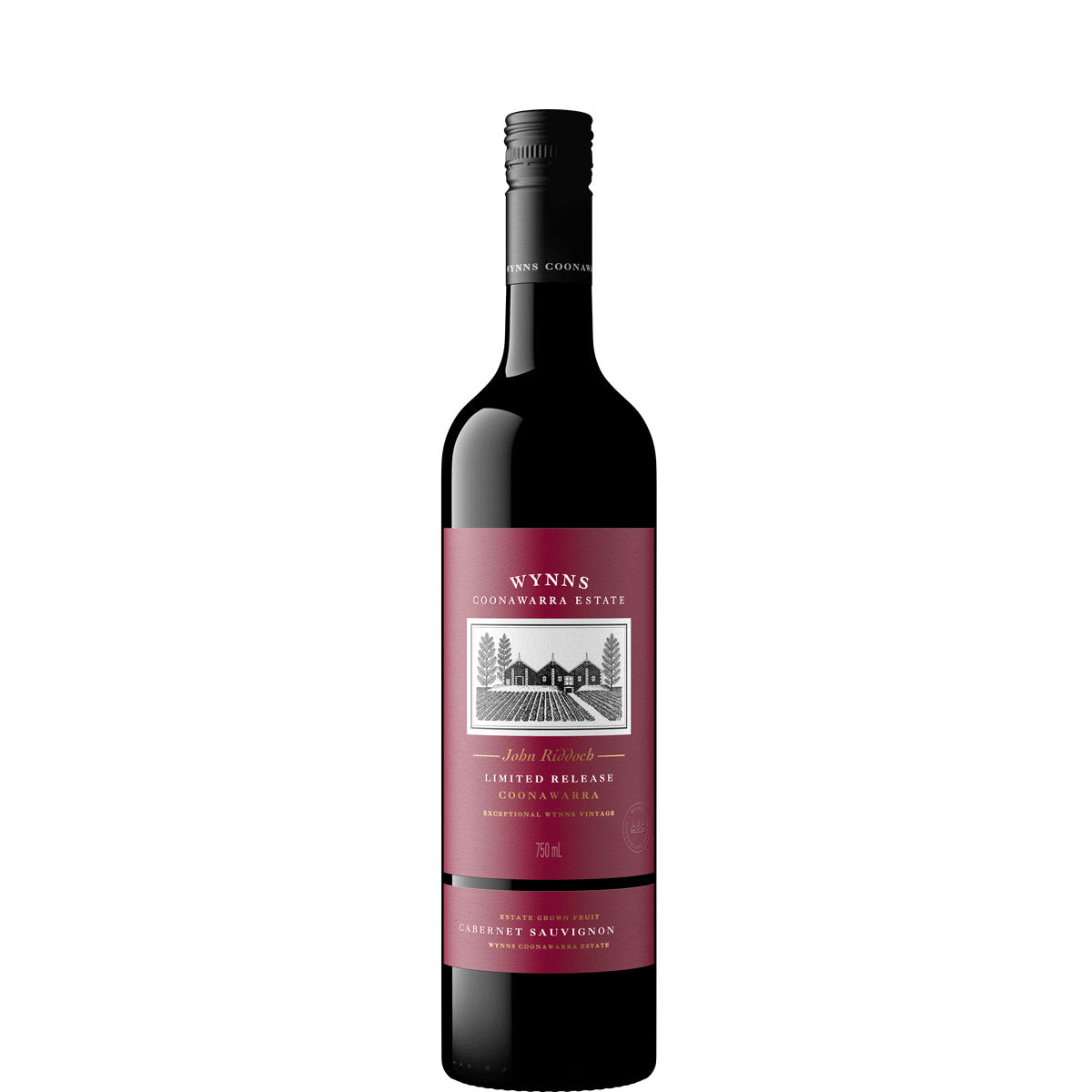
Wynns Coonawarra Estate, John Riddoch, Cabernet Sauvignon, 2023
Wynns Coonawarra Estate, John Riddoch, Cabernet Sauvignon, 2023
- 75cl
- 14.5%
- Red Still
- Cabernet Sauvignon
Couldn't load pickup availability
Enquire about this item

Drinking window: 2030 - 2048
Est. delivery in 2027
Wynns Coonawarra Estate, with roots tracing back to the late 1800s, is one of the leading wine producers in the Coonawarra region. Founded in 1951, it is the largest single vineyard, boasting the finest and oldest vineyard sites in Coonawarra.
The estate's origins date back to Scottish pioneer John Riddoch, who planted vineyards in 1891 and completed the iconic three-gabled winery in 1896. In 1951, Melbourne wine merchants Samuel and David Wynn acquired Riddoch’s vineyards and winery, renaming it Wynns Coonawarra Estate. The Wynns family recognised the inherent quality of Coonawarra wines, known for their richness and intense fruit character, and worked to establish a distinctive identity in the region. They developed the iconic label that has made John Riddoch’s winery one of Australia’s most recognised symbols of heritage and refinement, values that Wynns continues to uphold.
Coonawarra's calling card is its terra rossa — a vivid, iron-rich red clay-loam that sits just a foot or two above free-draining limestone, giving vines excellent water access without waterlogging, and imparting a mineral precision to the fruit that's hard to replicate elsewhere. The region sits in South Australia's far southeast, close enough to the Southern Ocean to benefit from cooling maritime influence that preserves acidity and extends the growing season. It's flat, unassuming country from the road, but that combination of red soil over white rock is almost freakishly well-suited to Cabernet Sauvignon, producing wines with structure and focus that far outlast what the landscape suggests.
Coonawarra is a GI (Geographical Indication) within South Australia, and one of the most geographically precise in Australia — essentially a narrow 15km strip of that celebrated terra rossa soil running north to south. Its boundaries have been fiercely contested in the courts, which tells you something about how much the name is worth and how seriously producers take its specific identity. It's best known for Cabernet Sauvignon above all else, producing wines with a cooler, more restrained profile than Barossa or McLaren Vale — less opulence, more structure, more mineral tension. Think of it as Australia's answer to a serious Left Bank Bordeaux appellation.
Coonawarra's 2023 vintage arrived after a growing season that kept growers honest. A wetter-than-average spring helped replenish soil moisture in the famous terra rossa, but also brought disease pressure that demanded vigilance in the vineyard. Summer settled into a more moderate rhythm than recent years, with temperatures that allowed slow, even ripening rather than a frantic race to harvest. The result was fruit that came in with good natural acidity intact — the kind of season where those who farmed carefully were rewarded and those who didn't, weren't.
Cabernet Sauvignon, as ever the region's calling card, looks promising: the cooler finish to the season preserved structure without leaving green edges, and the better examples have the density and fine-grained tannin that Coonawarra does better than almost anywhere in Australia. Shiraz performed well too, with more definition than you sometimes get in warmer years. These are still early days for the reds — most benefit from another two to three years in bottle, with the top Cabernets drinking well until 2035 and beyond.

OUR GROWERS
Wynns Coonawarra Estate

