

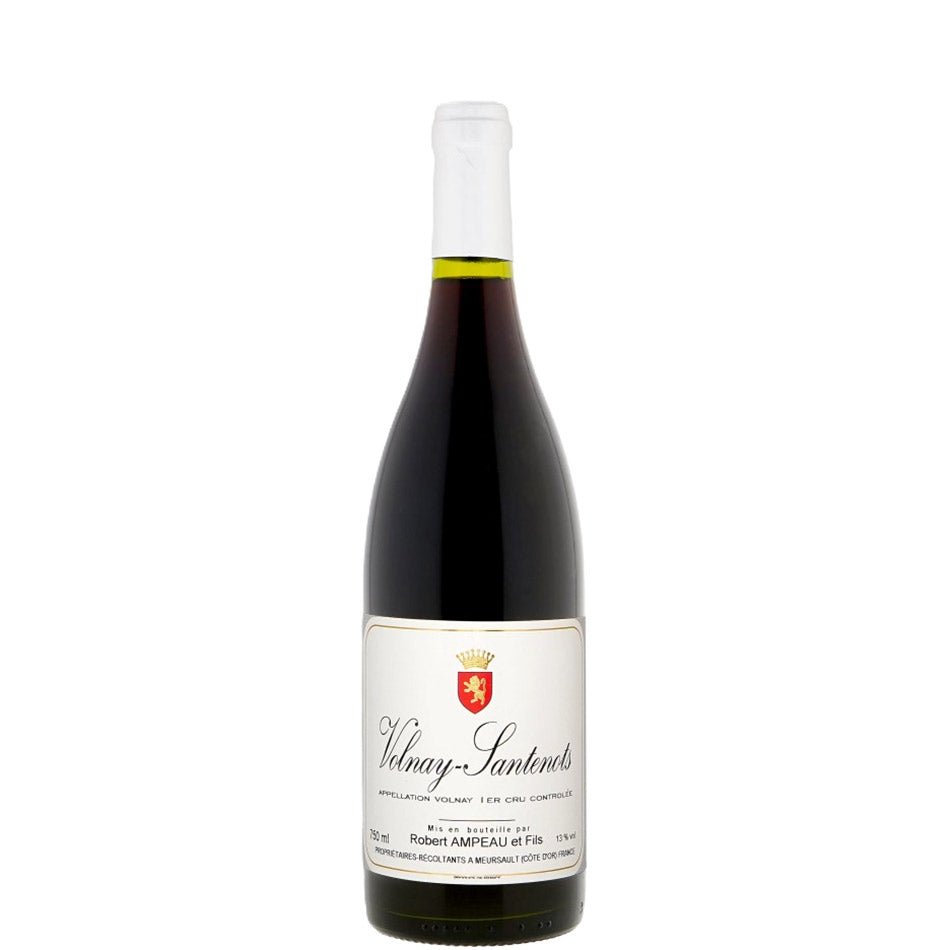
Volnay Premier Cru, 'Santenots', Domaine Robert Ampeau et Fils, 1995
Volnay Premier Cru, 'Santenots', Domaine Robert Ampeau et Fils, 1995
- 75cl
- 13%
- Red Still
- Pinot Noir
Couldn't load pickup availability
Est. delivery in late autumn 2026
From one of Volnay’s finest climats, bordering Meursault, where iron-rich soils naturally give a broader, more powerful expression of Pinot Noir.
Often overlooked on release, the vintage has aged superbly. Once firm and reserved, these wines have softened into something generous and harmonious. Ampeau’s Santenots captures the site beautifully, offering ripe red and black fruit, a touch of lingering tannin, and a long, resonant finish that unfurls with real grace.
As these wines have remained unmoved in the cold cellars at Ampeau since bottling, the conditions for a very slow, undisturbed ageing are perfect. Given the nature of the wines, we are unable to offer credit for corked/out of condition bottles, but our experience with these bottles is that the condition and ex-cellar provenance is impeccable.
The Santenots climat sits on the boundary between Volnay and Meursault, and its iron-rich, clay-limestone soils are heavier than most of Volnay's hillside plots. That extra weight and mineral richness pushes the Pinot Noir towards a broader, more structured expression — more muscle than silk. The slope faces east-southeast at around 250 metres, giving good morning sun and natural drainage, but it is the soils that define the wine's power and grip.
Volnay is one of the Côte de Beaune's most celebrated red wine villages, prized for Pinot Noir of exceptional finesse and perfume. Its Premier Cru vineyards account for well over half the village's total production — an unusually high proportion, reflecting the quality of the hillside sites. Santenots is technically classified as Volnay Premier Cru when planted to red varieties, even though the land physically falls within Meursault's boundaries. That quirk of appellation law makes it one of Burgundy's more interesting anomalies.
Nineteen ninety-five delivered a vintage that Burgundy needed after a run of difficult years. A dry, warm growing season built phenolic ripeness steadily rather than dramatically, with the vines largely spared the rot pressure that had plagued earlier harvests. The result was grapes with good concentration and sound skins — the sort of raw material that rewards careful hands in the cellar, and in 1995 there were rather more careful hands than there had been a decade before. That generational shift in winemaking matters here; you cannot divorce the quality of these wines from the fact that a new cohort of vignerons was hitting their stride.
The reds are the story. Pinot Noir produced wines with real density and structure, firmer than the silkier 1999s but with the fruit to back up that backbone. Whites are good but less celebrated, and most should have been drunk by now. The reds, particularly from the Côte de Nuits, are at or approaching their peak — thirty years in, the tannins have softened into something genuinely rewarding, and the best village and premier cru examples still have a few years of pleasure ahead. Grand crus from serious addresses can go further still.

OUR GROWERS
Robert Ampeau & Fils
Explore related wines


-
-
Speak to one of our Wine Gurus
Speak to a Wine GuruWith years of experience, our team can help you with all your wine buying and selling needs