

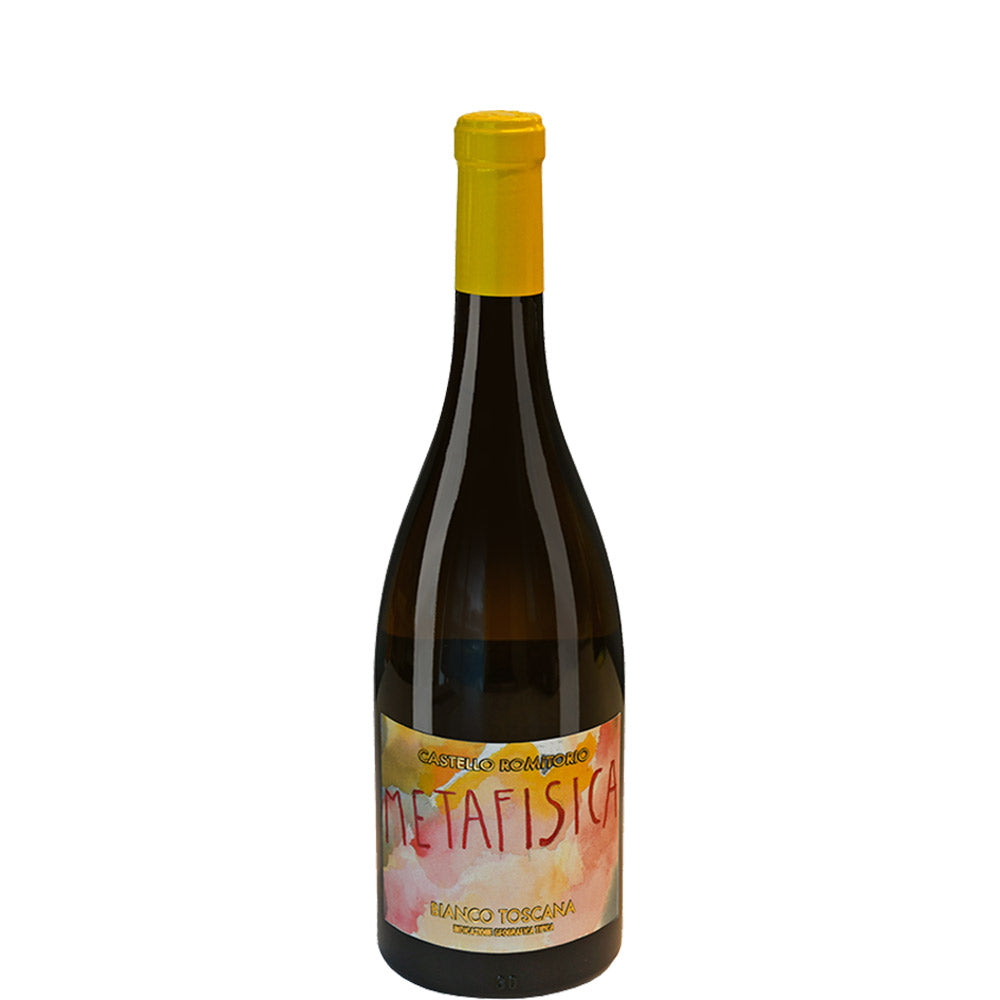
Toscana Blanco 'Metafisica', Castello Romitorio, 2021
Toscana Blanco 'Metafisica', Castello Romitorio, 2021
- 75cl
- 12.5%
- White Still
- Chardonnay, Trebbiano
Couldn't load pickup availability

Optimal drinking window: Now - 2031
Metafisica is Castello Romitorio’s thoughtful Tuscan white, blending Chardonnay from Montalcino with Trebbiano (Procanico) from Scansano. The components are vinified separately and aged on lees in barrique, bringing texture and complexity while keeping the focus on freshness and balance. 2021 marks an important step for the wine, refining its shape and sense of place.
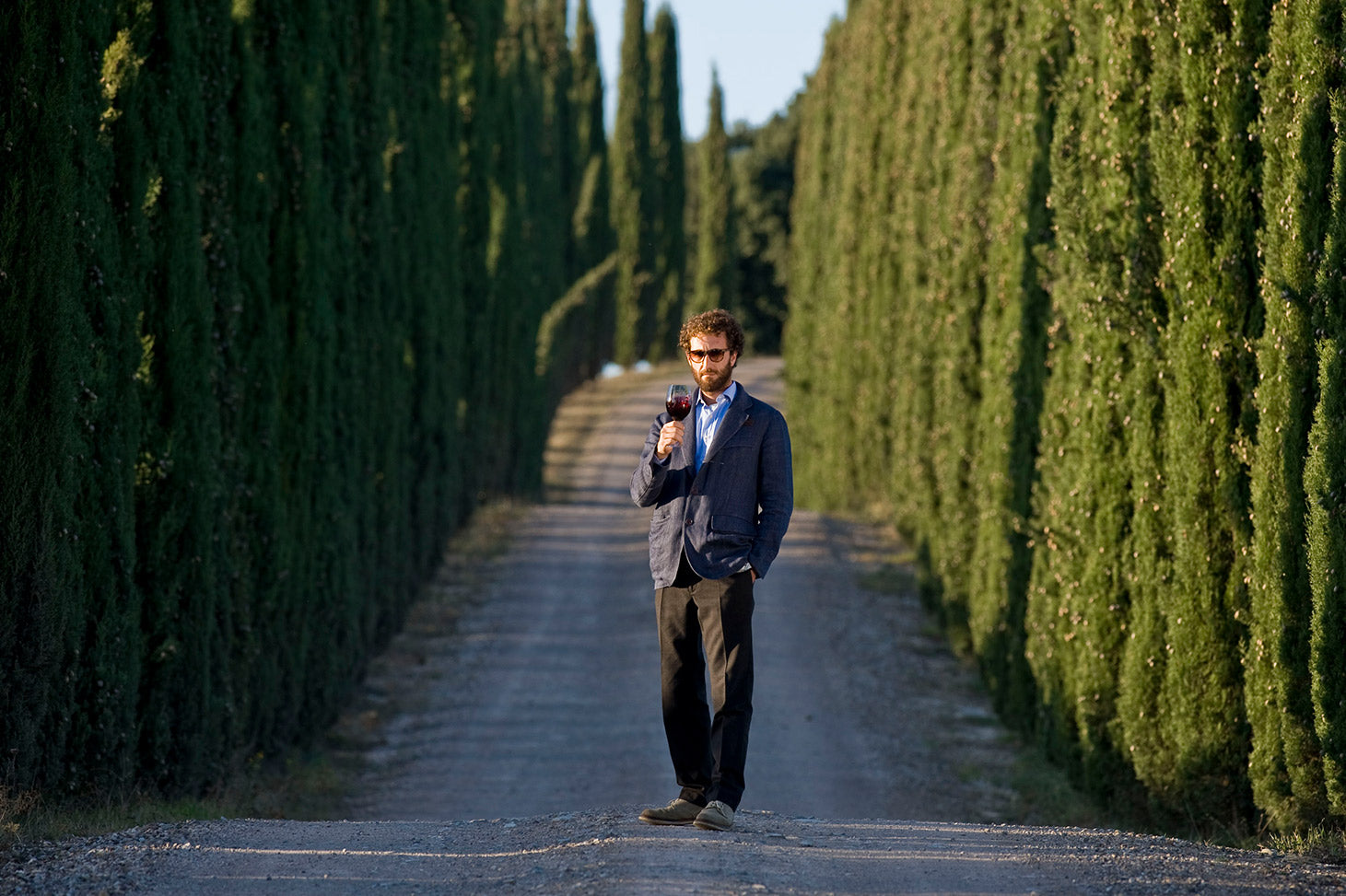
The Wine Advocate's Monica Larner has declared "Filippo Chia's Castello Romitorio is on fire. All of his wines are enjoying a well-deserved moment in the spotlight", and having pushed through to the front rank of Montalcino, Castello di Romitorio is arguably Tuscany's most exciting address. When we first brought on Castello di Romitorio we were convinced this was an estate going places and it's a real pleasure to see Filippo and the team achieve the superstar status they deserve.
Right now, in 2026, Metafisica is in a fine place: the primary fruit is vivid and the lees texture is still fresh and clean. Over the next two to three years the orchard and baked-fruit notes will begin to integrate more fully with the oak, and a broader, more honeyed character should emerge. By 2029 or 2030 it will likely be at its most expressive, with the Procanico's mineral salinity coming through more clearly as the fruit softens. We wouldn't push it much beyond 2031 — this is a wine built for pleasure over a medium horizon, not heroic cellaring.
What the critics say:
"The Castello Romitorio 2021 Metafisica is equal parts Chardonnay and Procanico, aged in oak for nine months. This is a new addition to the estate portfolio, with the Chardonnay coming from Montalcino and the Procanico coming from the Scansano area in southern Tuscany. The Procanico vineyard boasts 50-year-old vines and is one of the oldest in the area. Filippo Chia and his family acquired the site in November 2020. It's especially hard to find a white wine of this texture and consistency. It opens to a light golden hue and a viscous appearance that translates to a creamy mouthfeel. Aromas include orchard fruit, baked pear, saffron and apple pie. You can taste the skins, and there is the slightest tannic imprint on the mid-weight finish, which is dry and laced with dusty minerality. Only 1,900 bottles were produced in this inaugural release. "
Tasting Notes
AppearanceLight gold with a faint viscous shimmer at the rim, suggesting the lees-aged richness to come.
NoseBaked pear and orchard fruit open things up, with a warm, spiced note — think saffron and apple pie — that comes directly from the Procanico's age and the oak's gentle influence. There's a creamy, almost brioche-like quality underneath, but it never tips into heaviness.
PalateThe texture is the talking point here: creamy and mid-weight, with the lees-ageing giving a roundness that feels deliberate rather than accidental. You can sense the grape skins — there's a very faint tannic grip on the mid-palate that keeps the wine from feeling soft or shapeless. Dry and focused, with dusty mineral salinity running through to the finish.
FinishClean, dry, and minerally — longer than the modest price point might suggest.
Overall impressionA genuinely distinctive Tuscan white that earns its texture through craft, not manipulation — and one of only 1,900 bottles in existence.
Food Pairings
In Tuscany, a white with this kind of weight and salinity would traditionally be poured alongside ribollita enriched with a glug of olive oil, or a plate of white beans with sage and prosciutto crudo. Around Montalcino, pici with a simple cacio e pepe or a light wild boar ragù would be natural companions. In the Maremma, where the Procanico vines grow, the locals would reach for grilled orata or branzino with capers, or a simple acquacotta — the peasant bread-and-vegetable soup that the coastal hills have sustained for centuries. The wine's saline, stony finish makes it a natural with anything the sea has to offer.
We think this wine would go well with
Serve at around 10-12°C — cold enough to keep the freshness alive, but not so cold you lose the texture. No need to decant, though a wide-bowled white wine glass will let that baked-fruit nose open up properly. If you've kept it in the cellar, give it 20 minutes at room temperature before opening.
The Chardonnay component comes from vineyards around Montalcino, where the altitude and galestro-rich soils produce grapes with natural freshness and definition. The Procanico (Trebbiano) comes from Scansano in the Maremma, where the vines — some 50 years old — dig deep into coastal-influenced soils that add a saline, stony edge. The contrast between these two sites is part of the wine's interest: Montalcino's elevation brings lift, Scansano's old vines bring weight and texture. Together they create something more layered than either could alone.
Toscana IGT (Indicazione Geografica Tipica) is the catch-all designation for wines made in Tuscany that fall outside the stricter DOC and DOCG rules — and far from being a second-tier label, it is where some of the region's most creative and ambitious whites are made. Unlike Vernaccia di San Gimignano or Vermentino-based DOCs, the IGT allows producers to blend across grape varieties and sub-regions, giving winemakers the freedom to find the best combination of sites and varieties. Metafisica makes full use of that latitude, pulling together two distinct corners of Tuscany into a single, coherent wine.
Tuscany's 2021 growing season began with a soggy spring that had growers muttering into their espressos, followed by a summer that swung between scorching heat and welcome August rains. The real drama came at harvest time when many producers had to pick fast and choose wisely, dancing around September downpours that separated the meticulous from the merely hopeful. Those who waited too long paid the price, but the estates that timed it right caught fruit with lovely ripeness and crucially intact acidity.
What emerged feels like Tuscany with its shirt sleeves rolled up — wines that are more approachable and less brooding than the powerhouse vintages we've grown used to. The Sangiovese shows bright red fruit and genuine charm rather than the dense, muscular character of recent years, whilst the international varieties like Cabernet Sauvignon and Merlot retained surprising freshness despite the heat. We're finding these wines drink beautifully now with a few years of bottle age, though the best Chiantis and Super Tuscans will happily cellar for another decade if you can resist them that long.
FAQs
What does Metafisica taste like?
Baked pear and orchard fruit on the nose, with a saffron-spiced warmth from the old-vine Procanico. On the palate it is creamy and mid-weight, with a very faint tannic grip and a dry, dusty mineral finish. Think textured Tuscan white rather than anything leaner or more aromatic.
When is the best time to drink this?
It is drinking well now and will continue to do so until around 2030 or 2031. The next two to three years should see it hit its peak, as the oak integrates and the mineral character of the Procanico becomes more pronounced.
What food does it pair well with?
The creamy texture and saline finish make it versatile at the table. Try it with grilled sea bass, white bean dishes with sage and olive oil, or a simple Tuscan ribollita. It has enough body to handle a light pasta with butter and aged pecorino.
How should I serve it?
Serve at around 10-12°C in a wide-bowled white wine glass. No decanting needed, though if you have kept it cold, give it a few minutes to warm slightly before pouring so the nose can open up.
Is it worth cellaring?
Yes, for a few years. It is not built for the long haul, but it will reward patience until around 2030, becoming rounder and more integrated as the oak settles. Just bear in mind only 1,900 bottles were made in this inaugural vintage, so do not leave it too long before opening.
What makes this wine unusual?
The blend itself is the oddity — Chardonnay from Montalcino and 50-year-old Procanico (Trebbiano) vines from Scansano, two quite different corners of Tuscany, vinified separately and aged on lees in barrel. It is the kind of wine that should not quite work, but very much does.
Explore related wines


What are you looking for tonight? Tell me the occasion, a grape, a region — or just try a suggestion below.
Your recommendations will appear here.
-
-
Speak to one of our Wine Gurus
Speak to a Wine GuruWith years of experience, our team can help you with all your wine buying and selling needs