

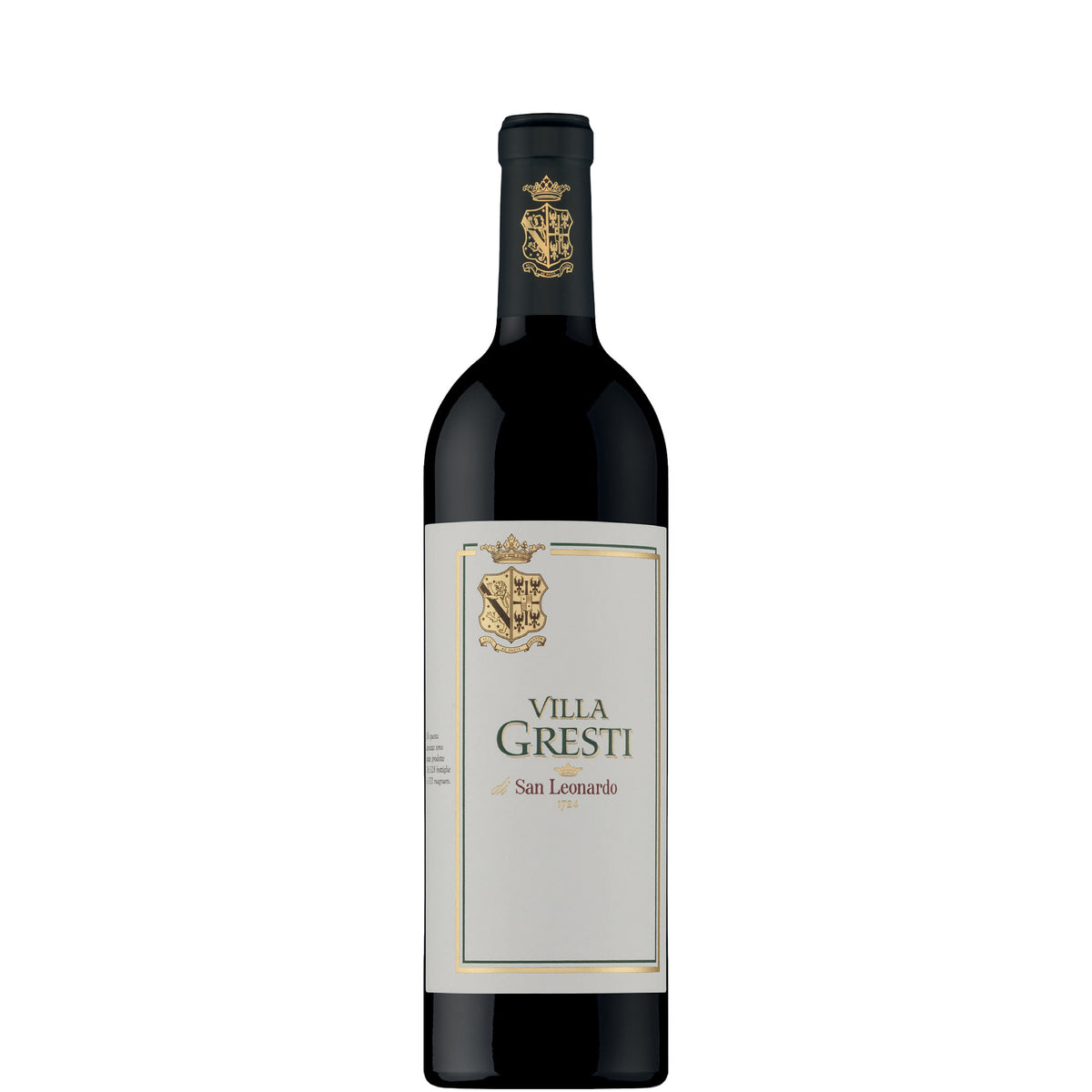
Tenuta San Leonardo, Villa Gresti Di San Leonardo, 2021
Tenuta San Leonardo, Villa Gresti Di San Leonardo, 2021
- 75cl
- 13.5%
- Red Still
- Merlot, Carménère
- Organic
Couldn't load pickup availability

Optimal drinking window: 2026 - 2036
Est. delivery in October, 2026
Villa Gresti is named after Gemma di Gresti, a remarkable ancestor of the family who played a key role in repatriating thousands of Italian prisoners of war from Russia after World War I.
Much like its namesake, this wine is both impressive and full of character. Made from 90% Merlot, it offers a unique take on the estate’s terroir—not a second wine, but a distinct expression. With its rich, velvety texture and deep, layered flavours, Villa Gresti can easily rival some of the top Pomerols, often at a fraction of the price.
Right now, Villa Gresti 2021 is in a pleasing primary phase: the dark fruit is vivid and the tannins are already silky enough to drink without apology. Over the next two to four years, the fruit will slowly draw back as secondary complexity — leather, tobacco, dried herbs, a little forest floor — begins to emerge. The magnum format gives it a meaningful advantage here, developing more slowly and evenly than a standard bottle. It should reach a lovely plateau somewhere around 2030-2032, holding there comfortably until 2036 or so before the fruit begins to fade. After 2038, drink up rather than hold on.
What the critics say:
"The 2021 Villa Gresti di San Leonardo is peppery and intensely floral, with a bouquet of geraniums, dried roses and lavender giving way to cedar shavings and mentholated wild berries. Streamlined and youthfully poised, this wine dances on the razor's edge, with crisp red and blue fruits that ride a silky textural wave framed by nuances of sour citrus that curl the tongue. It tapers off with excellent length and a chewy sensation, as edgy tannins resonate, offset by a bump of residual acidity."
Tasting Notes
AppearanceDeep ruby with a bright, clear garnet rim — still youthful and lively at five years old.
NoseDark cherry and plum up front, with dried thyme, tobacco leaf, and a cool, almost Alpine earthiness underneath. The Carmenère adds a faint green-herb quality that gives it interest without tipping into greenness.
PalateMid-to-full bodied, with silky, well-integrated tannins and lively acidity that keeps everything fresh. The fruit is generous but not overripe — dark cherry, cassis, a little dried fig — with a savoury, mineral undercurrent that speaks clearly of the valley's gravelly soils. The magnum format has allowed it to knit together more seamlessly than you might expect at this age.
FinishLong and herbal, with a faint graphite mineral quality and real persistence.
Overall impressionA beautifully poised, Bordeaux-spirited northern Italian red that drinks well now but will reward another five years in the cellar.
Food Pairings
In Trentino, a wine like this would be poured alongside a slow-braised shin of beef with polenta — the kind of dish that takes all afternoon and fills the kitchen. Locals would also reach for it with a plate of canederli in brodo (bread dumplings in rich meat broth), or a roast saddle of venison with juniper and wild mushrooms, both of which match the wine's herbal lift and structure. Aged local cheeses such as Trentingrana — a harder, more rustic cousin of Parmigiano — work wonderfully too, the umami amplifying the wine's savoury mineral finish.
We think this wine would go well with
Serve at 17-18°C — any warmer and the freshness that makes this wine distinctive starts to flatten. In magnum from 2021, a 30-45 minute decant is worthwhile: the wine opens generously and the fruit integrates quickly once it gets a little air. Use a large-bowled Bordeaux glass to give the aromatics room to breathe.
The vineyards sit in the Lagarina Valley, a natural wind corridor running south from the Dolomites toward Lake Garda, which moderates temperatures and ensures good diurnal range. Soils are a mix of alluvial gravel and glacial moraine — free-draining and warm, yet with enough clay in the deeper layers to retain moisture through dry summers. The Alpine influence brings freshness and aromatic lift that you simply wouldn't get from Merlot grown further south, and it shows clearly in Villa Gresti's structure and aromatic precision.
Villa Gresti is released under the Vigneti delle Dolomiti IGT designation, a broad Indicazione Geografica Tipica covering Trentino-Alto Adige that gives producers freedom to work with international varieties outside the constraints of local DOC rules. This flexibility is precisely what allowed the Guerrieri Gonzaga family to plant Bordeaux varieties at scale — something the stricter Trentino DOC would have complicated. The IGT label here carries no stigma; like the great Super Tuscans, it simply signals that the winemaker chose ambition over bureaucracy.
The 2021 growing season in Trentino started promisingly with a mild winter and early budbreak, only to face late spring frosts that caught many growers off guard. Summer brought intense heat waves interspersed with timely rainfall that kept the vines hydrated without encouraging rot. The Alps provided their usual moderating influence, but temperatures still spiked well above average in July, pushing some vineyards to their limits before cooler nights in late August and September rescued the ripening process.
What emerged was a vintage of surprising concentration and freshness, particularly for the indigenous varieties that thrive in these mountain foothills. The Pinot Grigio shows more texture and mineral backbone than usual, while Teroldego delivered wines with proper mountain structure rather than the soft, jammy character that can plague hot years. Most 2021s are drinking beautifully now, offering immediate pleasure with enough acidity to carry them until 2028, though the best Teroldego and Lagrein examples will reward patience for another few years.
FAQs
What does Villa Gresti taste like?
It is a Merlot-led red with dark cherry, dried herbs, tobacco, and a cool Alpine earthiness running through it. The tannins are silky and the acidity is fresh — more Bordeaux in spirit than Italian, but with a mountain freshness that sets it apart from either.
How does Villa Gresti differ from the flagship San Leonardo?
San Leonardo is the grand vin: more Cabernet-dominant, more structured, and built for considerably longer ageing. Villa Gresti is rounder, earlier to drink, and more Merlot-forward — think of it as the estate's second wine, though that undersells it. In a great vintage and in magnum, it is a serious bottle in its own right.
When should I drink this magnum?
It is genuinely enjoyable from now, but the magnum format means it has more road ahead than a standard bottle. We would suggest 2028-2035 as the sweet spot, when the primary fruit has softened and secondary complexity has had time to develop. If you can wait, you will be rewarded.
What food should I serve with this?
Braised or roasted red meats are the natural partners here — beef shin, venison, lamb shoulder. It also handles rich, umami-forward dishes well: aged hard cheeses, mushroom-based sauces, slow-cooked game. The herbal freshness in the wine means it works with herb-crusted or juniper-seasoned preparations particularly well.
Should I decant it?
Yes, briefly. Around 30-45 minutes in a decanter before serving will open it up nicely. The wine is not so closed that it needs hours, but it does respond well to air — the fruit becomes more expressive and the herbal aromatics lift pleasingly.
Is the magnum format worth it for this wine?
Genuinely, yes. Magnums age more slowly and evenly than standard bottles, and for a wine with Villa Gresti's structure, that means better development over time. If you are buying to cellar rather than to drink immediately, the magnum is the smarter format by some margin.


What are you looking for tonight? Tell me the occasion, a grape, a region — or just try a suggestion below.
Your recommendations will appear here.
-
-
Speak to one of our Wine Gurus
Speak to a Wine GuruWith years of experience, our team can help you with all your wine buying and selling needs