

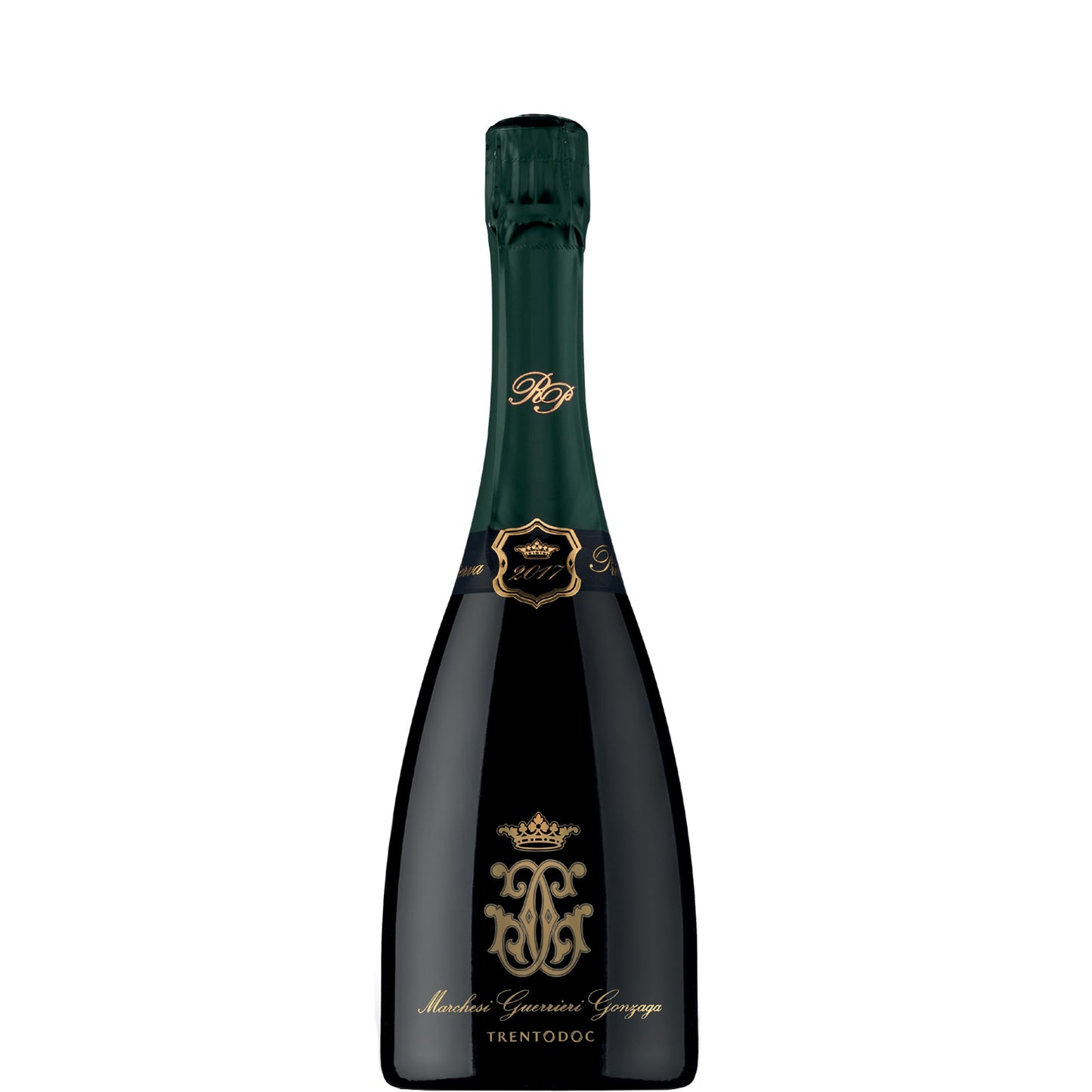
Tenuta San Leonardo, Riserva Privata Trento DOC, 2017
Tenuta San Leonardo, Riserva Privata Trento DOC, 2017
- 75cl
- 12.5%
- White Sparkling
- Chardonnay
- Organic
Couldn't load pickup availability

Optimal drinking window: Now - 2032
A vintage traditional-method sparkling wine from the San Leonardo estate in Trentino’s Adige Valley.
In the glass, it’s all about clarity and cut — bright citrus and crisp green apple up front, with a faint herbal note that gives it real character. Time on the lees brings gentle layers of toasted bread, almond and a touch of brioche, but it never feels heavy. The palate is dry, taut and confidently structured, driven by firm acidity and a fine, persistent bead, finishing long and savoury with a lovely mineral edge.
Produced under the Trento DOC appellation, the base wine is fermented in stainless steel and kept on its lees for six months with regular bâtonnage to build texture and structure. It then undergoes second fermentation in bottle and is aged for a minimum of 60 months before disgorgement, giving the wine depth and fine, persistent mousse.
At nine years from vintage, this wine is very much in its sweet spot — the primary citrus and apple fruit has integrated with the autolytic brioche and almond character developed during lees ageing, and the two are now working in harmony. Drink it with pleasure now until around 2029, when the mineral and savoury elements will begin to dominate and the fruit will gradually recede. Beyond 2030, the wine may start to feel more austere than complex, though bottles kept in good cellar conditions could hold until 2032. This is not a wine to forget about.
Tasting Notes
AppearancePale straw gold with a fine, persistent bead rising in clean columns.
NoseBright and focused — lemon zest, crisp green apple, and a faint herbal lift that keeps things interesting. With a little air, toasted bread and almond emerge, the result of nearly six years on lees, though it never tips into heaviness.
PalateDry and taut, with firm acidity giving the wine real backbone. The mousse is fine and precise rather than foamy, and there is enough mid-palate texture from the lees work to hold your attention without obscuring the wine's essential cut and freshness.
FinishLong, savoury, and mineral — a clean chalk-dust note that lingers well after the glass is down.
Overall impressionA sparkling wine of real discipline and quiet confidence, which has earned every month of its extended ageing.
Food Pairings
In Trentino, a sparkling wine of this calibre and age would comfortably sit beside a plate of speck — the region's lightly smoked cured ham — or alongside Puzzone di Moena, the pungent washed-rind cheese that locals eat with an almost combative pride. The acidity cuts beautifully through risotto all'Isolana or a simple trota del Sarca, the prized river trout cooked with butter and mountain herbs. For something more celebratory, Trentini would pair this with a whole roasted guinea fowl or a slow-cooked rabbit with polenta — nothing fussy, but always rooted in the mountains.
We think this wine would go well with
Serve at 8-10°C — cold enough to keep the mousse precise, but not so cold that you lose the secondary complexity that makes this wine interesting. No need to decant; let it breathe in the glass for a few minutes. A tulip-shaped sparkling wine glass, rather than a flute, will give you more surface area to pick up the toasted and herbal notes.
The San Leonardo estate sits in the Adige Valley in Trentino, where the valley's thermal dynamics — warm days, cool Alpine nights — preserve the natural acidity that makes Trento DOC sparkling wines so compelling. Vineyards here are planted on glacially carved soils of alluvial gravels, limestone, and clay, which lend the wines their characteristic mineral edge and structural precision. The altitude moderates ripening and keeps the grapes fresh through a long growing season, building the depth of flavour you need to survive extended lees ageing.
Trento DOC, established in 1993, is Italy's benchmark appellation for traditional-method sparkling wine — Metodo Classico in the local parlance. The rules are strict: only Chardonnay, Pinot Noir, Pinot Blanc, and Meunier are permitted, and minimum lees ageing runs from 15 months for non-vintage to 24 for vintage, with Riserva wines requiring a minimum of 36. In practice, the best producers go well beyond that, and the results can hold their own against serious Champagne — though Trento tends to run leaner and more mineral, with less of the yeasty richness you get further north. It is one of Italy's most underappreciated sparkling appellations, and that, frankly, works in the buyer's favour.
The 2017 vintage in Trentino arrived after a challenging growing season that tested even the most experienced producers. A dry winter gave way to an exceptionally hot summer, with temperatures soaring well above average and precious little rainfall to ease the vines' stress. The saving grace came from Trentino's altitude and the cooling influence of the Dolomites, which helped preserve acidity levels that might have collapsed entirely at lower elevations. Harvest began unusually early, with many growers picking in late August rather than their traditional September dates.
What emerged from this punishing year surprised many of us: wines with real concentration and character, though yields were predictably low. The reds, particularly Teroldego, show remarkable density and structure, whilst the whites - Pinot Grigio especially - display more weight and texture than usual without losing their mountain freshness entirely. These aren't the lithe, mineral-driven Trentino wines we typically champion, but they're compelling in their own right. Most are drinking well now and will continue to do so until 2025, though the best Teroldego may reward patience until 2027.
FAQs
What does this wine taste like?
Think crisp citrus and green apple with a faint herbal lift, then a second layer of toasted bread, almond, and brioche from nearly six years on lees. The palate is dry and precise, with firm acidity and a fine, persistent mousse, finishing long and savoury with a distinct mineral edge.
When should I drink this wine?
It is drinking beautifully well right now and will continue to do so until around 2029 or 2030. After that, the fruit will gradually recede and the wine will become more austere. There is no urgent rush, but do not leave it gathering dust until 2032.
What food should I serve with it?
This is a sparkling wine with real structure, so it can handle more than canapés. Think speck, aged mountain cheeses, river trout with herbs, or a simple risotto. It would also hold its own alongside roast guinea fowl or rabbit with polenta.
How should I serve it?
Serve at 8-10°C in a tulip-shaped sparkling wine glass rather than a flute — you need the room to appreciate the toasted and herbal complexity. No decanting required; a few minutes in the glass will do the work.
Is this comparable to Champagne?
Trento DOC uses the same traditional method as Champagne — second fermentation in bottle, extended lees ageing, disgorgement — and the best wines genuinely compete at that level. This one runs leaner and more mineral than most Champagne, with less yeasty richness and more Alpine precision. Think of it as what Champagne might taste like if it grew up in the mountains.
Is it worth buying more than one bottle?
At this stage of its drinking window, yes — particularly if you have a cool cellar. The wine is at its peak now but will hold comfortably until around 2030, and having a second bottle six months down the line is always instructive. It is also, relative to its quality, still underpriced compared to equivalent-quality Champagne.
Explore related wines


What are you looking for tonight? Tell me the occasion, a grape, a region — or just try a suggestion below.
Your recommendations will appear here.
-
-
Speak to one of our Wine Gurus
Speak to a Wine GuruWith years of experience, our team can help you with all your wine buying and selling needs