
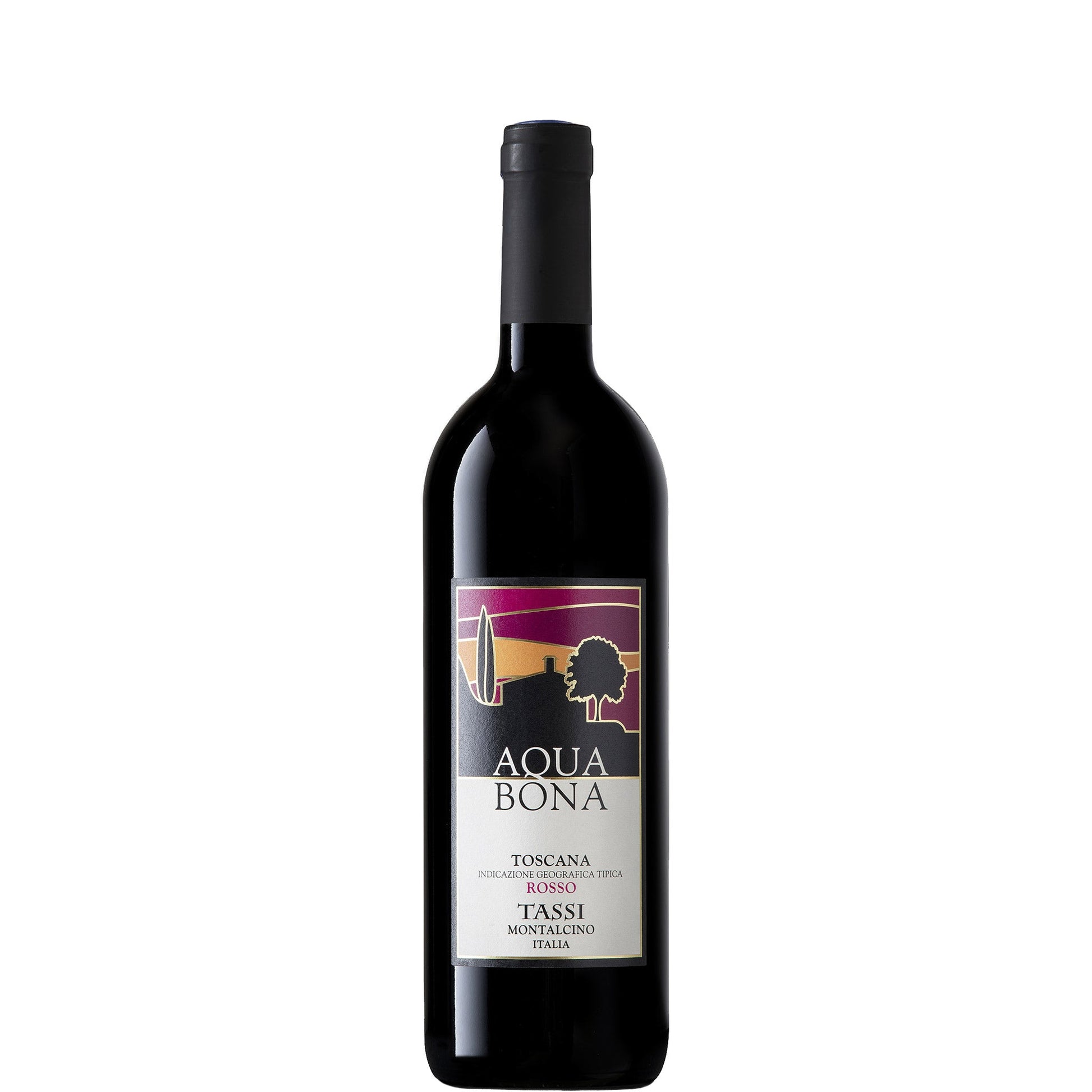
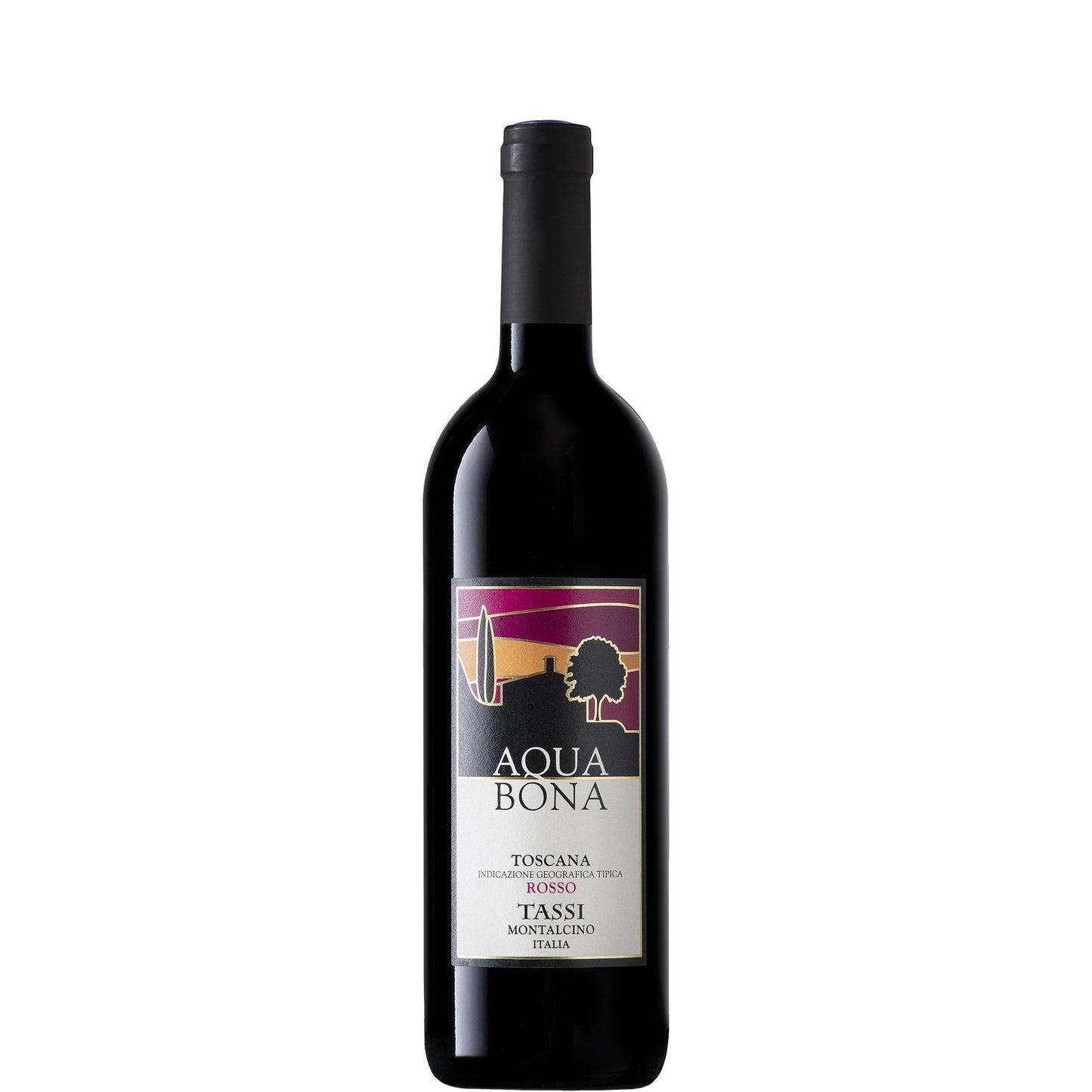
Tassi Montalcino, Aqua Bona Rosso Toscana, 2017
Tassi Montalcino, Aqua Bona Rosso Toscana, 2017
- 75cl
- 14%
- Red Still
- Sangiovese
Couldn't load pickup availability

Optimal drinking window: Now - 2030
About Tassi Montalcino, Aqua Bona Rosso Toscana, 2017
The Franci family, raised in Montalcino for many generations, started its business making honey by the patriarch of the family Guido Franci. Franci Franca winery, run by his son Fabio Tassi, is strongly bonded with Montalcino’s territory since its origin. Its wine clearly expresses its tie to the land with elegance and uniqueness.
Tassi, Rosso di Montalcino is a bold Rosso that reflects the character and personality of the land and winery. The richness of the soil and meticulous care of the vineyard have made this estate one of the finest in the Montalcino region.
The wine is bright red with a fragrant and aromatic bouquet of red fruit, minerals and flowers. Full bodied with powerful structure and balanced tannins.
At nine years old, the 2017 Aqua Bona is in a good place right now — the tannins have integrated, the fruit is still vivid, and the warm vintage has given it a generosity that makes it easy to enjoy without ceremony. We wouldn't expect major new layers of complexity to emerge with further ageing; this is a wine designed for pleasure rather than transformation. Drink it confidently over the next two to three years, perhaps to 2028 at a stretch, but there's no reward in waiting. By 2030 the fruit will have begun to thin, and the charm that makes it worth opening will quietly slip away.
Tasting Notes
AppearanceBright ruby red with a clear, lively rim — no sign of age-related fading.
NoseFresh morello cherry and dried cranberry sit alongside a seam of iron-tinged earthiness that's unmistakably Montalcino. There's a floral lift — dried violet rather than fresh rose — and a light dusting of cinnamon that the 2017 warmth has drawn forward.
PalateMedium to full-bodied with the kind of tannins that have softened nicely in bottle but still give you something to chew on. The fruit is generous and round — warm vintage talking — with a streak of sour cherry acidity keeping everything in line and stopping it from feeling heavy.
FinishClean and persistent, with a pleasant mineral dryness on the close that leaves you reaching for another glass rather than another sip of water.
Overall impressionA food-friendly, characterful Tuscany red from a producer who knows their patch — drinking well right now.
Food Pairings
In and around Montalcino, a wine like this would most naturally appear alongside a plate of pappardelle al cinghiale — wide ribbons of pasta pulled through a slow-cooked wild boar ragu that's been simmering since lunchtime. Bistecca di maiale, a grilled pork chop rubbed with fennel and sage, is another classic local pairing that the wine's acidity handles with ease. Hard aged Pecorino di Pienza, the sharp, crumbly sheep's cheese made just down the road in the Val d'Orcia, is a proper Sienese table staple alongside wines like this. Simple grilled lamb with rosemary also works a treat.
We think this wine would go well with
Serve at around 16-17°C — any warmer and the generous 2017 fruit can tip into jamminess. A short decant of 20 to 30 minutes will open up the nose and soften the last of the tannins, though it's approachable enough to pour straight if you're short on patience. A standard Bordeaux-style glass with a decent bowl will do the job well; no need to go hunting for anything specialist.
The Tassi vineyards sit in the hills around Montalcino, where galestro — the crumbly, schist-like limestone that defines so much of the best Brunello country — keeps yields in check and pushes the vines to dig deep. Altitudes range from around 250 to 400 metres, with warm days and cool nights that preserve the natural acidity Sangiovese needs to hold its shape. The 2017 growing season across Tuscany was one of the warmest in recent memory, accelerating ripeness and delivering wines with more forward, generous fruit than the leaner vintages either side of it.
Rosso Toscana IGT sits outside the strict DOC and DOCG framework that governs Rosso di Montalcino and Brunello, which means producers have more latitude over grape varieties, blending, and winemaking decisions. In practice, many estates in Montalcino use it for wines made from younger vines or grapes that don't quite meet their top-tier selection criteria — so you often get genuine Montalcino character at a fraction of the price. It's a classification that rewards curiosity: the rules are loose, but the land is the same.
The 2017 growing season in Tuscany delivered exactly what winemakers hope for but rarely receive: steady temperatures, well-timed rainfall, and a long, unhurried ripening period that stretched into October. Spring arrived without drama, summer stayed mercifully cool compared to recent scorching years, and crucially, September brought just enough rain to refresh the vines before harvest began. It was the sort of vintage that reminded everyone why Tuscany became famous in the first place, allowing each variety to ripen at its own pace rather than racing against heat stress.
What emerged from the cellars shows remarkable consistency across the region. Sangiovese developed its characteristic cherry brightness while maintaining proper structure, Cabernet Sauvignon ripened fully without jammy excess, and even the international varieties that sometimes struggle here found their footing. The wines show immediate charm but carry enough backbone to develop gracefully, making 2017 one of those rare vintages that works for both early drinking and patient collectors. Most are singing beautifully now and should continue until 2030, though the finest examples will reward those who wait even longer.
FAQs
What does the Aqua Bona taste like?
Think warm, ripe Sangiovese — morello cherry, a hint of dried violet, and that classic Montalcino streak of iron-tinged earthiness. The 2017 vintage gives it a round, generous mid-palate, with enough tannic grip and sour-cherry acidity to stop it feeling soft. It's characterful without being demanding.
When should I drink this wine?
Now is a great time. The 2017 warmth has given this wine an approachable generosity, and the tannins have had nine years to settle. We'd drink it until around 2028, but there's no upside in waiting longer than that.
What's the difference between this and a Rosso di Montalcino DOC?
The Aqua Bona is classified as Rosso Toscana IGT rather than Rosso di Montalcino DOC, which gives Tassi more flexibility in how they make it. In practice, it draws on the same land, the same Sangiovese grape, and the same family knowledge — you just often get more value for money, and occasionally a more relaxed, free-spirited wine as a result.
What food should I serve with this?
It's made for the table rather than the sofa. Pappardelle with wild boar ragu is the classic local match, but grilled pork, slow-roasted lamb, or a good aged Pecorino will all do the job. Essentially, if it came off a grill or out of a slow oven, you're on safe ground.
How should I serve it?
Around 16-17°C is the sweet spot. Give it a 20 to 30 minute decant if you have the time — it opens the nose up nicely — but it's approachable enough to pour straight from the bottle. A standard large-bowled red wine glass works well.
Is this wine worth cellaring?
Not particularly. This is an IGT Toscana from a warm vintage, made for near-term drinking rather than long-haul cellaring. It's at its best right now, and will remain so for another two or three years. Put your cellaring energy into the Brunello and drink this with dinner.

OUR GROWERS
Tassi
Explore related wines


What are you looking for tonight? Tell me the occasion, a grape, a region — or just try a suggestion below.
Your recommendations will appear here.
-
-
Speak to one of our Wine Gurus
Speak to a Wine GuruWith years of experience, our team can help you with all your wine buying and selling needs