

Tagaro, Pinataro Negroamaro, 2024
Tagaro, Pinataro Negroamaro, 2024
- 75cl
- 13%
- Red Still
- Negroamaro
Couldn't load pickup availability

Optimal drinking window: 2026 - 2029
Negroamaro (the name means 'black and bitter', though it rarely lives up to the bitter part) is the workhorse red of Puglia, and in the right hands it produces something genuinely characterful: dark, earthy, and generously fruited without tipping into jam.
Tagaro's 2024 Pinataro is exactly that kind of wine. Full-bodied and smooth, with ripe dark berry fruit, a seam of dried earth running through it, and soft tannins that make the whole thing easy to reach for on a Tuesday. The balanced acidity keeps things lively, and the savoury finish gives it more personality than the price might suggest.
The 2024 is already in a very comfortable place; the fruit is forward and generous, and the soft tannins mean there is no need to wait. Drink it now and over the next two to three years for the best of that ripe, immediate Negroamaro character. By 2028 or so, the primary fruit will begin to integrate more fully and the earthy, dried-herb qualities may become more prominent.
Tasting Notes
AppearanceDeep ruby-purple, dense and opaque at the centre with a clean, youthful rim.
NoseRipe blackberry and dark plum up front, with a distinctive dried earth and sun-warmed herb quality that is very much Negroamaro. There is a faint suggestion of dried fig and a whisper of black olive that adds savouriness without weight.
PalateFull-bodied and generous, the fruit is plush and immediate without being heavy. Soft tannins carry the wine through a mid-palate of dark cherry and warm spice, while the acidity is present enough to keep things from feeling flat. It is straightforward, but confidently so.
FinishMedium-length and savoury, with a pleasant earthy warmth that lingers after the fruit has faded.
Overall impressionAn honest, full-flavoured southern Italian red that delivers real character at a no-fuss price point.
Food Pairings
In Puglia, Negroamaro is the natural companion to the region's boldly flavoured, vegetable-forward cooking. Think melanzane ripiene — aubergines stuffed with breadcrumbs, capers, and tomato — or ciceri e tria, the ancient local dish of pasta with fried and stewed chickpeas. It is equally at home alongside grilled lamb chops rubbed with rosemary and chilli, or a tray of roasted peppers with anchovies and garlic. Locally, it would also appear alongside strong aged cheeses like aged pecorino, where the wine's earthy warmth pushes back against the salt and fat with confidence.
We think this wine would go well with
Serve at around 16-17°C — cool enough to keep the wine lively, warm enough to let the fruit open up. A short decant of 20-30 minutes will soften the edges and bring out the earthy, savoury character. A standard large-bowled red wine glass works well here; nothing too wide, as you want the aromatics to concentrate rather than dissipate.
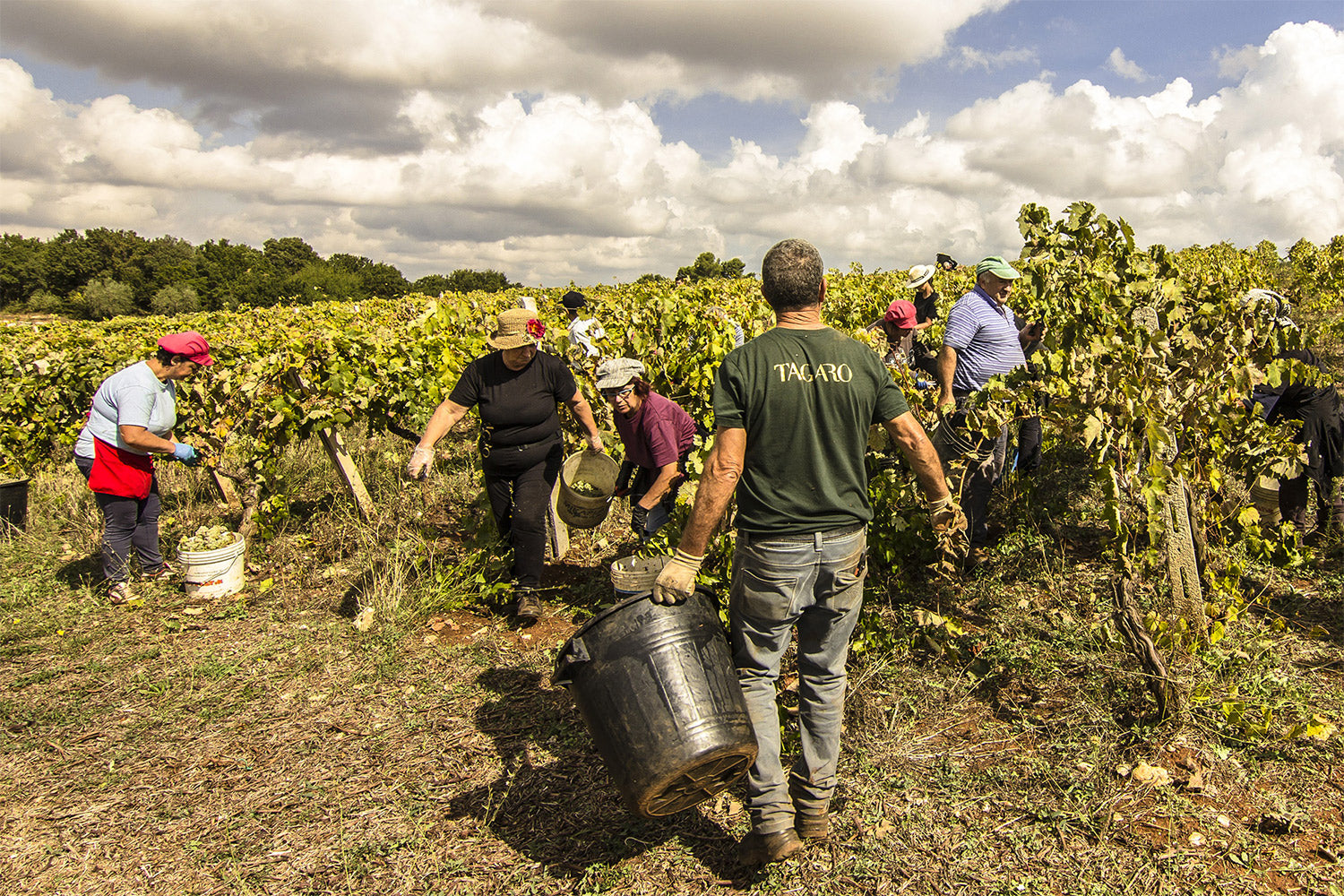
Puglia's heel-of-Italy position means long, hot summers, intense sunshine, and very little rain — conditions that push Negroamaro to produce concentrated, richly coloured fruit. The soils in the region are predominantly limestone and clay, which retain moisture through the driest months and lend the wines their characteristic earthy grip. The flat to gently rolling landscape offers little shelter from the heat, so the resulting wines tend to be full-bodied and ripe, with natural alcohol levels that reflect the climate honestly.
Puglia produces more wine by volume than almost any other Italian region, but quality has risen sharply over the past two decades as producers started treating indigenous varieties like Negroamaro and Primitivo as assets rather than blending fodder. Negroamaro thrives particularly around Salento in the south of the region, where it is used in wines ranging from the lighter Salice Salentino to the more structured Primitivo di Manduria DOC nearby. The grape's name may promise bitterness, but well-made examples are more about dark fruit, warmth, and a pleasantly earthy finish than anything austere.
FAQs
What does Tagaro Pinataro Negroamaro taste like?
Full-bodied and smooth, with ripe dark berry fruit, dried earth, and a savoury, warm finish. The soft tannins and balanced acidity make it easy drinking without being bland.
When should I drink this wine?
It is drinking well right now and will continue to do so until around 2029.
What food works well with this wine?
It is a natural match for grilled or roasted vegetables, especially aubergine, peppers, and courgette. It also works well with lamb, aged cheeses, and anything with a savoury, herb-heavy flavour profile.
How should I serve it?
Serve at around 16-17°C. A short decant of 20-30 minutes is worth the effort. Use a standard large-bowled red wine glass to concentrate the aromatics.
What is Negroamaro?
Negroamaro is one of Puglia's most important indigenous red grapes. The name translates roughly as 'black and bitter', though well-made examples are more about dark fruit, earthiness, and warmth than bitterness. It produces full-bodied, richly coloured reds that reflect the heat and sunshine of southern Italy.

Explore related wines


What are you looking for tonight? Tell me the occasion, a grape, a region — or just try a suggestion below.
Your recommendations will appear here.
-
-
Speak to one of our Wine Gurus
Speak to a Wine GuruWith years of experience, our team can help you with all your wine buying and selling needs