

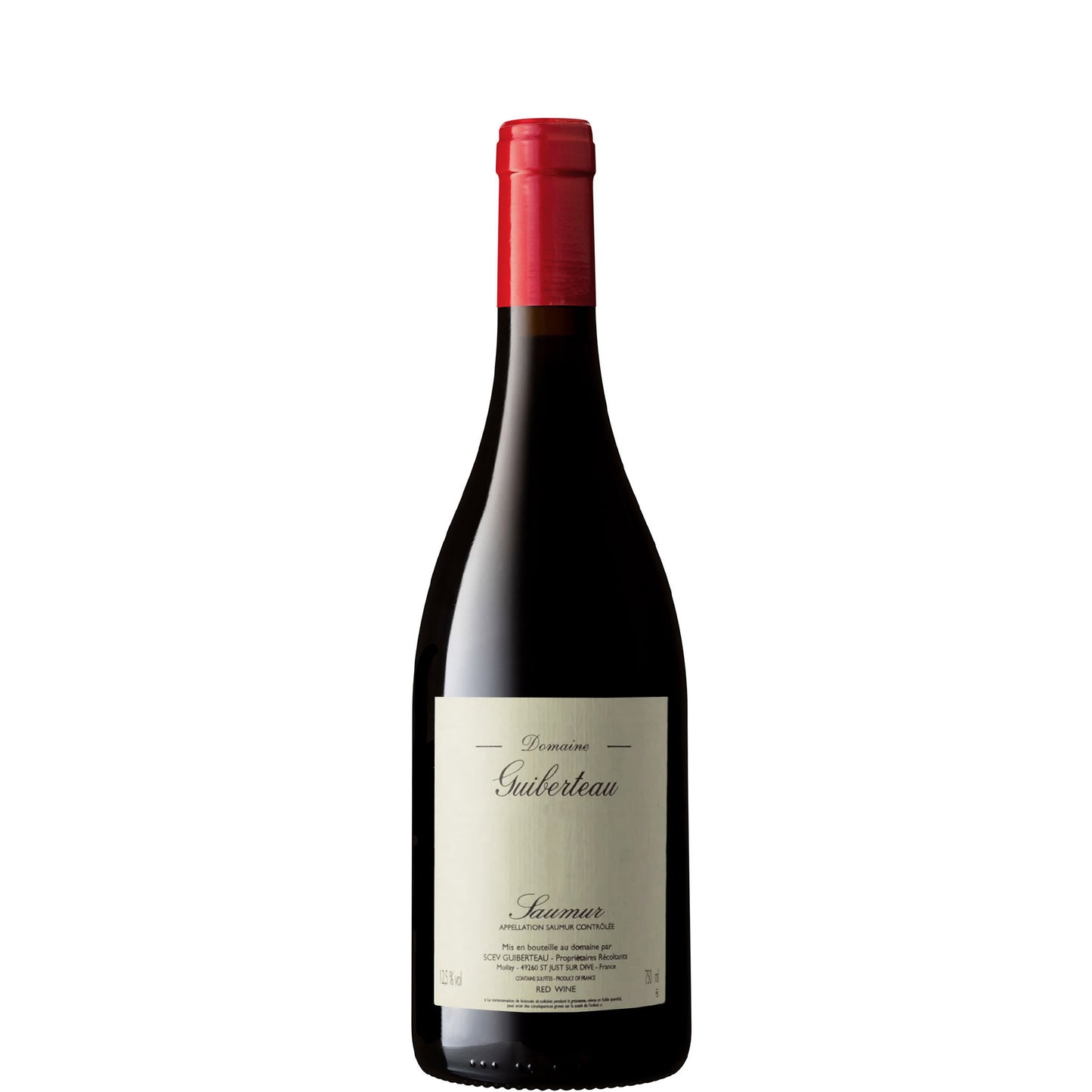
Saumur Rouge, Domaine Guiberteau, 2024
Saumur Rouge, Domaine Guiberteau, 2024
- 75cl
- 13%
- Red Still
- Cabernet Franc
- Organic
- Biodynamic
Couldn't load pickup availability

Optimal drinking window: 2026 - 2035
Romain Guiberteau crafts some of the Loire's most compelling reds from his Saumur vineyards, where Cabernet Franc finds its most graceful expression. This 2024 shows the vintage's natural freshness, balancing bright red fruit with the mineral backbone that makes Loire reds so food-friendly.
The approach is refreshingly restrained - no over-extraction, no heavy oak, just pure Cabernet Franc character shaped by limestone soils.
Right now, the 2024 is in an engaging but slightly closed phase — the fruit is vivid but the wine hasn't yet fully integrated its acidity and mineral grip into a seamless whole. By 2027-2028, we'd expect that tautness to soften and the secondary complexity — dried herbs, iron, earthy depth — to start emerging alongside the fruit. The window from 2028 to 2033 is probably where this wine will be most rewarding, with everything in balance and the tufa minerality fully expressed.
Tasting Notes
AppearanceBright, translucent ruby with a fine violet rim — the kind of colour that signals freshness before you've even lifted the glass.
NoseRed cherry, crushed raspberry, and a cool green herb lift that's entirely Cabernet Franc and entirely Loire. Underneath, there's a stony, almost wet-chalk quality that feels like the tufa itself has made it into the wine. Give it ten minutes in the glass and dried violets start to emerge.
PalateTaut and focused, with fine, slightly grippy tannins that feel more textural than aggressive. The acidity is the engine here — bright, linear, and long — carrying that red fruit and mineral character cleanly from front to back. It's precise rather than plush, which is exactly what you want from this address.
FinishLong and mineral, with a faint savoury, almost iron-tinged persistence that lingers well after the fruit has faded.
Overall impressionA Saumur Rouge with real spine and character — still finding its feet but pointing firmly in the right direction.
Food Pairings
In Saumur, this style of Cabernet Franc would naturally find its way to the table alongside rillettes de porc from the nearby charcutiers of Tours or Saumur itself — the wine's acidity cuts right through the fat. Mushroom-heavy dishes are a natural match too, particularly those featuring the champignons de Paris grown in the tufa cave networks nearby. Goat's cheeses from the Loire, especially a slightly aged Selles-sur-Cher, work brilliantly with the wine's herbal edge and mineral grip. On a cooler evening, a simple roast guinea fowl with thyme would be hard to argue with.
We think this wine would go well with
Serve cool — around 14-15°C — to keep the wine's freshness and mineral character intact; too warm and the acidity can seem flabby. A 30-minute decant will open up the nose without stripping the structure, but if you're drinking it young and want to experience the tension, pour straight from the bottle and let it open in the glass. A standard Burgundy-style glass with a generous bowl works well, giving the more delicate aromatics room to develop.
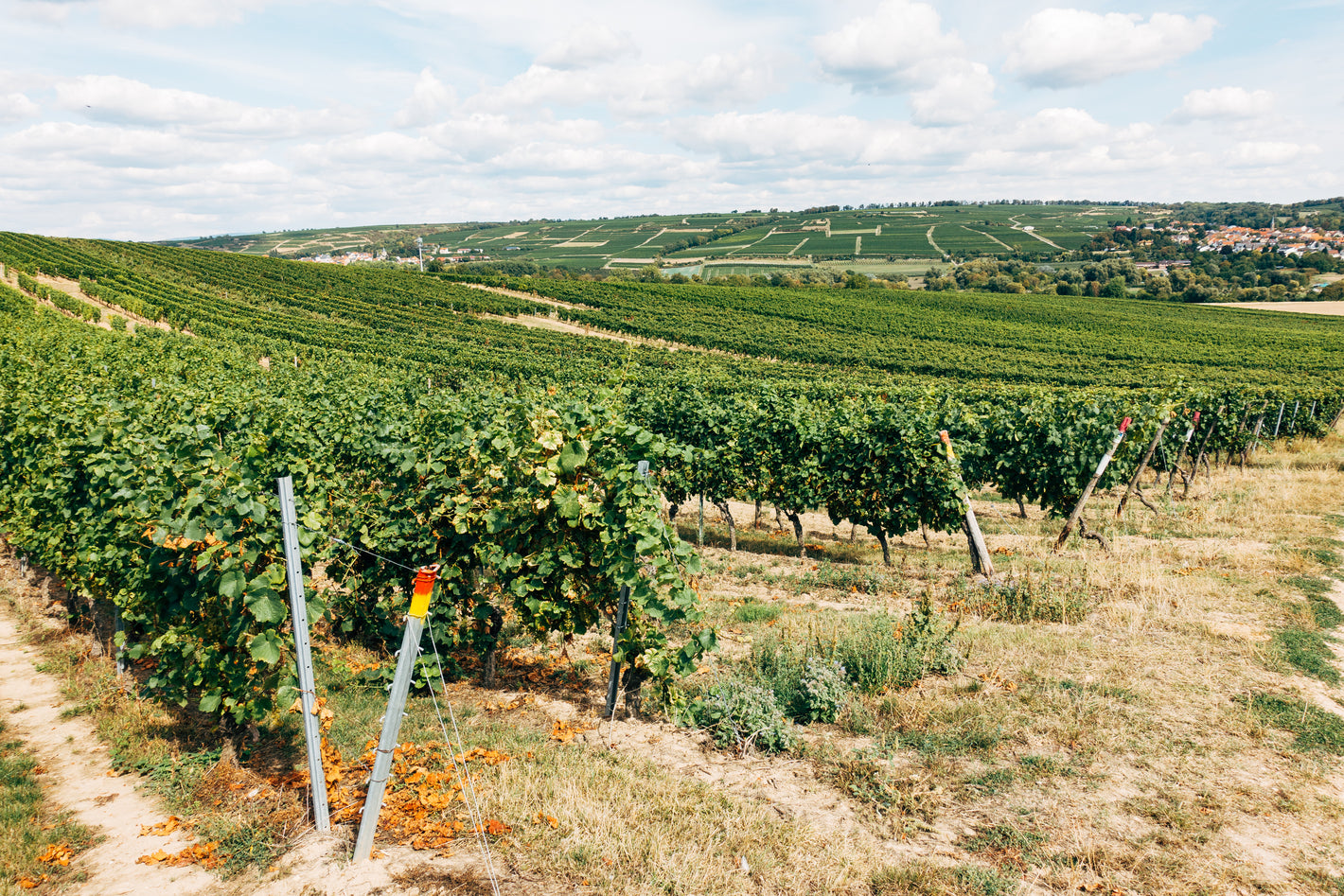
Guiberteau's vineyards sit on the tufa limestone that defines Saumur's best sites — a soft, porous rock that drains freely, keeps roots cool in summer, and lends a distinctive chalky, almost saline mineral character to the wines. The continental-leaning Loire climate gives warm days and cool nights, preserving freshness and aromatics in the grapes. For the rouge, this means Cabernet Franc with excellent natural acidity and fine-grained tannins rather than weight and extraction.
Saumur Rouge is a Loire Valley AOC producing red wines exclusively from Cabernet Franc, with Cabernet Sauvignon permitted as a minor blending component. It sits between Anjou to the west and Saumur-Champigny to the east, sharing much of the same tufa geology but with slightly less commercial recognition than its more famous neighbour. The appellation rewards producers who resist the urge to over-ripen or over-oak — the best examples are lean, mineral, and age surprisingly well. Guiberteau operates here and in Saumur-Champigny, and the distinction between the two is often more subtle than the labels suggest.
We're still learning what 2024 gave us in the Loire, but the early signs are promising. The growing season brought its share of drama — a challenging spring that kept vignerons on their toes, followed by a summer that delivered just enough sunshine without tipping into the punishing heat that can flatten the region's trademark freshness. Harvest timing varied considerably across the valley's sprawling length, with producers picking earlier than usual in some appellations while others waited for that final push of ripeness.
What we're tasting shows wines with lovely energy and balance, particularly from Sancerre and Pouilly-Fumé where the Sauvignon Blanc has that mineral backbone we adore without the green aggression of cooler years. The Chenin Blanc from Vouvray and the Coteaux du Layon seems to have found its sweet spot between richness and acidity, while early tastings of Chinon suggest the Cabernet Franc has real potential for structured, age-worthy reds. Most 2024s are drinking beautifully now with their youthful vibrancy intact, though we suspect the better examples will reward patience over the next three to five years.
FAQs
What does Guiberteau's Saumur Rouge taste like?
Think taut, cool-climate Cabernet Franc: red cherry, crushed raspberry, a green herb lift, and a distinctly chalky mineral character running underneath. It's precise and focused rather than rich or generous, with fine tannins and bright acidity doing most of the talking.
When is the best time to drink the 2024?
The window from 2027 until 2035 is where we expect it to perform best, with peak complexity likely around 2028 to 2032.
What food should I serve with this wine?
Loire Cabernet Franc at this style loves pork rillettes, mushroom dishes, and aged Loire goat's cheeses. A roast guinea fowl or chicken with herbs would also be a natural match. Keep the food relatively simple — this wine rewards being the most interesting thing on the table.
How should I serve it?
Serve at around 14-15°C — cooler than you might think, but it keeps the wine's freshness alive. A short 30-minute decant helps open the nose without softening the structure. Use a Burgundy-style glass for the best aromatic expression.
Is Guiberteau a name worth following?
Absolutely. Romain Guiberteau is one of the most respected producers in Saumur, particularly known for his whites from the Brézé vineyard. His reds are allocated and sought-after, and they consistently over-deliver for their appellation. Getting hold of any Guiberteau is worth the effort.
How does Saumur Rouge differ from Saumur-Champigny?
Both are Cabernet Franc from the same tufa limestone geology, and in honest terms the difference is often more about the map than the glass. Saumur-Champigny has the greater reputation and slightly more commercial weight behind it, but Saumur Rouge from a producer like Guiberteau can easily match it for quality and often represents better value.
Explore related wines


What are you looking for tonight? Tell me the occasion, a grape, a region — or just try a suggestion below.
Your recommendations will appear here.
-
-
Speak to one of our Wine Gurus
Speak to a Wine GuruWith years of experience, our team can help you with all your wine buying and selling needs