

Saumur Blanc ‘Clos des Carmes’, Domaine Guiberteau, 2021
Saumur Blanc ‘Clos des Carmes’, Domaine Guiberteau, 2021
- 75cl
- 12.5%
- White Still
- Chenin Blanc
- Organic
- Biodynamic
Couldn't load pickup availability

Optimal drinking window: Now - 2035
Clos des Carmes is (in many minds) the flagship white from Domaine Guiberteau. Harvested from old-vine Chenin on clay-limestone/tuffeau soils in Brézé, hand-picked, fermented with native yeasts, and aged 18–24 months on lees in mostly older oak barrels before finishing in tank, it's both rich and precise: bright acidity and a chalky, slate-like minerality give it freshness and focus, while a round, textured body offers depth and weight.
Domaine Guiberteau is one of the Loire’s most thrilling producers and a name increasingly mentioned in the same breath as Clos Rougeard. Trained by the legendary Nady Foucault himself (of Clos Rougeard fame), Romain Guiberteau crafts wines that combine electric precision with a quiet intensity that speaks of Brézé’s chalky soils - the Loire’s most prized terroir for Chenin Blanc and Cabernet Franc alike.
The 2021 is currently in a somewhat reserved, primary phase — the fruit is present but taut, and the wine's full personality is still gathering itself. We'd expect the orchard fruit to integrate and deepen noticeably by 2027 or 2028, at which point secondary complexity — beeswax, toasted hazelnut, dried apricot — will start to emerge in earnest. The peak is likely somewhere between 2029 and 2035, when the acidity, minerality, and fruit should be in near-perfect conversation. Well-stored bottles will hold at a high plateau until at least 2035; Chenin of this quality from great vintages has a habit of outlasting even optimistic predictions. There is no urgency whatsoever.
Tasting Notes
AppearancePale gold with a faint green tinge, clear and luminous in the glass.
NoseThere's a cool, almost austere first impression — wet chalk, green apple, and a waxy lanolin quality that is pure old-vine Chenin. Give it a few minutes and bruised quince and white blossom emerge, along with a subtle toasty quality from the lees ageing that never overwhelms the fruit.
PalateThe acidity is the first thing you notice — bright and precise, but not aggressive, held in check by a genuinely full, textured body. There's orchard fruit at the core, but the wine is really defined by its mineral quality: a chalky, slate-like sensation that runs from entry to finish and gives everything tremendous focus. The oak has been absorbed entirely; you feel its contribution in the weight and roundness, but you never taste it.
FinishLong and persistent, with that chalky mineral thread still pulling at you a full minute after you've swallowed.
Overall impressionA wine of genuine tension and precision that is only just beginning to show what it's capable of.
Food Pairings
In the Loire Valley, this style of Saumur Blanc would naturally find its way onto the table alongside a pike-perch quenelle or a whole sandre au beurre blanc — the river fish and rich, acidic butter sauce being a near-perfect match for the wine's weight and acidity. Rillettes de Tours, the local potted pork spread eaten on thick slices of pain de campagne, work surprisingly well with the wine's textural richness. Goat's cheese from the region — a proper Sainte-Maure de Touraine, chalky and young, or a more aged Selles-sur-Cher — is the classic pairing, the shared mineral quality of wine and cheese amplifying each other. For something more substantial, a roast chicken with cream and tarragon or a veal blanquette would suit the wine's combination of richness and freshness perfectly.
We think this wine would go well with
Serve between 10 and 12 degrees Celsius — cold enough to show the minerality clearly, but not so cold that the texture and complexity close down. There's no need to decant a young example; simply open the bottle twenty minutes before serving and let it breathe in the glass. A wide-bowled white wine glass works well here, giving the nose room to develop without concentrating the acidity uncomfortably. If you're drinking a bottle with some age on it, a Burgundy-style glass is even better.
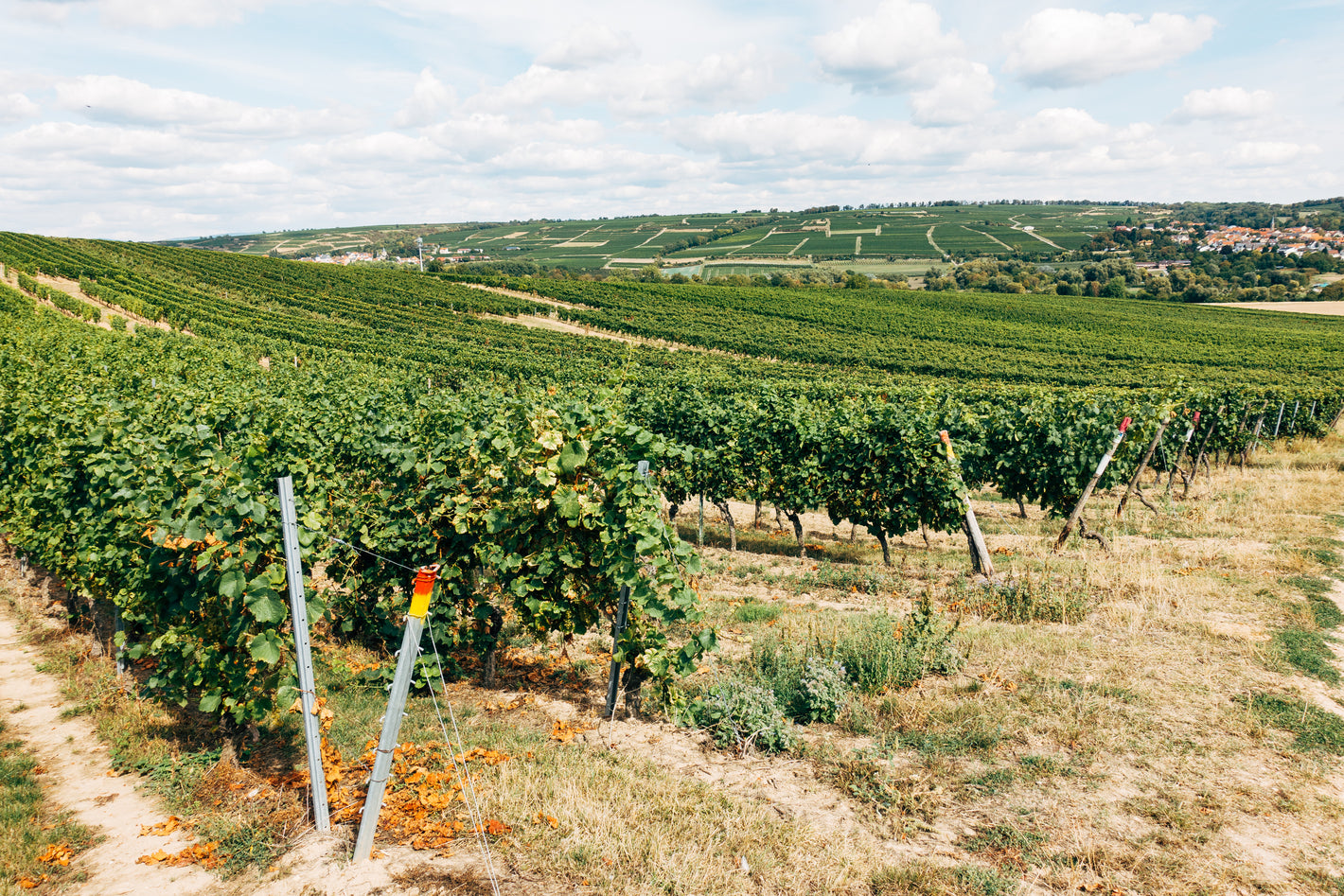
The Clos des Carmes vineyard sits in Brézé, a village in the Saumur appellation that many regard as the finest spot in the Loire for Chenin Blanc. The soils are a mix of clay-limestone and tuffeau — the same soft, chalky tufa that the locals have been carving wine cellars into for centuries — and it's this that gives the wines their distinctive chalky minerality and cool, focused energy. Old vines push roots deep into the rock, finding water and minerals that younger plantings simply can't reach. The result is a wine with exceptional concentration and a mineral precision that feels almost geological.
Saumur Blanc is the white wine appellation of the greater Saumur zone in the central Loire, made exclusively from Chenin Blanc. It sits within the wider Anjou-Saumur sub-region, neighboured by Savennières to the north-west — arguably the only other appellation that rivals it for serious, mineral-driven Chenin. The rules are relatively permissive on yields and winemaking, which means the appellation covers everything from industrial co-op production to the extraordinary single-vineyard wines of growers like Guiberteau. The commune of Brézé, while not yet its own designated cru, is the area's most prized address and is increasingly spoken of as a benchmark for the whole appellation.
The 2021 Loire season felt like watching a thriller where you're not quite sure if the hero will make it out alive. Spring frost struck with particular vengeance in April, decimating yields across Sancerre and parts of Muscadet, whilst summer brought alternating spells of heat and rain that kept vignerons on their toes. The harvest stretched later than usual, with many producers picking well into October to capture proper ripeness after such a challenging start.
What emerged from this meteorological drama were wines with real personality and surprising depth. The reduced yields actually worked in favour of concentration, particularly for Sauvignon Blanc, which shows more texture and mineral drive than we often see from the Loire. Cabernet Franc fared especially well where it survived the frost, producing wines with lovely freshness and structure that remind us why this grape belongs here. Most 2021s are drinking beautifully now, offering immediate pleasure whilst having enough backbone to reward cellaring until 2028.
FAQs
What does Clos des Carmes taste like?
It's taut, mineral-driven Chenin Blanc with real weight and texture. Think orchard fruit, beeswax, and wet chalk rather than tropical or overtly fruity flavours. The acidity is bright and precise, the body full and round, and there's a chalky, slate-like mineral quality that runs all the way through to the finish. It's a wine about precision and depth rather than immediate generosity.
When is the best time to drink the 2021?
It's approachable now if you're curious, but it's asking for patience. The wine is still in a somewhat closed, primary phase in 2026. We'd suggest waiting until 2028 for the complexity to start opening up properly, and serious cellaring until 2030 or beyond will be well rewarded. It will remain at its best until 2035 and quite possibly longer.
What food works well with this wine?
Loire river fish — pike-perch or trout — with a butter-based sauce is the regional classic, and it's hard to argue with. Goat's cheese, particularly a young Sainte-Maure de Touraine, is another natural pairing given the shared chalky mineral quality. It's also very good with roast chicken in cream sauce, veal, or anything with enough richness to match the wine's texture without overwhelming its precision.
How should I serve it?
Around 10 to 12 degrees Celsius is ideal. Take it out of the fridge twenty minutes before you plan to pour. No need to decant; just let it open in the glass. A wide-bowled white wine glass or a Burgundy-style glass will give the nose the best chance to express itself.
Is Domaine Guiberteau worth the price?
We think so, unambiguously. Romain Guiberteau trained under Nady Foucault of Clos Rougeard, and his whites from Brézé are widely regarded as among the finest expressions of Chenin Blanc produced anywhere in the Loire. Clos des Carmes in particular is a wine with genuine age-worthiness and a personality that very few producers can match. The name is increasingly well known, and prices have moved accordingly, but the quality justifies it.
What makes Brézé special for Chenin Blanc?
Brézé is the most prized village in Saumur for Chenin Blanc, and arguably in the entire Loire. The combination of clay-limestone and tuffeau soils — the soft, chalky tufa that the region is famous for — gives wines from here a distinctive mineral precision that you simply don't find elsewhere. The old vines at Clos des Carmes push deep into that rock, producing fruit with concentration and focus that younger plantings on less remarkable soils can't replicate.

Explore related wines


What are you looking for tonight? Tell me the occasion, a grape, a region — or just try a suggestion below.
Your recommendations will appear here.
-
-
Speak to one of our Wine Gurus
Speak to a Wine GuruWith years of experience, our team can help you with all your wine buying and selling needs