
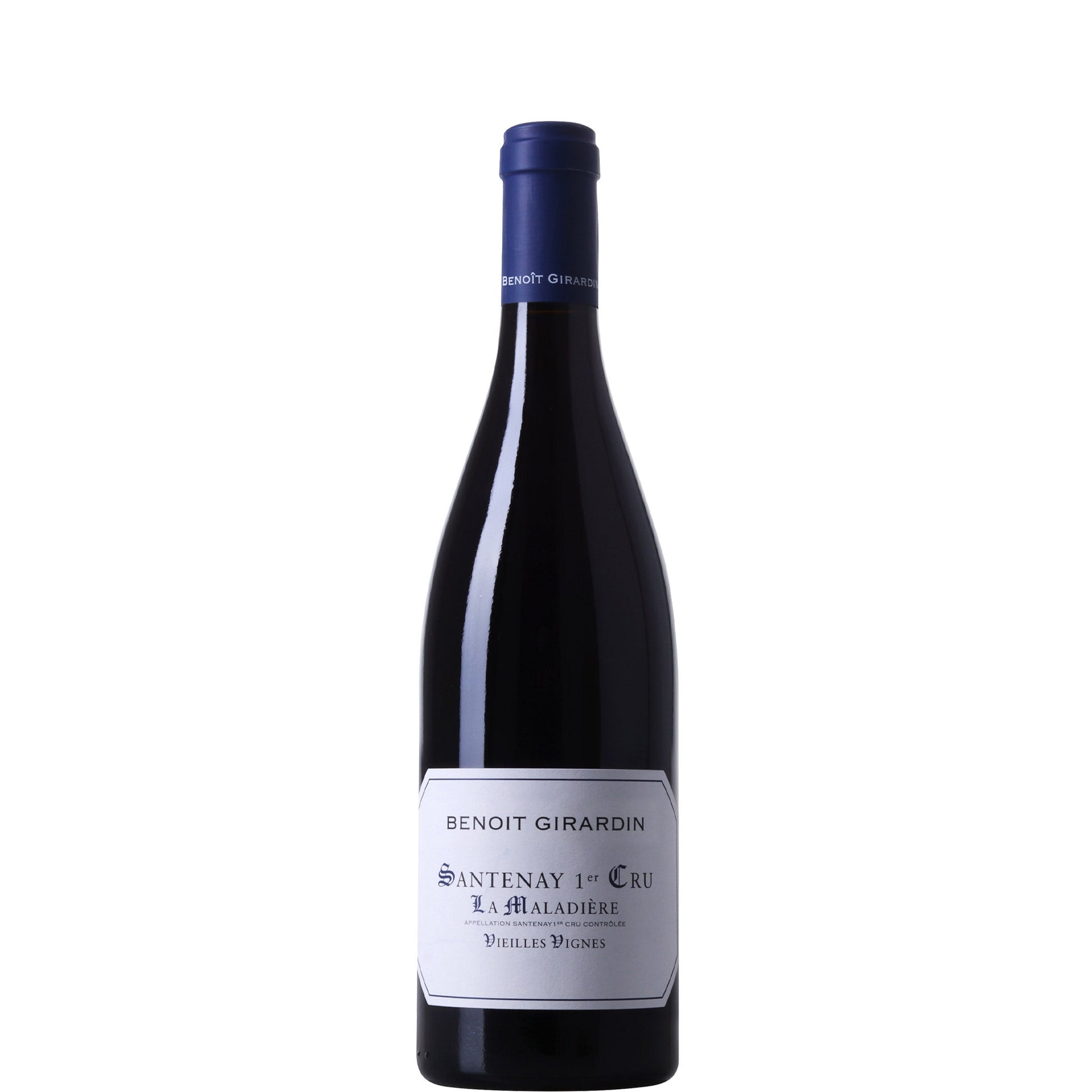
Santenay Premier Cru 'La Maladière' Vieilles Vignes Rouge, Domaine Benoit Girardin, 2022
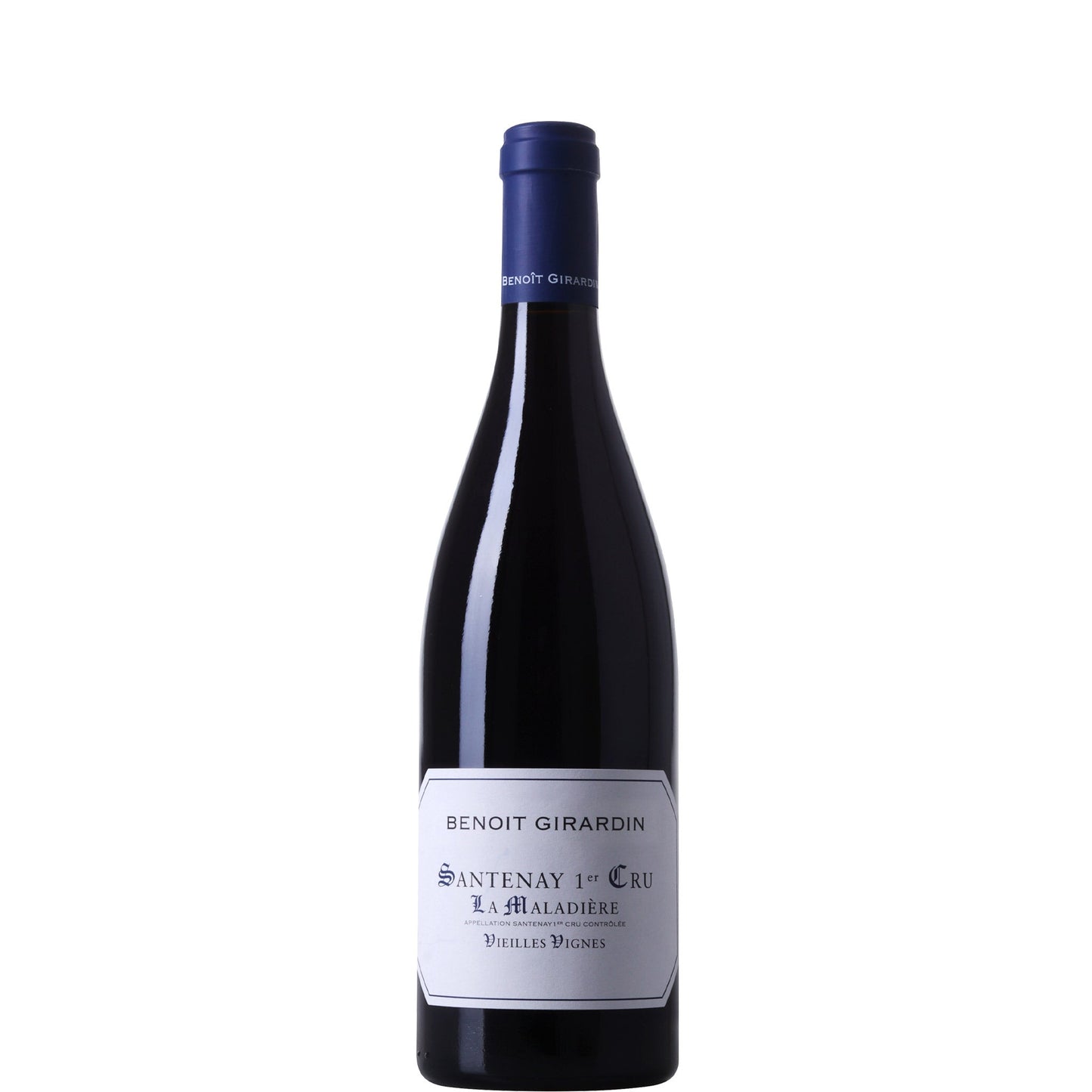
Santenay Premier Cru 'La Maladière' Vieilles Vignes Rouge, Domaine Benoit Girardin, 2022
- 75cl
- 13%
- Red Still
- Pinot Noir
Couldn't load pickup availability

Optimal drinking window: Now - 2038
About Santenay Premier Cru 'La Maladière' Vieilles Vignes Rouge, Domaine Benoit Girardin, 2022
"More limestone soils give elegance and finesse to this wine which has a lightly smoky nose, full of raspberries, cocoa, and dark earth. The palate offers spicy red plums and cherries, bound by linear, herbal tea tannins, and a refreshing phenolic bitterness on the finish. Sinuous and sapid this should develop well over the next five+ years."
Tom Harrow, Head Wine Guru
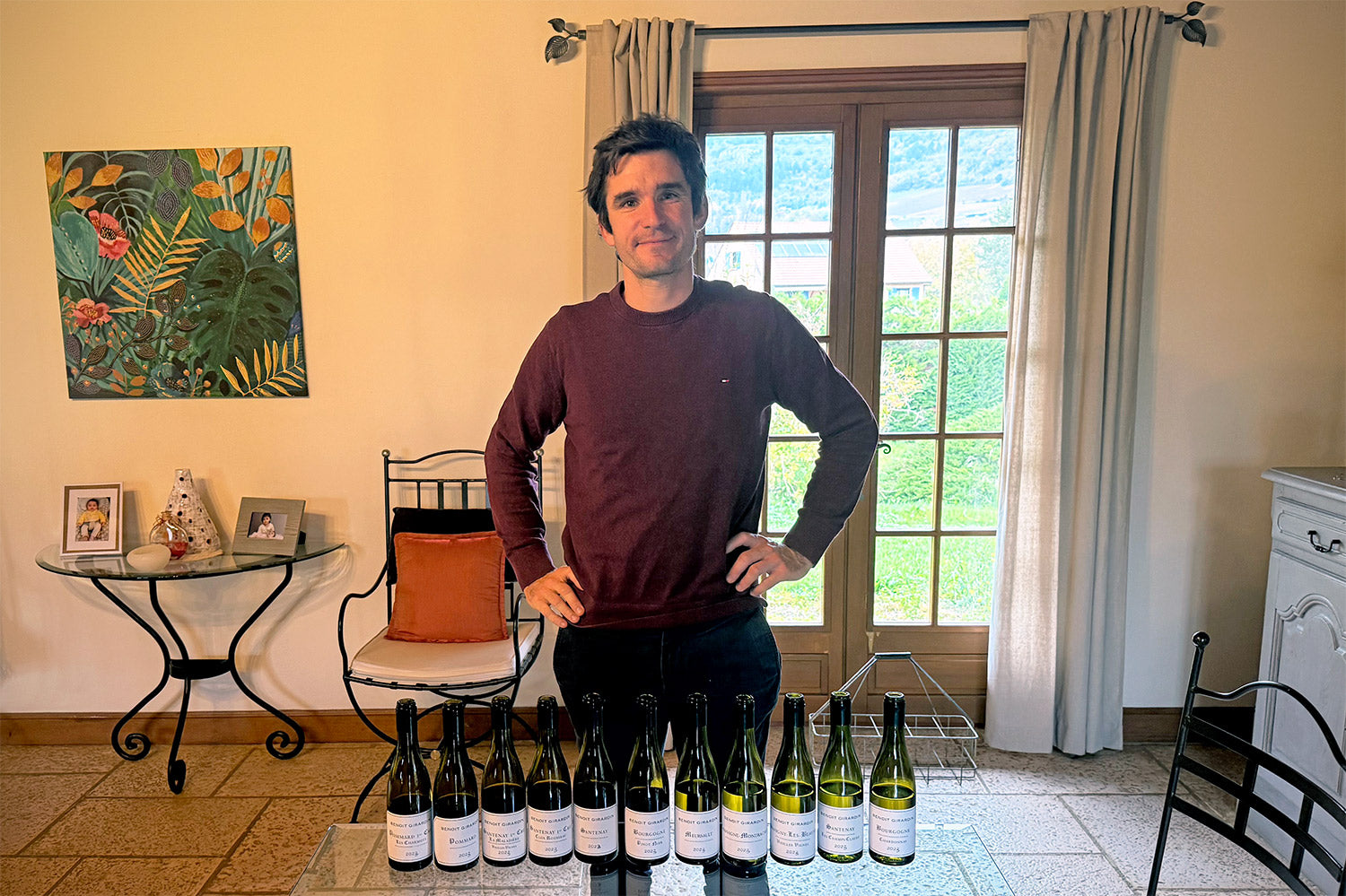
Benoît Girardin is one of the most exciting new names to hit our list and he's already turning heads in France. The Girardin family boasts 13 generations of winemaking, and after years under his father Yves’ acclaimed domaine, Benoît launched his own label in 2020 with 8 hectares of prime vineyards across top Burgundy sites, including Chassagne-Montrachet, Meursault and Pommard.
On paper, the winemaking is classic and restrained — but in the glass, the wines are electric. They’re refined, silky and far more sophisticated than you’d expect at this stage of the domaine’s journey. This is the moment to get these wines in the cellar while pricing and availability are still friendly — they won’t stay under the radar for long.
Right now the wine is still finding its feet, with the red plum and cherry fruit sitting slightly ahead of the earthier, more savoury notes to come. Over the next two to three years the herbal tea tannins will soften and integrate, allowing the smoky, cocoa-tinged complexity to take the lead. By 2029 or so expect a more harmonious wine, with fruit and earth in proper balance, holding steady until around 2034 before it begins its graceful decline.
Tasting Notes
AppearanceClear, mid-ruby with a translucent garnet rim — classic cool-climate Pinot Noir, no opacity to hide behind.
NoseLightly smoky on first pass, then raspberry and dark cherry come forward with a suggestion of cocoa and damp earth underneath. There's a subtle herbal quality — dried thyme, a breath of forest floor — that gives it real Burgundian character without the wine needing to shout about it.
PalateSpicy red plum and cherry fruit, medium-bodied, with tannins that are fine-grained and slightly herbal — the kind that clench gently rather than grip. The limestone influence shows as a linear, almost saline thread pulling through the mid-palate and keeping everything in check.
FinishA refreshing phenolic bitterness lingers, clean and precise — the sort of finish that makes you reach for another sip.
Overall impressionA wine of real sinew and focus from a producer who already understands that restraint is a form of generosity.
Food Pairings
In Burgundy, a wine like this would traditionally sit alongside a poulet de Bresse roasted with tarragon butter — the wine's herbal edge finding its mirror in the bird. Locals would also reach for it with a plateau of Burgundian charcuterie: rosette, jambon persillé, and a wedge of Époisses if they're feeling bold about the pairing. Boeuf bourguignon is the obvious call, though we'd argue this is more elegant than that dish demands — better suited to a simple daube, or a rack of lamb with flageolet beans. In the colder months, pigeon with lentils du Puy and a little thyme is as natural a match as you'll find.
We think this wine would go well with
Serve at 15-16°C — cool enough to keep the wine's freshness alive, warm enough to let the fruit open. A 30-minute decant is worth it in 2026; it softens the tannins just enough without stripping the aromatic freshness the wine still has in abundance. A Burgundy bowl — wide enough to let the nose breathe, tapered enough to concentrate it — is the right glass. Avoid anything too large or the delicacy gets lost.
La Maladière sits on the southern edge of Santenay, where the slope eases and limestone becomes increasingly dominant in the soil mix. That calcium-rich bedrock is what gives the wine its lift and linear structure — it pulls freshness through the fruit rather than letting it sit round and plump. The vineyard's elevation and easterly aspect mean mornings are cool, which preserves the aromatic precision and herbal edge that defines the wine's character. Vieilles vignes here means vines that have had decades to push their roots deep into that rock, concentrating flavour without sacrificing the elegance the limestone insists upon.
Santenay sits at the southern tip of the Côte de Beaune, often treated as an afterthought after the glamour of Puligny and Chassagne to the north — which, frankly, makes it one of Burgundy's better-kept secrets. Its premiers crus are capable of real seriousness, combining the minerality of the Côte de Beaune's limestone backbone with a slightly earthier, more rustic edge that sets them apart from their pricier neighbours. La Maladière is one of Santenay's most respected premier cru lieux-dits, running along the hillside above the village and producing Pinot Noir with more finesse than the appellation's modest reputation might suggest. Appellation rules follow standard Burgundy premier cru requirements: Pinot Noir only, with yield restrictions that push quality upward.
The 2022 growing season in Burgundy began with a worryingly dry spring that had vignerons checking soil moisture levels weekly, followed by a summer that alternated between intense heat and welcome rainfall. The vines handled the stress remarkably well, producing smaller berries with concentrated flavours, though yields dropped significantly across both the Côte d'Or and Chablis. Harvest began earlier than usual, with many producers picking in late August under bright skies.
What emerged from the cellars shows a vintage of surprising finesse given the challenging conditions. The Pinot Noirs display vivid fruit and firm tannins without the jammy weight you might expect from a hot year, whilst the Chardonnays retained their mineral backbone alongside ripe stone fruit flavours. We're finding the village-level wines particularly compelling right now, drinking beautifully with just a year or two of bottle age, though the premier and grand crus will reward patience until the late 2020s.
FAQs
What does this wine taste like?
Think spicy red plum and cherry with a lightly smoky, earthy nose and a fine-grained herbal grip on the finish. It's precise rather than plush — a Burgundy built on limestone-driven freshness and focus, not weight. The phenolic bitterness on the finish gives it a real savoury snap.
When should I drink this wine?
It's approachable now, particularly with food, but it's in no great hurry. We'd give it until 2028 or 2029 to really find its feet, and it should drink well until around 2033 to 2035. If you can sit on a few bottles, do.
Is this worth cellaring?
Yes — and especially at this price point. Benoît Girardin is a name that won't stay under the radar, and these wines are still accessible while the domaine is young. Old-vine premier cru Santenay from a serious producer has a track record of rewarding patience. Buy now, drink well later.
What food should I pair this with?
Roast chicken with tarragon, rack of lamb with flageolet beans, or a slow-cooked daube are all natural partners. The wine's herbal tannins and savoury finish mean it works particularly well with dishes that have a little fat and some earthy depth. Avoid anything too heavy or rich — this is a wine of finesse, not muscle.
How should I serve it?
Serve at around 15-16°C and decant for 30 minutes before pouring. A standard Burgundy bowl is ideal. Don't serve it too warm or the freshness that makes it distinctive will flatten out.
How does La Maladière compare to other Santenay premiers crus?
La Maladière is one of Santenay's most respected sites, sitting on a hillside with more limestone in the soil than some of the flatter, heavier parcels closer to the village. That translates to more lift and linearity — it's the more elegant end of what Santenay can do, closer in spirit to the southern Côte de Beaune than to the earthier, broader style the appellation is sometimes associated with.
Explore related wines


What are you looking for tonight? Tell me the occasion, a grape, a region — or just try a suggestion below.
Your recommendations will appear here.
-
-
Speak to one of our Wine Gurus
Speak to a Wine GuruWith years of experience, our team can help you with all your wine buying and selling needs