

Robert Weil, Monte Nostrum, Riesling, 2024
Robert Weil, Monte Nostrum, Riesling, 2024
- 75cl
- 12.5%
- White Still
- Riesling
Couldn't load pickup availability
Enquire about this item

Drinking window: 2025 - 2055
Est. delivery in 2027
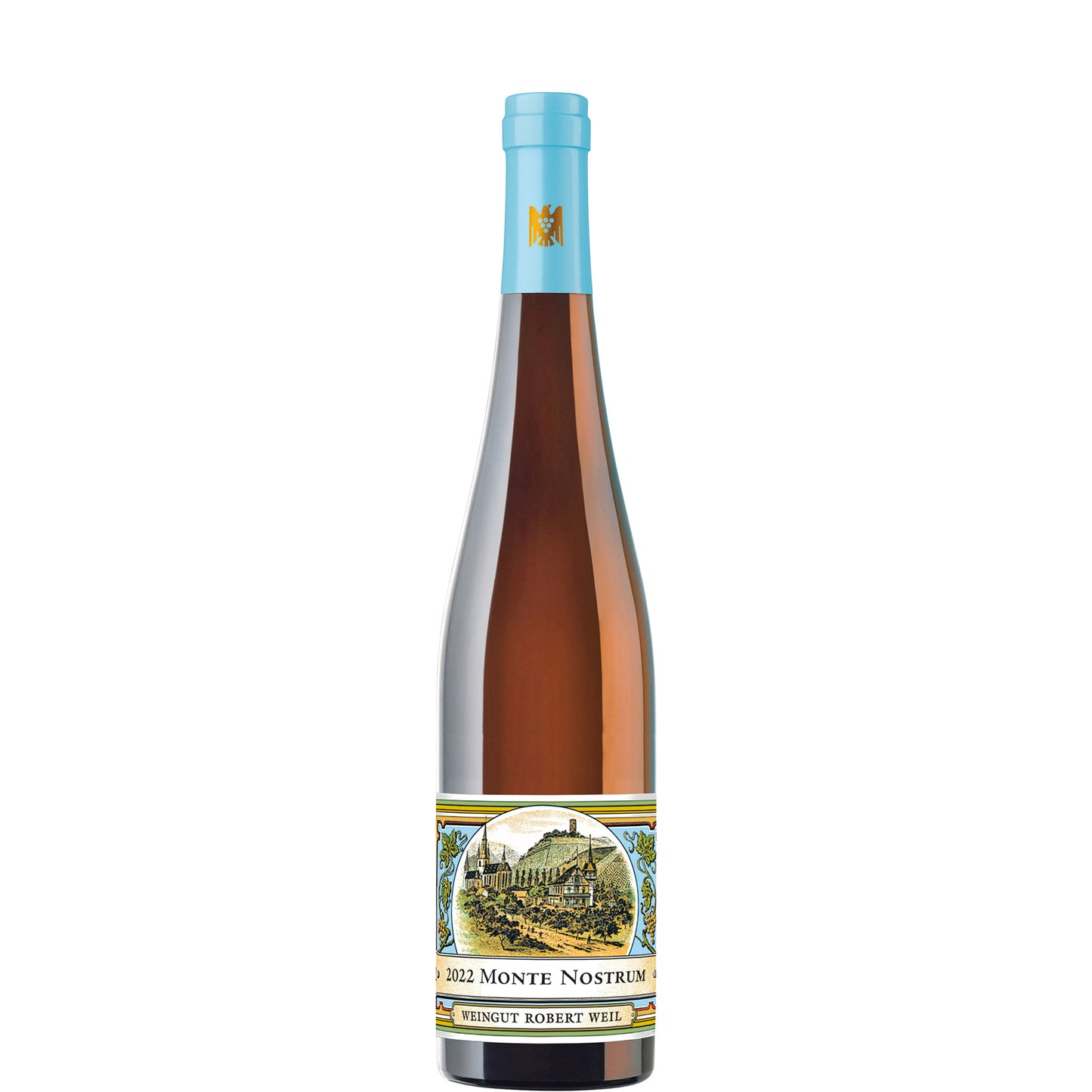
The Robert Weil Monte Nostrum Riesling Trocken 2022 is a dry Riesling crafted by Weingut Robert Weil, one of the most respected wineries in Germany's Rheingau region. Its front label was designed in 1875, when the estate was founded.
Although the Rheingau is one of Germany’s smaller wine-growing regions, its ca. 3,100 ha of vineyards are vastly diverse in their geological makeup. Grapes for the Monte Nostrum are collected from the highest elevated and coolest parcels within the “Kiedricher Berg”, above the classified Crus Turmberg and Gräfenberg along the crest. The geological and microclimatic condition, which exemplify the best qualities of a "cool climate," enable the production of a Riesling that's highly mineral-driven, refined, and complex.
What the critics say:
"There’s just a hint of wood, but it is beautifully integrated with the Amalfi-lemon, white-currant and gooseberry fruit. Very pure and crystalline on the sleek and compact, medium-bodied palate. Beautiful as it already is, this will develop extremely well with a bit more time in the bottle. From organically grown grapes. Wild-fermented and matured sur lie in large neutral-oak casks. Vegan. Drinkable now, but best from 2026."
"From the highest plots above (not of) Turmberg and Gräfenberg and from the poorest soils, the 2024 Rheingau Riesling Trocken Monte Nostrum is a super focused, rigorous wine that opens with a deep, pure and stony, rather coolish and leafy bouquet of citrus fruits intermingled with notes of nettles, tomato leaves and iodine or sea breeze. Bone dry on the palate, this is a rich but pure and saline, very savory but elegant and straightforward, nicely grippy and energetic Riesling from the Kiedrich Wasseros. The finish is mouthwatering, still pure and vital. 12.5% stated alcohol. Natural cork. Tasted at the domaine in August 2025."
"The 2024 Riesling Monte Nostrum is from the most elevated parcels of the estate, all along the forest edge across Graefenberg and Turmberg. This bears the original estate label from 1875. It fermented spontaneously in wood and the very slightest note of yeast still swings youthfully. This is followed by tangy citrus notes of lime, green tangerine and a touch of white grapefruit-tinged spiciness. The palate is a pure, clear soprano tone of Meyer lemon. The body is elongated, precise and wonderfully strait-laced, with a bracing but ripe freshness. This has crystalline poise and purity. It will be auctioned in March 2025 at the VDP Rheingau auction. (Bone-dry)"
The Monte Nostrum parcels sit at the highest elevations of the Kiedricher Berg, above the classified Crus, where cooler temperatures slow ripening and preserve acidity well into harvest. The soils here are predominantly phyllite slate and quartzite, which drain freely, keep yields naturally low, and lend the wines their characteristic stony, saline edge. This altitude and aspect mean the vines work harder than those lower on the slope, concentrating flavour and sharpening the wine's mineral character. It is precisely this combination of lean soils and cooler microclimate that makes the site so well-suited to producing Riesling of tension and longevity.
The Rheingau is one of Germany's smaller wine regions, covering around 3,100 hectares along a south-facing arc of the Rhine, sheltered by the Taunus hills to the north. It has a strong historical claim as one of Riesling's spiritual homes, with estates like Schloss Johannisberg and Robert Weil helping shape its reputation over centuries. Unlike the Mosel, where steep slate slopes and lower alcohol levels dominate, the Rheingau tends to produce fuller, more structured dry Rieslings, though the best sites at altitude can rival the Mosel for pure, electric minerality. German wine law classifies the finest Rheingau sites as Erstes Gewächs, the region's answer to premier cru, and the Kiedricher Gräfenberg is among the most celebrated.
The 2024 growing season across the Rheingau was, frankly, a grower's nerve-test. A wet spring and persistently damp conditions through much of summer put disease pressure — particularly mildew — at the top of everyone's worry list, and those who weren't meticulous in the vineyard paid the price. The saving grace arrived later in the season, when drier, warmer weather in early autumn gave conscientious producers the chance to hang the fruit and build ripeness properly. Yields were down for many, but the growers who held their nerve and managed canopies carefully came out with something genuinely interesting.
What emerged from the better estates is Riesling with real cut to it — lower sugars than the richer recent vintages, but with the kind of focused, mineral acidity that the Rheingau does better than almost anywhere. These are not blockbusters. They are precise, structured wines with good energy, and in that sense 2024 sits closer to the leaner end of the stylistic dial. Drink the Kabinett and Spätlese with pleasure now, but the better Auslesen and any serious Erstes Gewächs will reward patience — we'd give them until 2028 at minimum and expect the finest to run considerably further.

OUR GROWERS
Weingut Robert Weil

