

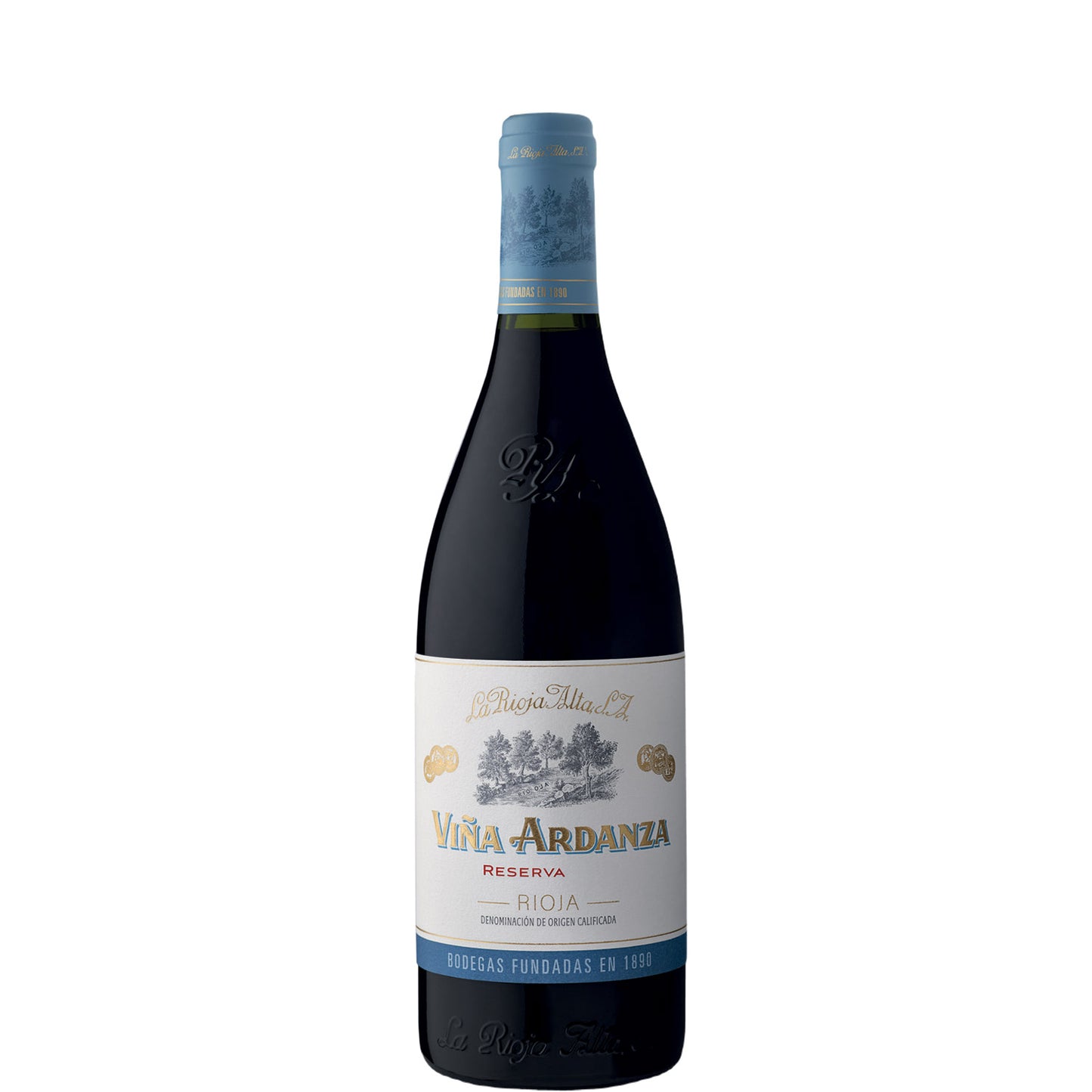
Rioja Reserva, Viña Ardanza, La Rioja Alta S.A., 2020
Rioja Reserva, Viña Ardanza, La Rioja Alta S.A., 2020
- 75cl
- 14.5%
- Red Still
- Tempranillo, Garnacha
Couldn't load pickup availability

Optimal drinking window: 2026 - 2038
The Viña Ardanza Rioja Reserva has always been a favourite, offering almost incomparable value for money for immediate drinking or cellaring. A blend of 80% Tempranillo and 20% Garnacha, the later is key to the Ardanza's structure, aromatics and concentration, and the result is utterly mesmerising.
This classic, age-worthy tipple is a sommelier's dream: a perfect balance of character and complexity at a price that can't be beat.
The 2020 Ardanza is in a very good place right now — the oak has integrated and the fruit is expressive and open. Over the next three to four years, the primary red fruit will deepen and dry out slightly, giving way to more leather, tobacco, and dried fig character. Peak drinking is likely around 2028-2035, when the secondary complexity will be fully developed and the structure will have softened to a silky ease.
What the critics say:
"This wine exhibits aromas of incense, spices and red cherries. It is medium- to full-bodied, elegant and polished, with clarity of fruit and underlying precise tannins. This will age forever. Drink or hold."
"The subtle, balsamic, structured and elegant 2020 Viña Ardanza Reserva is a blend of Tempranillo from Rioja Alta and around 20% Garnacha from Rioja Baja. It fermented destemmed in stainless steel and aged in American oak barrels, 20% of them new, for a period of 36 months in the case of the Tempranillo and 30 months for the Garnacha, then the two wines are blended before bottling. It's a textbook example of the label, with the perfume and elegance of the Garnacha and the clout from Tempranillo. It has clean aromas and is still quite fresh, only starting its tertiary phase. It comes in at 14.5% alcohol and keeps a pH of 3.57 and 5.7 grams of acidity. It's balanced, seamless and well-built, and its tannins are mostly resolved. It should live long in bottle. 500,000 bottles produced. It was bottled in November 2024."
Tasting Notes
AppearanceBright ruby-garnet with a translucent edge, showing the wine's relative youth.
NoseRipe red cherry and dried strawberry lead, with vanilla and a whisper of coconut from the American oak ageing. There is a pleasant undercurrent of dried rosemary and a touch of tobacco leaf that adds definition without weight.
PalateMedium-to-full bodied with supple, well-resolved tannins and warm, rounded red fruit at the centre. The acidity is fresh and keeps everything lively, while the oak sits in harmony rather than dominating — a sign of good ageing and confident winemaking. A earthy, slightly dusty quality on the mid-palate gives it a classically Riojan character.
FinishLong and gently spiced, with dried cherry skin and a faint savouriness that lingers pleasingly.
Overall impressionA textbook Rioja Reserva from a house that has been doing this longer than most — approachable now, but with plenty left to give.
Food Pairings
In Rioja, Ardanza would almost certainly appear on the table alongside cordero asado — slow-roasted lamb, usually cooked in a wood-fired oven until the skin is crisp and the meat falls from the bone. The region is also famous for patatas a la riojana, a hearty chorizo and potato stew that matches the wine's warm spice and gentle savouriness perfectly. Grilled lamb chops with nothing more than salt and a squeeze of lemon are another natural partner. Further along the meal, a wedge of aged Manchego or Idiazábal cheese would extend things very happily.
We think this wine would go well with
Serve at 16-17°C — cool enough to keep the acidity fresh, warm enough to let the oak and fruit open up. Decanting for 30-45 minutes is worthwhile, as it helps the wine shed any slight reticence and show its full generosity. A standard Bordeaux-style glass with a wider bowl works well, giving the fruit room to breathe without losing the aromatic detail.
The Tempranillo component comes from vineyards in the Rioja Alta sub-zone around Haro, where soils are predominantly clay-limestone at altitude, giving the wine its backbone and freshness. The Garnacha comes from Rioja Baja, where the climate is warmer and more Mediterranean, and the soils more sandy, producing richer, rounder fruit. The contrast between these two sub-zones is central to Ardanza's character — the tension between structure and generosity is literally baked into the blend's geography. Together they produce a wine that is more interesting than either component would be alone.
Rioja is Spain's most famous red wine DO, divided into three sub-zones: the cooler, higher-altitude Rioja Alta and Alavesa in the west, and the warmer, lower-lying Rioja Baja (now officially Rioja Oriental) in the east. The Reserva classification requires a minimum of three years ageing, at least one of which must be in oak — though traditional producers like La Rioja Alta typically far exceed this. Rioja is almost entirely built on Tempranillo, though Garnacha, Mazuelo, and Graciano all play supporting roles. The region's signature American oak influence sets it apart from neighbouring Ribera del Duero, which tends toward a more austere, French oak-driven style.
The 2020 vintage in Rioja arrived with all the drama of a Spanish telenovela. After a mild winter and early budbreak, spring brought welcome rains that recharged the soils, followed by a scorching summer that had growers reaching for their prayer books. The saving grace came in September's cooler nights, which allowed the grapes to retain their freshness whilst still achieving full ripeness. Harvest began earlier than usual but proceeded at a measured pace, giving producers the luxury of picking each plot at its optimal moment.
What emerged from the cellars shows Rioja at its most expressive. The Tempranillo displays gorgeous concentration without heaviness—think ripe cherry and plum wrapped in fine tannins that feel polished rather than aggressive. Garnacha from the higher sites particularly shines, bringing vibrant red fruit and spice that cuts through the vintage's natural richness. We're finding the crianzas already drinking beautifully, showing their fruit with confidence, whilst the reservas and gran reservas promise to develop into something rather special over the next decade. This is a vintage that rewards both patience and immediate pleasure.
FAQs
What does Viña Ardanza taste like?
Think ripe red cherry, dried strawberry, vanilla, and a gentle earthy spice from the American oak ageing. It is warm and generous rather than austere — a classically Riojan style with supple tannins and a long, savoury finish. The Garnacha in the blend adds a plump, rounded quality that makes it very easy to love.
When is the best time to drink the 2020?
It is drinking well right now and will continue to do so until around 2038 or so. The 2020 vintage was warm and ripe, and the wine has already integrated its oak nicely. If you can wait until 2028-2030, you will catch it at its most complex and complete, but there is no need to hold back if the occasion calls.
What food should I pair this with?
Slow-roasted lamb is the classic match — either a full leg or grilled lamb chops with good salt. It also works very well with rich stews, roast pork, or aged hard cheeses like Manchego. Avoid anything too delicate or light, as Ardanza will overwhelm it.
How should I serve it?
Serve at around 16-17°C and decant for 30-45 minutes before drinking. This gives the wine time to open up and lets the fruit express itself fully. A standard large-bowled red wine glass is ideal.
Is this worth cellaring?
Yes, though it is equally worth opening now. If you do cellar it, aim for 2028-2035 for peak drinking. Keep it somewhere cool, dark, and vibration-free and it will reward patience with more leather, dried fruit, and tobacco complexity.
How does Viña Ardanza differ from other Rioja Reservas?
Ardanza is a blend of Tempranillo and Garnacha from two different sub-zones, which gives it more flesh and warmth than many single-sub-zone Reservas. La Rioja Alta also ages their wines longer than the minimum required, and they release only when the wine is ready — so what you are buying has already done much of the work for you. It sits firmly in the traditional Rioja camp, with American oak and real depth of house style, rather than the more modern, internationally-influenced end of the spectrum.

OUR GROWERS
La Rioja Alta
Explore related wines


What are you looking for tonight? Tell me the occasion, a grape, a region — or just try a suggestion below.
Your recommendations will appear here.
-
-
Speak to one of our Wine Gurus
Speak to a Wine GuruWith years of experience, our team can help you with all your wine buying and selling needs