

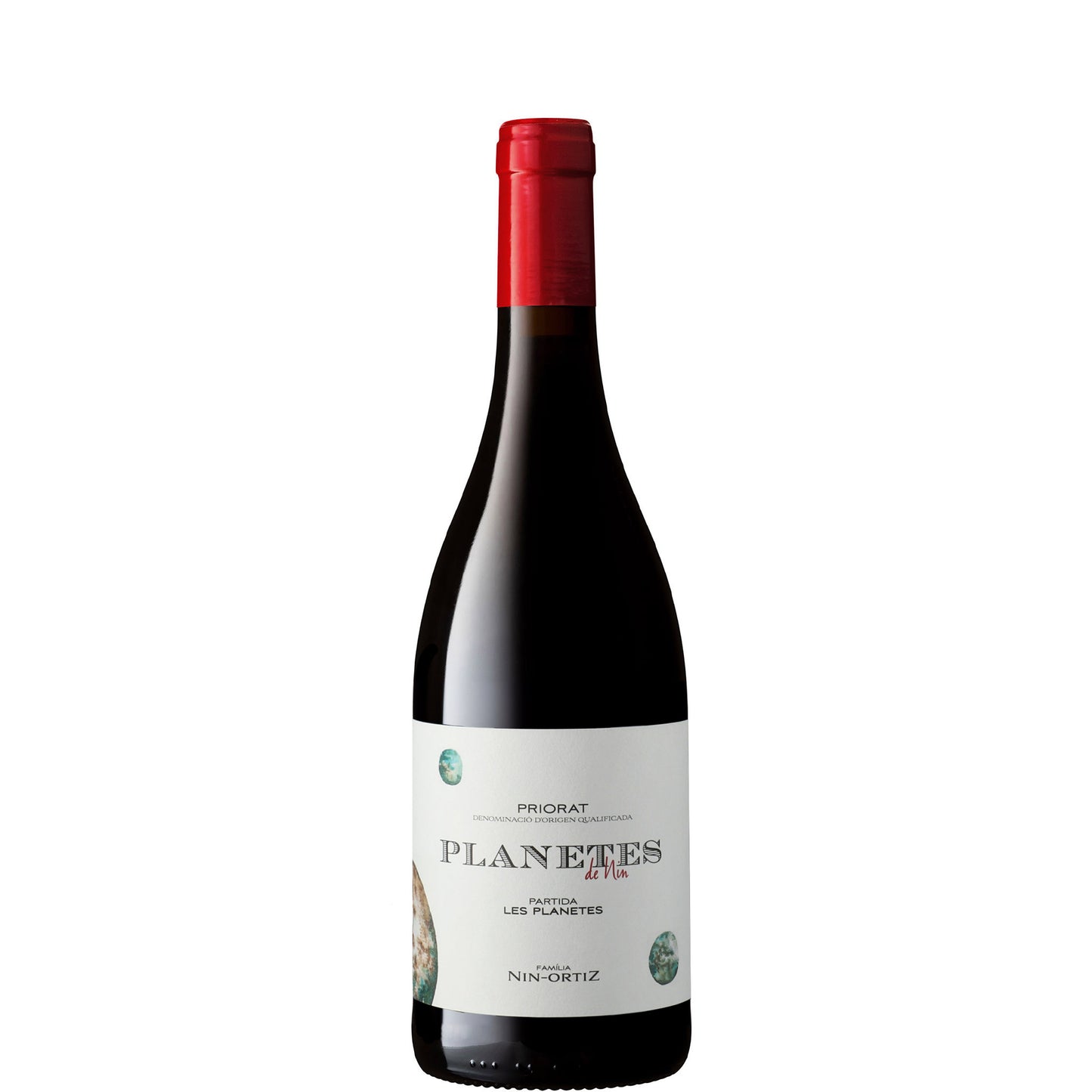
Familia Nin-Ortiz, Priorat Planetes De Nin, 2016
Familia Nin-Ortiz, Priorat Planetes De Nin, 2016
- 75cl
- 14.5%
- Red Still
- Grenache, Carignan
- Organic
- Biodynamic
Couldn't load pickup availability

Optimal drinking window: Now - 2035
Família Nin Ortiz are among Priorat's quieter obsessives - working tiny parcels of old-vine Grenache and Carignan on the region's famous llicorella schist, and doing very little else besides letting the land speak.
Planetes de Nin is their entry point into that conversation, but don't be misled by the positioning: this is a serious, structured red with real depth and an almost iron-willed grip that is pure Priorat. Think dark fruit pressed hard against volcanic rock, with dried wild herbs and a finish that seems to drag slate along with it.
The 2016 vintage in Priorat was one of the more balanced in recent memory - enough warmth for ripeness, enough freshness to keep the wine from tipping into excess.
At ten years old, the 2016 Planetes de Nin is just entering its most rewarding phase — the primary fruit has settled, the tannins have integrated, and the secondary mineral and herbal complexity is coming into focus. Over the next three to four years, we would expect further softening and greater aromatic detail, particularly around dried fruit, earth, and spice. By the late 2020s it should be at its peak, holding there comfortably until around 2032 or 2033. Beyond 2035, the fruit will likely fade faster than the structure, and the wine may become austere — drink it before then.
What the critics say:
"A 60/40 blend of Garnacha and Cariñena from the vineyard that names the wine, the 2016 Planetes de Nin saw a similar vinification and aging as the 2017 I tasted next to it, so the differences found were only due to the vintage and the moment of harvest. This is a fresher vintage, with tantalizing aromas that are subtle and elegant, with notes of violets and red cherries, nuanced and ever-changing in the glass. The palate is medium-bodied and nicely textured, with very fine tannins and fine chalky minerality. 9,108 bottles were filled in April 2017."
Tasting Notes
AppearanceDeep garnet, still dense at the core with a ruby edge that hints at graceful rather than rapid ageing.
NoseDark plum and black cherry lead, but the real interest is underneath: crushed schist, iron filings, dried thyme, and a thread of garrigue. There is a warmth to it without any sense of over-ripeness.
PalateFull-bodied and grippy, with tannins that are firm but no longer angular — they coat the mouth rather than cut it. The fruit is dark and concentrated, the acidity quiet but present, and that mineral, almost metallic quality runs the length of the wine.
FinishLong, dry, and savoury, with slate and dried herbs lasting well beyond the swallow.
Overall impressionA wine that earns its density through precision rather than weight.
Food Pairings
In Priorat and across Catalonia, wines like this are poured alongside slow-roasted lamb with romesco, or xai al forn — lamb shoulder baked with garlic, tomatoes, and local olive oil until it collapses. Grilled wild mushrooms, particularly ceps gathered from the surrounding hills, are a natural partner, as is aged Manchego or the harder local cow's milk cheeses. A slow-braised oxtail or beef cheek would be another very good argument for opening a second bottle.
We think this wine would go well with
Serve at 17°C — a touch cool for a wine this structured, which will help keep the alcohol in check and let the mineral character come through cleanly. Decant for at least 45 minutes, or up to two hours if you are opening it on the younger end of its window. A large-bowled Burgundy-style glass gives the wine room to open without forcing it.
The vineyards sit on Priorat's defining llicorella — a fractured black schist and quartz composite that drains aggressively, forces roots deep, and lends wines that characteristic mineral rasp and iron-edged character. Yields are tiny, partly by design and partly by necessity: the soils are barely soils at all. Altitude across the Priorat massif moderates what would otherwise be scorching daytime temperatures, preserving the acidity that stops these big wines from becoming flat.
Priorat — DOQ, the highest classification in Catalan wine law and one of only two Spanish appellations to hold DOQ or DOCa status — is built on llicorella schist and an almost monastic tradition of difficult viticulture. Tiny yields, old vines, and extreme slopes are the norm rather than the exception. Compared to neighbouring Montsant, which surrounds it, Priorat tends to be more concentrated, more mineral, and considerably more expensive. The appellation is dominated by Grenache and Carignan, often blended, and the wines carry a structural intensity that marks them out from almost anything else in Spain.
Priorat in 2016 produced wines of real density and drive, shaped by a growing season that was broadly dry and warm without tipping into the kind of punishing heat that can strip the llicorella soils of their finest quality: precision. Yields were low, as they almost always are here, but the grapes came in with concentration intact and, crucially, with acidity that gives the wines their architecture. Garnacha showed particularly well, delivering the kind of dark fruit and mineral grip that reminds you why this appellation earned its DOCa status in the first place. Cariñena added structure and grip to blends, and the better producers made wines that feel both powerful and purposeful.
2016 sits comfortably among the stronger recent Priorat vintages without being showy about it. These are not wines that announced themselves early; they needed time, and the best are now entering a genuinely rewarding window. We'd be reaching for the serious single-vineyard bottlings now and holding the grandest crus until 2026 or beyond. If you've had bottles sitting in the rack, the wait has been worthwhile.
FAQs
What does Planetes de Nin taste like?
Dark plum and black cherry, but the real signature is the mineral, almost metallic quality that comes from the schist soils — iron, crushed slate, and dried wild herbs running through a full-bodied, grippy frame. Dense without being heavy, and precise throughout.
When should I drink the 2016?
It is drinking well now and will continue to do so until around 2035. The sweet spot is probably 2026 to 2032, when the tannins have softened and the secondary complexity is fully open. No need to rush, but equally no need to wait much longer either.
What food works best with this wine?
Slow-roasted or braised lamb is the classic pairing — romesco, garlic, tomatoes. Grilled ceps or other wild mushrooms are excellent, as is aged hard cheese. Anything with enough richness and savour to stand up to the wine's grip and intensity.
How should I serve it?
Serve at around 17°C and decant for at least 45 minutes. A large-bowled glass — Burgundy-style — gives it room to breathe without losing the mineral detail that makes it interesting.
Is this wine worth cellaring?
At ten years old, it is already at a very good point, so the urgency to cellar further is low. That said, it has enough structure to reward another five to seven years in a good cellar. If you have bottles now, open one and decide for yourself.
How does Planetes de Nin compare to other Priorat wines?
It sits at the more restrained, precise end of the Priorat spectrum — less about sheer power than some of the appellation's bigger names, more about mineral tension and old-vine character. The Nin Ortiz family's hands-off approach in the cellar keeps the wine honest and site-specific in a way that not every producer in the region manages.
OUR GROWERS
Família Nin-Ortiz


What are you looking for tonight? Tell me the occasion, a grape, a region — or just try a suggestion below.
Your recommendations will appear here.
-
-
Speak to one of our Wine Gurus
Speak to a Wine GuruWith years of experience, our team can help you with all your wine buying and selling needs