

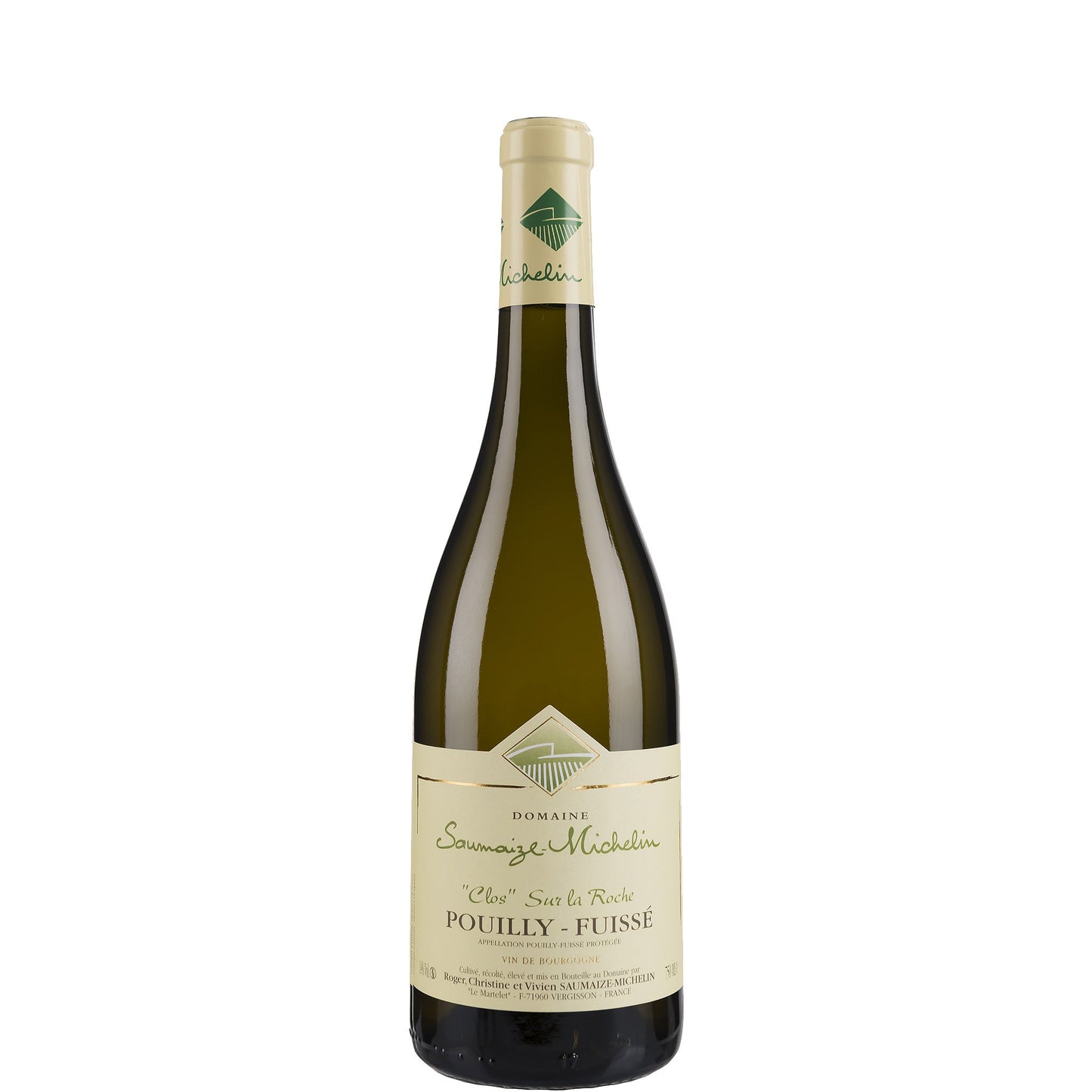
Pouilly-Fuissé Premier Cru 'Sur La Roche', Domaine Saumaize-Michelin, 2023
Pouilly-Fuissé Premier Cru 'Sur La Roche', Domaine Saumaize-Michelin, 2023
- 75cl
- 13.5%
- White Still
- Chardonnay
- Organic
- Biodynamic
Couldn't load pickup availability

Optimal drinking window: 2026 - 2042
Saumaize-Michelin has long been one of the quiet stars of Pouilly-Fuissé, and Sur La Roche is the wine that proves it. Taken from one of the appellation's steeper, rockier premier cru sites, this is Chardonnay with real spine: the limestone speaks through the glass, all citrus zest and wet stone, before a gentle, barrel-worked richness fills things out underneath.
It's a wine of two halves done well, tension up front and texture behind, and it should age with genuine grace.
Included amongst Charles Curtis of Decanter's 'top Burgundy 2023 wines'.
At the time of writing, in 2026, the citrus and stone notes dominate, with the oak still a background hum rather than a flavour in its own right. Give it two or three years and the texture will fill out further, with the lees-derived creaminess knitting more tightly into the fruit. By 2030 or so expect subtler, more savoury notes, think toasted hazelnut and honeycomb, to emerge alongside the minerality, and the wine should hold that form comfortably until the early 2040s before beginning its slow decline.
What the critics say:
"Arrestingly concentrated aromas of passionfruit and grapefruit are accented with flinty mineral notes and hints of white flowers. It all flows through to the palate where the texture positively vibrates with tension, yet lingers gracefully on the finish. The secret is the location; the domaine has 1.65ha of vines aged 40-100 years old, planted at the top of the Roche de Vergisson at 360-390m elevation. Give this wine five years before opening and drink over the next two decades."
"The 2023 Pouilly-Fuissé Sur La Roche 1er Cru has a more immediate nose than the Aux Charmes, soaring with yellow plum, fern and light smoky notes with time. It conveys a sense of classicism. The palate is beautifully balanced with a fine bead of acidity, tightly wound but there is superb energy locked up in this Premier Cru with a tingle of ginger right on the finish. Excellent."
Tasting Notes
AppearancePale gold with a faint green tinge at the rim.
NoseLemon pith and crushed stone lead, with a touch of white blossom and a faint smokiness from careful oak handling.
PalateTaut and saline at first, with citrus and green apple cutting through a softer, creamy centre built from lees work rather than new wood.
FinishLong, chalky, and precise, with that stony signature lingering well after the fruit has faded.
Overall impressionA wine of real tension, built to reward a little patience.
Food Pairings
Around Vergisson and Fuissé, this is the wine poured with quenelles de brochet in a rich crayfish sauce, or simply with the local Charolais beef done rare. Grilled river fish, especially pike-perch with beurre blanc, make the most of that chalky acidity. A good Comté or young Mâconnais goat's cheese does the job equally well when the bottle outlasts the main course.
We think this wine would go well with
Serve at 11-12°C, cool but not fridge-cold, to let the stony character show through. No need to decant, though opening half an hour ahead lets the aromatics stretch out a little. A tulip-shaped white Burgundy glass is ideal, narrow enough to hold on to the mineral lift.
Sur La Roche sits on a steep, south-facing slope beneath the limestone cliffs of Vergisson, where thin, stony topsoil over fractured rock forces the vines to dig deep for what little they get. Altitude and exposure here keep things cooler than much of the Mâconnais, preserving acidity even in warm vintages. It's a site that favours precision over plushness, and the wine shows it.
Pouilly-Fuissé sits at the southern tip of Burgundy's Mâconnais, long overshadowed by the Côte d'Or despite producing Chardonnay of genuine seriousness. The appellation gained its first premier crus only in 2020, a belated recognition of sites like Sur La Roche that had quietly outperformed many grander names for decades. Compared to Meursault or Puligny, these wines tend to show more overt minerality and a leaner, more linear frame, though the best, like this one, lose nothing in depth.
The 2023 growing season in Burgundy unfolded like a cautionary tale about climate change, then pulled off a last-minute redemption that left everyone rather stunned. After a warm, early spring pushed budbreak ahead of schedule, the vines endured a thoroughly miserable summer of persistent rain and cool temperatures that had growers muttering darkly about rot and dilution. Just when things looked dire, September arrived with glorious sunshine and dry winds that concentrated the fruit and saved the harvest—though not without some frantic sorting in the cellars.
What emerged from this meteorological rollercoaster are wines that wear their vintage on their sleeve: Pinot Noirs with bright, singing acidity and red fruit that feels almost crystalline in its purity, whilst the Chardonnays show remarkable tension and mineral drive. The reds are drinking beautifully now if you fancy immediate pleasure, but we suspect the better villages and premiers crus will reward patience over the next decade. It's not a powerhouse vintage, but there's something genuinely charming about these wines—they remind us why we fell for Burgundy in the first place.
FAQs
What does this wine taste like?
Taut and flinty, with lemon pith, crushed stone, and a creamy texture underneath that broadens on the finish.
When should I drink this wine?
It's approachable from 2026 but has the structure to improve until early 2040s.
What food should I pair it with?
Think grilled river fish, quenelles in crayfish sauce, or a good Comté if you're keeping things simple.
How should I serve it?
At 11-12°C in a white Burgundy glass, with no need to decant.
Is this wine worth cellaring?
Yes, this is a premier cru site with real backbone, built to gain complexity rather than just hold steady.
How does this compare to other white Burgundies?
It has more overt minerality and a leaner frame than a Meursault, but loses nothing in depth or ageing potential.
Explore related wines


What are you looking for tonight? Tell me the occasion, a grape, a region — or just try a suggestion below.
Your recommendations will appear here.
-
-
Speak to one of our Wine Gurus
Speak to a Wine GuruWith years of experience, our team can help you with all your wine buying and selling needs