

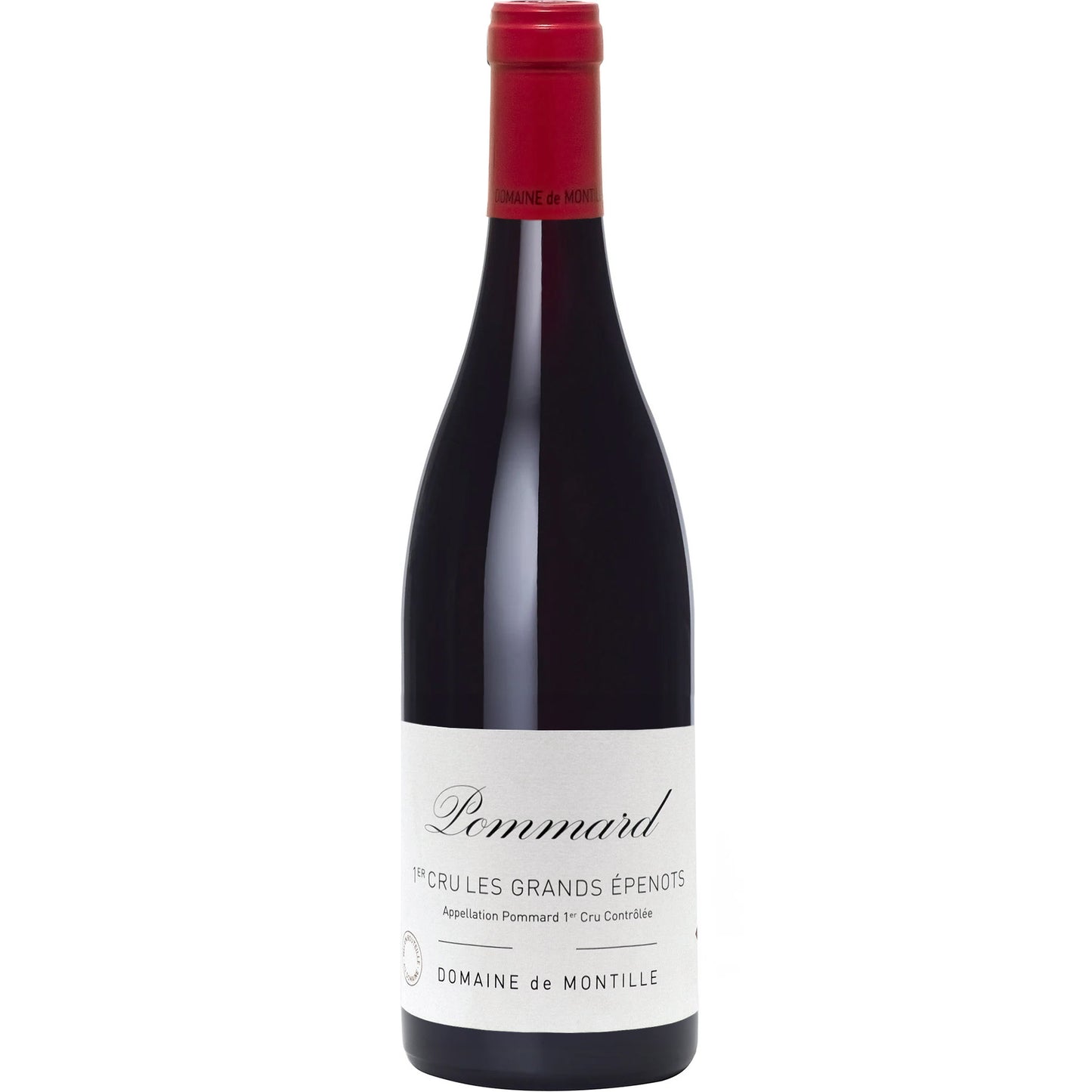
Pommard Premier Cru 'Les Grands Épenots', Domaine de Montille, 2020 - Magnum
Pommard Premier Cru 'Les Grands Épenots', Domaine de Montille, 2020 - Magnum
- 150cl
- 13%
- Red Still
- Pinot Noir
- Organic
- Biodynamic
- Kosher
Couldn't load pickup availability

Optimal drinking window: Now - 2043
Domaine de Montille wanted their first kosher wines to set a new benchmark so chose prestigious, discrete-sized premier cru sites that are picked at around the same time and usually early which is a bonus in a forward vintage like 2020. The cuvees have not needed acidification or chaptalisation either and both reds are 100% whole cluster so minimal intervention is required to ensure quality. To ensure the barrels are kosher, they are filled up three times with water, left for 24-hrs each time and emptied, then refilled with fresh water and rinsed. The barrels are then inspected and approved. This process necessarily begins four days prior to harvest.
The domaine's wines are known for their great aromatic purity. They always favour balance and elegance over power and extraction. The wines are classic expressions of Burgundy, of their appellations in general and of their specific terroirs in particular. The farming methods they use contribute to this individual style, and their winemaking methods aim to avoid excessive outside influences in order to bring out the equilibrium that can be found naturally in Burgundian terroir.
The Domaine has practiced organic viticulture since 1995. Today, their wines are certified by Ecocert. Additionally, since 2005, biodynamic practices have been implemented.
Pommard is an appellation that makes wine lovers dream. It is 312.76 hectares of Pinot Noir (115 hectares of which are Premier Crus) cover two terrains: south (on the Volnay side), the wines are elegant yet powerful; while in the north (closer to Beaune) the wines are silkier. However, this rule has some exceptions, like "Les Grands Épenots", which is planted on a combination of clay and limestone that is rich and heavy. This Premier Cru initialised a request for reclassification to Grand Cru in 2012.
The words "epeneaux, épenots, epenottes" certainly comes from the same root as "épine", or spine. It is possible that there were previously patches of thorny bushes in the middle of the vineyard. Their Pommard "Grands Épenots" is the most "Pommard" of their Pommards, showing its earthy, masculine side, which has impressive power despite the fact the nobility of the terroir gives it a certain refinement.
"From one of the two most reputed premier cru sites in the village, touching grand Cru quality. Darker, deeper cherry fruit, with tobacco, sandalwood, and hints of tamarind and star anise. Palate is both broad and linear, showing stricter, cedary tannins which are still ripe and juicy, with notes of cloves and tapenade around the red cherry and plum fruit, leading to a brightly herbal and stony finish."
Tom Harrow, Honest Grapes Wine Director
Les Grands Épenots sits on the northern flank of Pommard, closer to Beaune, on a combination of clay-rich limestone soils that are notably heavier than much of the Côte de Beaune. That clay content drives depth and structure, giving the wine its characteristic weight and earthy backbone. The vineyard sits at around 250-280 metres, with a gentle east-facing slope that tempers the heat and preserves freshness even in a warm vintage like 2020. It is one of the two most reputed premier crus in Pommard and has been under review for Grand Cru reclassification since 2012, which tells you something about the quality of what the land can achieve.
Pommard is a village appellation in the southern Côte de Nuits that has always divided wine lovers, partly because its reputation for dense, earthy, muscular Pinot Noir made it a favourite of merchants producing big commercial wines that bore little resemblance to what the best sites can do. The appellation covers 312.76 hectares of Pinot Noir, with 115 hectares classified as premier cru across 28 named sites. The village broadly splits into two characters: the southern vineyards bordering Volnay tend to produce more elegant, lifted wines, while the northern sites towards Beaune, where Grands Épenots sits, lean darker and more structured. At its finest, Pommard is not the blunt instrument its critics describe but a wine of serious depth and mineral backbone that rewards patience.
We'll be honest: 2020 in Burgundy was a vintage that kept everyone on their toes. A warm, dry spring brought early budbreak, then summer turned properly scorching with temperatures hitting 40°C in August. The saving grace came from perfectly timed August rains that rescued the vines from serious drought stress, followed by ideal September weather that allowed for unhurried picking. Yields were mercifully normal after several years of frost-ravaged harvests, and crucially, the heat never tipped into the jammy territory that can plague warmer vintages here.
What emerged were wines with surprising freshness despite the heat, showing ripe fruit balanced by good acidity and lovely mineral precision. The reds have more immediate charm than the structured 2019s, with silky tannins and generous Pinot Noir character, whilst the whites display beautiful richness without losing that crystalline Burgundian tension we adore. This isn't a legendary vintage like 2005 or 2010, but it's thoroughly delicious and more approachable in youth than many Burgundy vintages. The village wines are drinking beautifully now, Premier Crus are just hitting their stride, and the Grands Crus will reward patience for another five to ten years.
Explore related wines


-
-
Speak to one of our Wine Gurus
Speak to a Wine GuruWith years of experience, our team can help you with all your wine buying and selling needs