

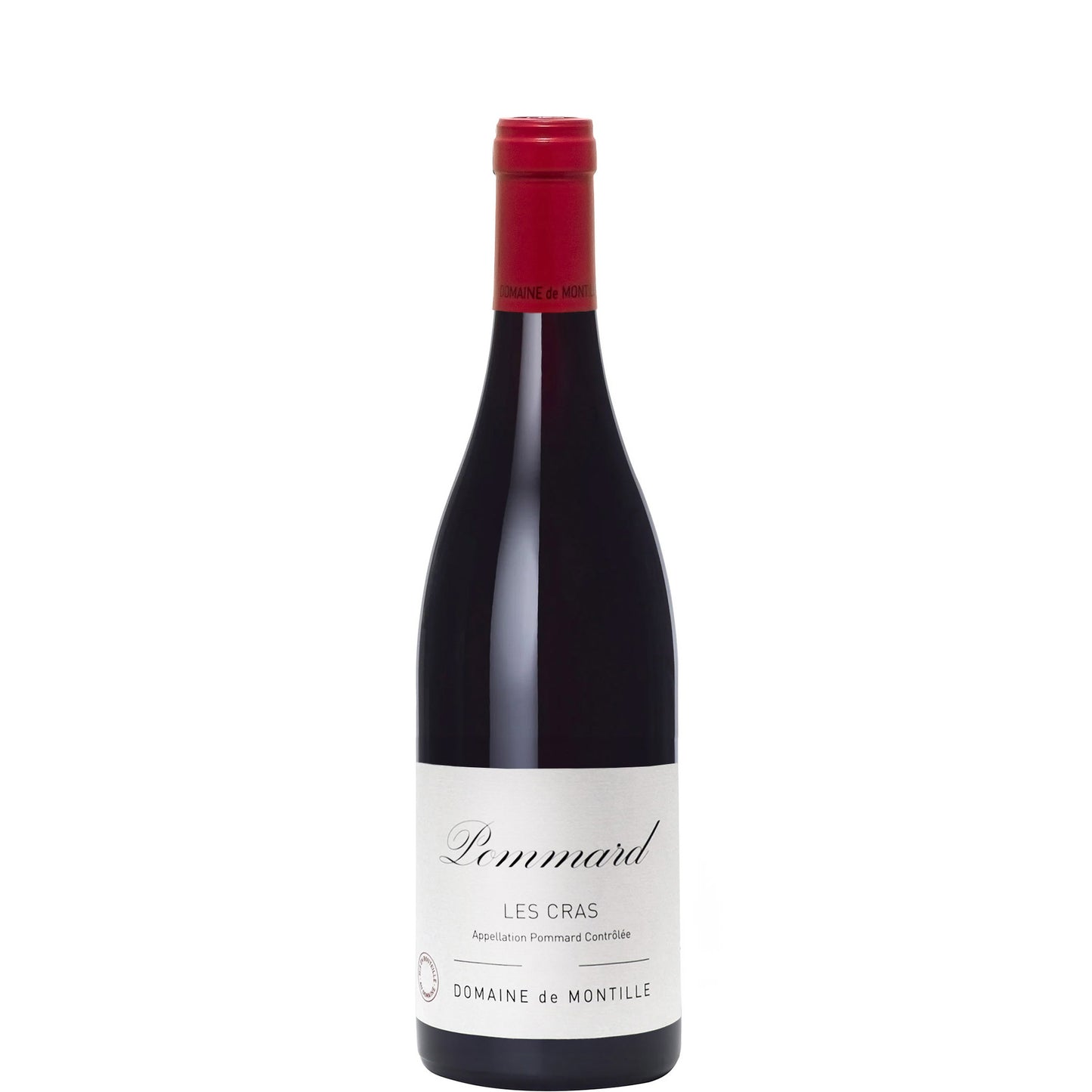
Pommard 'Les Cras', Domaine de Montille, 2019
Pommard 'Les Cras', Domaine de Montille, 2019
- 75cl
- 12.5%
- Red Still
- Pinot Noir
- Organic
- Biodynamic
Couldn't load pickup availability

Optimal drinking window: Now - 2034
Brian is rightly pleased with the domaine’s wines again this year commenting on a good balance of acidity and alcohol but adding a note of caution about climate change: 2019 was one of the driest vintages on record and he suggests Burgundy is in “in a window right now. Pinot Noir is a delicate variety and we need more water and less sun”. Overall he preferred slightly fewer whole bunches and less new oak than 2018. Etienne adds that 2019 has a “classic textural character” and was “a consensual vintage – everyone could make the style of wine they wanted, unlike the last three vintages, here there is something for everyone”.
The latter is certainly true here at de Montille with chiselled, polished reds and racy but juicy whites. Once again Beaune 1er Cru (both colours) continues to over perform and offer exceptional value.
"Named for the rocky hillside in between two premier cru vineyards where this lieu dit is situated (just under Rugiens Bas), Les Cras has plenty of gravel atop the traditional iron-rich clay red clay of the area which gives good mineral drive as well as generous fruit. Third whole bunch in 2019. Lightly spiced, perfumed lift to the fruit, red plums and red berries, with herbal and herbaceous notes. Palate has a refreshing green edge (ivy) to the acidity, whilst the fruit is ferrous and sappy. Really very attractive and deep, much more than a village Pommard, as you might expect given its location."
Tom Harrow, Wine Guru
In 2026 this is drinking well but hasn't yet shown everything it has. The primary red fruit is bright and forward, and the ferrous, mineral core is already compelling, but the herbal and spice elements from the whole-bunch inclusion are still integrating. By 2028-2030, expect the fruit to deepen and the wine to find a more settled, complex mid-palate as the primary vivacity gives way to something more earthy and Burgundian. The site's natural acidity and iron-driven structure suggest it will hold through to 2033-2035 without issue, and in a good cellar it may surprise further. Don't leave it much beyond 2036 — this is a lieu-dit, not a premier cru, and it's built for pleasure over extreme longevity.
Tasting Notes
AppearanceClear, mid-deep ruby with a bright, slightly translucent rim — nothing overdone for 2019.
NoseLightly spiced and perfumed, with red plum and hedgerow berry lifted by a floral top note that speaks to the whole-bunch inclusion. There's a cool herbal undercurrent — dried herbs rather than green ones — that keeps things fresh and gives the fruit some interesting tension to work against.
PalateThe palate is where this really delivers: that ferrous, sappy quality arrives early and runs through to the finish, anchoring the red fruit in something earthy and serious. Acidity is refreshing rather than sharp, with a faintly green, ivy-like edge that prevents the 2019 ripeness from ever feeling soft or blowsy. The tannins are fine-grained and well-integrated, polished in the de Montille way without losing grip.
FinishLong and mineral, with the iron-inflected fruit holding its shape well into the aftertaste.
Overall impressionA Pommard that punches well above its lieu-dit status, built on site character rather than extraction.
Food Pairings
In Burgundy, this is exactly the kind of wine that appears at the table alongside boeuf bourguignon — the slow-braised beef absorbing the same iron and herbal notes you find in the glass, so the two simply agree. Coq au vin is the other obvious partner, the chicken giving way to the wine's sappy acidity rather than competing with it. Locally, you'd also find it next to a plateau of cheeses: Époisses is the classic pairing and a genuinely great one, the washed-rind funk and the wine's mineral drive striking an unlikely but convincing balance. For something simpler, good charcuterie — jambon persillé, in particular, a Burgundian staple — needs nothing more elaborate than this.
We think this wine would go well with
Serve at around 16-17°C — cool enough to keep the acidity lively, warm enough to let the perfume open up. A 30-minute decant is worthwhile in 2026, less to soften tannins (they're already fine-grained) and more to let the whole-bunch aromatics lift and the fruit expand. A standard Burgundy-shaped glass works perfectly here — wide enough to let the nose breathe, not so large that the wine's freshness gets lost in the bowl.
Les Cras sits just below the celebrated Rugiens Bas premier cru, on a rocky hillside that gives the lieu-dit its name — 'cras' referring to the stony, gravelly soils that define it. Gravel over iron-rich red clay is the combination here, and it matters: the stones drain quickly and warm up fast, encouraging concentration, while the clay retains just enough moisture to keep the fruit alive and the acidity fresh. That iron in the subsoil leaves its fingerprint on the wine — a ferrous, sappy quality that you don't find in softer, flatter Pommard plots. The site sits between two premier cru vineyards, which tells you something about the quality of the raw material without needing a classification to confirm it.
Pommard is one of Burgundy's most recognisable names — and one of its most polarising. The village sits between Volnay to the south and Beaune to the north, and its wines have a reputation for muscle: dense tannin, dark fruit, and a firmness that can tip into rusticity in lesser hands. Unlike its neighbours, Pommard has no grand cru, which is either a tragedy or a buying opportunity depending on your outlook. The premier crus — Rugiens and Epenots chief among them — are genuinely serious, but lieu-dits like Les Cras show that the village's best expression isn't always on the official map.
The 2019 vintage in Burgundy delivered exactly what vignerons needed after a string of challenging years: a textbook growing season that let the grapes ripen slowly and evenly. Spring arrived gently, summer stayed warm without punishing heat spikes, and crucially, September brought those cool nights that preserve acidity whilst allowing full phenolic ripeness. We find ourselves talking about 2019 as one of those vintages where nature simply cooperated, giving winemakers healthy fruit with natural balance rather than forcing them to correct for extremes in the cellar.
What emerged are Burgundies with remarkable freshness married to genuine depth—the Pinot Noirs show that silky texture and bright red fruit character that makes great Burgundy so compelling, whilst the Chardonnays have both the mineral backbone and subtle richness that age beautifully. The quality runs impressively deep across all appellations, from village wines that drink like premier crus to grand crus that remind you why Burgundy commands such devotion. These wines are drinking beautifully now if you fancy them young and vibrant, though we suspect the better bottles will reward patience well into the 2030s.
FAQs
What does Les Cras taste like?
Red plum and hedgerow berry with a lightly spiced, perfumed lift from whole-bunch fermentation. The defining quality is the ferrous, sappy mineral edge that runs through from the nose to a long finish — this is Pommard with freshness and precision rather than the blunt force the appellation is sometimes known for.
Is this wine ready to drink now?
Yes — it's very much open for business in 2026. The tannins are fine-grained and the fruit is generous, so there's real pleasure here right now. That said, another two to four years will reward patience, as the whole-bunch elements and the mineral core settle into something more layered.
How long can I cellar this?
We'd be comfortable drinking it until 2035, with the sweet spot likely falling between 2028 and 2033. The site's natural acidity and iron-driven structure give it genuine ageing potential, but this is a lieu-dit rather than a premier cru — built for medium-term pleasure rather than extreme longevity.
What food works best with this wine?
Boeuf bourguignon is the obvious answer and a genuinely great one — the braised beef and the wine's iron and herbal notes simply agree. Coq au vin, jambon persillé, or a good plateau of Burgundian cheeses (Époisses especially) all work brilliantly. This is not a wine that needs elaborate food.
How should I serve it?
Around 16-17°C, with a 30-minute decant to let the whole-bunch aromatics open up. A standard Burgundy glass gives the nose the space it needs without losing the wine's freshness.
Is Les Cras a premier cru?
No — it's a lieu-dit, a named site within the village appellation rather than an officially classified premier cru. But it sits just below Rugiens Bas, one of Pommard's finest premier crus, and the quality of the site comes through clearly in the glass. At its price point, that makes it one of the more interesting buys in the village.
Explore related wines


What are you looking for tonight? Tell me the occasion, a grape, a region — or just try a suggestion below.
Your recommendations will appear here.
-
-
Speak to one of our Wine Gurus
Speak to a Wine GuruWith years of experience, our team can help you with all your wine buying and selling needs