

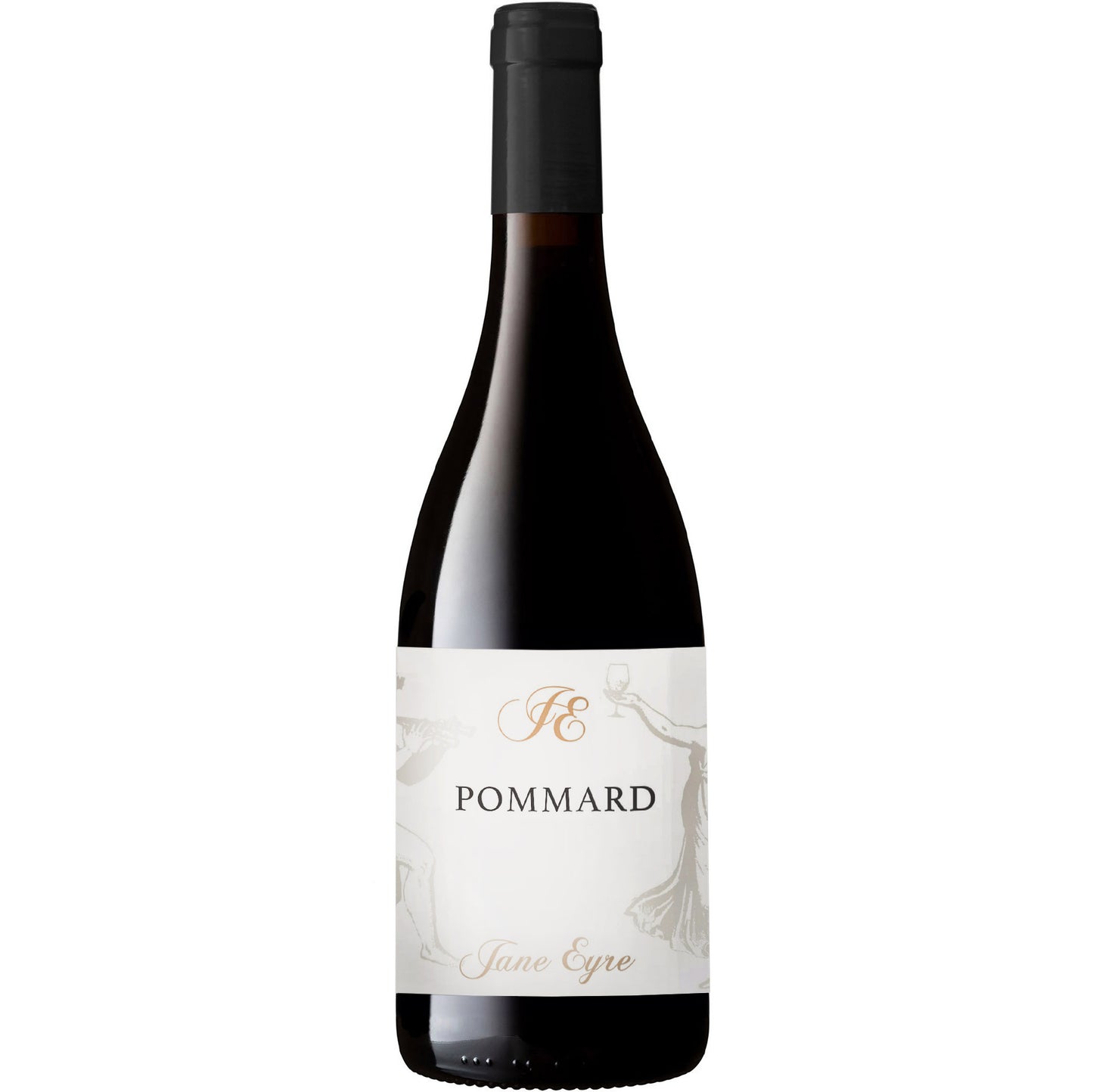
Pommard 'Les Chanlins Hauts', Jane Eyre, 2024 - Magnum
Pommard 'Les Chanlins Hauts', Jane Eyre, 2024 - Magnum
- 150cl
- 13%
- Red Still
- Pinot Noir
Couldn't load pickup availability

Optimal drinking window: 2028 - 2038
Pommard is Burgundy's brooding counterpoint to its more gossamer neighbours — where Volnay floats, Pommard stands firm. Les Chanlins Hauts sits on the village's southern flank, a premier cru-adjacent lieu-dit that draws the best of the appellation's character: that distinctive iron grip, dark cherry fruit, and soils with serious depth.
2024 could hardly suit Jane Eyre better. A cool, rain-affected year with low natural alcohols and sharply reduced volumes, it demanded obsessive sorting and restraint in the cellar. Jane delivered both. Sorting varied dramatically by site, with some parcels requiring extraordinary attention, but the results are wines of clarity, finesse, and unmistakable origin.
"From 80-year-old vines just above Rugiens, right on the Volnay border. Noticeably deeper in colour than the preceding wines. Cherries, fresh spice, and a mix of red and black fruit. Succulent, grounded, and wonderfully complete."
Stewart Pryce, Honest Grapes Wine Club Manager
This one has the bones for the cellar. Pop one open now if you must, but the real conversation starts around 2028.
Right now, Les Chanlins Hauts is doing what young Pommard does best: asserting itself. The dark cherry fruit and iron-edged grip are very much front and centre, and while the 2024's naturally low alcohol and fine-boned structure mean it's not forbidding, it isn't fully open either. Around 2028 the tannins should begin to soften into something more generous, and the interplay between the red and black fruit will grow more interesting. By the early 2030s expect a more resolved, savoury character to emerge — the kind of earthy, mineral depth that makes old-vine Pommard so compelling. The magnum format buys extra time; don't be in a rush.
What the critics say:
"€: Value wines that are especially worth seeking out"
Tasting Notes
AppearanceDeep, translucent ruby with a violet rim — the colour of a wine with something to prove.
NoseDark cherry and dried violet upfront, then a waft of iron and damp earth that is unmistakably Pommard. A thread of woodsmoke and five-spice emerges with a little air.
PalateMedium-full bodied with firm, fine-grained tannins that are present but not aggressive — the cooler 2024 vintage keeping everything pulled taut. Red and black cherry flesh, a mineral chalkiness mid-palate, and a lift of acidity that gives it real focus.
FinishLong, savoury, and dry — iron filings and dried herbs lingering well past the swallow.
Overall impressionA serious, site-driven Pommard that needs time but rewards the patient drinker handsomely.
Food Pairings
In Burgundy, Pommard is the wine the locals reach for with boeuf bourguignon — the wine's iron-rich earthiness and firm tannins built for exactly that kind of long-braised richness. A coq au vin made with the wine itself is another classic, and rightly so. Closer to the table, aged Époisses or a well-matured Comté both work brilliantly with the wine's savoury, mineral character. In the colder months, a daube of wild boar or venison with juniper would be the sort of pairing that makes the whole bottle disappear.
We think this wine would go well with
Serve at 16-17°C — a few degrees below room temperature to keep the acidity bright and the tannins from tipping into austerity. In its youth (until around 2030), decant for at least 90 minutes to two hours; the wine is structured enough to need it. A wide-bowled Burgundy glass is the right call, giving the nose room to open and those earthy, violet aromatics space to develop.
Les Chanlins Hauts occupies the upper portion of the Chanlins slope in the southern part of Pommard, where the soils are a mix of clay-limestone with good iron content — the source of that characteristic earthy, ferrous quality in the wine. The elevation provides slightly better drainage than the lower village-level vineyards, which tends to produce wines with more definition and lift. The limestone bedrock beneath encourages deep root penetration and contributes to the mineral, structured backbone that defines this lieu-dit.
Pommard is a village-level AOC in the Côte de Beaune, sitting between Beaune to the north and Volnay to the south, and is one of the few Burgundy communes with no Grand Cru vineyards — though its best Premiers Crus are widely considered to punch at that level. The rules require 100% Pinot Noir, with a maximum yield of around 40 hectolitres per hectare for village wines. Compared to Volnay, Pommard wines tend to be darker, more tannic, and more age-worthy; compared to the Côte de Nuits communes, they often show more earthiness and a broader, more rustic frame that rewards patience.
The 2024 growing season in Burgundy was, frankly, a test of nerve. A wet spring brought significant mildew pressure, and vignerons who stayed sharp in the vineyard — working fast, keeping canopies open, reducing yields where necessary — came out the other side with something worth talking about. Summer brought warmer, drier conditions that helped the fruit recover composure, and harvest arrived broadly on the later side, with growers picking carefully to find phenolic ripeness without sacrificing freshness. Quantity was down across much of the Côte, which concentrates minds as much as it concentrates wine.
What emerged is a vintage that rewards those who put the work in. The Pinots we have tasted carry real precision and translucency — not because they are light, but because the acidity is lively and the fruit unforced. Chardonnays from the Côte de Beaune look particularly promising: taut, mineral, with genuine length. This is not a vintage to panic-open. Most village and premier cru reds want three to five years at minimum, with the better appellations drinking well until 2035 and beyond. The whites are more approachable now, though the best will reward patience too.
FAQs
What does this wine taste like?
Dark cherry, violet, and iron with an earthy, mineral backbone and firm tannins. It is structured and serious rather than immediately generous — this is Pommard doing what Pommard does best.
When should I drink this wine?
We would hold off until at least 2029. The 2024 vintage and the magnum format both point toward patience. It should drink well until 2042, possibly further in the right cellar.
Should I decant it?
Yes, and generously. Give it at least 90 minutes to two hours if you are opening it young. The wine has the structure to absorb air and will reward it with greater openness and aromatic complexity.
What food works best with this wine?
Classic Burgundian fare is hard to beat: boeuf bourguignon, coq au vin, braised venison, or aged Comté. The wine's earthiness and firm tannins are built for rich, slow-cooked dishes rather than delicate ones.
Is it worth cellaring in magnum format?
Very much so. Magnums slow the ageing process, meaning the wine evolves more gradually and tends to reach greater complexity. If you are buying to drink around 2030 or later, this is exactly the format to do it in.
How does Les Chanlins Hauts differ from other Pommard vineyards?
The Chanlins Hauts site sits at the upper end of the slope, where better drainage and slightly more limestone in the soil give the wine more definition and lift than some of the broader, more tannic wines from the lower village plots. It tends toward precision within Pommard's generally robust character.
Explore related wines


What are you looking for tonight? Tell me the occasion, a grape, a region — or just try a suggestion below.
Your recommendations will appear here.
-
-
Speak to one of our Wine Gurus
Speak to a Wine GuruWith years of experience, our team can help you with all your wine buying and selling needs