

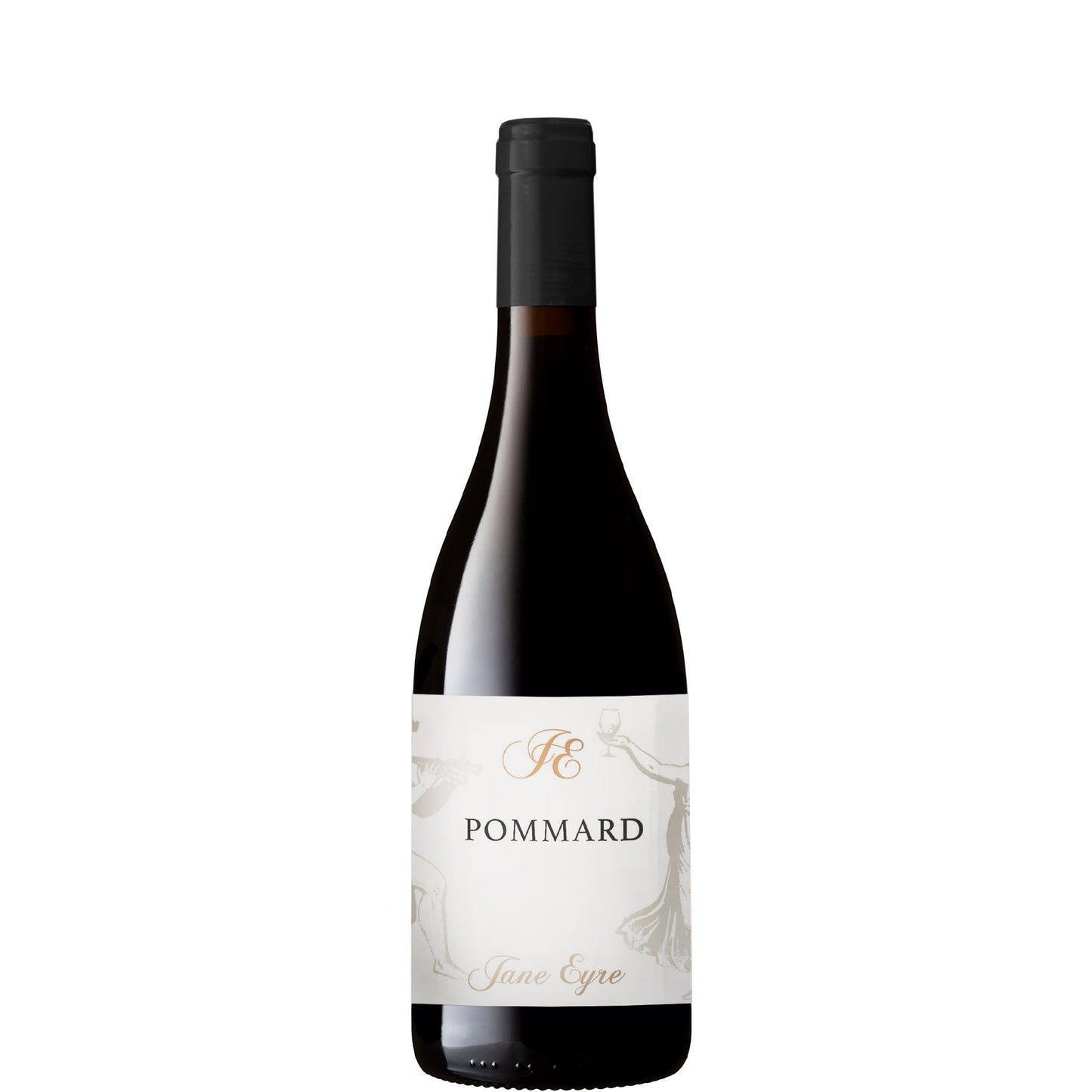
Pommard 'Les Chanlins Hauts', Jane Eyre, 2024
Pommard 'Les Chanlins Hauts', Jane Eyre, 2024
- 75cl
- 13%
- Red Still
- Pinot Noir
Couldn't load pickup availability

Optimal drinking window: 2028 - 2038
Pommard is Burgundy's brooding counterpoint to its more gossamer neighbours — where Volnay floats, Pommard stands firm. Les Chanlins Hauts sits on the village's southern flank, a premier cru-adjacent lieu-dit that draws the best of the appellation's character: that distinctive iron grip, dark cherry fruit, and soils with serious depth.
2024 could hardly suit Jane Eyre better. A cool, rain-affected year with low natural alcohols and sharply reduced volumes, it demanded obsessive sorting and restraint in the cellar. Jane delivered both. Sorting varied dramatically by site, with some parcels requiring extraordinary attention, but the results are wines of clarity, finesse, and unmistakable origin.
"From 80-year-old vines just above Rugiens, right on the Volnay border. Noticeably deeper in colour than the preceding wines. Cherries, fresh spice, and a mix of red and black fruit. Succulent, grounded, and wonderfully complete."
Stewart Pryce, Honest Grapes Wine Club Manager
This one has the bones for the cellar. Pop one open now if you must, but the real conversation starts around 2028, and it should hold its shape well until 2038.
Right now the wine is in its primary phase — the fruit is vivid and the structure prominent, which makes it rewarding to taste but not quite at ease. Around 2028, the tannins should start to knit more fully into the fruit, and the spice and mineral elements will begin to integrate into something more cohesive. Between 2030 and 2035, this is likely to hit its stride, with the old-vine concentration filling out the mid-palate and secondary complexity — dried cherry, leather, earth — starting to emerge alongside the primary fruit. It should hold its shape well until 2038, after which the fruit may gradually fade even if the structure remains. Buy accordingly.
What the critics say:
"€: Value wines that are especially worth seeking out"
Tasting Notes
AppearanceDeep ruby with a vivid, youthful rim and good clarity.
NoseDark cherry, dried rose petal, and a characteristic iron-and-earth note that is very Pommard. Behind that, a suggestion of clove and crushed stone that speaks to 2024's cooler growing season.
PalateMedium to full-bodied with the firm, almost chewy tannins this village is known for — not aggressive, but definitely present and asking for time. Red and dark cherry fruit, a flicker of wild herb, and a line of cool acidity that keeps everything honest.
FinishPersistent and mineral, with tannin grip that lingers and a faint savoury, almost meaty note at the very end.
Overall impressionA wine that is currently pulling its coat on rather than getting comfortable — give it a few years and it will reward the patience considerably.
Food Pairings
In Burgundy, Pommard is the natural companion to the region's more robust table: boeuf bourguignon, slow-cooked and richly sauced, is the obvious pairing and it works precisely because both have substance and depth. Locally, you would find it served with coq au vin, where the wine's acidity cuts through the richness of the braising liquid. A plateau of local cheeses — Époisses, Comté aged for 18 months — handles the tannins well. Roasted duck leg with lentils du Puy is another regional classic that plays beautifully to Pommard's iron-edged character, and in autumn, a simple preparation of wild mushrooms on toast would let the wine's earthy quality shine without competition.
We think this wine would go well with
Serve at 16-17°C — cooler than you might think, as a degree or two below room temperature keeps the fruit precise and stops the tannins feeling heavy. Decanting is worthwhile even at this young stage: 30-45 minutes will open the wine up meaningfully and soften that tannic edge. A large-bowled Burgundy glass is the right choice, giving the more restrained aromatics the space to develop as the wine breathes.
Les Chanlins Hauts sits on the southern edge of Pommard's village vineyards, on gently sloping ground with a predominantly east-facing aspect. The soils here are heavier than much of the Côte de Nuits — a mix of red clay and limestone with significant iron oxide content, which gives Pommard its characteristic density and tannic grip. Altitude is modest, around 260 metres, but the clay-limestone combination retains water well and gives the wines a structural backbone that needs time to fully integrate.
Pommard is a village appellation in the Côte de Beaune producing only red wine from Pinot Noir — no white is permitted under the AOC rules. It sits between Volnay to the south and Beaune to the north, and is known for producing some of Burgundy's most structured, age-worthy village and premier cru reds. Where Volnay is often described as feminine and perfumed, Pommard tends toward the muscular — darker fruit, firmer tannins, and a more pronounced earthy, iron-tinged character that softens with age. Les Rugiens and Les Épenots are its most celebrated premier crus, but lieux-dits like Les Chanlins Hauts can offer similar character at a more accessible level.
The 2024 growing season in Burgundy was, frankly, a test of nerve. A wet spring brought significant mildew pressure, and vignerons who stayed sharp in the vineyard — working fast, keeping canopies open, reducing yields where necessary — came out the other side with something worth talking about. Summer brought warmer, drier conditions that helped the fruit recover composure, and harvest arrived broadly on the later side, with growers picking carefully to find phenolic ripeness without sacrificing freshness. Quantity was down across much of the Côte, which concentrates minds as much as it concentrates wine.
What emerged is a vintage that rewards those who put the work in. The Pinots we have tasted carry real precision and translucency — not because they are light, but because the acidity is lively and the fruit unforced. Chardonnays from the Côte de Beaune look particularly promising: taut, mineral, with genuine length. This is not a vintage to panic-open. Most village and premier cru reds want three to five years at minimum, with the better appellations drinking well until 2035 and beyond. The whites are more approachable now, though the best will reward patience too.
FAQs
What does this wine taste like?
Think dark cherry, dried rose, and an earthy, iron-tinged quality that is very much Pommard in character. The tannins are firm and present, with cool acidity and a mineral finish. It is structured rather than immediately generous — a wine for the table and ideally for the cellar.
When should I drink this wine?
We would hold off until at least 2028. Right now the tannins need time to integrate and the wine is not yet showing its full hand. It should be at its best between 2030 and 2035, and hold well until 2038 in good storage.
Should I decant it?
Yes, even if you are opening it earlier than ideal. Give it 30-45 minutes in a decanter — it will open up the aromatics and take the edge off the tannins. A large-bowled Burgundy glass is the right vessel.
What food should I serve with it?
This is a wine for the table rather than the sofa. Boeuf bourguignon, coq au vin, roast duck leg, or wild mushrooms are all good calls. Aged Comté or Époisses also work well if you are going the cheese route.
Is this worth cellaring?
Genuinely, yes. Pommard from a well-made vintage with this kind of structure repays patience handsomely. If you can leave it alone until 2030, you will be rewarded with a wine that has shed its tannic austerity and developed real secondary complexity.
How does this compare to other Pommards?
Les Chanlins Hauts sits just outside premier cru classification but offers the characteristic Pommard profile — firmer and more structured than Volnay, darker-fruited and earthier than Beaune. It is not trying to be Rugiens, but it is a serious, site-expressive wine that punches above its appellation level in the right hands.
Explore related wines


What are you looking for tonight? Tell me the occasion, a grape, a region — or just try a suggestion below.
Your recommendations will appear here.
-
-
Speak to one of our Wine Gurus
Speak to a Wine GuruWith years of experience, our team can help you with all your wine buying and selling needs