


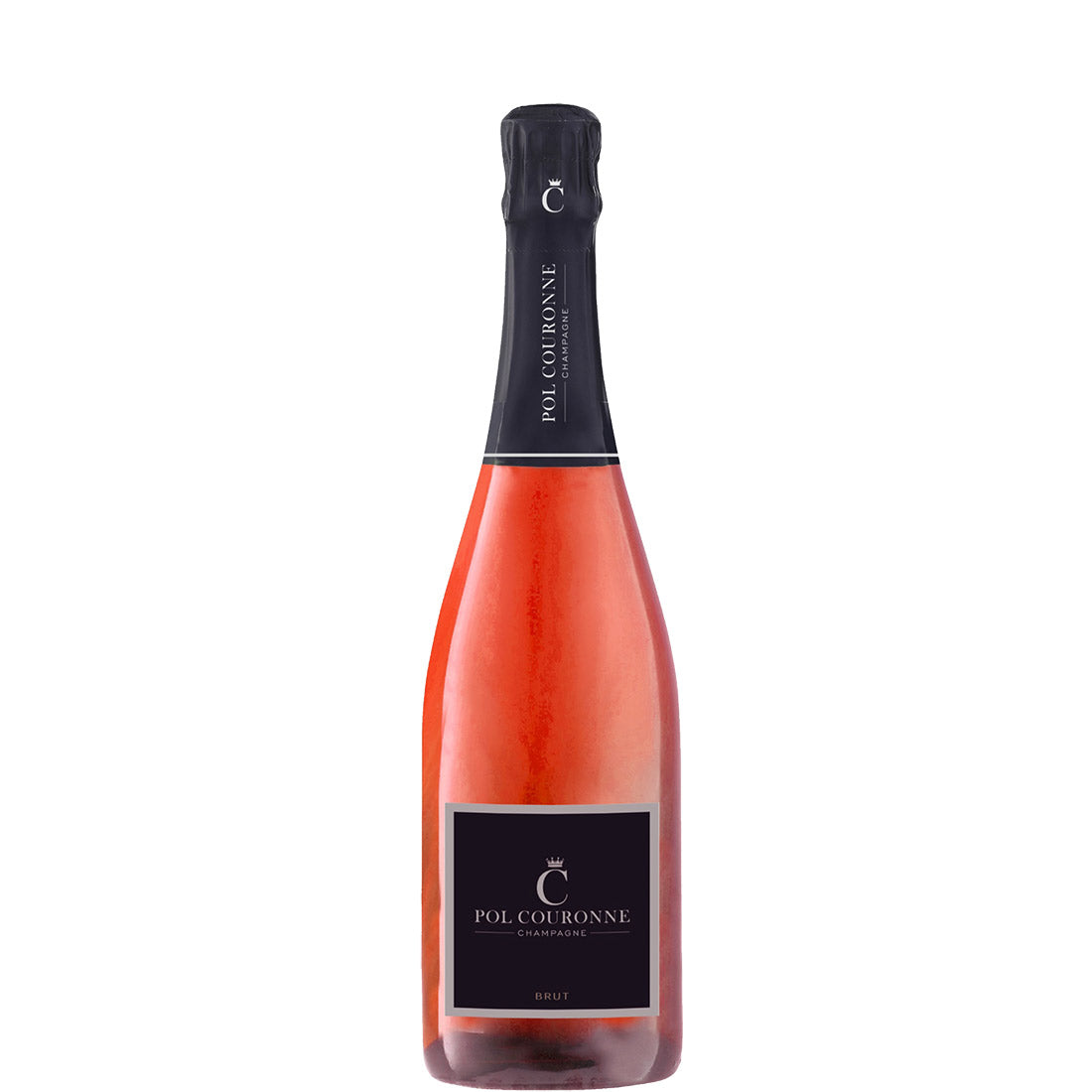
Pol Couronne Brut Rosé, NV
Pol Couronne Brut Rosé, NV
- 75cl
- 12%
- Rosé Sparkling
- Chardonnay, Pinot Noir, Pinot Meunier, Coteaux champenois
Couldn't load pickup availability

Optimal drinking window: 2026 - 2029
About Pol Couronne Brut Rosé, NV
SPECIAL 6-FOR-5 OFFER: Buy a case of 6, and receive a free bottle
Pol Couronne's Brut Rosé is light, subtle and powerful at the same time.
The colour of this delightful rosé is lightly coppery, the bubble thin and light. You will find notes of red fruits, cherry. With beautiful effervescence, it is supple and round, and has notes of wild strawberries and raspberries that bring an aromatic finale. A wonderful apéritif, or why not try it with a tray of Iberian ham?
The Pol Couronne Champagne House was founded in 1887. For over a century, sustainable vineyard practices and winemaking traditions have been used to create characterful and high quality wines. Pol Couronne embraces the complexity of assemblage (the blending of the grapes within a wine) by working with vineyards across the Champagne region that best emphasise the character of each varietal. For example, the sandy-clay soils of Avize produce a special minerality within the Chardonnay grape that adds linearity and freshness to their wine.
"Our cuvee Brut Rosé is made with due respect for tradition. We select our best Pinot Meunier to produce a red Coteaux champenois which will bring this Brut Rosé its splendid colour. This champagne will win you over with its modernity."
JB Prevost
"The development of this cuvée is carried out with respect for traditions. We select our most beautiful Pinot Meunier to create a Coteaux champagne which will bring this magnificent colour to our Brut Rosé, a champagne that will seduce you."
Pol Couronne
• 27% Chardonnay, 26% Pinot Noir, 33% Pinot Meunier + 14% red Coteaux champenois (base Pinot Meunier)
Non-vintage Champagne is released ready to drink, and this rosé is no exception — the fruit is fresh, the mousse is lively, and there is nothing to be gained by waiting years. Over the next 12-18 months the primary red fruit will remain at its brightest and most expressive. Push it towards 2028 and the wine will start to settle into a slightly rounder, more biscuity register, which can be pleasant if that is your preference. Beyond 2029, the freshness that defines this style will begin to fade, and the wine is unlikely to develop meaningful secondary complexity to compensate. Drink it with enthusiasm and soon.
Tasting Notes
AppearancePale coppery salmon with a fine, persistent mousse and a delicate bead.
NoseFresh wild strawberry and red cherry up front, with a subtle earthy warmth from the Pinot Meunier base. There is a clean, chalky lift underneath that keeps everything bright and focused.
PalateLight-bodied but with more structure than the colour suggests — the Coteaux Champenois addition gives it a quiet grip. Raspberry and cherry sit alongside a creamy mid-palate, with the Chardonnay pulling the finish towards crispness and length.
FinishClean and refreshing, with a faint mineral note and a lingering red fruit echo.
Overall impressionA rosé Champagne that earns its structure rather than relying purely on charm.
Food Pairings
In the Marne, a glass of rosé Champagne before a Sunday lunch typically means charcuterie first — rillettes, thin slices of jambon de Reims, or a terrine de campagne with cornichons. Locals also favour it with the region's own potée champenoise, a slow-cooked pork and cabbage dish, where the wine's acidity cuts through the richness rather neatly. Further south towards Troyes, andouillette — the city's famously pungent tripe sausage — is a classic pairing that sounds alarming and works extremely well. Simpler pleasures include Chaource, the local soft cow's milk cheese, whose mild, creamy tang plays beautifully against the wine's red fruit and fizz.
We think this wine would go well with
Serve at 8-10°C — cold enough to keep the bubbles tight and the acidity lively, but not so cold that the fruit closes down. No need to decant; simply pop it in an ice bucket for 20-25 minutes before serving. A tulip-shaped Champagne glass rather than a flute will give the wine a little more room to open up and let the strawberry and cherry character come forward.
Pol Couronne sources from multiple sites across Champagne, choosing each for what it brings to the blend rather than for a single prestigious address. Their Chardonnay comes partly from the sandy-clay soils of Avize in the Côte des Blancs, which delivers the clean, mineral-edged freshness that keeps this rosé from going flabby. The Pinot Meunier used for the Coteaux Champenois base — the element that gives the wine its colour and earthy depth — comes from sites chosen for fruit concentration and structure. The region's cool continental climate, with its chalky subsoils across many villages, is what gives all Champagne its signature tension between ripeness and acidity.
Champagne is the northernmost major wine region of France and the only place in the world legally entitled to produce wine labelled as Champagne. The appellation is tightly governed: permitted grape varieties are limited to Chardonnay, Pinot Noir, and Pinot Meunier (plus a handful of rare heritage varieties), and all sparkling wine must undergo secondary fermentation in the bottle. Non-vintage Champagne, like this Brut Rosé, is a blend of multiple years, giving the producer the freedom to maintain a consistent house style regardless of vintage variation. Rosé Champagne can be made either by brief skin maceration or — more distinctively, as Pol Couronne does here — by adding a small quantity of still red Coteaux Champenois wine to the base blend before the second fermentation.
FAQs
What does Pol Couronne Brut Rosé taste like?
Fresh wild strawberry and red cherry dominate, with a clean mineral lift from the Chardonnay and a subtle earthy warmth from the Pinot Meunier. The mousse is fine and persistent, and the finish is crisp rather than sweet. It is light on its feet but has more structure than many rosé Champagnes at this price point.
How is the colour achieved?
Rather than a brief skin maceration, Pol Couronne makes a dedicated still red wine called Coteaux Champenois from Pinot Meunier, then adds 14% of that wine to the blend. It is a more labour-intensive approach than the alternatives, and it gives the wine its pale coppery salmon colour as well as a quiet structural depth.
When should I drink this wine?
Now through 2029. Non-vintage Champagne is designed to be enjoyed young and fresh, and this rosé is at its most expressive right now. The fruit and fizz will hold well for another three years, but there is no benefit to holding it beyond that.
What food works well with this wine?
Iberian ham is a natural match — the wine's acidity and red fruit cut through the fat and salt very cleanly. It also works well with soft cow's milk cheeses, smoked salmon blinis, or a simple charcuterie board. If you want something more substantial, try it with a light prawn or lobster dish.
How should I serve it?
Chill to 8-10°C before serving — around 20-25 minutes in an ice bucket does the job. Use a tulip-shaped Champagne glass rather than a flute to give the aromas a little more room. No need to decant.
Is it worth cellaring?
Not particularly. This is a wine built for pleasure now, and its defining qualities — bright fruit, lively acidity, fine mousse — are at their peak today. Cellaring beyond 2029 is unlikely to add complexity, and risks losing the freshness that makes it worth drinking in the first place.

Explore related wines


What are you looking for tonight? Tell me the occasion, a grape, a region — or just try a suggestion below.
Your recommendations will appear here.
-
-
Speak to one of our Wine Gurus
Speak to a Wine GuruWith years of experience, our team can help you with all your wine buying and selling needs