

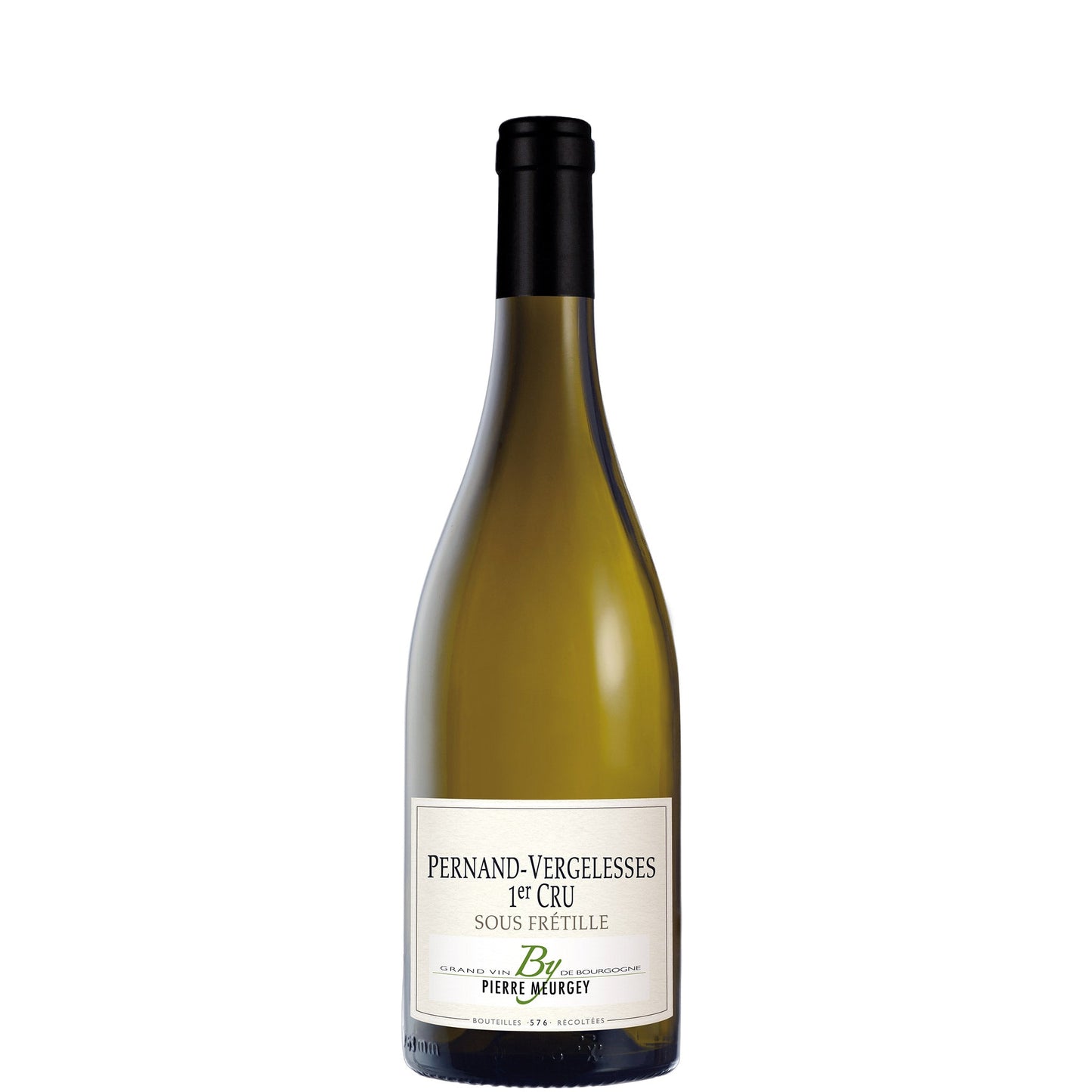
Pernand-Vergelesses Premier Cru 'Sous Frétille', Maison Pierre Meurgey, 2022
Pernand-Vergelesses Premier Cru 'Sous Frétille', Maison Pierre Meurgey, 2022
- 75cl
- 13.5%
- White Still
- Chardonnay
Couldn't load pickup availability

Optimal drinking window: Now - 2033
“Limpid colour, lime-flecked, with a bright, high-toned nose of apple skin, mirabelle, fresh almonds and acacia blossoms. Palate is focussed and energetic, the oak well absorbed, crunchy pear fruit and notes of beeswax and acacia honey lead to a juicy, sapid finish. Pernand is perennially under-rated but the quality here is undeniable and the value point exceptional. We missed out on getting an allocation of the 2021 but are delighted to have cases to offer this year. It comes highly recommended."
Tom Harrow, Head Wine Guru
Pierre Meurgey's Sous Frétille comes from an elevated, sunny site, at the top of the hill overlooking Pernand that was promoted to Premier Cru status (for whites) from the 2000 vintage onwards. The vines get plenty of sun but the height ensures a cooler fruit profile.
Our second vintage from Pierre, who divides his time between vineyards in Macon and the Cote d’Or, the latter being made in Château de Bligny, formerly the winemaking base of Jane Eyre. Pierre characterises 2022 has having “ripeness and preserved freshness". He suggests that despite the hot year the wines do not have the same concentration as 2020 - which were more forced because of the early harvest, and instead show a greater natural balance, being made from “happy fruit” as he puts it. He notes the wines have gained more body during élévage but retain a fresher style than normal solar vintages.
Right now, in 2026, the wine is entering its first window of real pleasure: the oak has integrated, the primary fruit is still vivid, and the acidity is doing its job. Over the next two to three years the pear and apple fruit will deepen and begin to take on more of a honeyed, nutty character. By 2029 or 2030 it should be at its most complex, with secondary notes of toasted almond, beeswax, and perhaps a hint of that flinty, struck-match quality that the best white Burgundy develops with age. We would not push it much beyond 2033; this is a wine built for finesse rather than a long haul in the cellar.
What the critics say:
"Two barrels, one new. Plenty of green reflexes in the colour. The oak only shows in a little coconut and vanilla the finish. Otherwise, there is a clean white fruit of some intensity, with a fine acidity to finish. Drink from 2026-2031. Tasted: October 2023."
Tasting Notes
AppearancePale gold with a limpid, lime-green shimmer at the rim.
NoseBright and high-toned, with apple skin, mirabelle, and fresh almonds lifting off the glass first. Acacia blossom adds a delicate floral thread, and there is just the faintest whisper of coconut from the oak — present but not pushing. It is a nose of energy rather than weight.
PalateFocused and crunchy, with pear fruit at its core and a texture that speaks of beeswax and acacia honey without straying into richness. The oak is well absorbed; what you feel instead is the natural tension of a cooler-picked Chardonnay from an elevated site. There is real intensity here, without any of the heaviness that 2022 can bring.
FinishLong, juicy, and sapid, with a clean mineral pull that keeps you reaching for another sip.
Overall impressionA wine that makes an excellent case for Pernand's Premier Crus: precise, characterful, and priced well below its quality level.
Food Pairings
In the villages around Beaune, a bottle like this would most naturally find itself beside a plate of jambon persillé, the parsley-flecked pressed pork terrine that is as Burgundian as it gets. Locals would also reach for it with quenelles de brochet in a light cream sauce, or a simple roast poulet de Bresse with tarragon butter. The wine's acidity and beeswax texture make it a natural friend to anything involving cream and mild herbs. A plate of Époisses, properly runny, would also be a fine way to close out a Sunday lunch.
We think this wine would go well with
Serve at 11-12°C, cold enough to keep the wine's crunch but not so cold that it mutes the floral and almond notes on the nose. No need to decant, though ten minutes in the glass before you start will open things up noticeably. A standard white Burgundy tulip or a wider-bowled Chardonnay glass both work well here; this is a wine with enough mid-palate texture to reward a little more surface area.
Sous Frétille sits at the top of the hill above Pernand-Vergelesses, elevated enough to keep temperatures in check even in warm vintages. The altitude brings a cooler fruit profile than the village sites below, preserving the naturally high acidity that defines white Pernand at its best. The site was only promoted to Premier Cru status for whites from the 2000 vintage, making it one of Burgundy's newer official recognitions, though the quality argument was clearly there long before the paperwork caught up. Soils are a mix of limestone and clay over the Hautes-Côtes bedrock, lending both energy and a flinty mineral backbone.
Pernand-Vergelesses is the village tucked behind the hill of Corton, sharing that grand slope with Aloxe-Corton and Ladoix-Serrigny but attracting far less fanfare. Its whites, made from Chardonnay, are among Burgundy's most consistently undervalued: higher-altitude vineyards, cooler expositions, and a restrained, mineral style that suits the grape beautifully without demanding grand cru prices. The Premier Cru vineyards for white wine are concentrated on the upper slopes, where Sous Frétille was officially promoted in 2000. If you want to drink serious white Burgundy without mortgaging anything, this is where to look.
The 2022 growing season in Burgundy began with a worryingly dry spring that had vignerons checking soil moisture levels weekly, followed by a summer that alternated between intense heat and welcome rainfall. The vines handled the stress remarkably well, producing smaller berries with concentrated flavours, though yields dropped significantly across both the Côte d'Or and Chablis. Harvest began earlier than usual, with many producers picking in late August under bright skies.
What emerged from the cellars shows a vintage of surprising finesse given the challenging conditions. The Pinot Noirs display vivid fruit and firm tannins without the jammy weight you might expect from a hot year, whilst the Chardonnays retained their mineral backbone alongside ripe stone fruit flavours. We're finding the village-level wines particularly compelling right now, drinking beautifully with just a year or two of bottle age, though the premier and grand crus will reward patience until the late 2020s.
FAQs
What does this wine taste like?
Expect a focused, energetic white Burgundy with crunchy pear, apple skin, acacia blossom, and a beeswax texture. It has the brightness of a cooler-site Chardonnay even in a warm vintage like 2022, with a long, mineral finish rather than any heaviness or excess richness.
When is the best time to drink it?
It is drinking well right now and will continue to do so until around 2031. The next two to three years are likely its sweet spot, when the primary fruit starts to take on more honeyed, nutty complexity without losing the freshness that makes it so appealing today.
What food does it pair well with?
This is a natural match for classic Burgundian dishes: jambon persillé, roast chicken with tarragon, quenelles de brochet in cream sauce, or a ripe soft cheese. Its acidity and texture make it versatile enough for most cream-based or gently herb-led dishes.
Is this wine worth cellaring?
Yes, within reason. It will reward patience until around 2030-2031, developing more honeyed and mineral complexity as it ages. That said, it is already genuinely enjoyable now, so there is no need to wait unless you want to.
How should I serve it?
Serve at around 11-12°C in a standard white Burgundy tulip or a wider Chardonnay glass. No decanting needed, but give it ten minutes in the glass before diving in and you will notice the nose opens up considerably.
Why is Pernand-Vergelesses worth paying attention to?
It sits in the shadow of Corton — literally and figuratively — which means prices rarely reflect the quality on offer. The elevated sites, like Sous Frétille, produce white Burgundy with real precision and mineral character. At this price point, it is one of the Côte de Beaune's better-kept secrets, though that reputation is slowly catching up with it.
Explore related wines


What are you looking for tonight? Tell me the occasion, a grape, a region — or just try a suggestion below.
Your recommendations will appear here.
-
-
Speak to one of our Wine Gurus
Speak to a Wine GuruWith years of experience, our team can help you with all your wine buying and selling needs