

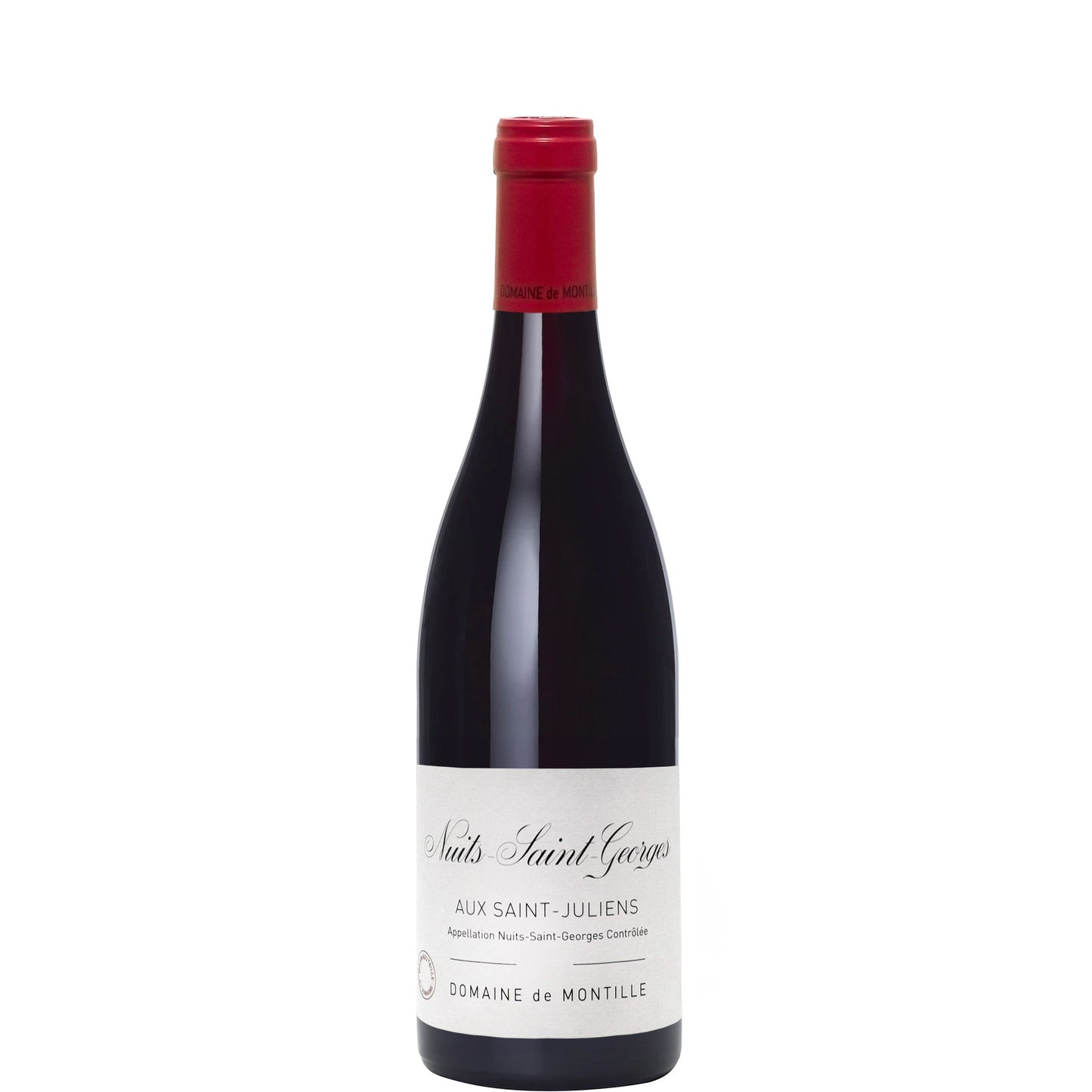
Nuits-Saint-Georges 'Aux Saint-Juliens', Domaine de Montille, 2019
Nuits-Saint-Georges 'Aux Saint-Juliens', Domaine de Montille, 2019
- 75cl
- 12.5%
- Red Still
- Pinot Noir
- Organic
- Biodynamic
Couldn't load pickup availability

Optimal drinking window: Now - 2038
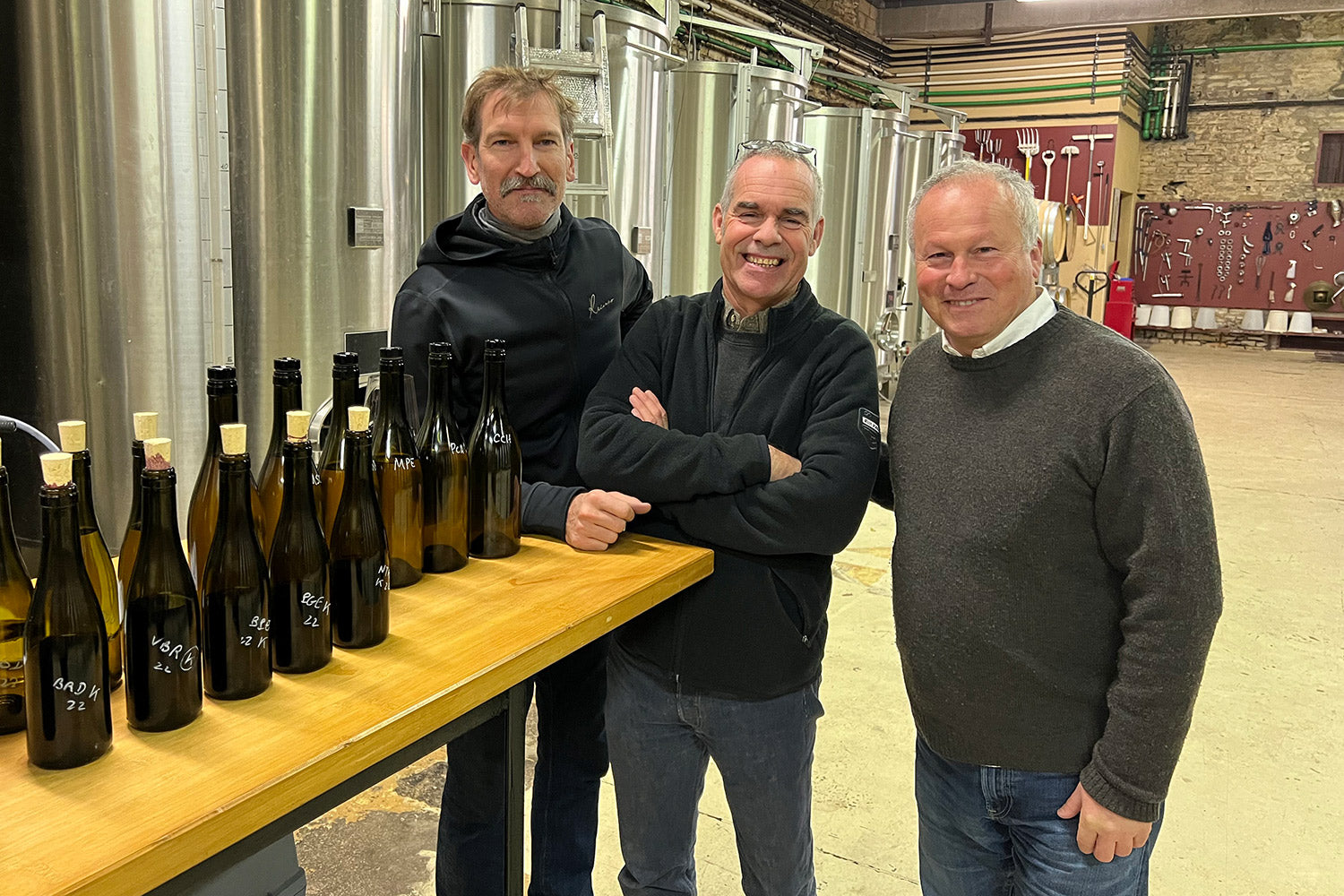
Tasting at de Montille is always an education as the opportunity to sample across the Cote d’Or, the domaine’s consistently top class reds and whites, gives an unrivalled perspective on the quality and style of the vintage, accompanied by Brian Sieve’s typically measured appraisal. Only marginally affected by the frosts of 2016 and 2017, the domaine has enjoyed fairly homogeneous yields across the last three vintages.
Great fruit set and warmer evenings but not the relentless heat that affected some sites established the tone for the domaine’s wines, and as ever, Brian is strict about picking based on the acidity profile of the grapes, which has ensured balanced wines with the correct pH and alcohol levels under 13.3%. Elegance, focus and energy epitomise the domaine’s wines and they were a pleasure to taste as always.
Currently in its primary phase with vibrant dark fruit dominating, this wine will benefit from 2 years of cellaring to allow the tannins to integrate and the mineral character to emerge more clearly. From 2028 onwards, expect the iron oxide terroir to become more prominent while secondary notes of forest floor and spice develop complexity. The wine should reach its peak around 2032-2035, maintaining its structure and mineral backbone throughout its drinking window until 2038.
What the critics say:
"From 60 year old vines. I am told that there are balls of iron oxide with magnesium in this vineyard. One third whole bunch and one third new wood. Quite a rich purple and the nose is striking too, with heady dark raspberry fruit, some spice behind rather than pepper, good density and structure for a village wine. Tasted: October 2020"
Tasting Notes
AppearanceRich purple with good density and a youthful rim.
NoseStriking dark raspberry fruit leads, followed by warming spice that's more exotic than simple pepper. There's an underlying mineral thread that speaks to the iron-rich soils, with subtle whole bunch influence adding complexity without overwhelming the fruit.
PalateGood density for a village wine, with structured tannins that frame rather than dominate the dark berry core. The iron minerality is clearly present, adding backbone and length to what could otherwise be a simple fruit-forward wine. The one-third new oak is well-integrated, supporting rather than masking the vineyard character.
FinishLong and mineral-driven, with the iron oxide terroir providing persistence and a slightly metallic edge that's distinctive to this lieu-dit.
Overall impressionA village wine with serious intent, built for cellaring and patient enough to reward those who wait.
Food Pairings
In Burgundy, this style of structured Nuits-Saint-Georges pairs naturally with the region's game dishes, particularly wild boar or venison slow-cooked with juniper and local herbs. The classic coq au vin made with the same Pinot Noir would be perfect, as would beef bourguignon simmered for hours until tender. Local charcuterie, especially the region's famous jambon persillé with its parsley-flecked gelée, complements the wine's mineral precision. The iron-rich character also works beautifully with roasted duck breast and the earthy flavours of Burgundian mushroom dishes.
We think this wine would go well with
Serve at 16-17°C to allow the mineral complexity to express itself fully. Decant for 30-45 minutes to soften the structured tannins and let the whole bunch spice integrate with the fruit. Use Burgundy bowls rather than Bordeaux glasses to concentrate the subtle aromatics and highlight the wine's elegance over power.
The Aux Saint-Juliens lieu-dit contains distinctive iron oxide deposits mixed with magnesium, creating a mineral-rich terroir that shows clearly in the wine's structure. These 60-year-old vines have deep roots that access this unique soil composition, contributing to the wine's characteristic spice and mineral backbone. The site's exposure and drainage provide ideal conditions for Pinot Noir to develop complexity while retaining freshness.
Nuits-Saint-Georges produces some of Burgundy's most structured and age-worthy village wines, lacking grand cru vineyards but compensating with premier crus of exceptional quality. The appellation's wines tend to be more muscular than neighbouring Gevrey-Chambertin, with distinctive mineral precision from the limestone and iron-rich soils. Village wines like this Aux Saint-Juliens often punch above their weight, offering serious Burgundy character at more accessible prices than the celebrated premier crus.
The 2019 vintage in Burgundy delivered exactly what vignerons needed after a string of challenging years: a textbook growing season that let the grapes ripen slowly and evenly. Spring arrived gently, summer stayed warm without punishing heat spikes, and crucially, September brought those cool nights that preserve acidity whilst allowing full phenolic ripeness. We find ourselves talking about 2019 as one of those vintages where nature simply cooperated, giving winemakers healthy fruit with natural balance rather than forcing them to correct for extremes in the cellar.
What emerged are Burgundies with remarkable freshness married to genuine depth—the Pinot Noirs show that silky texture and bright red fruit character that makes great Burgundy so compelling, whilst the Chardonnays have both the mineral backbone and subtle richness that age beautifully. The quality runs impressively deep across all appellations, from village wines that drink like premier crus to grand crus that remind you why Burgundy commands such devotion. These wines are drinking beautifully now if you fancy them young and vibrant, though we suspect the better bottles will reward patience well into the 2030s.
FAQs
What does this wine taste like?
Dark raspberry fruit with distinctive spice and iron minerality, more structured and serious than typical village Burgundy.
When should I drink this wine?
While approachable now, we'd recommend waiting until 2028 for the tannins to integrate, then drinking until 2038.
What food pairs well with this wine?
Classic Burgundian dishes like coq au vin or beef bourguignon, plus game meats and local charcuterie.
Should I decant this wine?
Yes, decant for 30-45 minutes to soften the tannins and allow the whole bunch spice to integrate with the fruit.
Is this wine worth cellaring?
Absolutely - this has the structure and mineral backbone to age gracefully for over a decade, developing complexity with time.
How does this compare to premier cru Nuits-Saint-Georges?
While lacking the power and complexity of premier cru sites, this village wine offers serious Burgundy character at a more accessible price point.
Explore related wines


What are you looking for tonight? Tell me the occasion, a grape, a region — or just try a suggestion below.
Your recommendations will appear here.
-
-
Speak to one of our Wine Gurus
Speak to a Wine GuruWith years of experience, our team can help you with all your wine buying and selling needs