

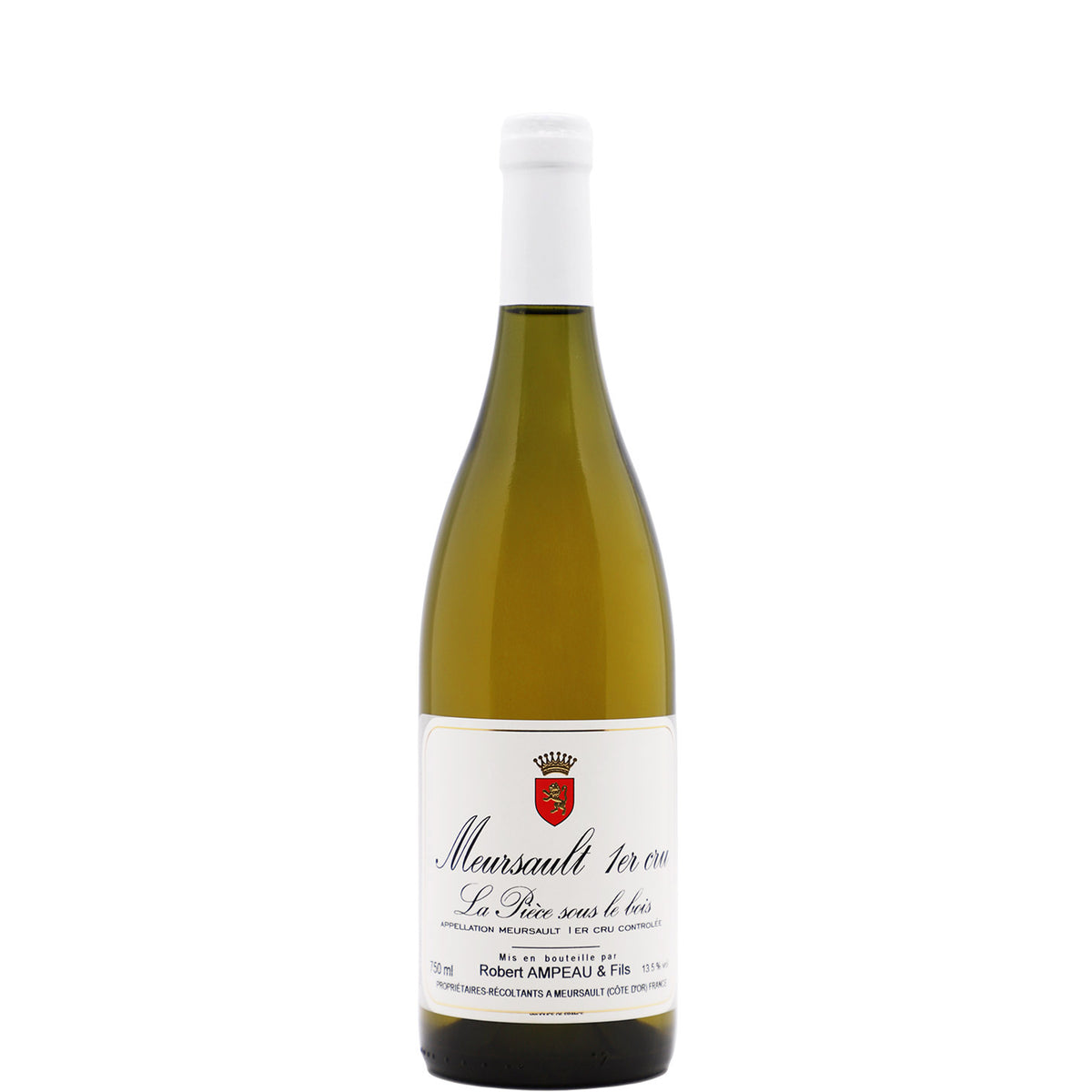
Meursault Premier Cru 'La Pièce sous le Bois', Domaine Robert Ampeau et Fils, 2002
Meursault Premier Cru 'La Pièce sous le Bois', Domaine Robert Ampeau et Fils, 2002
- 75cl
- 13.5%
- White Still
- Chardonnay
Couldn't load pickup availability
Enquire about this item

Drinking window: 2026 - 2034
Est. delivery in late autumn 2026
Ampeau is one of Burgundy's great eccentrics, and we mean that as the highest compliment. The domaine releases wines years, sometimes decades, after the harvest — not because they forgot, but because Michel Ampeau believed his wines were simply not ready before then. A 2002 Meursault premier cru hitting the market now is, by their standards, practically youthful.
La Pièce sous le Bois is one of the larger and more characterful premier cru lieux-dits in Meursault, sitting at the southern end of the appellation where the soils deepen and the wines tend toward richness and texture rather than the laser precision of Perrières or Charmes.
As these wines have remained unmoved in the cold cellars at Ampeau since bottling, the conditions for a very slow, undisturbed ageing are perfect. Given the nature of the wines, we are unable to offer credit for corked/out of condition bottles, but our experience with these bottles is that the condition and ex-cellar provenance is impeccable.
La Pièce sous le Bois lies at the southern end of Meursault's premier cru belt, bordering Blagny, at elevations of around 280 to 310 metres. The soils here are deeper and more clay-rich than those of Perrières, with a base of Bathonian limestone that lends the wine its structural backbone. The extra clay brings weight and a rounder texture, and the slight southerly aspect gives good ripeness even in cooler years like 2002. That combination of richness and underlying stony grip is what makes this lieu-dit so compelling.
Meursault is the most important white wine village in the Côte de Beaune, producing Chardonnay of extraordinary range and depth across around 400 hectares. Unlike its neighbours Puligny-Montrachet and Chassagne-Montrachet, Meursault has no grand cru vineyard, but its premiers crus — Perrières, Charmes, Genevrières, and Pièce sous le Bois among them — are among the finest white wine sites in the world. The appellation's character tends toward richness, texture, and a characteristic nuttiness that distinguishes it from the more tightly wound wines of Puligny. Yields are controlled and oak ageing in French barrique is standard, though the best producers use it with restraint.
The 2002 growing season in Burgundy demanded patience and nerve in equal measure. A cool, unsettled summer kept growers anxious well into August, but a warm, dry September arrived just in time and transformed the picture entirely. Those who waited, picking at full ripeness rather than rushing for the door, were rewarded handsomely. The result was a vintage built on genuine freshness rather than forced concentration — acidity bright and structural, fruit precise and well-defined. Pinot Noir in particular found its footing, producing wines with real grip and definition without the weight that warmer years can impose.
Two decades on, 2002 looks like one of the more quietly serious Burgundy vintages of its era — not the loudest in the room, but often the most satisfying. The reds from premier and grand cru sites have aged with real composure, and the best are drinking beautifully right now, in the way that only properly mature Burgundy can. We would not panic about drinking them, but there is no urgency either. Good bottles from serious producers should hold comfortably until 2030 and beyond. The whites, though less talked about, were precise and taut in their youth and the best should still reward those who kept faith with them.

OUR GROWERS
Robert Ampeau & Fils


