
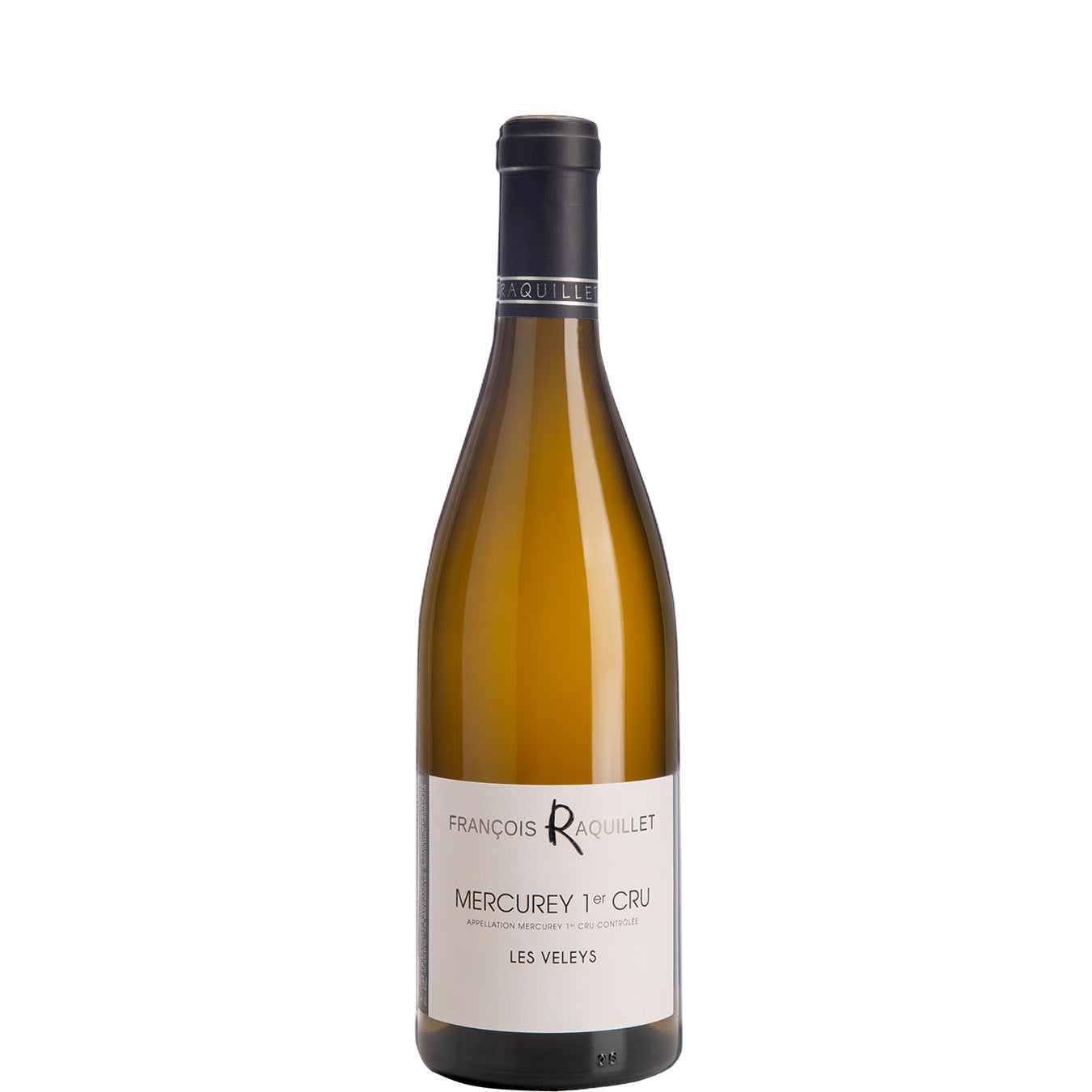
Mercurey Blanc Premier Cru 'Les Veleys', Domaine François Raquillet, 2021
Mercurey Blanc Premier Cru 'Les Veleys', Domaine François Raquillet, 2021
- 75cl
- 13.5%
- White Still
- Chardonnay
Couldn't load pickup availability

Optimal drinking window: Now - 2037
Widely considered the best producer of the village (and among the leaders of the region), Francois has been harvesting his 12ha (8 planted to red and 4 to white) of increasingly old vines, some 70 years+, at the end of August for the last six years so is far less concerned by climate change than many Côte d’Or growers to the north.
In fact the Chalonnaise has been a beneficiary of the hotter, drier weather as it has helped reduce yields, and increase concentration and ripeness in the grapes, ultimately leading to richer, more gourmand, and delicious wines.
This 2021 is drinking beautifully now, with primary fruit still prominent but beginning to integrate with the oak and mineral components. Over the next 2-3 years, we expect the stone fruit to become more honeyed whilst developing classic white Burgundy secondary characters of hazelnut and brioche. The wine should reach its peak between 2028-2034, when the mineral backbone will provide elegant structure to the developed fruit. Beyond 2037, the wine may begin to show tertiary development, though quality Mercurey whites can surprise with their longevity when properly stored.
Tasting Notes
AppearanceBright golden yellow with green highlights, showing the wine's youth and vitality.
NoseConcentrated stone fruit and citrus peel lead, followed by subtle oak spice and a distinctive chalky minerality. There's a lovely tension between the ripe fruit and the limestone-driven precision that marks quality Chalonnaise whites.
PalateMedium-bodied with excellent concentration, showing white peach and grapefruit wrapped in well-integrated oak. The mineral backbone provides structure without overwhelming the fruit, whilst the acidity keeps everything fresh and focused.
FinishLong and mineral-driven with citrus peel and a saline quality that speaks of the limestone terroir.
Overall impressionA premier cru white Burgundy that delivers genuine complexity and terroir expression at excellent value.
Food Pairings
In Burgundy's Chalonnaise, this style of Chardonnay would traditionally accompany the local freshwater fish from the Saône river, particularly pike or perch in cream sauce. Escargots de Bourgogne with garlic and parsley butter make a classic pairing, as does the region's famous Chaource cheese, whose creamy texture complements the wine's mineral backbone. Coq au vin blanc, made with the local white wine, creates a harmonious match, whilst the traditional jambon persillé of Burgundy provides a perfect contrast to the wine's acidity and oak integration.
We think this wine would go well with
Serve at 11-13°C, slightly warmer than basic white Burgundy to allow the complexity to show. No need to decant, but do open 30 minutes before serving to let the wine breathe and the oak integrate further. Use proper Burgundy glasses with a wide bowl to concentrate the aromatics. If cellaring, store on its side in a cool, dark place with consistent temperature.
Les Veleys sits on the limestone-rich slopes of Mercurey's premier cru vineyards, with clay-limestone soils that provide both drainage and water retention. The east-facing exposure captures morning sun whilst avoiding the afternoon heat, crucial for maintaining acidity in Chardonnay. These soils, combined with Raquillet's old vines, create wines with mineral backbone and the ability to age gracefully. The Chalonnaise's continental climate, now moderated by warming trends, produces riper fruit with better concentration than in previous decades.
Mercurey is the Côte Chalonnaise's largest and most important appellation, producing both red and white wines from Pinot Noir and Chardonnay respectively. The appellation includes 32 premier cru vineyards, with Les Veleys among the most respected for white wines. Mercurey sits between the prestigious Côte d'Or to the north and Mâcon to the south, offering genuine Burgundian character at more accessible prices. The appellation's limestone-rich soils and continental climate create wines with both elegance and substance, often representing exceptional value compared to their more famous Côte d'Or neighbours.
The 2021 growing season in Burgundy started badly and got worse before pulling off one of wine's great escapes. Spring frost in April devastated vineyards across the Côte d'Or, followed by a summer that alternated between biblical downpours and scorching heat. Many producers lost 50% or more of their crop to the frost alone, then watched hail batter what remained in some unlucky villages. By August, with rot creeping through rain-soaked vineyards, even the most optimistic vignerons were writing off the vintage.
What emerged from this chaos surprised everyone: wines with remarkable freshness and purity, if you can find them. The tiny yields meant those grapes that survived were intensely concentrated, while the September sunshine saved the day with perfect ripening conditions. We find the reds show beautiful fruit clarity without heaviness, drinking with an immediacy that makes them irresistible now but promising a decade or more of evolution. The whites are particularly stunning, with a mineral intensity that cuts through their richness. Yes, there's not much 2021 Burgundy about, and yes, it's expensive, but this is one of those vintages where disaster bred greatness.
FAQs
What does this wine taste like?
Concentrated white Burgundy with stone fruit, citrus, and mineral tension from the limestone soils, wrapped in subtle oak spice.
When should I drink this wine?
Drinking beautifully now and will continue to develop complexity until 2037, with peak drinking likely between 2028-2034.
What food pairs well with this wine?
Classic matches include roasted chicken, fish in cream sauce, or Burgundian specialities like escargots and Chaource cheese.
How should I serve this wine?
Serve at 11-13°C in proper Burgundy glasses, opened 30 minutes beforehand to let it breathe and show its full complexity.
Is this wine worth cellaring?
Absolutely - it has the structure and acidity to develop beautiful secondary complexity over the next decade, though it's delicious now too.
How does this compare to Côte d'Or white Burgundy?
It offers genuine Burgundian character and terroir expression at better value than most Côte d'Or wines, with similar quality from one of the region's best producers.
Explore related wines


What are you looking for tonight? Tell me the occasion, a grape, a region — or just try a suggestion below.
Your recommendations will appear here.

-
-
Speak to one of our Wine Gurus
Speak to a Wine GuruWith years of experience, our team can help you with all your wine buying and selling needs