
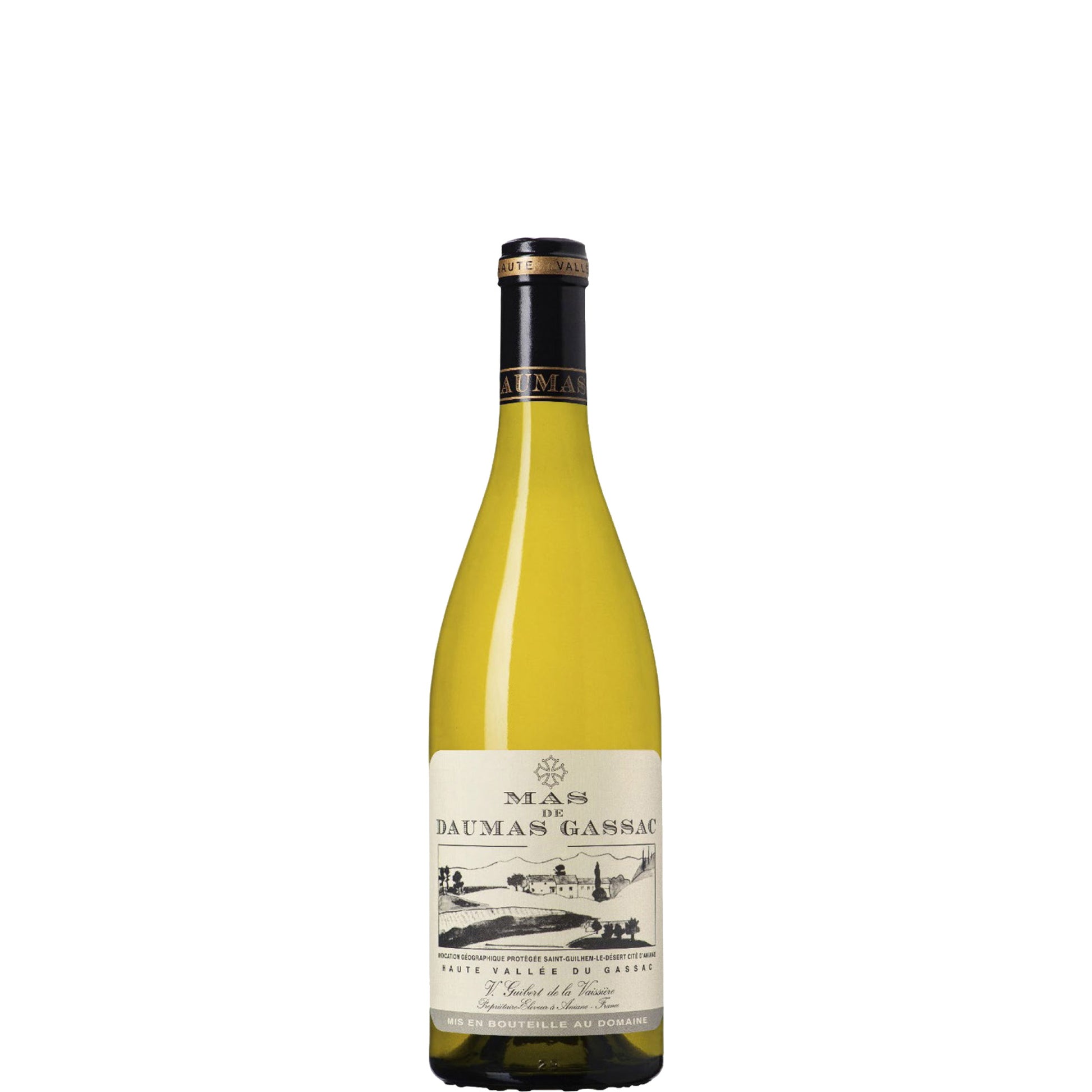
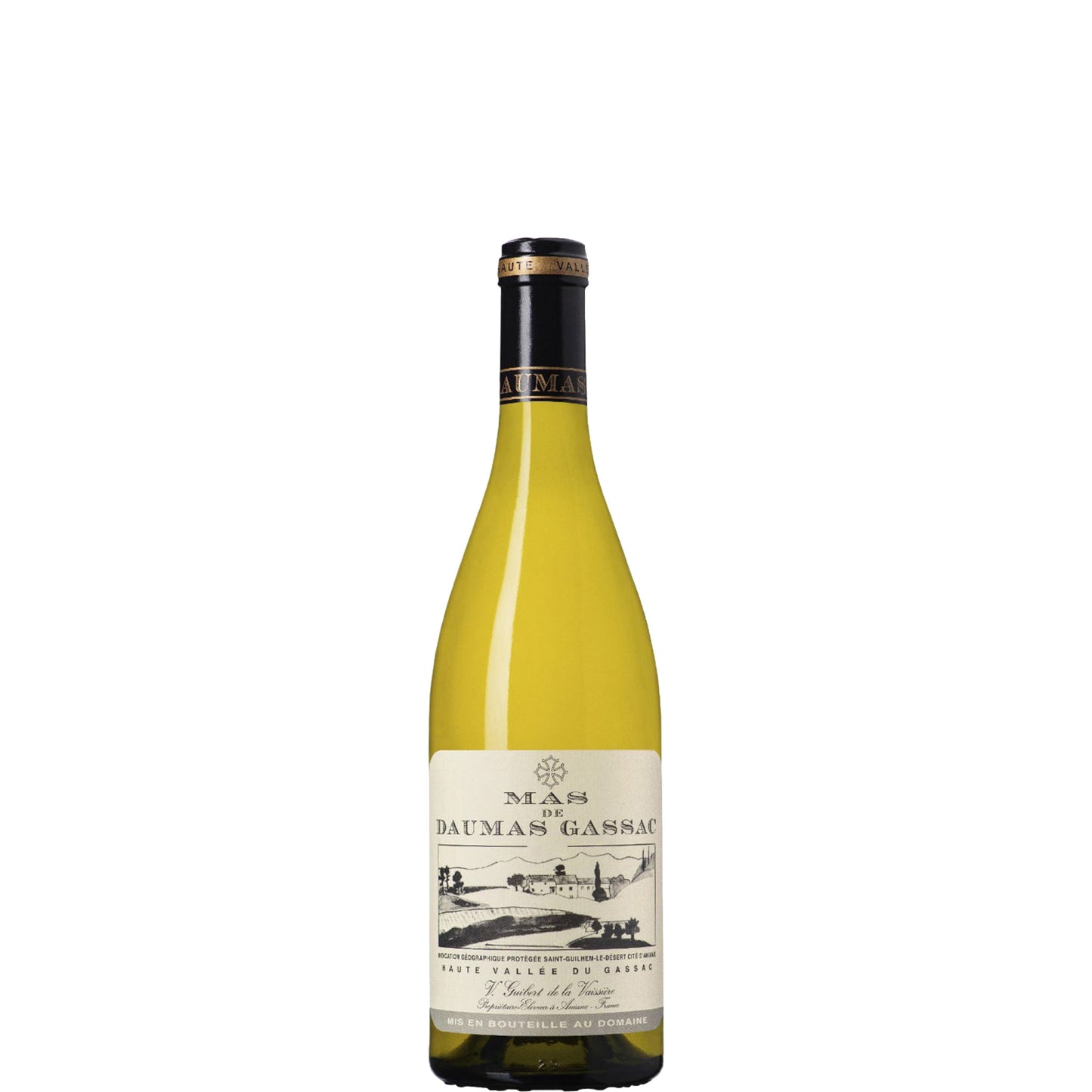
Mas De Daumas Gassac, Blanc, 2020 - Half-bottle
Mas De Daumas Gassac, Blanc, 2020 - Half-bottle
- 37.5cl
- 13.5%
- White Still
- Viognier, Chardonnay, Petit Manseng, Chenin Blanc
- Organic
Couldn't load pickup availability

Optimal drinking window: 2026 - 2033
A blend of Viognier, Chardonnay, Petit Manseng, and a touch of Chenin Blanc, this is a distinctive wine with plenty of character. Medium-bodied and textured, it unfolds in layers of tropical fruit, ripe stone fruit, and a drizzle of honey. The finish is long and lingering, keeping that richness in balance. A great match with French onion soup.
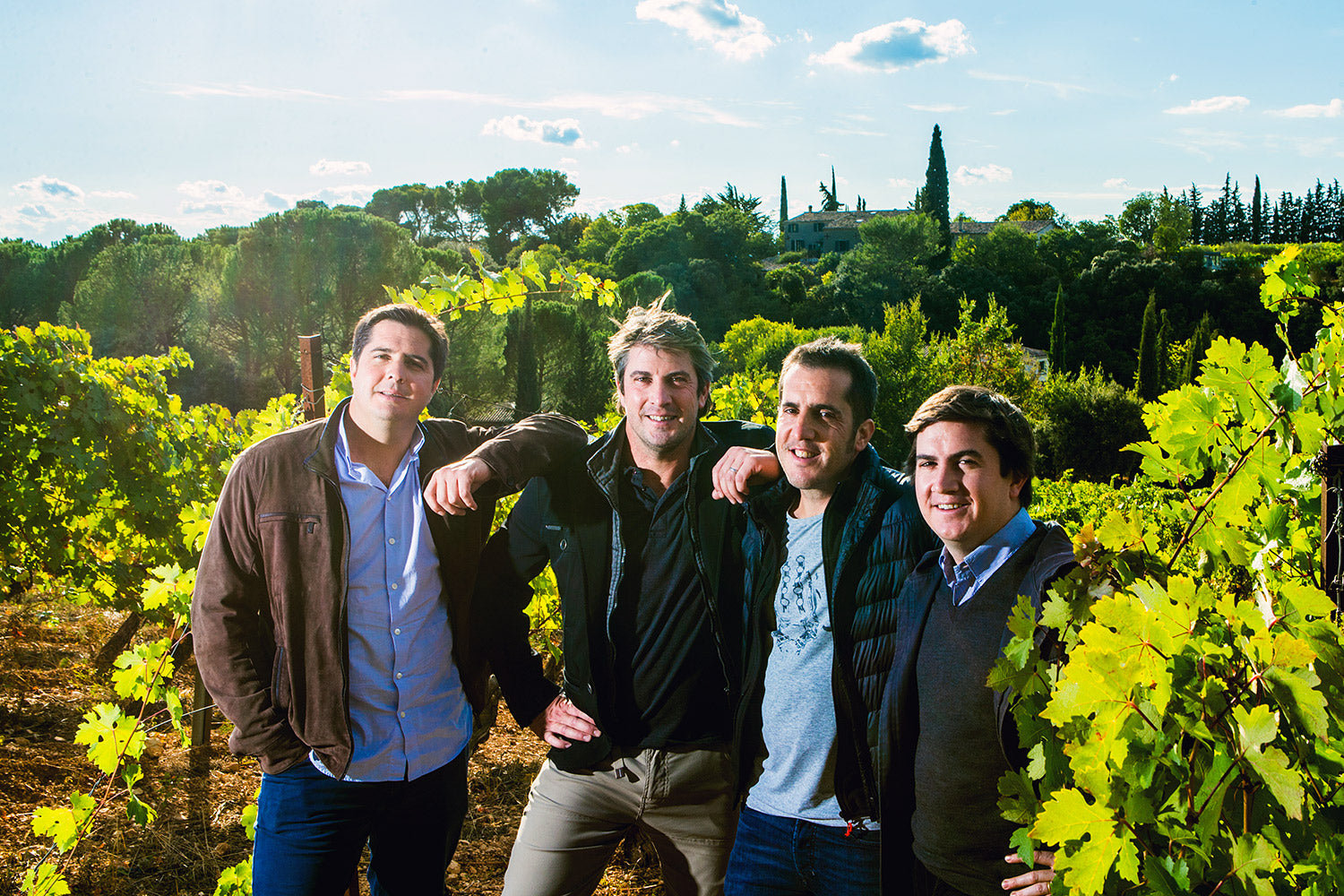
Famous for its Grands Vins, the Mas de Daumas Gassac has been a family owned vineyard for more than 40 years and belongs to the Guibert family. The estate is set in a wild and enchanting valley, close to the magnificent romanesque abbey of Saint-Guilhem-le-Désert. 50 hectares of a deep, well drained soil, free from any chemical fertilisers.
This 2020 needed a few years to begin unfolding its layers properly. Peak drinking will likely arrive around 2027-2030, when the honey and wax characteristics fully emerge and the bitter elements soften into sophisticated balance. Even then, the wine should hold its structure and concentration well into the 2030s.
What the critics say:
"Pale gold. Awkward, at first – needed lots of air. (To be honest, this wine needs lots more time…) So young and unformed, but very intense. This is fisted into a white-knuckled ball of concentration, still angular, but even so, it's a kaleidoscope of layers, flavours, components. The ripeness of golden Cape gooseberries and apricots pushes through clouds of May blossom and angelica flower. Grapefruit and passion fruit, bitter-salty quinine, linden and mimosa florals, honey, wax and lime. On the finish, cardamom and white pepper and chalk linger, dry and insistent. A wine that, even in its cocoon, has weight and presence. When I taste this wine, it feels like a heavy pewter spoon, tarnished into worn beauty, cold, pressed into warm wax, laid on bronze silk. Buy this wine, tuck it into a far corner of the cellar, come back to it in three, four, five years' time."
Tasting Notes
AppearancePale gold with brilliant clarity and subtle green highlights.
NoseInitially tight and angular, requiring generous aeration to reveal its kaleidoscope of aromas. Golden Cape gooseberries and ripe apricots emerge through clouds of May blossom and angelica flower. Grapefruit pith mingles with passion fruit intensity, while deeper notes of honey, beeswax, and lime zest add complexity.
PalateMedium-bodied but dense with concentration, feeling like 'a heavy pewter spoon pressed into warm wax'. Tropical fruit ripeness balances bitter-salty quinine notes, while linden and mimosa florals provide perfumed lift. The texture is layered and textured, unfolding in waves of flavour that reveal the wine's youthful potential.
FinishLong and insistent, with cardamom spice, white pepper heat, and chalky minerality lingering on the palate.
Overall impressionA wine coiled like a spring, demanding patience but promising exceptional complexity for those who wait.
Food Pairings
In the Languedoc, this style of rich white wine traditionally accompanies hearty regional dishes like cassoulet, where the wine's weight matches the richness of duck confit and white beans. Local fishermen pair similar wines with bourride, the region's saffron-scented fish stew, while inland, it complements roasted goat with herbs de Provence. The wine's honeyed richness makes it perfect with aged Roquefort from nearby caves, a pairing beloved by locals who understand how the wine's acidity cuts through the cheese's intensity.
We think this wine would go well with
Serve well-chilled at 10-12°C, though allow it to warm slightly in the glass to reveal its full complexity. No need to decant, but do give it time to breathe in a generous bowl-shaped glass that can capture its evolving aromatics. If opening now, plan to finish the bottle over several hours as it continues developing in the glass.
The estate sits in a wild valley near the abbey of Saint-Guilhem-le-Désert, where 50 hectares of deep, well-drained soils provide exceptional drainage without any chemical intervention. This unique microclimate and soil composition allows the blend of varieties to ripen slowly and develop remarkable concentration. The terroir's natural purity translates directly into wines that express both power and finesse, requiring time to reveal their full complexity.
Mas de Daumas Gassac operates outside the traditional AOC system in the Languedoc, choosing freedom over formal appellation constraints. This allows the Guibert family to craft wines from international varieties alongside local ones, creating blends that would be impossible under stricter regional rules. The estate has earned recognition as one of the 'Grands Vins' of the Languedoc through sheer quality rather than regulatory compliance. Their approach champions terroir expression over bureaucratic tradition, proving that exceptional wines can emerge from unconventional methods.
The 2020 vintage in Languedoc threw winemakers a curveball, starting with a relatively mild winter that gave way to a challenging spring marked by significant rainfall and cooler temperatures. Just when producers were beginning to worry about disease pressure and delayed flowering, the summer heat arrived with characteristic Mediterranean intensity, creating the sort of stop-start growing season that separates the wheat from the chaff. Harvest came later than the scorching years of 2017 and 2019, giving grapes crucial hang time to develop flavour whilst retaining the acidity that makes Languedoc wines so food-friendly.
What emerged was a vintage with real personality rather than brute force. The Syrahs show lovely spice and structure without the jammy overripeness that can plague hot vintages, whilst Grenache and Mourvèdre found their sweet spot between power and finesse. We find the reds drinking beautifully now, with enough backbone to cellar for another five to eight years if you fancy waiting. The whites, particularly those from higher altitude sites, captured a freshness that makes them absolute gems for current drinking.
FAQs
What does this wine taste like?
Intensely concentrated tropical and stone fruits with honey, balanced by citrus and mineral elements. Think apricots and passion fruit with a chalky, spiced finish.
When should I drink this wine?
We'd recommend patience - this 2020 is still very young and needs until at least 2029 to show its best. It will reward cellaring until the mid-2030s.
What food pairs well with this wine?
Rich dishes like French onion soup work beautifully, as do roasted poultry, creamy fish dishes, or aged hard cheeses. The wine's weight can handle substantial flavours.
How should I serve this wine?
Serve chilled at 10-12°C in a generous white wine glass. Let it warm slightly and breathe - this wine evolves constantly as it opens up.
Is this wine worth cellaring?
Absolutely. This is built for the cellar and will transform dramatically over the next decade. Buy it now and tuck it away for future rewards.
Why is this wine in a half-bottle?
Half-bottles are perfect for this style - the wine's richness and concentration make 375ml ideal for two people, and the format ages beautifully while being more accessible for special occasions.


What are you looking for tonight? Tell me the occasion, a grape, a region — or just try a suggestion below.
Your recommendations will appear here.
-
-
Speak to one of our Wine Gurus
Speak to a Wine GuruWith years of experience, our team can help you with all your wine buying and selling needs