

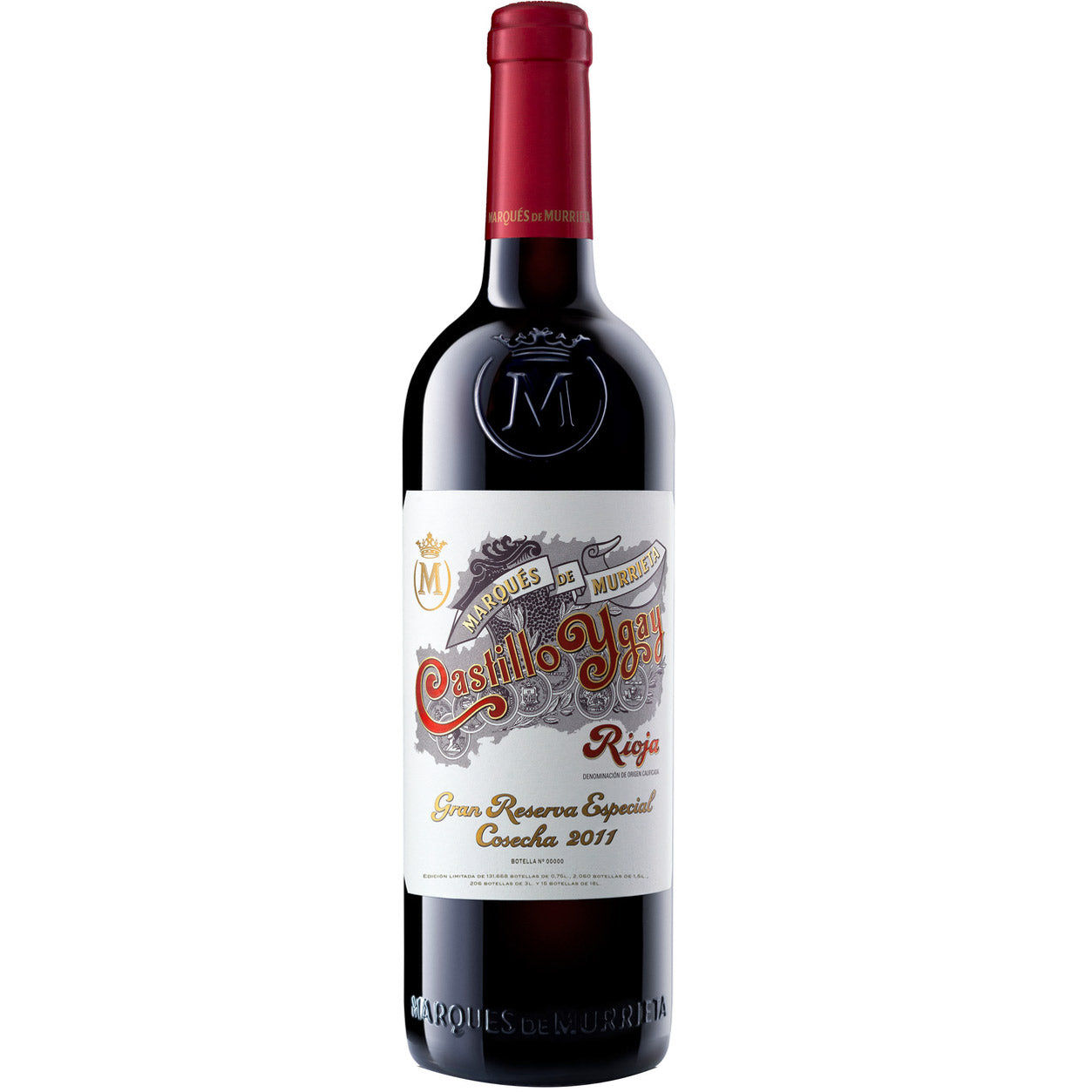
Marqués de Murrieta Castillo Ygay, Gran Reserva Especial, 2011 - Magnum
Marqués de Murrieta Castillo Ygay, Gran Reserva Especial, 2011 - Magnum
- 150cl
- 14%
- Red Still
- Tempranillo, Mazuelo
- Organic
- Biodynamic
Couldn't load pickup availability

Optimal drinking window: Now - 2045
Est. delivery in September, 2026
Castillo Ygay is the flagship label of Marqués de Murrieta, one of Rioja's oldest and most storied estates, and the Gran Reserva Especial is the wine they've been making — in various guises — since the nineteenth century.
It's produced only in exceptional vintages, and the 2011 is a Tempranillo-led blend aged for an extended stretch in American oak before bottling. In magnum it has had the chance to develop at a gentler, more regal pace than its standard-format counterparts. The result is something that sits squarely in the grand Rioja tradition: amber-edged, savoury, and bracingly serious.
What the critics say:
"Fantastic structure to this with a mouthfeel of compacted velvet as well as crunchy acidity. Black truffle. Black berry. Light balsamic. It's full and layered with a powerful tannin structure and a flavorful finish. Decant two hours before serving. Drink or hold."
"The 2011 Castillo Ygay Gran Reserva Especial was produced with a blend of 84% Tempranillo and 16% Mazuelo (Cariñena) from a plot called La Plana that was planted in 1950 at 485 meters in altitude, the highest in the Ygay property. The grapes were picked between September 17 and 22, and the Mazuelo was later, on September 28. The bunches were destemmed and lightly crushed and put to ferment in stainless steel for 11 days with constant pump-overs and punch-downs. The Tempranillo matured for 28 months in American oak barrels and the Mazuelo for 28 months in French barriques. It's 14% alcohol and has a pH of 3.65 with 5.6 grams of acidity (measured in tartaric acid per liter). It's very tough to follow a vintage like 2010, and 2011 was not an easy year; the wine is possibly more powerful and concentrated but keeping the freshness, with a longer élevage but very young and lively, with an elegant texture and mouthfeel, great balance and elegance. The wine feels lively, and it seems impossible that it has been in bottle for over six years. It has the classical profile with the effect of the American oak barrels, cigar box, cedar wood, sweet spices—aromatic, intoxicating, complex. This should age very slowly and for a very long time. 131,668 bottles produced. It was bottled in February 2016. No 2013, 2014 or 2015 will be produced. They have a 2012, and they will jump from that to 2016. The 2012 will be released in late 2023 or early 2024 and the 2016 in 2027 or 2028. Fingers crossed..."
The Ygay estate sits on a plateau south of Logroño at around 450 metres altitude, where the soils are predominantly clay-limestone, offering good water retention and natural acidity that keeps the wines fresh despite the warm continental climate. The altitude moderates the summer heat and extends the growing season, which in a year like 2011 — warm and dry — produced concentrated, well-structured fruit with genuine depth. The combination of calcareous subsoil and diurnal temperature variation is central to why Ygay wines age so decisively.
Rioja is Spain's most internationally recognised fine wine appellation, divided into three subzones — Rioja Alta, Rioja Alavesa, and Rioja Oriental — though wines can be blended across them. Castillo Ygay sits within Rioja Alta, the coolest and most prestigious of the three. Rioja DOCa (Denominación de Origen Calificada) — the only DOCa in Spain alongside Priorat — has strict rules governing oak ageing: Gran Reserva wines must spend a minimum of two years in oak and three in bottle before release, though Murrieta far exceeds this. Extended wood ageing is not just permitted here, it's the region's defining tradition.
The 2011 vintage in Rioja arrived after a growing season that kept producers on their toes. Spring brought welcome rainfall after a dry winter, but summer turned challenging with periods of intense heat followed by cooler spells that slowed ripening. September rains threatened the harvest timing, forcing many bodegas to pick earlier than ideal or wait and gamble on better weather windows.
What emerged was a vintage of two faces: those who picked early captured bright acidity and freshness, whilst those who held their nerve through the autumn uncertainty were rewarded with more concentrated fruit. The Tempranillo shows particular vibrancy here, with red berry flavours that feel immediate and approachable rather than the more structured, age-demanding style of classic Rioja years. We find these wines drinking beautifully now through 2026, offering that rare pleasure of serious Rioja that doesn't demand decades in your cellar.

OUR GROWERS
Marqués de Murrieta
Explore related wines


-
-
Speak to one of our Wine Gurus
Speak to a Wine GuruWith years of experience, our team can help you with all your wine buying and selling needs