

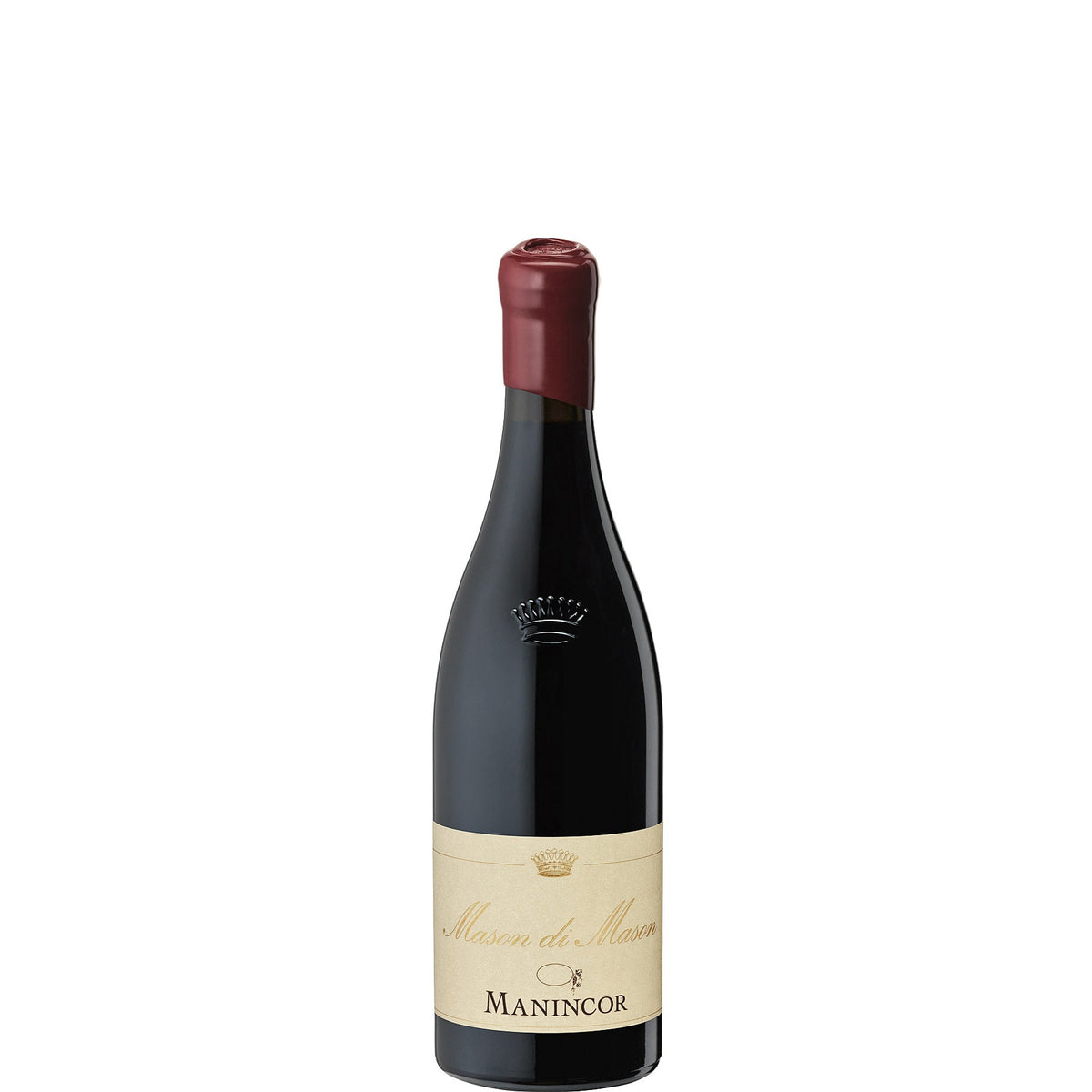
Manincor, Mason Di Mason, 2016 - Half-bottle
Manincor, Mason Di Mason, 2016 - Half-bottle
- 37.5cl
- 13.5%
- Red Still
- Pinot Nero
- Biodynamic
Couldn't load pickup availability

Optimal drinking window: 2026 - 2034
About Manincor, Mason Di Mason, 2016 - Half-bottle
Manincor’s Mason di Mason 2016 is serious Alto Adige Pinot Noir, made from the highest and oldest vines at the Mazon site, a south-facing, well-ventilated plateau at around 400–500 metres. Manincor describes it as its “grand cru from a grand cru” — only the best parcels and barrels make the cut.
The 2016 has really hit its stride. Expect ripe cherry and plum, with hints of cinnamon, nutmeg and vanilla, alongside the savoury, slightly Mediterranean character that makes this part of Alto Adige so interesting. The palate is broad but silky, with fine-grained tannins, plenty of freshness and a long, savoury finish. It’s Pinot Noir with a little more muscle than Burgundy, but none of the heaviness.
In the cellar, fermentation is spontaneous in open-top oak vats, with around three weeks on the skins, followed by 12 months in barriques, half of them new. Manincor farms biodynamically and selects only the finest barrels for Mason di Mason.
The 2016 Mason di Mason is in a fine place right now: the primary fruit has settled, the oak is fully integrated, and the mineral, secondary complexity that makes this wine worth seeking out is front and centre. We'd say it's at peak drinking from 2026 until around 2030, when the fruit will begin to dry out a little and the wine will become more austere than expansive.
What the critics say:
"Dried cranberries, petrichor, tart cherries and darker plums all spring into action. The palate is very clear-cut and serious with electric acidity and finely molded tannins. Full-bodied, subtle and polished. Effortless finesse in motion. Drink now."
Tasting Notes
AppearanceDeep golden yellow with a warm, burnished hue — more colour than you'd expect from a young Pinot Bianco, and a signal of the wine's textural ambition.
NoseWhite peach and ripe pear sit alongside toasted almond and a subtle waxy, honeyed note that speaks to age and oak integration. Underneath, there's a cool mineral character — chalk dust and struck flint — that keeps everything focused and stops it from feeling heavy.
PalateBroad and textured, but held in check by firm, cleansing acidity: this is not a wine that flatters immediately, but one that rewards attention. There's white stone fruit, a whisper of brioche, and that saline, almost oyster-shell quality on the mid-palate that is the vineyard's signature. The oak is fully absorbed, contributing structure rather than flavour.
FinishLong, dry, and mineral — the fruit fades gently and the stony quality is the last thing standing.
Overall impressionA Pinot Bianco of genuine seriousness, at its peak now and arguing the case for Alpine whites with every sip.
Food Pairings
In South Tyrol, a wine like this would appear alongside Speckknödel — bread dumplings with cured mountain ham — or a plate of local Graukäse, the sharp, low-fat grey cheese that is as much a regional staple as riesling is in the Mosel. Freshwater fish from the nearby lakes, particularly perch or char, prepared simply with butter and herbs, is a natural match. The wine's texture also holds its own against richer dishes: a creamy risotto with local mushrooms or a veal piccata would both be excellent. In a half-bottle, this is also perfectly sized for a generous cheese course on its own.
Serve at 11-13°C — cold enough to keep the acidity lively, warm enough to let the texture and secondary complexity open up. A brief 20-minute rest in the fridge after taking it from the cellar is usually all it needs. No need to decant, but do give it 10-15 minutes in the glass before drinking: it opens up noticeably with a little air. A white Burgundy-style glass with a wider bowl will show it at its best, giving the wine room to breathe and the nose space to develop.
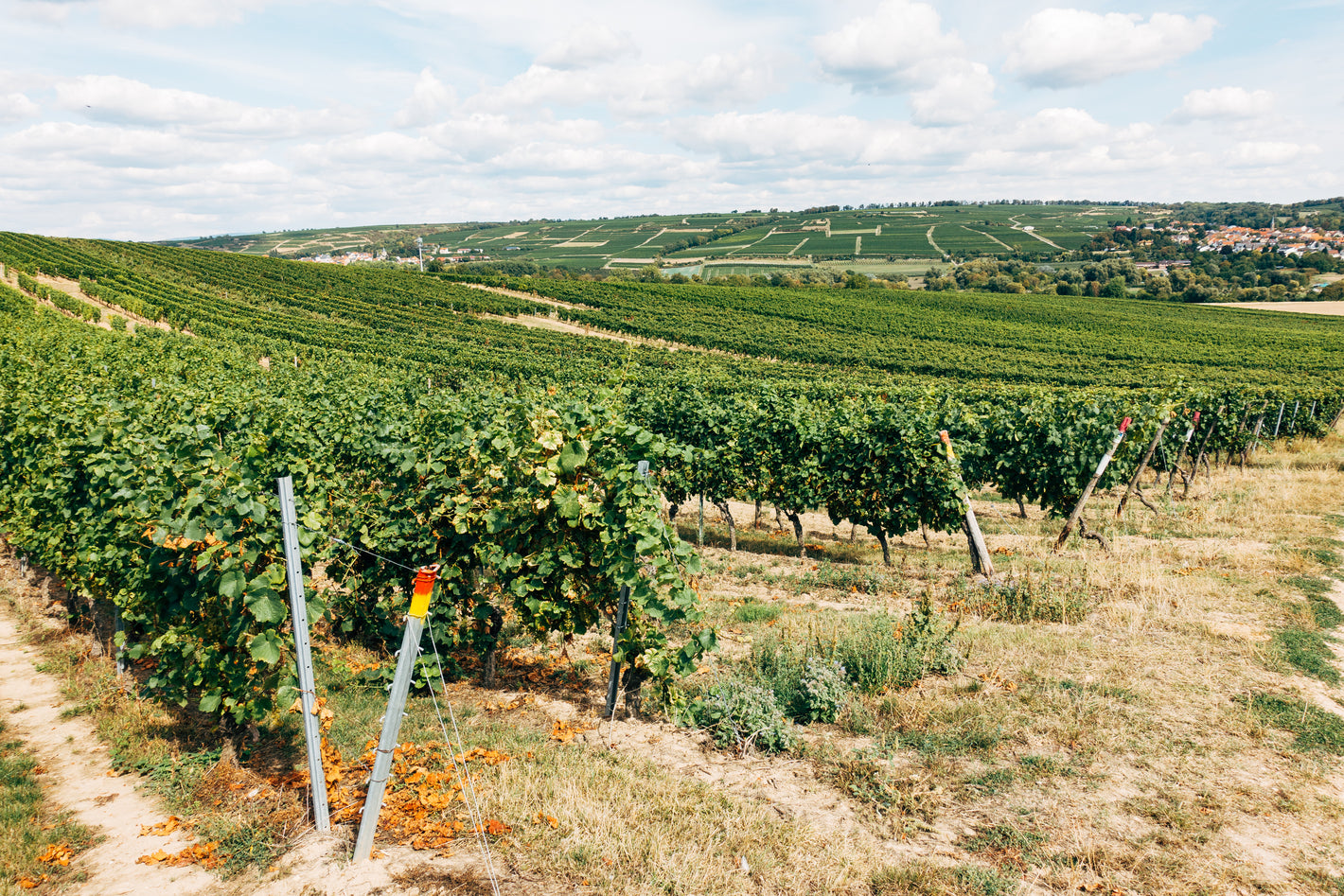
The Mason vineyard sits at around 250-350 metres above sea level on the western bank of Lake Kaltern, where the lake's thermal influence moderates temperatures and extends the growing season significantly. Soils here are predominantly calcareous clay and moraine deposits over bedrock, giving wines their characteristic stony, mineral quality and structural backbone. The combination of warm days and cool Alpine nights preserves acidity and aromatic precision, which is exactly what you taste in the glass.
Alto Adige DOC covers the northernmost wine-producing zone in Italy, a largely German-speaking Alpine corridor that produces some of the country's most precise and aromatic whites. Pinot Bianco — known locally as Weissburgunder — is one of the region's signature varieties, and the DOC permits single-vineyard designations that allow producers like Manincor to distinguish exceptional plots. Compared to the broader Trentino-Alto Adige zone, wines from the lake-influenced sub-zones around Kaltern tend toward greater texture and mineral depth than those from higher-altitude sites further north.
Alto Adige in 2016 was not the kind of vintage that makes headlines, but it delivered something arguably more useful: consistency. The growing season was generally warm and dry, with good diurnal temperature variation in the valley and on the slopes — the very thing that keeps acidity alive and aromatics precise in a region where the Alps do most of the heavy lifting. There were no catastrophic weather events to navigate, which allowed growers to focus on timing rather than triage, and harvest came in at a measured pace with healthy fruit across the board.
The result is a vintage of real finesse rather than power, which suits Alto Adige down to the ground. Pinot Grigio and Pinot Bianco came through with the kind of sharp, focused fruit that makes you remember why the region does these varieties better than almost anywhere. Gewurztraminer retained its characteristic aromatic intensity without tipping into flabbiness. Reds, particularly Lagrein and the Pinot Neros, show good structure with enough fruit to remain engaging. Most whites are drinking well now and will hold until 2025 or so; the better reds have a few more years in them yet.
FAQs
What does Mason di Mason taste like?
This is Pinot Bianco with serious intent: white peach, toasted almond, and a stony, saline mineral quality that runs from the nose all the way through the finish. It has texture and weight without ever feeling heavy, and the 2016 vintage has aged into a quietly compelling, secondary complexity that puts it well beyond the everyday Pinot Bianco bracket.
When should I drink this wine?
Now is a very good time. The 2016 has fully integrated its oak and is showing real complexity, and in a half-bottle format it will evolve faster than a full bottle. We'd drink it with pleasure until around 2030, and at a push until 2034 — but the reward for waiting is modest, and the reward for opening it tonight is immediate.
What food should I serve with this?
Think of the Alto Adige table: freshwater fish like perch or char, cured mountain ham with bread dumplings, or a plate of sharp local cheese. The wine's texture also suits richer preparations — a creamy mushroom risotto, veal piccata, or a good butter-roasted chicken breast would all be excellent companions.
How should I serve it?
Serve at 11-13°C in a wider white Burgundy-style glass. No need to decant, but give it 10-15 minutes in the glass and you'll notice it open up considerably. If you're taking it straight from the fridge, let it warm for a few minutes before pouring.
Is this wine worth cellaring further?
In a half-bottle, the answer is probably not — or at least, not much further. The wine is at its peak now, and the smaller format means evolution is already more advanced than in a standard bottle. If you have a full bottle of the same vintage, you might reasonably cellar it until 2030-2032. But this half-bottle deserves to be opened and enjoyed soon.
What makes Manincor special?
Manincor is one of Alto Adige's most serious estates: a centuries-old property farmed biodynamically under Demeter certification, with a winemaking philosophy that prioritises vineyard expression over technical intervention. Mason di Mason is their flagship white, made from a single plot on the shores of Lake Kaltern, and it consistently argues the case for Pinot Bianco as one of Italy's most underrated fine wine grapes.

Explore related wines


What are you looking for tonight? Tell me the occasion, a grape, a region — or just try a suggestion below.
Your recommendations will appear here.
-
-
Speak to one of our Wine Gurus
Speak to a Wine GuruWith years of experience, our team can help you with all your wine buying and selling needs