

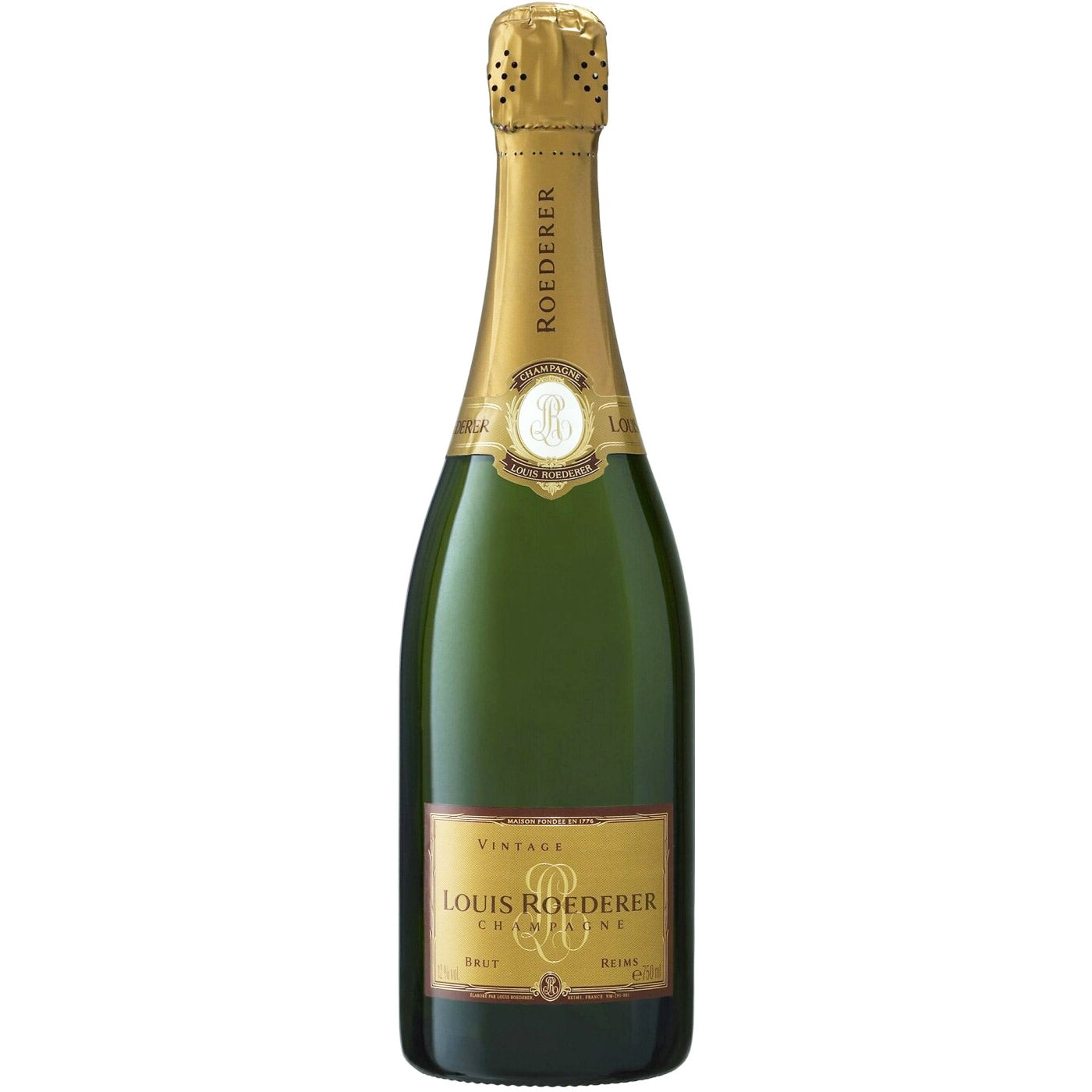
Louis Roederer, Brut Vintage, 1993 - Magnum
Louis Roederer, Brut Vintage, 1993 - Magnum
- 150cl
- 12.5%
- White Sparkling
- Pinot Noir, Chardonnay, Pinot Meunier
Couldn't load pickup availability

Optimal drinking window: 2026 - 2032
About Louis Roederer, Brut Vintage, 1993 - Magnum
Louis Roederer Brut Vintage 1993 is a refined and mature champagne, showcasing the exceptional craftsmanship of the house and the nuances of an older vintage. Known for its elegance and depth, the 1993 vintage came from a cooler year, resulting in a champagne with fresh acidity and fine balance.
This vintage pairs beautifully with rich foods, including lobster, roasted poultry, or truffled dishes, and is an exceptional choice for those who appreciate the complexity of well-aged champagnes.
Tasting Notes
AppearanceDeep golden amber with a fine, persistent bead that speaks to careful cellaring in magnum.
NoseToasted brioche, roasted hazelnuts, and dried orange peel lead, with an undercurrent of dried mushroom and aged cheese rind that tells you exactly how long this wine has been thinking. There is still a thread of chalky mineral freshness running through it all, which is quietly thrilling for a wine this age.
PalateThe mousse is soft and creamy now, the effervescence more of a whisper than a shout. Flavours of walnut, beeswax, preserved lemon, and white truffle unfold with unhurried confidence, held together by the firm, clean acidity that made 1993 such an interesting year. It is not a generous, giving wine — it asks for your full attention.
FinishLong and saline, with a final impression of chalk and toasted grain that lingers well after the glass is empty.
Overall impressionMature Champagne at its most intellectually satisfying — not a crowd-pleaser, but utterly distinctive.
Food Pairings
In the Marne, a wine like this would go to the table alongside something properly substantial — roast guinea fowl with a cream and morel sauce is the classic pairing, and it earns its place. Aged Comté or Époisses would be another route in, the salt and funk of the cheese finding a natural counterpart in the wine's savoury depth. Champagne is also truffle country at the luxury end, and white truffle scrambled eggs remains one of the great combinations with aged vintage Champagne. If you want something simpler, a whole roasted chicken with tarragon butter does the job beautifully without fuss.
We think this wine would go well with
Serve at 10-12°C — colder than this and the complexity will hide; warmer and the mousse becomes sluggish. This does not need decanting in the conventional sense, but pouring into a wider-bowled white wine glass rather than a flute will open up the aromatics considerably, which for a wine this old and this complex is exactly what you want. Give it five minutes in the glass before you start drinking.
Roederer's vineyards span the Montagne de Reims, Vallée de la Marne, and Côte des Blancs, covering the full spectrum of Champagne's chalk-dominated soils. The deep chalk subsoil is the key: it drains freely, retains just enough water during dry spells, and imparts that characteristic mineral tension that gives fine Champagne its backbone. The 1993 vintage, cool and late, drew heavily on that acidity-preserving chalk influence, producing wines with more nerve than flesh — which, with three decades of age behind them, has proved a considerable virtue.
Champagne is the most tightly regulated sparkling wine appellation in the world, with rules governing everything from permitted grape varieties and vineyard yields to minimum ageing on the lees. Vintage Champagne, as opposed to the non-vintage blends that form the commercial backbone of the region, must spend at least three years on the lees — though the serious houses age their vintages considerably longer. The result is a wine that reflects a single year's character rather than a house's consistent house style, which makes old vintages like this one genuinely irreplaceable.
Champagne 1993 is not a vintage that gets producers reaching for the superlatives, and honesty demands we say so upfront. A difficult growing season — wet and uneven, with disease pressure putting growers under real strain — meant that both quantity and quality were compromised across the region. Chardonnay struggled particularly, losing some of its precision and freshness, while Pinot Noir fared slightly better in the best-drained sites. The houses that declassified ruthlessly made decent wine; those that didn't, didn't.
The resulting wines were always leaner and more angular than the celebrated 1990s that preceded them, and most non-vintage blends absorbed whatever the year had to offer long ago. If you have a vintage-dated 1993 in your cellar, it's a curiosity worth opening — not because time will improve it, but because the window for finding out is already closing. Drink up, and without too many expectations.
FAQs
What does this wine taste like?
This is fully mature vintage Champagne — think toasted brioche, roasted hazelnuts, dried citrus peel, white truffle, and a long, saline, chalky finish. It is complex and contemplative rather than exuberant, with a soft creamy mousse and acidity that still holds everything together after more than three decades.
Is this wine ready to drink now?
Yes, and we would not wait much longer. In magnum it has aged more slowly than a standard bottle, which means it is at or near its peak right now. We would drink it over the next two to six years — ideally by 2032 — while the structure is still intact.
What food should I serve with it?
This needs something rich enough to match its depth and savoury character. Roast guinea fowl, lobster with a bisque-style sauce, white truffle dishes, or a seriously aged hard cheese like Comté are all excellent options. It is not the wine for oysters — those need something younger and brighter.
How should I serve it?
Serve at around 10-12°C. Skip the flute and use a wider white wine glass instead — it will open up the aromatics in a way that does this wine real justice at this age. Give it a few minutes before you start drinking.
Why is this in magnum, and does it matter?
It matters enormously. Magnums age Champagne more slowly and evenly than standard bottles because the ratio of wine volume to air in the closure is more favourable. A 1993 in magnum will be in considerably better condition than most standard bottles of the same wine today — it is one of the key reasons to seek out old Champagne in larger formats.
How does the 1993 vintage compare to other Roederer vintages?
1993 was a cool, challenging year in Champagne — not one of the celebrated decades like 1996 or 1990. But Roederer, with their estate-grown fruit and precise winemaking, made a wine defined by freshness and mineral precision rather than richness. With age, that restraint has become its greatest virtue. It is a wine for people who find the big, ripe vintages slightly too easy.
OUR GROWERS
Louis Roederer
Explore related wines


What are you looking for tonight? Tell me the occasion, a grape, a region — or just try a suggestion below.
Your recommendations will appear here.
-
-
Speak to one of our Wine Gurus
Speak to a Wine GuruWith years of experience, our team can help you with all your wine buying and selling needs