

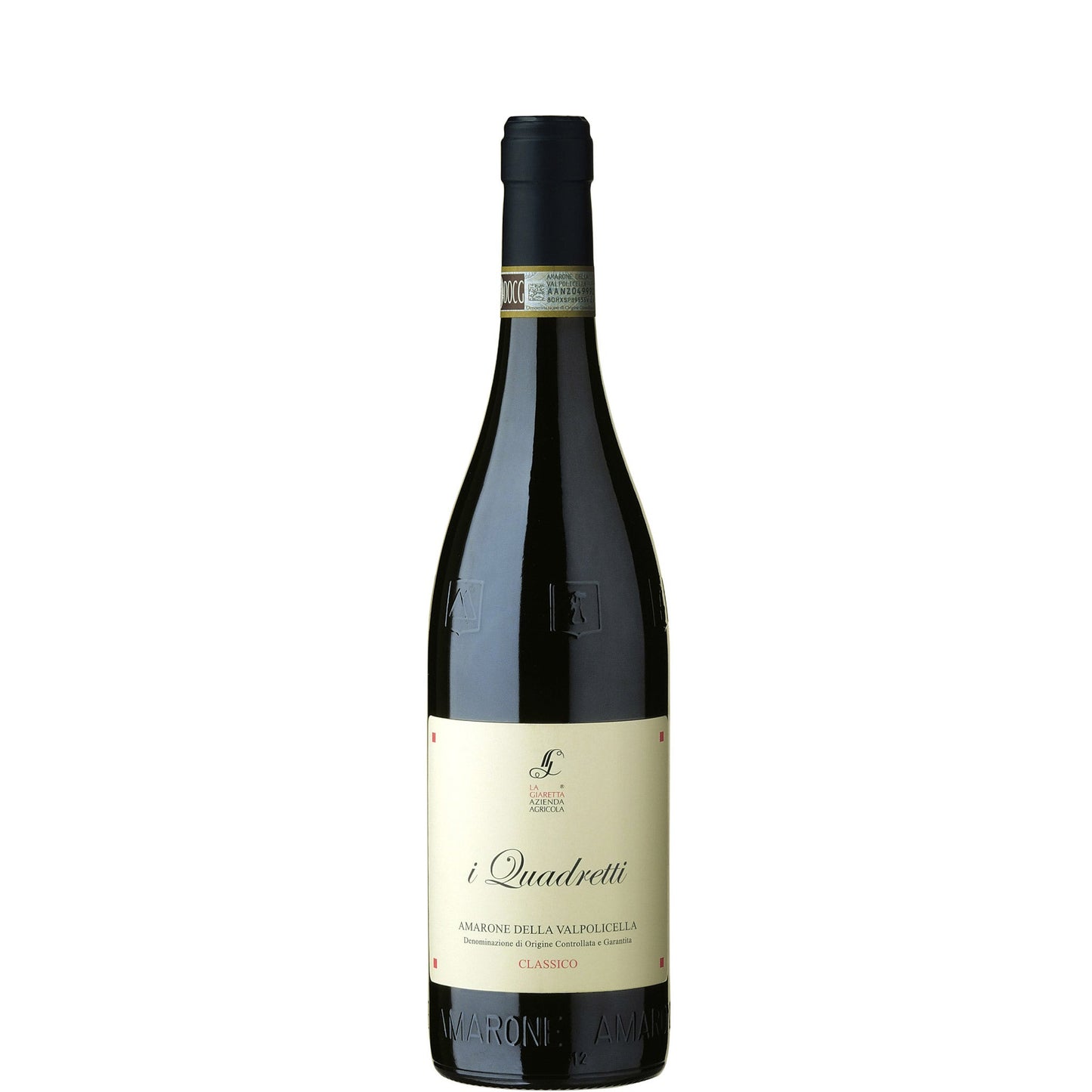
La Giaretta, I Quadretti Amarone Classico, 2018
La Giaretta, I Quadretti Amarone Classico, 2018
- 75cl
- 16%
- Red Still
- Corvina, Corvinone, Rondinella
Couldn't load pickup availability

Optimal drinking window: 2026 - 2040
Sourced from La Giaretta's oldest and most prized vineyards in the heart of Valpolicella, I Quadretti is the flagship Amarone—crafted only from the finest grapes of each vintage. Aged for around three years in small French oak (durmast) barrels and then refined in bottle for 10–12 months, it offers a deep ruby red colour, impressive structure, and a complex bouquet of spices. At its core, though, it stays true to Amarone’s signature notes of cherry and wild berries.
This is a wine built for bold flavours—perfect alongside game, braised beef, grilled meats, aged cheeses, and cured meats. It’s also a superb wine for quiet contemplation. For the best experience, open it ahead of time and serve at 18°C.
"The wines from this under the-radar-property La Giaretta, in the hill town of Valgatara, are amongst the most popular in our portfolio with club members. Their flagship is the stunning, single vineyard Amarone Classico Riserva “I Quadretti”, produced in miniscule quantities, which is a powerhouse of a wine, with a super ripe cherry nose of Kirsch and Black Forest Gateaux, together with loam and highly polished leather. Despite its’s almost port-like richness, and sweetness, the palate retains a wonderful fruit-driven freshness and energy. Talented winemaker Francesca Nicoli, together with husband and agronomist Francesco, ensures unfailingly every year that the wine quality here deserves to be far more widely recognised. One of our best kept secrets!"
Tom, Head Wine Guru
At eight years old, I Quadretti 2018 is in a generous, accessible phase — the dried fruit and oak have integrated well, and it's showing beautifully right now with air. Over the next three to five years, more secondary complexity will emerge: dried herbs, tobacco, leather, and savoury earthiness starting to sit alongside the fruit rather than behind it. The plateau is likely somewhere between 2028 and 2034, where the wine should be at its most harmonious and complete. After 2038, the primary fruit may begin to fade faster than the structure, so drinking before 2040 is wise unless your cellar is particularly ideal.
Tasting Notes
AppearanceDeep, almost opaque ruby with a garnet edge and very little rim variation — this is a dense wine.
NoseIt opens with a rush of kirsch and dried black cherry, undercut with dark chocolate, leather, and something earthy and loamy underneath. With time in the glass, a thread of cinnamon and dried rose petal emerges — the hallmark of well-made Amarone rather than overworked one.
PalateFull-bodied and concentrated, but not heavy — the freshness is the thing that surprises. There's a port-like richness from the appassimento process, yet the fruit-driven energy keeps it very much a wine rather than a liqueur. Tannins are ripe and well-integrated, with the oak sitting behind rather than in front of the fruit.
FinishLong, warming, and spiced — dried cherries and dark chocolate linger well after the glass is down.
Overall impressionA serious Amarone from a producer that deserves far more attention than it currently gets.
Food Pairings
In Valpolicella, Amarone is the wine you bring out for the Sunday brasato — beef slow-cooked for hours in the wine itself, with rosemary and root vegetables, until the whole house smells of it. Locals also pair it with pastissada de caval, a horse meat stew that's been a Veronese staple since the Middle Ages, or with bigoli con l'arna, thick pasta with duck ragu. Aged cheeses — Monte Veronese stravecchio, Grana Padano riserva — are a natural match, as is a plate of soppressa and salami. It's also traditionally drunk alongside risotto all'Amarone, where a generous pour of the wine goes into the pan as well as the glass.
We think this wine would go well with
Serve at 18°C — any cooler and the wine closes in on itself; any warmer and the alcohol begins to dominate. Decant for at least two hours before serving; three is better for the 2018. A large-bowled Burgundy or Bordeaux glass gives the wine the space it needs to open up and show its full range.
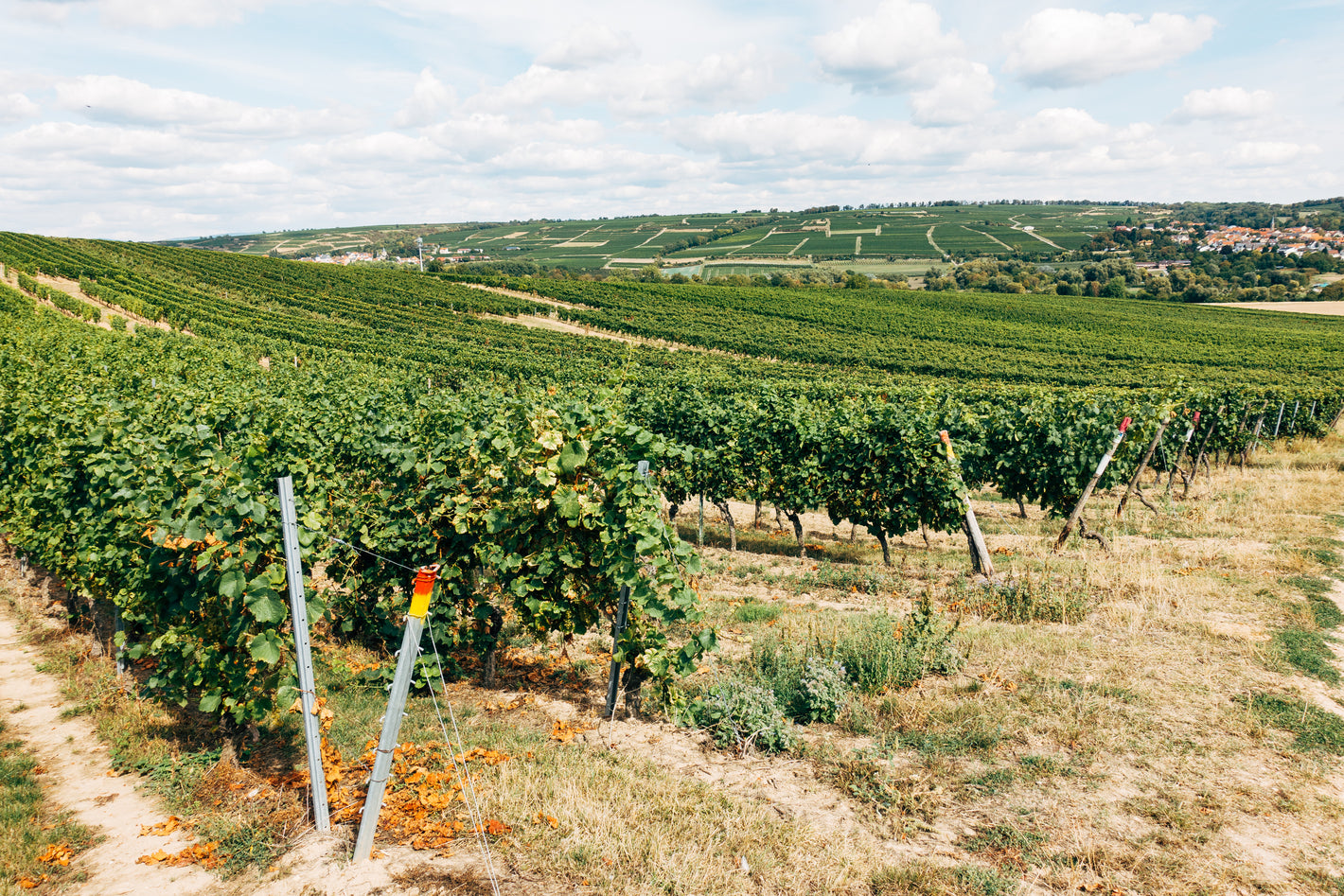
The vineyards sit in the Valpolicella Classico zone, which covers the original historic hillside communes to the west of Verona — Negrar, Marano, Fumane, Sant'Ambrogio, and San Pietro in Cariano. Soils here are predominantly limestone and clay with volcanic basalt intrusions, providing good drainage and mineral complexity. The altitude and aspect of these hillside sites mean significant diurnal temperature variation, which preserves acidity and aromatic precision in grapes that would otherwise be overwhelmed by the richness of the drying process.
Amarone della Valpolicella DOCG is one of Italy's great reds, made exclusively from partially dried grapes — predominantly Corvina, with Corvinone, Rondinella, and sometimes Molinara — a process known as appassimento. Grapes are harvested in late September or October and then laid on bamboo racks for 90 to 120 days, losing around 30% of their weight and concentrating sugars, flavour, and structure dramatically. The Classico designation refers to the original, historic hillside zone, and wines from here tend to show more defined structure and freshness than those from the broader Valpolicella production area.
The 2018 vintage in Veneto arrived after a growing season that kept producers on their toes. Spring brought welcome rainfall after the drought stress of 2017, though summer heat tested the vines once again. The saving grace was September's cooler nights, which allowed the grapes to retain their freshness while reaching full ripeness. Harvest timing proved crucial, with those who picked at the right moment capturing both concentration and balance.
What emerged was a vintage of surprising consistency across the region's varied terroirs. The Soave producers we work with speak fondly of 2018's Garganega, which shows real mineral precision alongside ripe stone fruit character. Valpolicella's Corvina and friends delivered wines with lovely immediacy, though the best Amarone from this year will reward patience. Most 2018 Veneto wines are drinking beautifully now, offering approachable pleasure without sacrificing the region's characteristic freshness, and the better bottles should cellar happily until 2028.
FAQs
What does I Quadretti Amarone taste like?
Rich and concentrated, with dried black cherry, kirsch, dark chocolate, leather, and a thread of spice. What makes it stand out is the freshness underneath all that richness — it never feels heavy or overworked. A serious wine with real energy.
When should I drink the 2018 vintage?
It's drinking well now, provided you give it at least two to three hours in a decanter. The sweet spot is probably 2027 to 2034, when secondary complexity really starts to emerge. We'd say drink it until 2040, but don't feel you need to wait — it's very enjoyable already.
What food should I serve with this?
Think big, slow-cooked flavours. Braised short rib or beef in Amarone, duck ragu, game birds, wild boar. Aged hard cheeses — Monte Veronese, Grana Padano riserva — work wonderfully too. It's also a fine wine to drink on its own, preferably in front of a fire.
How should I serve it?
Serve at 18°C in a large-bowled glass that gives it room to breathe. Decant for a minimum of two hours — three if you can manage it. The wine rewards patience in the decanter.
Is this worth cellaring?
Yes, with confidence. Amarone Classico from a good producer in a warm vintage like 2018 has real ageing potential. The structure and concentration are there to support another ten to twelve years of development. Just make sure your cellar is cool, dark, and consistent.
Who makes this wine?
La Giaretta is a small family estate in Valgatara, in the Valpolicella Classico hills. Winemaker Francesca Nicoli and her husband Francesco run the property with real precision and care. They're not widely known outside of serious wine circles, which is part of what makes them one of our best-kept secrets — for now.



What are you looking for tonight? Tell me the occasion, a grape, a region — or just try a suggestion below.
Your recommendations will appear here.
-
-
Speak to one of our Wine Gurus
Speak to a Wine GuruWith years of experience, our team can help you with all your wine buying and selling needs