
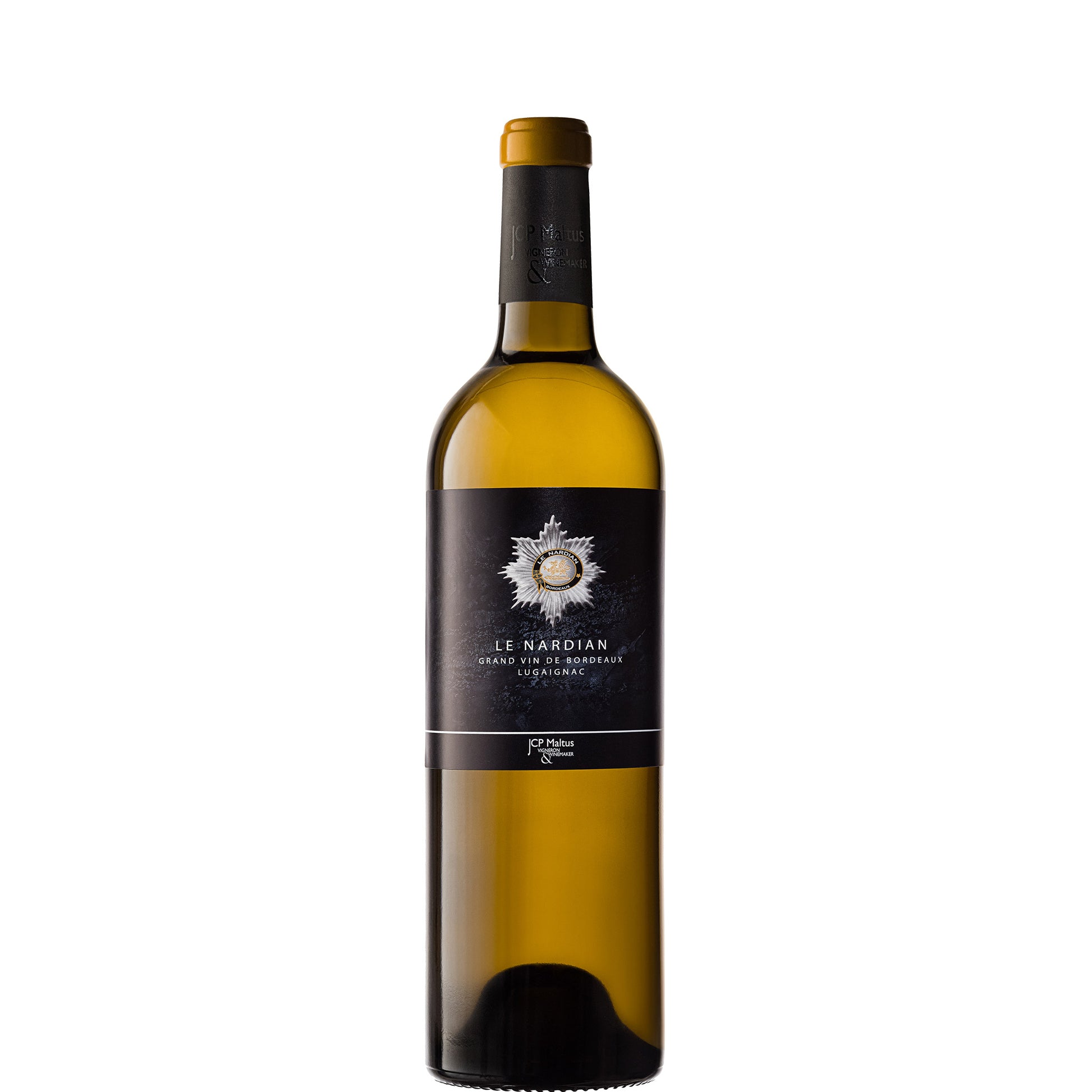
JCP Maltus, Le Nardian Blanc, 2021
JCP Maltus, Le Nardian Blanc, 2021
- 75cl
- 12.5%
- White Still
- Sauvignon Blanc, Sémillon, Muscadelle
- Kosher
Couldn't load pickup availability

Optimal drinking window: Now - 2028
Le Nardian is the product of a wager between their now-retired Consulting Oenologue, Gilles Pauquet (also consultant to Chateau Cheval Blanc, Figeac and Canon) and JCP Maltus, that a low cropped white would see similar benefits to a red wine.
Le Nardian has, as one of its major components, Muscadelle - a cousin of Viognier. They manage to get an almost Rhône-style sense with the wine as its aromatic quality comes to the fore.
Right now, in 2026, Le Nardian Blanc 2021 is in a really appealing place — the primary fruit is vivid and the floral aromatics are singing. Over the next year or two, expect that waxy, honeyed quality to deepen and integrate with the mineral backbone. By 2028-2029, it should be at its most complex, with the Muscadelle lending an almost Viognier-like richness without losing the freshness the vintage provides. Hold it beyond 2030 and you're testing the outer limits — the fruit will soften and the aromatic lift may fade. Drink with pleasure and don't overthink it.
What the critics say:
"Medium-to full-bodied with a fleshy array of waxed lemons, apricot stones, lemon grass and dried pineapples. Fresh, too. Just a hint of white pepper at the end. Layered and structured. Bitter-lemon notes. Serious for the vintage. 70% sauvignon blanc, 15% muscadelle and 15% semillon."
"The white 2021 Le Nardian might just be the best yet, made in a lively, fresh style while still showing good concentration. Based on 70% Sauvignon, 20% Semillon and 10% Muscadelle, it's medium-bodied, has a floral, exotic style, plenty of minerality, and classic tangerine and peach-like fruit. This clean, vibrant, balanced white will drink nicely for 4-6 years, if not longer."
Tasting Notes
AppearancePale gold with a greenish rim and good clarity, bright under light.
NoseThe Muscadelle announces itself immediately — floral, almost perfumed, with white peach, dried apricot, and lemon zest. There's a waxy, almost honeyed quality underneath that gives it real presence without heaviness. Lemongrass and a faint dried pineapple note add an exotic edge that keeps it interesting.
PalateMedium-bodied and lively, with tangerine and stone fruit up front and a mineral, almost chalky texture through the mid-palate. The Sauvignon Blanc provides the structure and the cut; the Muscadelle provides the intrigue. A flicker of white pepper on the back palate gives it a Viognier-like signature without any of the weight.
FinishClean and long, with a bitter-lemon twist that keeps you reaching for the glass.
Overall impressionA genuinely original Bordeaux white that earns its comparison to the Rhône — and then does something quietly its own.
Food Pairings
On the Right Bank, this style of white would be poured alongside a plateau de fruits de mer — oysters from Arcachon, langoustines, a few whelks for good measure. The aromatic richness also makes it a natural partner for the richer fish dishes of the Périgord, just over the border: a trout meunière with brown butter, or pike quenelles with a cream sauce. Foie gras mi-cuit, served cool, is a classic Bordelais pairing for aromatic whites with some body. If you want something simpler, a goat's cheese from the Loire or a ripe Saint-Nectaire would do the job beautifully without overshadowing the wine.
We think this wine would go well with
Serve at around 10-12°C — cold enough to keep the aromatics focused, warm enough to let the stone fruit and waxy character open up. No need to decant, but do give it 10 minutes in the glass before diving in. A larger white wine glass with a reasonable bowl, rather than a narrow flute-style, will let the nose breathe and give the Muscadelle the space it deserves.
Le Nardian's vineyards sit on the limestone-clay soils typical of Saint-Émilion's plateau and its surrounding slopes, where drainage is good and the subsoil retains enough moisture to keep vines in balance through warm summers. The continental climate of the Right Bank means warm days and cooler nights during the growing season, which matters enormously for aromatic whites — it's that diurnal shift that keeps freshness alive in the Muscadelle and Sauvignon Blanc. The 2021 vintage was cooler and later than most, which for white wine was something of a gift: slow, careful ripening and naturally higher acidity. The result is a wine with real tension and lift that a hotter year would not have produced.
Bordeaux Blanc sits outside the prestige hierarchy that defines the region's reds, which is precisely why it remains such fertile ground for the adventurous. The appellation allows Sauvignon Blanc, Sémillon, and Muscadelle — the classic Bordeaux white trio — and the rules give producers considerable latitude on yields and winemaking. What Le Nardian does is push Muscadelle, usually a minor player used for its aromatic richness, into a starring role alongside the Sauvignon. The result sits closer in spirit to a white Rhône than a classic Pessac or Entre-Deux-Mers, which is exactly the point.
The 2021 growing season in Bordeaux delivered one of those vintages that separates the wheat from the chaff. Spring frost in April walloped many vineyards, particularly on the Right Bank, slashing potential yields before the season properly began. A sodden start gave way to a blistering summer that pushed ripening forward, then September rains arrived just as harvest decisions loomed. The producers who survived the frost and timed their picking with surgical precision crafted wines of real character, whilst others found themselves wrestling with dilution or struggling with reduced volumes.
What emerged from this gauntlet is a vintage of surprising charm, though decidedly not a blockbuster year. The Merlot-based Right Bank wines show particular finesse where frost damage was minimal, with a silky texture that makes them uncommonly approachable young. Left Bank Cabernet Sauvignon fared better through the challenging weather, producing wines with good structure but less of the power you might expect from recent years. We find ourselves reaching for these 2021s now rather than cellaring them for decades—they're drinking beautifully with a few years on them and should hit their stride over the next decade.
FAQs
What does Le Nardian Blanc taste like?
It's aromatic and lively, with dried apricot, tangerine, lemongrass, and a waxy citrus quality that's closer in spirit to a white Rhône than a classic Bordeaux Blanc. The Muscadelle grape is the key — it brings a floral, almost exotic character that makes this wine stand apart from the usual Sauvignon-led crowd. There's real freshness underneath, with a bitter-lemon finish that keeps everything in check.
When should I drink this wine?
It's drinking really well right now in 2026, but will continue to develop until around 2029-2030. The 2021 vintage gave it enough natural acidity to age gracefully, but this isn't a wine that needs years in the cellar — the primary fruit and aromatics are its greatest strength, and they're at their most expressive now.
What food should I pair with this wine?
Oysters and langoustines are the classic local match, but the aromatic richness also works well with richer fish dishes — trout meunière, creamy fish pie, or scallops with a buttery sauce. Goat's cheese is a reliable option if you're going down the cheese route. Avoid anything too heavily spiced, which would fight the wine's delicate floral character.
Why does this taste more like a Rhône white than a Bordeaux?
Because that was the intention. Le Nardian was born out of a wager between JCP Maltus and their former consulting oenologue Gilles Pauquet — who also advised Cheval Blanc and Figeac — that low-cropped whites could achieve the kind of aromatic intensity usually associated with reds. The use of Muscadelle, a grape with a family connection to Viognier, is central to that. Most Bordeaux Blanc is dominated by Sauvignon Blanc; this one uses Muscadelle to push in a more perfumed, fleshy direction.
How should I serve it?
Around 10-12°C works well — chilled enough to keep the aromatics precise, but not so cold that the stone fruit and waxy texture disappear. No need to decant; just give it a few minutes in a generous white wine glass and let it open up on its own.
Is this worth buying more than one bottle?
If you like aromatic whites with genuine personality, yes. The 93-94 point scores from James Suckling and Jeb Dunnuck reflect real quality here, and at this level of Bordeaux production, the value is strong. Drinking over the next three to four years will give you the most pleasure, so there's no need to hoard — but having two or three bottles to follow across a couple of years is worthwhile.
Explore related wines


What are you looking for tonight? Tell me the occasion, a grape, a region — or just try a suggestion below.
Your recommendations will appear here.
-
-
Speak to one of our Wine Gurus
Speak to a Wine GuruWith years of experience, our team can help you with all your wine buying and selling needs