

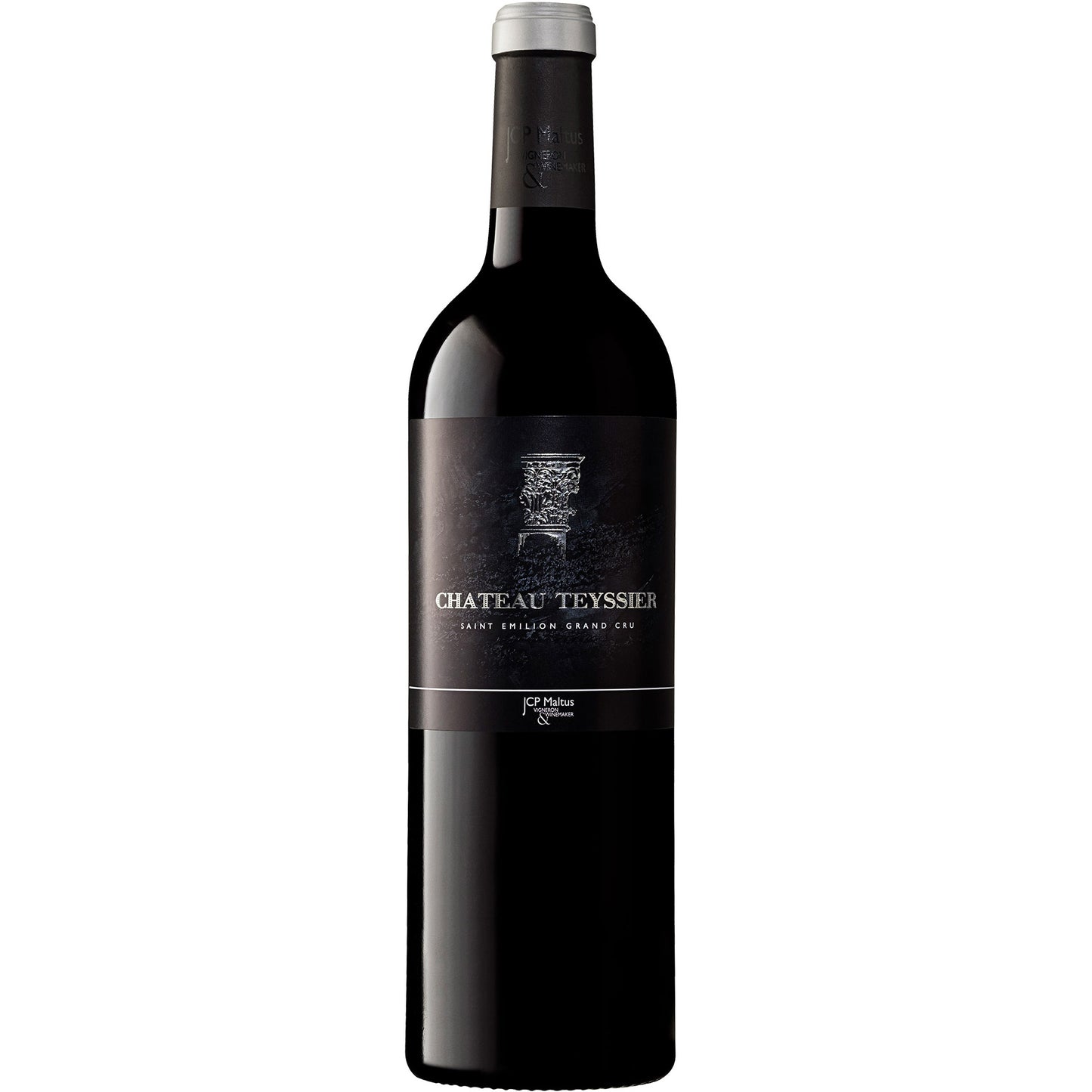
JCP Maltus, Château Teyssier, 2020 - Magnum
JCP Maltus, Château Teyssier, 2020 - Magnum
- 150cl
- 13.5%
- Red Still
- Cabernet Franc, Merlot
Couldn't load pickup availability

Optimal drinking window: Now - 2040
Teyssier is a solid performer, gracing the 1st class lounges of several airlines, the choice of a Grand Prix or two, and recommended by critics like The Wall Street Journal's Will Lyons and Master of Wine Tim Atkin.
Currently showing primary fruit characteristics with vibrant berry flavours and fresh acidity taking centre stage. Over the next 2-3 years, the fine-grained tannins will integrate further whilst secondary notes of tobacco, cedar, and earth begin to emerge. The wine should reach its peak drinking window around 2028-2035, when the fruit and savoury complexity achieve perfect balance. In magnum format, expect slower, more graceful development with the wine maintaining freshness well into the 2040s before any decline becomes apparent.
What the critics say:
"Full-bodied with very fine, well integrated tannins that frame this wine wonderfully. It’s persistent and nicely chewy on the finish."
"The 2020 Teyssier is a blend of 80% Merlot and 20% Cabernet Franc. Medium to deep garnet-purple in color, it leaps from the glass with notes of kirsch, mulberries, and black raspberries, plus hints of clove oil and fragrant earth. The medium-bodied palate is zippy and refreshing, with a fine-grained texture supporting the youthful red and black berry flavors, finishing on a mineral note."
"The 2020 Teyssier is laced with inky dark fruit, crème de cassis, lavender, spice and chocolate. Medium in body, with terrific purity and tons of nuance, Teyssier is a very pretty wine, especially in its price range. There is a bit of grittiness in the tannin that hopefully will soften with aging. This opens beautifully with aeration."
Tasting Notes
AppearanceDeep garnet-purple with youthful intensity and brilliant clarity.
NoseKirsch and mulberries leap from the glass, followed by black raspberries and a hint of clove oil. There's fragrant earth underneath, with subtle lavender and chocolate notes emerging with air.
PalateMedium-bodied with zippy freshness that belies its concentration. Fine-grained tannins support youthful red and black berry flavours, with cassis depth and lovely purity. The texture is refined with just enough grip to promise good development.
FinishPersistent and mineral-driven, with chocolate and spice notes lingering alongside the dark fruit.
Overall impressionA wine that balances immediate charm with serious ageing potential, especially in this generous magnum format.
Food Pairings
In the Gironde, this style of Merlot-based red traditionally accompanies duck confit with crispy potatoes, the wine's mineral backbone cutting through the rich duck fat whilst complementing the meat's savoury depth. Locals might also serve it with côte de bœuf grilled over vine cuttings, or with the region's famous entrecôte à la bordelaise, where the wine's cassis notes echo the shallot and red wine reduction. Aged cheeses from nearby Périgord, particularly a well-aged Cabécou, would make an excellent match for the wine's developing complexity.
We think this wine would go well with
Serve at 16-18°C to allow the fruit to sing whilst preserving the mineral backbone. Decant for 45 minutes to an hour to soften any youthful tannins and allow the chocolate and spice notes to emerge fully. Use generous Bordeaux bowls to concentrate the aromatics, and don't be afraid to open this magnum a bit earlier than you might the standard bottle.
Teyssier's vineyards sit on the clay-limestone plateau of Puisseguin-Saint-Émilion, just northeast of the famous commune itself. The clay retains moisture during dry spells whilst the limestone provides excellent drainage, creating ideal conditions for Merlot to develop depth and complexity. The slightly cooler microclimate compared to Saint-Émilion proper helps maintain freshness and mineral precision in the wines.
Puisseguin-Saint-Émilion is one of the four satellite appellations surrounding the famous commune of Saint-Émilion. Established in 1936, it covers 740 hectares of predominantly clay-limestone soils similar to those of its illustrious neighbour. The wines must be at least 60% Merlot and offer excellent value compared to Saint-Émilion proper, often displaying similar elegance and complexity at a fraction of the price.
The 2020 Bordeaux vintage began with one of the wettest winters on record, followed by a scorching summer that nearly broke temperature records across the region. What could have been a disaster became salvation: those deep winter water reserves carried the vines through the heat, while the dry conditions from July onwards concentrated flavours beautifully. The harvest started early and moved quickly, with most châteaux picking under ideal September skies.
We find 2020 Bordeaux surprisingly charming for such a hot year - the wines show ripe, generous fruit without the baked character you might expect. The Merlot-based Right Bank wines are particularly successful, displaying plush damson and blackberry flavours with enough freshness to keep them lively. Cabernet Sauvignon on the Left Bank delivers power and concentration, though some properties struggled more than others with the heat. Most 2020s are drinking beautifully now - this isn't a vintage that demands decades of patience, and we rather like that about it.
FAQs
What does this wine taste like?
Rich dark berry fruit with cassis and mineral notes, supported by fine-grained tannins and a persistent, chocolate-tinged finish.
When should I drink this wine?
Approachable from 2027 onwards, but will reward patience until 2040, especially in this magnum format which develops more slowly.
What food pairs well with this wine?
Duck confit, grilled beef, or aged hard cheeses. The mineral backbone makes it excellent with rich, savoury dishes.
Should I decant this wine?
Yes, decant for 45 minutes to an hour to soften the tannins and allow the complex aromatics to fully emerge.
Is this wine worth cellaring?
Absolutely. This has the structure and balance to develop beautifully over 15+ years, particularly in magnum which ages more gracefully.
How does this compare to Saint-Émilion?
From the satellite appellation Puisseguin-Saint-Émilion, it offers similar style and quality to its famous neighbour at a much more accessible price point.
Explore related wines


What are you looking for tonight? Tell me the occasion, a grape, a region — or just try a suggestion below.
Your recommendations will appear here.
-
-
Speak to one of our Wine Gurus
Speak to a Wine GuruWith years of experience, our team can help you with all your wine buying and selling needs