

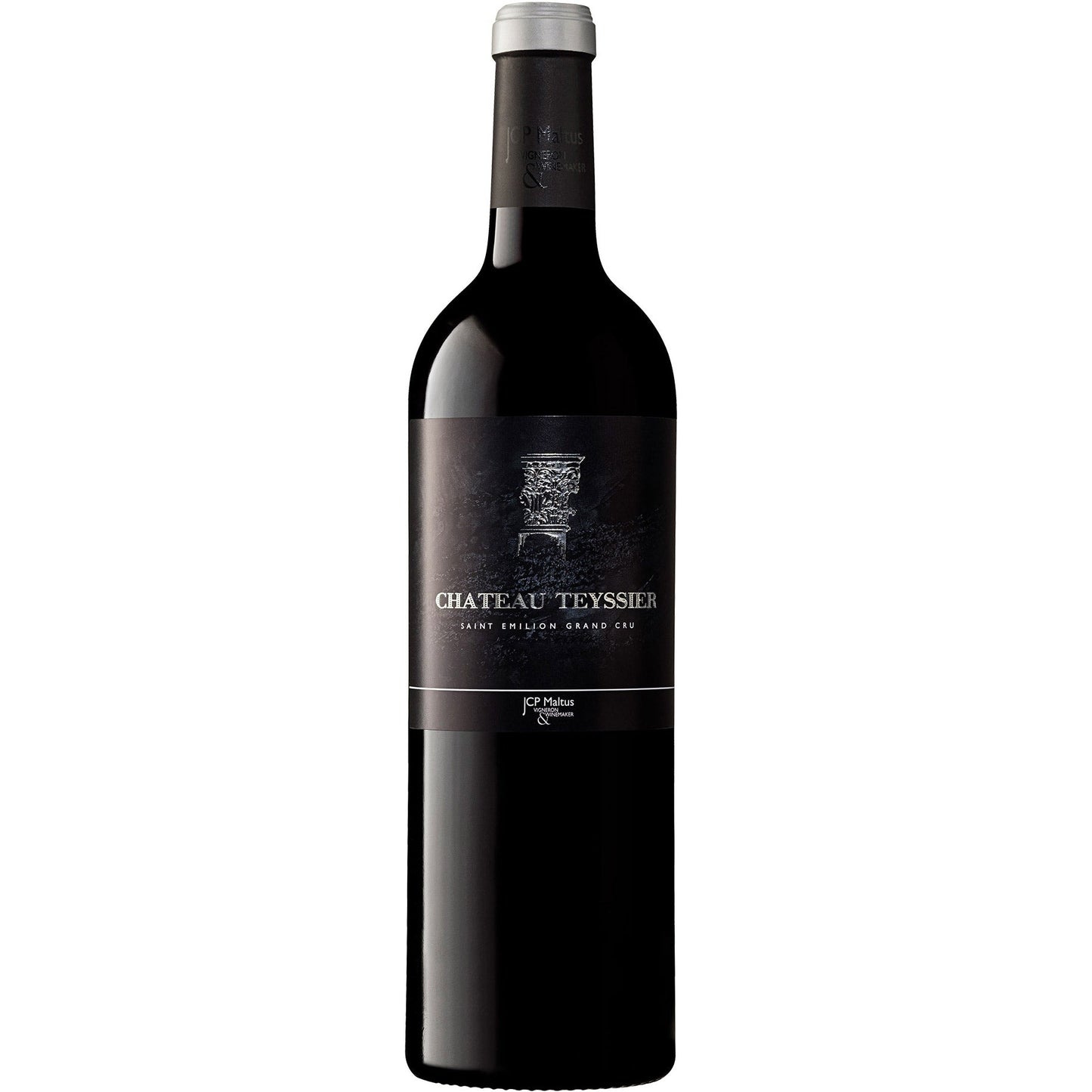
JCP Maltus, Château Teyssier, 2019 - Magnum
JCP Maltus, Château Teyssier, 2019 - Magnum
- 150cl
- 14%
- Red Still
- Merlot, Cabernet Franc
Couldn't load pickup availability

Optimal drinking window: Now - 2033
This wine is presented in its original wooden case by 6.
A polished, fruit-forward Saint-Émilion built mainly on Merlot, the 2019 shows ripe plum and blackberry, soft spice and fine, supple tannins. It’s drinking beautifully now, with enough structure to hold for a few more years.
Teyssier is a solid performer, gracing the first-class lounges of several airlines, the choice of a Grand Prix or two, and recommended by critics like The Wall Street Journal’s Will Lyons and Master of Wine Tim Atkin. It’s also one of our key picks and best-value reds — great for impressing at dinner parties without trying too hard.
Right now, the 2019 is in a very good place — the primary fruit is generous, the tannins have softened into something approachable, and the finish has length without aggression. Over the next two to three years, that fruit will begin to integrate more deeply with the oak and earthy notes, adding a secondary complexity of leather and dried herbs. In magnum format, this process will be slower and more gradual than a standard bottle, which is precisely why the format rewards patience. We'd expect the wine to plateau somewhere around 2028 to 2030, holding there comfortably until around 2033 before the fruit begins to fade.
What the critics say:
"Tight, focused ripe fruit with chewy, polished tannins. It’s full-bodied with a lingering and precise finish. Extremely well-done."
"QPR Winner. The nose of this wine is lovely, crisp, earthy, dirty, and smoky, with ripe fruit, showing red, blue, and hints of black fruit, all wrapped in black tea, anise, rich menthol, lovely minerality, coffee grinds, and loam, nice! The mouth of this full-bodied wine is ripe, balanced, and tense, with lovely blackberry, raspberry, ripe blueberry, loam, roasted herbs, mouth-draping and elegant tannin, with sweet oak, lovely tension, scraping minerality, loam, and more smoke. The finish is long, ripe, and balanced, with more tannin, ripe blueberry, plum, leather, dark chocolate, menthol, rich graphite, and minerality, and loam lingering long. Bravo! Drink from 2025 until 2033."
Tasting Notes
AppearanceDeep ruby with a youthful, dense core and a clean, bright rim.
NoseRipe blackberry, plum, and blueberry underscored by loam, black tea, and a lift of anise and sweet oak. There's a pleasing smokiness in the background — earthy and grounding rather than overdone.
PalateFull-bodied but well-balanced, with raspberry and blackberry fruit sitting alongside roasted herbs, dark chocolate, and a streak of graphite minerality. The tannins are mouth-draping and elegant, with genuine tension keeping everything focused and honest.
FinishLong and ripe, with lingering plum, leather, menthol, and a mineral persistence that outlasts the fruit.
Overall impressionA polished, precise Saint-Émilion that punches well above its price, ready to drink now and with room to grow.
Food Pairings
In Saint-Émilion and the wider Bordeaux region, a wine like this would typically meet a côte de boeuf grilled over vine cuttings — the classic Bordelaise way of doing things, and still the best. Locally, entrecôte with sauce Bordelaise, a reduction of red wine and bone marrow, is practically a civic institution. Duck confit, a staple across southwest France, works brilliantly with the wine's ripe fruit and earthy edge. For something more casual, a platter of aged Comté or Cantal holds its own against the tannins without overpowering the wine's finesse.
We think this wine would go well with
Serve at around 17°C — too warm and the alcohol takes over, too cool and the tannins tighten unnecessarily. As a magnum, we'd decant for at least 45 minutes to an hour; the larger format holds its fruit well but benefits from a little breathing room to open fully. A large-bowled Bordeaux glass will give the nose space to develop without losing any of its aromatic detail.
Château Teyssier's vineyards sit on Saint-Émilion's plateau and slopes, where limestone and clay soils give the Merlot both its generous flesh and its underlying mineral spine. The clay retains moisture well, which in a warm year like 2019 kept the vines from stressing during the dry summer, allowing even, complete ripening. This combination of warmth and water-retentive soils is what gives Teyssier its reliably polished, ripe character without tipping into overripeness.
Saint-Émilion sits on the Right Bank of Bordeaux, where Merlot reigns rather than Cabernet Sauvignon. Unlike the Médoc's gravel-dominated estates across the river, Saint-Émilion is a patchwork of limestone plateau, clay slopes, and sandy soils at its fringes, producing wines that tend to be rounder, more immediately approachable, and fruit-forward by Bordeaux standards. It operates its own classification system, separate from the famous 1855 Médoc ranking, and is reviewed and revised periodically. The appellation covers a relatively compact area around the medieval hilltop town of the same name, and at its best produces some of the most sought-after Merlot-dominant wines in the world.
The 2019 growing season in Bordeaux delivered exactly what vignerons dream about: a textbook combination of winter rain to replenish the soils, a warm spring that encouraged even budbreak, and crucially, a bone-dry summer that stressed the vines just enough without cooking them. September brought the perfect finale with warm days and cool nights, allowing grapes to ripen slowly while retaining their natural acidity. Harvest began in mid-September under ideal conditions, with pickers working through October to capture each variety at optimal ripeness.
What emerged from the cellars shows all the hallmarks of a properly made vintage: the Merlot displays that gorgeous plush fruit character without any jammy excess, while Cabernet Sauvignon achieved full phenolic ripeness with structured tannins that feel ripe rather than harsh. We find these wines have a lovely immediacy about them—they're not the brooding, backward style that demands decades of patience, but rather wines with enough backbone to age gracefully while offering genuine pleasure from release. Most are drinking beautifully now and will continue to develop over the next 15-20 years, making this one of those vintages that works for both early drinkers and patient cellars.
FAQs
What does this wine taste like?
Think ripe blackberry, plum, and blueberry, with dark chocolate, graphite, roasted herbs, and a streak of earthy smokiness. The tannins are polished and elegant, and the finish lingers with mineral persistence. It's a serious, focused Saint-Émilion without being austere.
When should I drink this wine?
It's drinking very well right now and has been since around 2025. In magnum, it will continue to develop nicely until around 2033, with the window of peak pleasure sitting comfortably through the late 2020s.
What food should I serve with it?
This is built for the dinner table. Grilled ribeye, duck confit, lamb with rosemary, or a slow-braised short rib will all sing alongside it. Aged hard cheeses work too if you're keeping things simple.
Should I decant it?
Yes — and because it's a magnum, give it a good 45 minutes to an hour. It will open up noticeably, with the nose becoming more expressive and the tannins softening into something even more inviting.
Is this worth cellaring?
Absolutely, especially in magnum format, which ages more slowly and gracefully than a standard bottle. If you can hold it until 2028 or beyond, you'll be rewarded with additional complexity, though it is genuinely enjoyable right now.
Why is Château Teyssier worth knowing about?
It's one of those Saint-Émilion estates that quietly overperforms — gracing the first-class cabins of several airlines, turning up at Grand Prix events, and earning recommendations from critics including Master of Wine Tim Atkin and the Wall Street Journal's Will Lyons. It's a reliable, well-priced route into quality Bordeaux without the premium of the famous names.


What are you looking for tonight? Tell me the occasion, a grape, a region — or just try a suggestion below.
Your recommendations will appear here.
-
-
Speak to one of our Wine Gurus
Speak to a Wine GuruWith years of experience, our team can help you with all your wine buying and selling needs