

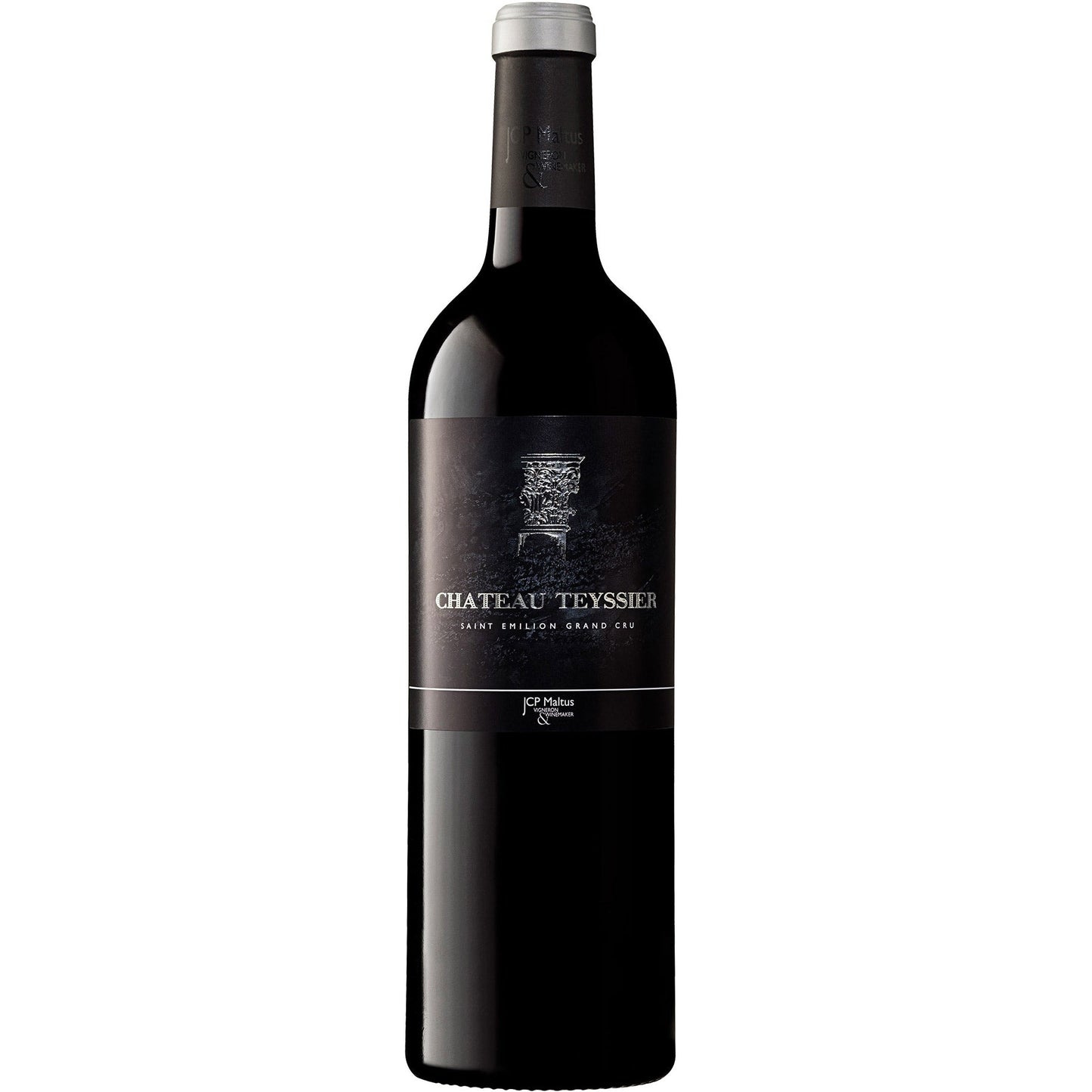
JCP Maltus, Château Teyssier, 2019 - Magnum
JCP Maltus, Château Teyssier, 2019 - Magnum
- 150cl
- 14%
- Red Still
- Merlot, Cabernet Franc
Couldn't load pickup availability

Optimal drinking window: Now - 2033
This wine is presented in its original wooden case.
A polished, fruit-forward Saint-Émilion built mainly on Merlot, the 2019 shows ripe plum and blackberry, soft spice and fine, supple tannins. It’s drinking beautifully now, with enough structure to hold for a few more years.
Teyssier is a solid performer, gracing the first-class lounges of several airlines, the choice of a Grand Prix or two, and recommended by critics like The Wall Street Journal’s Will Lyons and Master of Wine Tim Atkin. It’s also one of our key picks and best-value reds — great for impressing at dinner parties without trying too hard.
Right now, the fruit is forward and the tannins are supple enough to make this immediately enjoyable — especially in magnum, which tends to soften things just enough. Over the next two to three years, the primary blackberry and plum will begin to knit with the earthy, graphite notes, adding complexity without losing freshness. By 2028 to 2030, we'd expect a more integrated, savoury mid-palate to emerge. The magnum format gives it genuine staying power, and we'd be comfortable holding until 2033, after which the fruit may begin to dry out rather than deepen.
What the critics say:
"Tight, focused ripe fruit with chewy, polished tannins. It’s full-bodied with a lingering and precise finish. Extremely well-done."
"QPR Winner. The nose of this wine is lovely, crisp, earthy, dirty, and smoky, with ripe fruit, showing red, blue, and hints of black fruit, all wrapped in black tea, anise, rich menthol, lovely minerality, coffee grinds, and loam, nice! The mouth of this full-bodied wine is ripe, balanced, and tense, with lovely blackberry, raspberry, ripe blueberry, loam, roasted herbs, mouth-draping and elegant tannin, with sweet oak, lovely tension, scraping minerality, loam, and more smoke. The finish is long, ripe, and balanced, with more tannin, ripe blueberry, plum, leather, dark chocolate, menthol, rich graphite, and minerality, and loam lingering long. Bravo! Drink from 2025 until 2033."
Tasting Notes
AppearanceDeep ruby with a concentrated, almost inky core and a bright, youthful rim.
NoseDark and earthy from the off — ripe blackberry and plum layered with loam, coffee grounds, and a curl of smoke. There's a herbal lift too, something between dried sage and anise, that keeps things lively.
PalateFull-bodied and focused, with ripe blueberry and blackberry riding on tannins that are polished but present — they grip without scratching. A seam of graphite and minerality runs through the mid-palate, giving the wine real tension beneath its generous fruit.
FinishLong and precise, with plum skin, dark chocolate, and a final flick of menthol keeping you honest.
Overall impressionA Saint-Émilion that earns its critics' scores — polished enough to drink now, but built to reward another three to five years of patience.
Food Pairings
In Saint-Émilion and the wider Gironde, this style of wine is most naturally at home alongside duck confit — the fat and the tannins are made for each other. Entrecôte à la Bordelaise, the region's canonical red wine steak with bone marrow and shallots, is the obvious centrepiece. Further afield in Périgord, a slice of terrine de foie gras or a slow-braised lamb with cèpes would find an equally willing partner. At home, a rib of beef or a well-aged hard cheese like Comté will do the job without any ceremony required.
We think this wine would go well with
Serve at around 17°C — a little cooler than full room temperature, especially in a warm dining room, to keep the fruit fresh and the tannins from feeling heavy. As a magnum, give it a solid hour's decanting at minimum; the larger format takes longer to open up, but when it does, the reward is real. A large-bowled Bordeaux glass will give the wine the space it needs to show its structure and that smoky, earthy character on the nose.
Château Teyssier's vineyards sit on the plateau and slopes of Saint-Émilion, where clay and limestone soils give Merlot both its plushness and its mineral backbone. The limestone subsoil retains moisture during dry years — and 2019 was warm and dry — lending freshness that stops the wine from tipping into overripeness. Elevation across the estate is modest but consistent, giving even ripening and good diurnal shift in September to preserve acidity.
Saint-Émilion is Bordeaux's most famously Merlot-driven appellation, sitting on the right bank of the Dordogne with a very different personality to the Cabernet-led estates of the Médoc. It operates under its own classification system — revised controversially in 2022 — with Premier Grand Cru Classé at the summit and a broad base of solid Grands Crus below. The best wines have a generosity and approachability that the Médoc often withholds for decades, though the plateau's limestone can produce wines of real structure and longevity.
The 2019 growing season in Bordeaux delivered exactly what vignerons dream about: a textbook combination of winter rain to replenish the soils, a warm spring that encouraged even budbreak, and crucially, a bone-dry summer that stressed the vines just enough without cooking them. September brought the perfect finale with warm days and cool nights, allowing grapes to ripen slowly while retaining their natural acidity. Harvest began in mid-September under ideal conditions, with pickers working through October to capture each variety at optimal ripeness.
What emerged from the cellars shows all the hallmarks of a properly made vintage: the Merlot displays that gorgeous plush fruit character without any jammy excess, while Cabernet Sauvignon achieved full phenolic ripeness with structured tannins that feel ripe rather than harsh. We find these wines have a lovely immediacy about them—they're not the brooding, backward style that demands decades of patience, but rather wines with enough backbone to age gracefully while offering genuine pleasure from release. Most are drinking beautifully now and will continue to develop over the next 15-20 years, making this one of those vintages that works for both early drinkers and patient cellars.
FAQs
What does this wine taste like?
Rich and earthy, with ripe blackberry, plum, and blueberry sitting alongside loam, coffee grounds, smoke, and a thread of graphite minerality. The tannins are polished and elegant rather than grippy, and the finish is long with a hint of dark chocolate and menthol.
When should I drink it?
It is drinking well right now — the 2019 vintage is generous and the magnum format has softened things nicely. That said, it has the structure to hold until 2033, and the larger bottle will help it evolve gracefully. If you can wait until 2028, the complexity will have moved up a level.
What food works best with this wine?
This is a natural partner for red meat — duck confit, a rib of beef, or a classic entrecôte. It also works well with slow-braised lamb, mushroom-rich dishes, and aged hard cheeses like Comté. If you are serving it at a dinner party, it will hold its own against bold flavours without overpowering more restrained cooking.
How should I serve it?
Serve at around 17°C and decant for at least an hour — as a magnum, it needs time to open up properly. A large Bordeaux glass is ideal. If you are serving it straight from the cellar, give it time to warm slightly in the decanter before pouring.
Is the magnum format worth it?
Yes, and for two reasons. Larger formats age more slowly and evenly, so the wine develops finer complexity over time. And practically speaking, a magnum makes an impression at the table — it is a confident choice for a dinner party where you want the wine to do the talking without the price tag announcing itself.
Who recommends this wine?
James Suckling rated the 2019 at 93-94 points, praising its focus and polished tannins. It has also been praised by Master of Wine Tim Atkin and the Wall Street Journal's Will Lyons, and is one of our own key picks for best-value Bordeaux reds. It has featured in the first-class lounges of several airlines and at a Grand Prix or two — solid company by any measure.


What are you looking for tonight? Tell me the occasion, a grape, a region — or just try a suggestion below.
Your recommendations will appear here.
-
-
Speak to one of our Wine Gurus
Speak to a Wine GuruWith years of experience, our team can help you with all your wine buying and selling needs