

JCP Maltus, Château Pontet Labrie, 2019
JCP Maltus, Château Pontet Labrie, 2019
- 75cl
- 14.5%
- Red Still
- Merlot, Cabernet Franc
Couldn't load pickup availability

Optimal drinking window: 2026 - 2034
About JCP Maltus, Château Pontet Labrie, 2019
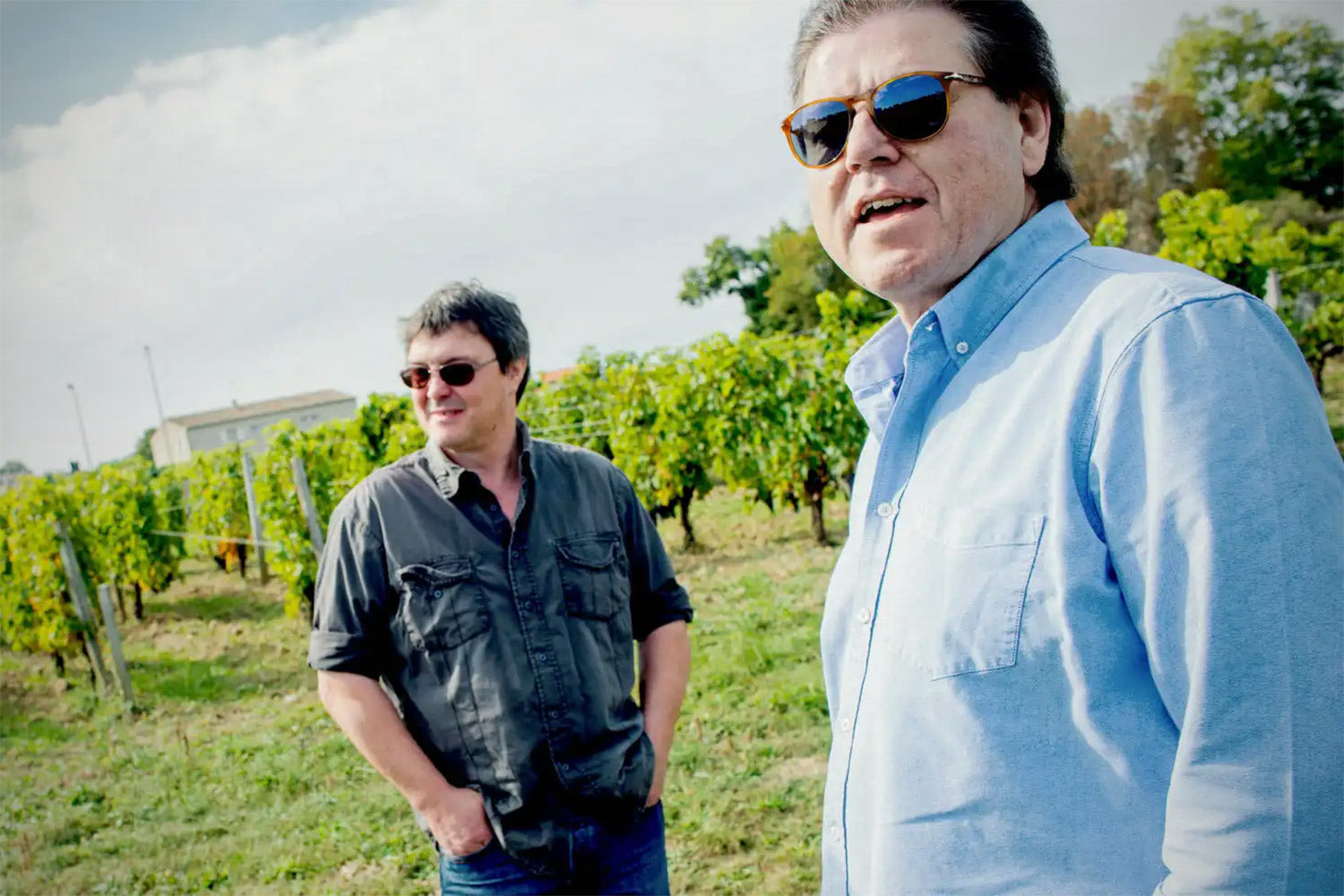
Pontet Labrie is a single vineyard Grand Cru Saint-Émilion, owned by one of the original Bordeaux ‘garagistes’, 100-point winemaker Jonathan Maltus OBE. Jonathan has evolved his winemaking philosophy pioneering a Burgundian approach, unusual in Bordeaux, focussing on small production, single site cuvées (rather than blending his various blocks, like everyone else). In 2014 he approached us as he owned a single 1ha of vines on a prime site of the prestigious plateau of Saint-Émilion, with vines pre-dating the frost of 1957, which he believed had the potential to be the Merlot-based equivalent to his famous Le Dôme.
The six vintages produced have attracted excellent 94/96+ point reviews and, given the exceptionally limited production, are immediately collector’s items, even featuring in the Robb Report’s “Hard To Get” feature on the world’s most elusive bottles. Pontet Labrie has been produced across the greatest six vintage run in Bordeaux’ history – 2015-2020, every year a winner and showing the individual character one would expect from a single vineyard wine. In August 2022 Prince Robert of Luxembourg’s Domaine Clarence Dillon (owner of First Growth Haut Brion and La Mission Haut Brion) bought the other 14ha of the vineyard from the owner, convinced of the quality of the terroir. This only helps to enhance the allure of Pontet Labrie.
The vineyard produces a maximum 300 cases of this exceptional Merlot/Cabernet Franc.
The 2019 is currently in a tight, almost adolescent phase where the tannins dominate and the fruit seems restrained. Over the next 4-5 years, the primary dark fruit will begin integrating with those mineral notes, and the Cabernet Franc will emerge from behind the Merlot's power. By 2030, expect secondary complexity to develop - leather, tobacco, and forest floor notes that will add layers without losing the wine's core identity. It should plateau beautifully through the 2030s before beginning a very gentle decline around 2045.
What the critics say:
"Based on an 80/20 split of Merlot and Cabernet Franc from the upper limestone plateau, the 2019 Château Pontet Labrie offers a more reticent, tight, almost closed style that slowly gives up notes of savory darker cherries, mulberries, iron, crushed stone, and graphite. It's beautiful on the palate, with medium to full-bodied richness and ripe yet present tannins, yet this beauty deserves at least 4-5 years of bottle age and is going to evolve for upwards of two decades."
"The 2019 Pontet Labrie has really come together beautifully with élévage. Rich, powerful and explosive, the 2019 possesses tremendous depth and resonance from start to finish. Dark cherry, spice, new leather, licorice and scorched earth lend gorgeous complexity. En primeur, the richness of the Merlot drove the balance, but over time the Franc has caught up, resulting in a super-expressive Saint Émilion that captures the essence of Jonathan Maltus’ style."
Tasting Notes
AppearanceDeep garnet with a concentrated purple core.
NoseInitially reticent, slowly revealing dark cherries and mulberries wrapped in iron and crushed limestone. There's something mineral and almost austere here, like graphite shavings over ripe fruit. Time in the glass brings out subtle spice and a hint of dark chocolate.
PalateMedium to full-bodied with serious weight and presence. The fruit is dark and concentrated rather than showy, supported by ripe but firm tannins that grip without overwhelming. Underneath the power, there's a seam of limestone minerality that runs through everything, giving the wine its distinctive Saint-Émilion character.
FinishLong and mineral-driven, with the graphite and stone notes lingering well after the fruit has faded.
Overall impressionA wine that's clearly built for the long haul, showing Maltus's precision and the terroir's nobility in equal measure.
Food Pairings
In Saint-Émilion, this would traditionally accompany the rich cuisine of the Périgord region - think duck confit with garlic-roasted potatoes, or côte de bœuf with marrow bones and wild mushrooms. The locals might serve it alongside agneau de Pauillac with flageolet beans, or during truffle season, a simple omelette aux truffes that lets both the wine's minerality and the truffle's earthiness shine. Aged Roquefort from nearby Aveyron makes a classic pairing for the wine's structured tannins.
We think this wine would go well with
Serve at 17-18°C to allow the mineral complexity to express itself fully. This wine absolutely demands decanting - give it at least two hours, ideally three, as it's currently quite closed and needs time to open up properly. Use generous Burgundy-style bowls rather than narrow Bordeaux glasses to help concentrate those emerging aromas. If you're opening it young, consider double-decanting to give it maximum aeration.
Pontet Labrie sits on the prestigious limestone plateau of Saint-Émilion, the same geological formation that underlies the greatest châteaux of the appellation. This 1-hectare plot features 60-year-old vines that pre-date the devastating 1957 frost, giving them deep root systems that penetrate the limestone bedrock. The plateau's excellent drainage and mineral-rich soils create the tension between power and elegance that defines exceptional Saint-Émilion, allowing the Merlot to achieve remarkable concentration whilst maintaining freshness.
Saint-Émilion Grand Cru represents the top tier of this UNESCO World Heritage appellation on Bordeaux's Right Bank. Unlike the Médoc's gravel soils that favour Cabernet Sauvignon, Saint-Émilion's clay-limestone plateau is perfect for Merlot, producing wines with more immediate charm but equal ageing potential. The Grand Cru classification requires stricter yields, higher alcohol levels, and longer ageing than standard Saint-Émilion, resulting in wines that combine the appellation's signature elegance with serious structure.
The 2019 growing season in Bordeaux delivered exactly what vignerons dream about: a textbook combination of winter rain to replenish the soils, a warm spring that encouraged even budbreak, and crucially, a bone-dry summer that stressed the vines just enough without cooking them. September brought the perfect finale with warm days and cool nights, allowing grapes to ripen slowly while retaining their natural acidity. Harvest began in mid-September under ideal conditions, with pickers working through October to capture each variety at optimal ripeness.
What emerged from the cellars shows all the hallmarks of a properly made vintage: the Merlot displays that gorgeous plush fruit character without any jammy excess, while Cabernet Sauvignon achieved full phenolic ripeness with structured tannins that feel ripe rather than harsh. We find these wines have a lovely immediacy about them—they're not the brooding, backward style that demands decades of patience, but rather wines with enough backbone to age gracefully while offering genuine pleasure from release. Most are drinking beautifully now and will continue to develop over the next 15-20 years, making this one of those vintages that works for both early drinkers and patient cellars.
FAQs
What does this wine taste like?
Dark cherries and mulberries with distinctive limestone minerality, iron, and graphite notes. It's powerful but restrained, with firm tannins and a mineral-driven finish that speaks to its exceptional terroir.
When should I drink this wine?
While technically drinkable now, it really deserves 4-5 years in the cellar to show its best. The ideal drinking window is 2030-2045, when the tannins will have softened and the complexity fully emerged.
What food pairs well with this wine?
Rich, earthy dishes work beautifully - duck confit, roasted beef with mushrooms, or aged sheep's cheeses. The wine's mineral backbone makes it particularly good with truffle dishes or anything that echoes the limestone terroir.
Should I decant this wine?
Absolutely - this wine is quite closed when first opened and needs at least 2-3 hours in a decanter to show its best. The extra aeration helps integrate the tannins and allows the mineral complexity to emerge.
Is this wine worth cellaring?
Definitely. With only 300 cases produced and critical scores of 95+ points, this is already a collector's item. More importantly, the wine will be significantly more enjoyable with age, as the current tightness gives way to extraordinary complexity.
How does this compare to other Saint-Émilion wines?
This represents Saint-Émilion at its most precise and mineral-driven, thanks to both Maltus's Burgundian approach and the exceptional limestone plateau terroir. It's more structured and age-worthy than typical Right Bank Merlot, with a tension that sets it apart from richer, more immediately approachable styles.



What are you looking for tonight? Tell me the occasion, a grape, a region — or just try a suggestion below.
Your recommendations will appear here.
-
-
Speak to one of our Wine Gurus
Speak to a Wine GuruWith years of experience, our team can help you with all your wine buying and selling needs