

Inglenook, Rubicon, 2019
Inglenook, Rubicon, 2019
- 75cl
- 14%
- Red Still
- Cabernet Sauvignon, Cabernet Franc, Merlot
Couldn't load pickup availability

Optimal drinking window: Now - 2045
Predominantly Cabernet Sauvignon with small amounts of other Bordeaux varietals, the aim of the Rubicon is, and always has been, to produce a wine capable of rivalling the best of Bordeaux, though with its own sense of place and tradition. Named after the river which was crossed by Julius Caesar in 49 B.C., Rubicon is produced from only the best plots across the estate.
Since 2016 the winemaking has been under the watchful eye of Philippe Bascaules who has taken the estate to whole new heights. Philippe cut his teeth right out of university with a job at one Château Margaux, eventually making his way up to Estate Director. This wealth of knowledge and prowess has been carefully implemented at Inglenook and the results are simply stunning.
Right now, the 2019 Rubicon is in that slightly awkward adolescent phase where the fruit is vivid and the tannins present but not yet fully integrated — it's impressive, but it's holding back. From around 2028, expect the cassis and cherry to begin melding with the espresso and tobacco into something more seamless and compelling. The mid-2030s look like a sweet spot, when secondary complexity — dried herb, leather, iron, forest floor — should start to emerge in earnest. The structure here suggests the wine will plateau comfortably from 2030 to 2045, before beginning a gradual, graceful decline.
What the critics say:
"A storrming, stonking Napa wine, playing at the top of its game in 2019. Somehow takes the power and concentration of Napa but makes it full of texture, life, light and shade. Espresso, liqourice root, cocoa bean, cassis, cranberry, black cherry, cold ash and crayon. Hard not to fall in love with, nothing overdone, everything in its place."
"Supple, generous and supremely well textured with chalky but fine tannins supporting the rich blackcurrant and cherry fruit. I love the cool blue fruit sensation also, this feels well worked and differently stylistically than many other Napa wines. A sense of refinement here, delicate yet still vibrant and confident. A clear difference between this and the normal bottling. Chewy and ripe with floral fragrance, some milk chocolate elements, caramel, coffee, sweet strawberries, herbal raspberries, liquorice and tobacco - such a lot going on here, but you can feel all the nuance and detail. An excellent wine worth seeking out."
Tasting Notes
AppearanceDeep, inky ruby with a dense core and a just-beginning-to-soften rim.
NoseCassis and black cherry lead, but what's striking is the cool, almost northern-European lift — cranberry, cold ash, a whisper of crayon and dried herbs that keeps the richness honest. Beneath it all, espresso and cocoa give weight without pushing into overripe territory.
PalateThe tannins are chalky and fine, the kind that coat without gripping — very much in the Margaux mould, which is no coincidence. There's generous black fruit, but also blue fruit, a floral lift, and just enough tobacco and liquorice on the mid-palate to remind you this is a serious wine built for the long haul.
FinishLong, savoury, and mineral, with the fruit slowly giving way to coffee, dark chocolate, and dried herb.
Overall impressionA Napa wine that earns comparison to the great Bordeaux châteaux — not by imitation, but by achieving something equally considered on its own terms.
Food Pairings
Napa's wine country table tends toward the unapologetically Californian: slow-roasted prime rib with a red wine jus is a natural partner, the wine's structure cutting through the fat without losing a beat. A rack of lamb with herb crust and roasted garlic is textbook, the green herbal note in the wine echoing the rosemary on the plate. The locals would equally reach for aged dry-rub ribeye off the grill, the charred edges finding common cause with the espresso and cocoa on the mid-palate. For something more refined, braised short rib with root vegetables lets the wine's plush tannins fully unwind.
We think this wine would go well with
Serve at 17-18°C — too warm and the alcohol pushes forward; too cool and the tannins close up. This wine is worth decanting for at least 90 minutes in 2026, ideally two hours, to allow the structure to soften and the secondary aromas to open up. A large-bowled Bordeaux glass gives it the space it needs to breathe and show its full complexity.
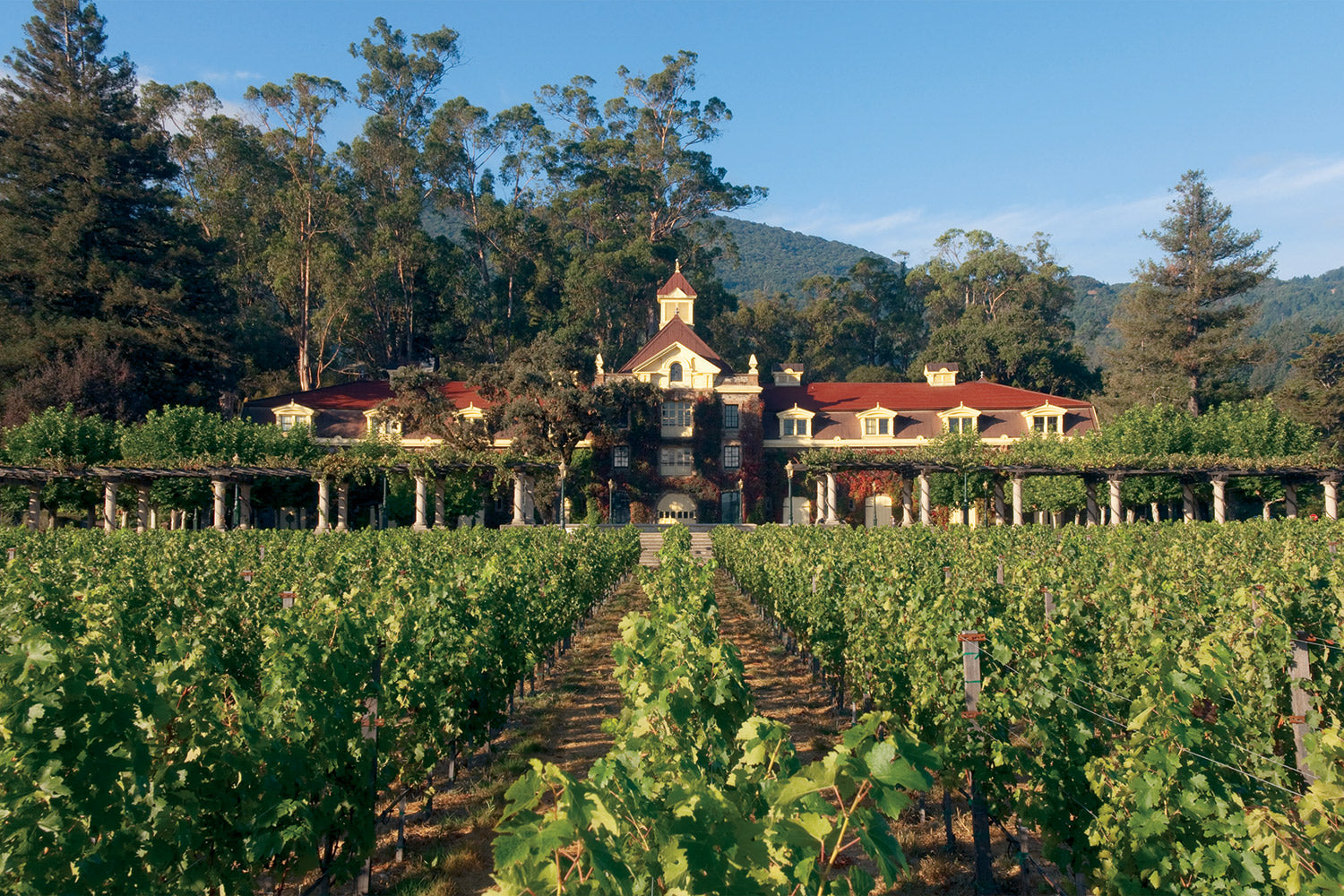
Inglenook's vineyards sit on the Rutherford Bench, a stretch of deep alluvial fan soils — gravel, loam, and volcanic material deposited by the Mayacamas Mountains — that drain exceptionally well and force the vines to dig deep. The result is concentration without heaviness, and a structural backbone that rewards cellaring. The benchland's slightly elevated position and afternoon shade from the mountains moderate what can be a very warm growing season, preserving freshness and acidity that define Rubicon's character.
Napa Valley is California's most prestigious wine appellation, a narrow strip of valley floor and hillside running roughly 30 miles from Carneros in the south to Calistoga in the north. Within it, Rutherford is regarded as one of the most historically significant sub-appellations, particularly for Cabernet Sauvignon — the so-called 'Rutherford dust' describing the fine, grippy tannin texture that the benchland soils produce. Compared to the showier power of Oakville or the structured austerity of Stags Leap, Rutherford tends to produce wines of mid-weight richness and earthy depth.
The 2019 growing season in Napa Valley delivered exactly what winemakers dream of: a long, steady march to harvest without drama. After winter rains recharged the soils, spring arrived gently and summer settled into a rhythm of warm days and cool nights that stretched well into October. This wasn't a vintage that made headlines for heat spikes or sudden surprises—it simply allowed the vines to ripen fruit with the kind of unhurried precision that produces exceptional wine.
What emerged from this calm season are wines with real substance and staying power, particularly the Cabernet Sauvignon that defines the valley. The tannins have structure without being punishing, the fruit carries weight without feeling heavy, and there's a freshness running through even the richest bottlings that keeps them lively. Chardonnay and Merlot both captured beautiful ripeness while holding their natural acidity. These wines are drinking gorgeously now but have the backbone to improve until 2035 and beyond—we find ourselves returning to our 2019s again and again, always finding something new.
FAQs
What does the 2019 Rubicon taste like?
Think cassis and dark cherry with a cool, almost European lift — cranberry, cold ash, and a floral note that keeps the richness grounded. Underneath there's espresso, cocoa, and fine chalky tannins. It's a Napa Cabernet, but one that prizes precision over power.
When is the best time to drink it?
It's approachable now with a long decant, but patience will be rewarded. We'd aim for 2028 at the earliest for a more complete picture, with the window running comfortably until 2045 and beyond for well-stored bottles.
Is it worth cellaring?
Absolutely. This is one of a handful of Napa wines genuinely built for the cellar — not just capable of ageing, but designed for it. The 2019 vintage was outstanding in Napa, and the structure here suggests it will repay a decade of patience handsomely.
What food should I serve with it?
Slow-roasted lamb or prime rib are the classic pairings, but a well-charred ribeye or braised short rib with root vegetables would be equally at home. The wine's herbal and tobacco notes mean it handles herb-crusted preparations particularly well.
How does it compare to Bordeaux?
That's precisely the question Inglenook has always invited. Winemaker Philippe Bascaules came from Château Margaux, and his influence is clear in the fine tannin structure and cool, precise style. It's not a Bordeaux impression — it's a Rutherford wine on its own terms — but the benchmark it's aiming at is unmistakable.
How should I serve it?
Serve at 17-18°C in a large Bordeaux glass. Decant for at least 90 minutes, ideally two hours — this wine is still in its youth and needs air to show its full hand.

Explore related wines


What are you looking for tonight? Tell me the occasion, a grape, a region — or just try a suggestion below.
Your recommendations will appear here.
-
-
Speak to one of our Wine Gurus
Speak to a Wine GuruWith years of experience, our team can help you with all your wine buying and selling needs