

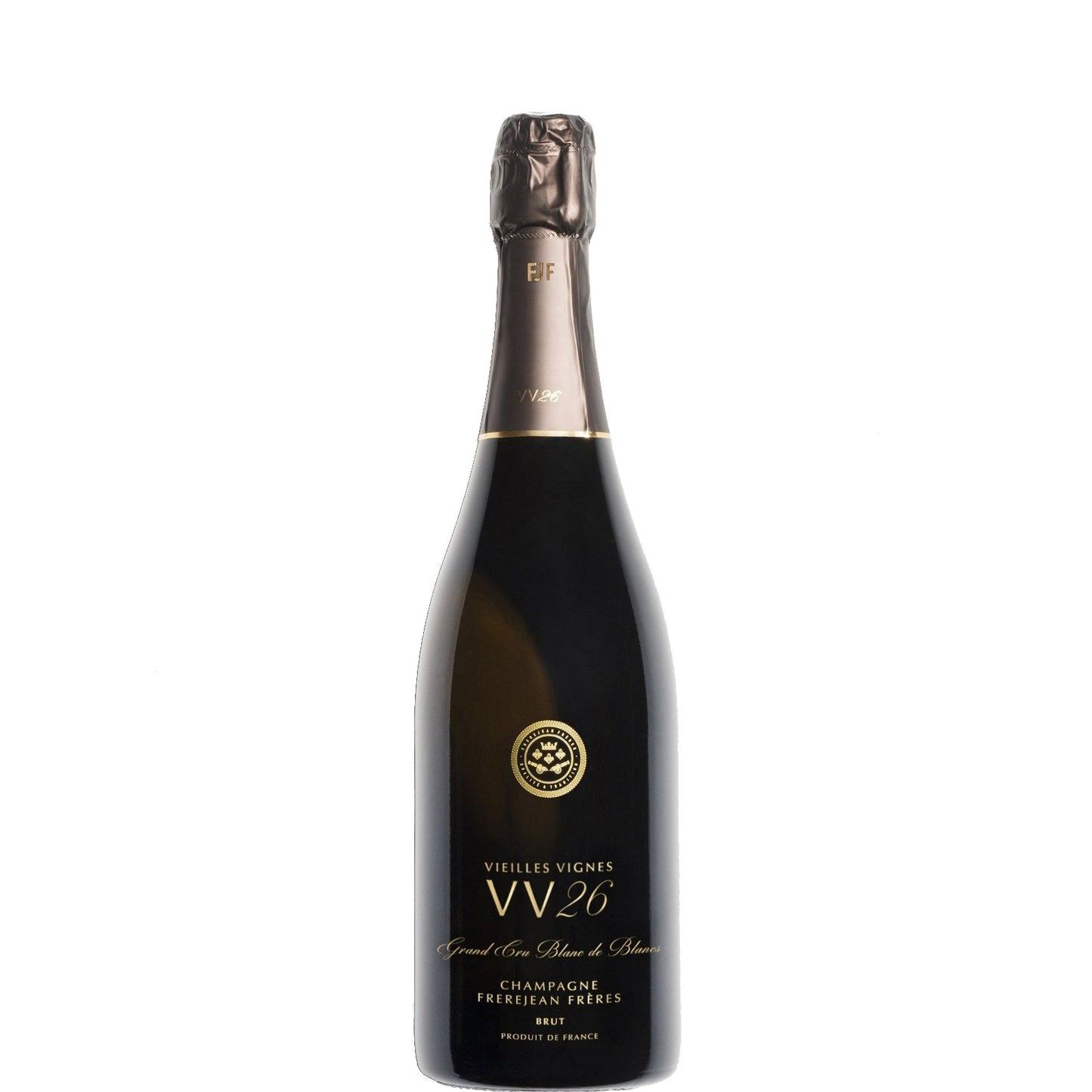
Frerejean Frères, VV26 Grand Cru Blanc de Blancs Brut, Nv
Frerejean Frères, VV26 Grand Cru Blanc de Blancs Brut, Nv
- 75cl
- 12%
- White Sparkling
- Chardonnay
Couldn't load pickup availability

Optimal drinking window: 2026 - 2032
Frerejean Frères brings precision and elegance to their VV26 Grand Cru Blanc de Blancs, a pure Chardonnay expression from the chalk slopes of Champagne's most prestigious villages. This is Champagne that speaks of place rather than producer ego - all citrus tension and mineral backbone, with the kind of fine mousse that makes you pause mid-conversation.
Based on 2012 with 2008 and 2009 as reserve wines, this is a gastronomic tour de force, with breadth, depth and terrific length, complexity and harmony, and capacity for longer-term cellaring (though it is GORGEOUS right now).
This Blanc de Blancs is drinking beautifully now, with primary citrus fruit at its peak freshness and the mineral backbone providing excellent structure. Over the next two to three years, expect the fruit to integrate further while developing subtle brioche and honey characteristics from the lees contact. The wine should plateau around 2028-2030, where the balance between freshness and complexity will be ideal.
What the critics say:
"A bright golden colour. Wonderful Champagne with reverberant character with aroma reminiscent of balmy spices, vanilla, Brioche, nuts and dried yellow stone fruits. Hints of candied lemon zest in the background. On the palate well balanced with intense flavour reminiscent of mild spices, Brioche and yellow stone fruit, hints of honey and roasted almonds in the background. Truly a Grand Cru quality with aromatic depth and length "blending" freshness and maturity."
"A blend of the 2009 and 2008 vintages, Frerejean Frères' NV Brut Blanc de Blancs VV26 was disgorged after eight years on the lees. Bursting from the glass with a rich bouquet of dried citrus fruit, yellow apples, honeycomb, toasted bread and walnuts, it's full-bodied, fleshy and enveloping, with a frothy mousse and a generous, expressive palate that's underpinned by lively acids. This is showing beautifully in its somewhat old-fashioned style and comes warmly recommended. The VV26 is a blend of Chardonnay from Cremant, Avize and Oger—dominated by the former to the tune of 90%—from older parcels, some of which date back to 1926. It's the highlight of the range by some margin."
"Deep straw color, and gentle, fine bubbles. A powerful nose: oxidative, honeyed, toasted bread and a hint of pain d’épices around a core of perfumed mirabelle and Seville orange marmalade, the latter giving both zing and an attractive nip of bitterness on the palate. Vinous, savory, rich, intense, concentrated, complex, long. Even so, it wasn’t quite up to duck stuffed with foie gras."
Tasting Notes
AppearancePale gold with a persistent fine mousse and steady stream of bubbles.
NoseFresh citrus zest and green apple dominate, with subtle brioche and chalk dust underneath. There's a lovely precision here, clean and focused rather than rich. A hint of white flowers adds elegance without sweetness.
PalateCrisp and mineral-driven, with lime and grapefruit leading the charge. The mousse is perfectly integrated, creating texture without weight. Chalk and sea spray on the mid-palate give this real Grand Cru character, while the acidity keeps everything taut and fresh.
FinishLong and saline, with citrus pith and mineral persistence that lingers beautifully.
Overall impressionThis is Blanc de Blancs that knows its place - elegant, precise, and utterly refreshing.
Food Pairings
In Champagne, this style of Blanc de Blancs would accompany the region's famous oysters from nearby Normandy, their briny sweetness matching the wine's mineral precision perfectly. Local chefs pair similar wines with pike-perch from the Marne, simply prepared with butter and herbs, or the delicate river trout that's traditional to the area. Chaource cheese, creamy and mild from just south of the region, creates a beautiful contrast with the wine's acidity. For special occasions, think escargots de Champagne - the local snails prepared with garlic and parsley butter.
We think this wine would go well with
Serve well-chilled at 6-8°C in proper flutes or white wine glasses to appreciate the mousse and aromatics. No need to decant - this wine is all about freshness and precision. If you have tulip-shaped Champagne glasses, even better, as they'll concentrate the delicate aromatics while showing off that beautiful persistent mousse.
The Grand Cru vineyards contributing to this blend sit on the classic chalk soils of the Côte des Blancs, where Chardonnay finds its most elegant expression. These chalky slopes provide excellent drainage while retaining enough moisture for the vines, and the mineral-rich subsoil imparts that distinctive saline quality to the finished wine. The continental climate with Atlantic influences creates the tension between ripeness and acidity that defines great Blanc de Blancs.
Champagne's Grand Cru classification covers just 17 villages across the region, representing the finest terroirs for both Chardonnay and Pinot Noir. These sites command the highest prices for grapes and produce wines of exceptional finesse and aging potential. For Blanc de Blancs, the Grand Cru villages of the Côte des Blancs - including Cramant, Avize, and Le Mesnil-sur-Oger - are considered the gold standard, delivering wines with unmatched elegance and mineral precision.
FAQs
What does this Blanc de Blancs taste like?
Crisp and mineral-driven, with citrus fruit, green apple, and a distinctive chalky character from the Grand Cru vineyards. It's elegant rather than rich, with fine bubbles and a clean, refreshing finish.
When should I drink this Champagne?
It's perfect now through 2032. The wine is at its freshest and most vibrant currently, but will develop more complexity over the next few years while maintaining its essential character.
What food pairs well with this wine?
Oysters and shellfish are classic matches, but it's also brilliant with light fish dishes, goat's cheese, or simply as an aperitif. The mineral precision makes it food-friendly without being demanding.
How should I serve this Champagne?
Serve well-chilled at 6-8°C in proper flutes or tulip-shaped glasses. No need to decant - this is all about capturing the fresh, precise character and beautiful mousse.
Is this worth cellaring?
While drinking beautifully now, it will reward 2-4 years of cellaring as the fruit integrates and develops more complexity. Beyond that, you're trading freshness for development, which is really a matter of preference.
What makes this a Grand Cru Champagne?
The grapes come from Champagne's top-rated villages, with their exceptional chalk soils and perfect exposition. This translates to greater precision, mineral character, and aging potential compared to standard Champagne.
Explore related wines


What are you looking for tonight? Tell me the occasion, a grape, a region — or just try a suggestion below.
Your recommendations will appear here.
-
-
Speak to one of our Wine Gurus
Speak to a Wine GuruWith years of experience, our team can help you with all your wine buying and selling needs