

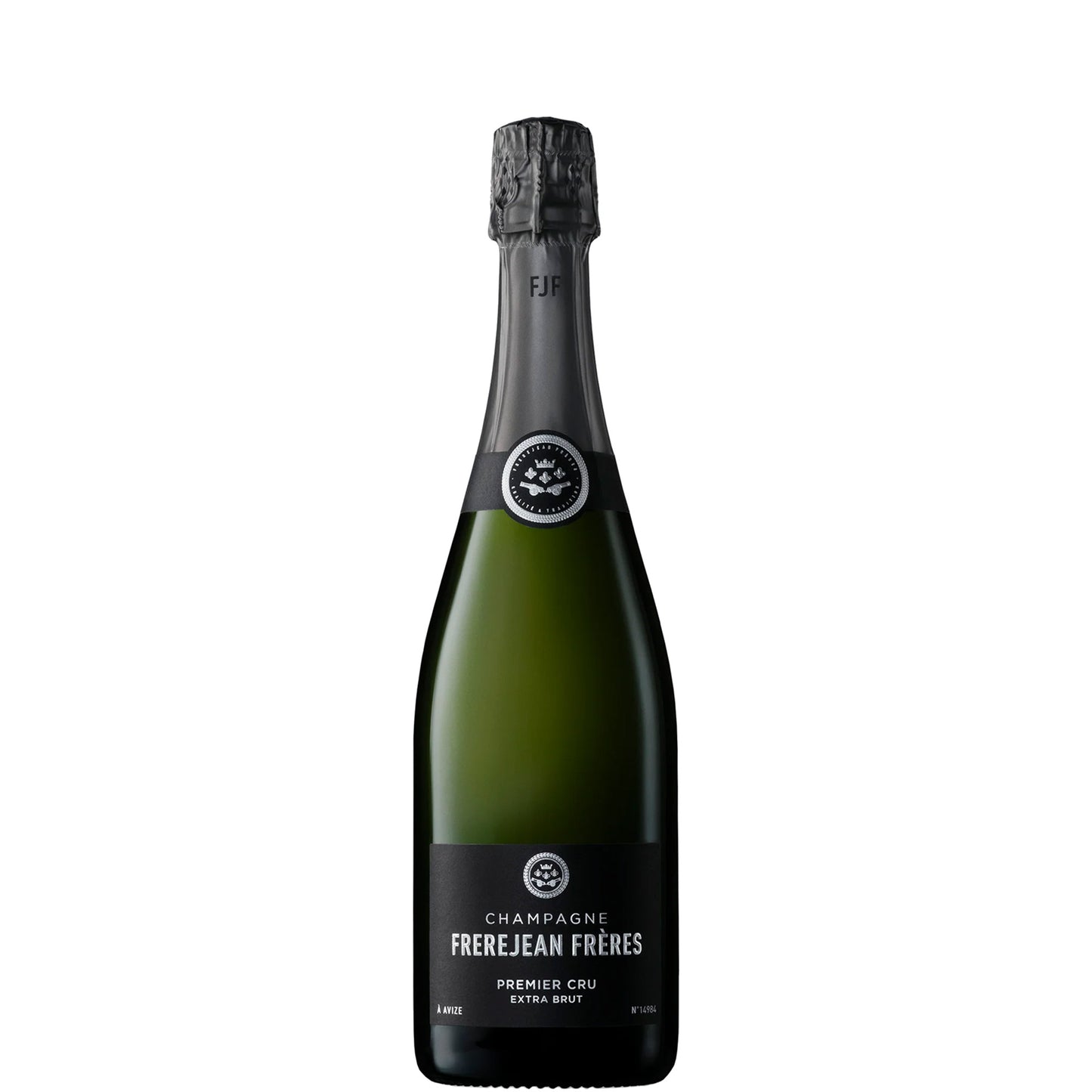
Frerejean Frères Premier Cru Extra Brut, NV
Frerejean Frères Premier Cru Extra Brut, NV
- 75cl
- 12%
- White Sparkling
- Chardonnay, Pinot Noir
Couldn't load pickup availability

Optimal drinking window: 2026 - 2030
Frerejean Frères was founded by the Frerejean-Taittinger brothers in the Côte des Blancs region of Champagne, with a focus on producing high-quality Champagnes from Premier Cru and Grand Cru vineyards. The house combines traditional methods with a modern touch, emphasising long aging and a commitment to expressing terroir. Their Champagne is now sold in hand-selected outlets the world over, but have stayed true to a small-scale approach.
The Premier Cru Extra Brut is incredibly versatile when it comes to food pairing due to its dry, crisp style. It pairs beautifully with seafood like oysters, lobster, and sushi, as well as delicate white fish dishes. Its acidity and minerality also make it a great match for creamy cheeses such as Brie or Camembert, or even rich dishes like risotto with truffle or mushroom.
This is a non-vintage wine built for pleasure now rather than the cellar, and it is already in a very good place. The lees ageing has done its work, and the toasty, brioche-like complexity is well integrated with the primary citrus fruit. Over the next two to three years the wine will likely soften very slightly, the mineral edge rounding just a touch and the stone-fruit notes becoming more prominent.
What the critics say:
"Pale straw. Floral, orchard, and warm pâtisserie aromas, followed by crystallized lemon and peach. The palate opens with appetite-whetting freshness and salinity then fans out into richer, bready, evolved notes and fine, pure fruit—sweet lemon, mirabelle plum, and white peach. Long, slender, and airy, but displaying the flesh of the 2015 vintage base at the same time. The dosage is perfectly pitched; you know it’s there, but you don’t notice it at all, making for harmony without a scintilla of austerity."
"From Avize in the Côtes des Blancs, the Frerejean Frères 1er Cru Extra Brut NV is serious fare. A moitié-moitié blend of Chardonnay and Pinot Noir, it’s late disgorged and appetisingly weighty and textured. Run by brothers Guillaume, Rodolphe and Richard, Frerejean Frères remains true to its small-scale roots but has a growing reputation in France and was official supplier to the 2022 Michelin Awards. "
Tasting Notes
AppearancePale gold with a very fine, persistent bead and a bright, clean rim.
NoseFresh green apple and lemon zest sit alongside a toasty, brioche-like quality that speaks to the time on lees. There is a chalky, almost saline undercurrent that is very much the Côte des Blancs making its presence felt. With a few minutes in the glass, white peach and a faint almond note begin to emerge.
PalateDry, focused, and energetic — the low dosage means there is no sweetness to soften the entry, just a clean, precise attack of citrus and white fruit. The mousse is creamy without being heavy, and the acidity is lively rather than sharp, giving the wine real drive across the palate. A stony, almost chalky mineral quality runs through the mid-palate and gives the wine genuine backbone.
FinishLong and mineral, with a lingering lemon-pith dryness that keeps you reaching for another sip.
Overall impressionA precise, uncompromising blanc de blancs style that earns its extra brut label without apology.
Food Pairings
In the villages of the Côte des Blancs, Champagne is not an aperitif — it is a food wine, full stop. Locals would think nothing of pouring a dry, mineral blanc de blancs style alongside a plate of Chaource or Langres cheese, both made just over the border in the same chalky northeast. Oysters from the Normandy coast are the classic companion, their salt and iodine meeting the wine's mineral edge like old friends. A simple roast chicken with tarragon cream, or escalope de veau with a lemon and caper butter, would also be right at home on a Champenois table with a bottle like this. In autumn, a light mushroom and Gruyère tart is the kind of honest regional food that shows exactly what an extra brut Champagne can do with a proper plate of something savoury.
We think this wine would go well with
Serve at 8-10°C — cold enough to keep the bubbles lively, but not so icy that the mineral and toasty complexity goes into hiding. No need to decant; simply pop the cork and pour into a tall, narrow tulip glass rather than a coupe, which will lose the fine bead and concentrate the aromas where you actually want them. If you are serving it with food rather than as an aperitif, pulling it from the fridge five minutes early will let the wine open up just enough to meet the plate.
The Côte des Blancs runs south from Épernay along a chalk-rich escarpment that is essentially Chardonnay's spiritual home in Champagne. The soils are predominantly Belemnite chalk, which drains freely, retains just enough moisture during dry summers, and gives the wines that distinctive saline, almost flint-edged mineral quality. The east-facing slopes catch the morning sun but stay cool enough to preserve acidity — exactly what you want for a fine, long-lived blanc de blancs style. Premier Cru villages such as Cuis, Vertus, and Oger each contribute slightly different expressions, from the delicacy of Cuis to the richer texture of Vertus.
Champagne is the most tightly regulated sparkling wine appellation in the world, confined to a defined zone northeast of Paris with strict rules on grape varieties, yields, pressing, and minimum ageing periods. Within that, the Premier Cru classification covers villages officially rated between 90 and 99 on the historic échelle des crus scale, sitting just below the seventeen Grand Cru villages. Premier Cru fruit can still be exceptional — the Côte des Blancs Premier Crus in particular are considered by many to rival their Grand Cru neighbours in finesse if not always in weight. Extra Brut indicates a dosage of between 0 and 6 grams of residual sugar per litre, placing it firmly at the dry end of the Champagne spectrum.
FAQs
What does the Premier Cru Extra Brut taste like?
It is dry, precise, and mineral — think green apple, lemon zest, and toasted brioche, with a chalky, saline quality running through the whole wine. The low dosage means no sugary softness; what you get instead is focus and real freshness.
Is Extra Brut very different from Brut Champagne?
Yes, meaningfully so. Extra Brut has between 0 and 6 grams of residual sugar per litre, compared to up to 12 grams in a standard Brut. That difference is noticeable in the glass — the wine feels drier, more precise, and lets the grape and the chalk do the talking rather than the sweetness.
When should I drink this?
Now is a perfectly good answer. This is drinking well in 2026 and will hold well until around 2030, but the vivid freshness and mineral energy that make it special are at their best in the next three or four years. Don't wait for a special occasion — that's what it is.
What food works well with this Champagne?
Its dry, mineral character makes it one of the more food-friendly Champagnes around. Oysters and other shellfish are the obvious choice, but it also works brilliantly with sushi, white fish, creamy cheeses like Brie or Camembert, or a mushroom and truffle risotto. The acidity cuts through richness; the minerality mirrors anything from the sea.
How should I serve it?
At 8-10°C in a tall tulip glass. Avoid the coupe — it kills the bead and disperses the aromas before you get a chance to enjoy them. No need to decant; just pour and drink.
Is this worth buying as a gift?
It is the kind of bottle that feels considered without being showy — the Frerejean-Taittinger name carries genuine credibility, the packaging is elegant, and the wine itself is serious enough to impress someone who knows Champagne. A very good call.
Explore related wines


What are you looking for tonight? Tell me the occasion, a grape, a region — or just try a suggestion below.
Your recommendations will appear here.

-
-
Speak to one of our Wine Gurus
Speak to a Wine GuruWith years of experience, our team can help you with all your wine buying and selling needs