

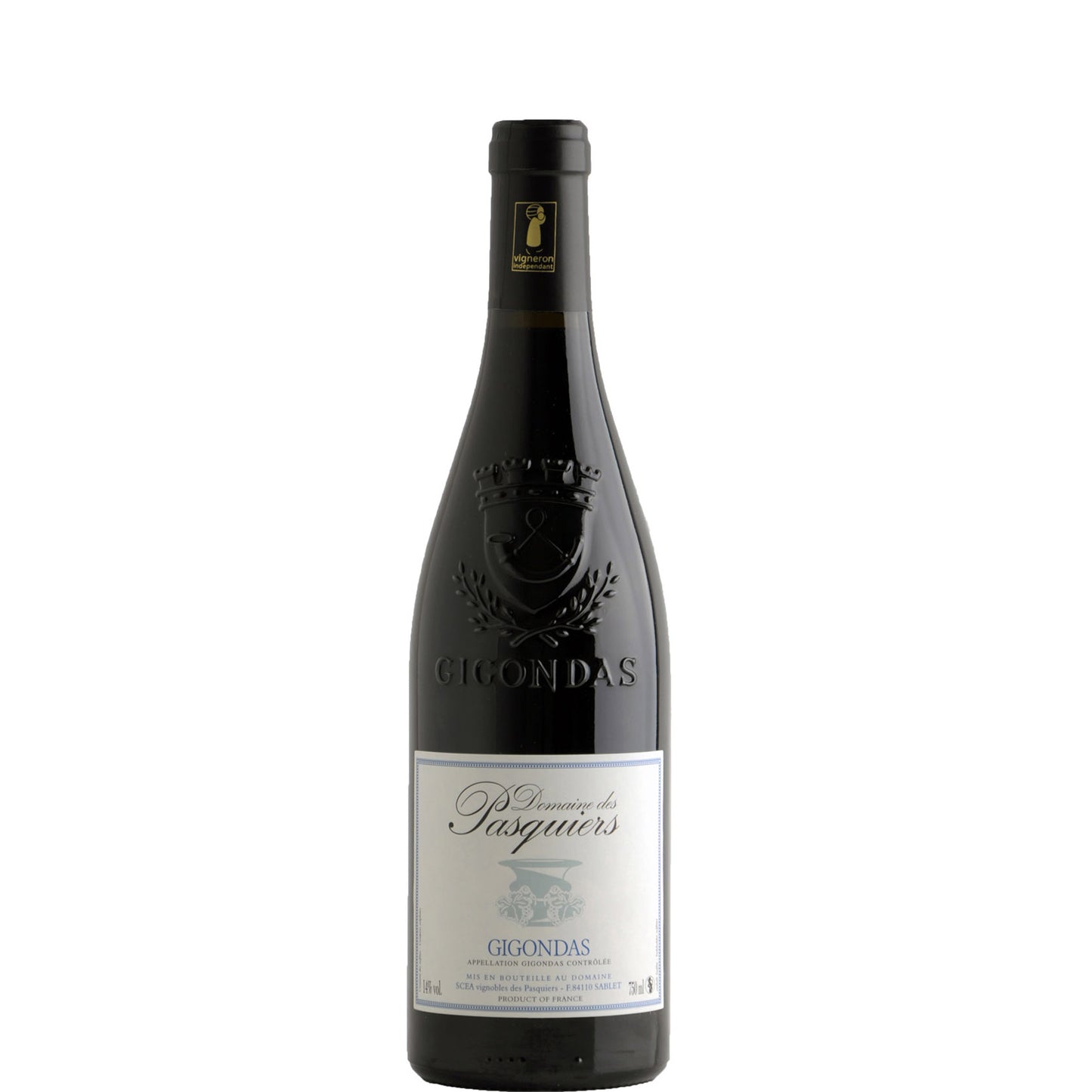
Domaine des Pasquiers, Gigondas, 2023
Domaine des Pasquiers, Gigondas, 2023
- 75cl
- 15%
- Red Still
- Grenache, Syrah
- Organic
- Vegetarian
- Vegan
Couldn't load pickup availability

Optimal drinking window: Now - 2038
Domaine des Pasquiers crafts one of Gigondas' most reliable expressions from their high-altitude vineyards beneath the Dentelles de Montmirail. The 2023 shows the wild herbs of the garrigue, the structured power that comes from old vines, and that distinctive mineral backbone that separates Gigondas from its flashier Châteauneuf neighbours.
Built on Grenache and Syrah, the fruit is dense and dark, the tannins serious but not severe, and there's a lovely tension between the Mediterranean warmth and the cooling influence of altitude.
Currently in its primary phase, this 2023 shows concentrated fruit but the tannins need time to integrate fully. From 2025-2030, expect the Grenache's generous fruit to merge beautifully with the Syrah's spice and structure. The wine will hit its stride from 2030-2035, developing secondary notes of leather, game, and dried herbs while retaining its mineral backbone. After 2035, the fruit will begin to fade gracefully, leaving behind the classic tertiary aromatics of aged southern Rhône - earth, truffle, and forest floor.
What the critics say:
"Lively and perfumed, the 2023 Gigondas is another strong effort from this estate. Unfurling in the glass with aromas of dark berries, cherries, flowers and garrigue, framed by a touch of reduction, it’s medium- to full-bodied, layered and textured, with a juicy core of fruit, good length and velvety tannins, concluding with a long, ethereal finish. Crafted from equal parts Grenache Noir and Syrah, it was matured for nine months in concrete tanks."
Tasting Notes
AppearanceDeep garnet with a purple rim, showing good concentration.
NoseDark plum and blackberry meld with dried thyme, rosemary, and a hint of black olive. There's a mineral edge underneath, like wet limestone after rain. The oak is present but well-integrated.
PalateFull-bodied with serious structure, the tannins firm but ripe. Dark fruit dominates the mid-palate, supported by white pepper spice and that distinctive garrigue herbaceousness. The acidity keeps everything fresh despite the wine's power.
FinishLong and mineral-driven, with lingering herbs and a touch of liquorice.
Overall impressionA serious Gigondas that captures the appellation's wild, mineral character while showing excellent aging potential.
Food Pairings
In the villages around Gigondas, this wine would accompany slow-braised daube de boeuf Provençale, rich with olives, tomatoes, and herbs de Provence. Game is equally traditional - wild boar stewed with juniper, or venison with a reduction of the wine itself. The local tapenade made from Nyons olives provides a perfect aperitif pairing, while aged Banon goat cheese wrapped in chestnut leaves offers a classic regional match that highlights both the wine's mineral character and herbaceous notes.
We think this wine would go well with
Serve at 16-18°C to allow the wine's complexity to unfold properly. Decant for at least two hours to soften the tannins and let the aromatics develop - this wine rewards patience. Use large Burgundy glasses to concentrate the garrigue aromas. If serving young, consider opening the bottle several hours before serving to allow proper aeration.
The vineyards sit on a complex mix of red clay, limestone, and galets roulés at elevations between 200-400 metres beneath the dramatic limestone peaks of the Dentelles de Montmirail. The mistral wind provides crucial cooling, while the rocky soils force vines to dig deep for water. This combination of Mediterranean warmth and alpine influence creates wines with both power and freshness, distinguishing Gigondas from the broader southern Rhône.
Gigondas earned AOC status in 1971, breaking away from the generic Côtes du Rhône to establish itself as one of the southern Rhône's most serious appellations. The rules mandate a minimum of 50% Grenache, with Syrah and Mourvèdre as principal partners, and restrict yields to 35 hectolitres per hectare. Unlike neighbouring Châteauneuf-du-Pape with its 13 permitted varieties, Gigondas keeps things focused, creating wines known for their mineral precision and garrigue-scented character.
The 2023 growing season in the Rhône started promisingly with a mild winter and early budbreak, but spring brought its challenges with late frosts affecting some vineyards, particularly in the north. Summer delivered the heat we expect here, though without the punishing extremes that can shut down photosynthesis entirely. What saved the vintage was September's cooling temperatures and occasional rain, allowing the grapes to retain freshness while completing their ripening cycle. Harvest began earlier than usual but proceeded at a measured pace, giving producers flexibility to pick at optimal moments.
The result is a vintage that captures the Rhône's sunny disposition without the overwrought power that can make these wines feel heavy-handed. Syrah from the northern appellations shows particular promise, combining the grape's natural spice and dark fruit intensity with surprising lift and precision. In the south, Grenache-based blends benefit from that late-season freshness, offering immediate charm whilst maintaining enough structure for proper ageing. Most 2023s are drinking beautifully now and will continue to develop until 2035, making this a vintage that rewards both early drinking and patient cellaring.
FAQs
What does this Gigondas taste like?
Dense dark fruit with wild Mediterranean herbs, structured tannins, and a distinctive mineral finish that reflects the limestone soils beneath the Dentelles de Montmirail.
When should I drink this wine?
The Gigondas is already lovely, but will be at its peak from 2027-2035.
What food pairs well with Gigondas?
Think robust Provençal cooking - daube de boeuf, grilled lamb with herbes de Provence, wild boar, or aged goat cheese. The wine's herbaceous character loves Mediterranean flavours.
How should I serve this wine?
Decant for at least two hours and serve at 16-18°C in large glasses. The wine needs air to show its full complexity.
Is this wine worth cellaring?
Absolutely. Gigondas is built for aging, and this wine will develop beautiful secondary complexity over the next 10-15 years while retaining its mineral character.
How does Gigondas compare to Châteauneuf-du-Pape?
Gigondas tends to be more structured and mineral-driven, with a wilder, more herbaceous character thanks to higher altitude and limestone soils. It offers similar quality at often better value.

OUR GROWERS
Domaine des Pasquiers


What are you looking for tonight? Tell me the occasion, a grape, a region — or just try a suggestion below.
Your recommendations will appear here.
-
-
Speak to one of our Wine Gurus
Speak to a Wine GuruWith years of experience, our team can help you with all your wine buying and selling needs