

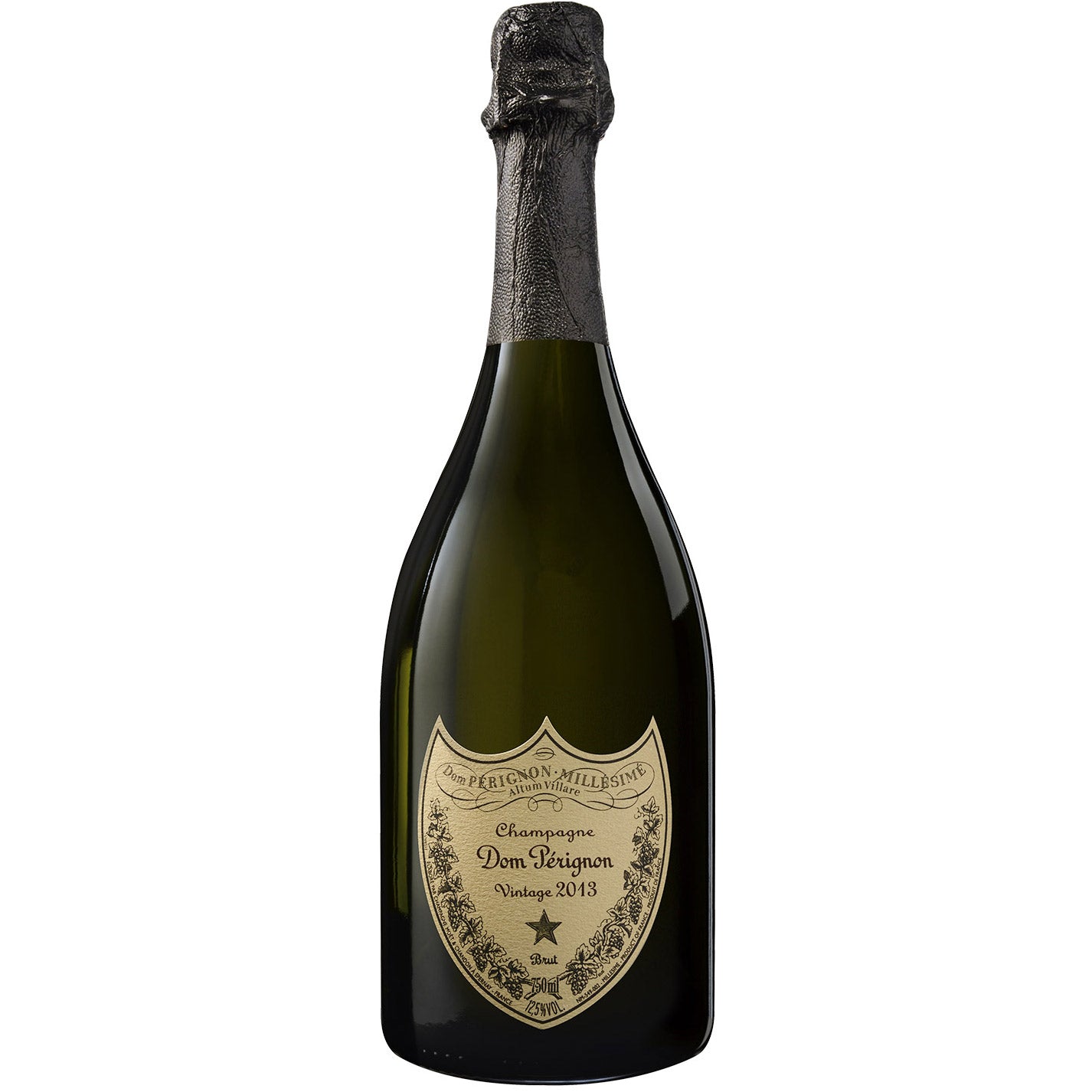
Dom Pérignon, Vintage, 2013 - Magnum
Dom Pérignon, Vintage, 2013 - Magnum
- 150cl
- 12.5%
- White Sparkling
- Pinot Noir, Chardonnay
Couldn't load pickup availability

Optimal drinking window: Now - 2045
The Dom Pérignon 2013 has that classic Dom Pérignon balance of richness and precision. Fresh citrus, green apple and pear lead on the nose, with touches of stone fruit, almond and a faint smoky edge. The palate is taut and energetic, driven by bright acidity, but there’s depth too, with layers of fruit and a long, mineral finish.
2013 certainly kept growers on their toes. A cool, damp spring slowed things down, but then the weather turned and 2013 became the sunniest summer on record in Champagne. The heat gave great ripeness, though it also meant yields were lower than expected – the harvest ended up the same size as 2012 and came in about two weeks later than usual.
It’s a vintage that combines generosity with freshness – approachable now but clearly built to age.
In magnum, the 2013 is currently at an intriguing early stage — the primary citrus and green fruit are bright and vivid, but the smoky, almond-edged character hints at what is to come. Between 2027 and 2030, we'd expect the fruit to soften and integrate, with brioche and stone fruit complexity coming to the fore alongside deeper minerality. The plateau of drinking pleasure — where everything is in harmony — is likely to sit somewhere between 2028 and 2035, with the magnum format adding several years of grace compared to a standard bottle. After 2040 or so, the wine may begin to take on a more oxidative, honeyed character that some will love and others will find a step too far. James Suckling's comparison to the great 1988 suggests this could genuinely surprise over a very long haul.
What the critics say:
"A driven and serious DP with aromas of chalk, biscuits, apricot stones and lemons. Some spice and dried flowers, too. So sleek and sophisticated. Elegant. Yet, it’s long and powerful, with a sharp minerality. Tight and precise. Reminds me of bottles from the 1980s, such as 1988. It really takes off. Disgorged October 2021. Drinkable on release in January 2023, but better in a couple of years. A DP for the cellar."
"Intense, lightly spicy nose and then on the palate very smooth-textured, gentle and lifted, with light bitterness on the finish – grapefruit peel? Some lightly vegetal notes and very long. Seamless texture and already very agreeable."
"Vivid acidity and a chalky underpinning make a crystalline frame for finely detailed notes of ripe melon, mandarin orange, toasted brioche and candied ginger in this harmonious Champagne, which is expressive and expansive on the palate, but with a sense of finesse and restraint. Long and creamy on the mineral-laced finish. Drink now through 2037."
Tasting Notes
AppearancePale golden straw with a fine, persistent stream of tiny bubbles and a luminous clarity.
NoseFresh citrus — lemon zest, green apple, a whisper of ripe pear — with a smoky, chalky edge and almond in the background. With time in the glass, dried apricot and a faint floral note begin to emerge, suggesting there is more to come with further age.
PalateTaut and energetic from the first sip, driven by bright, focused acidity, yet there is real depth underneath — stone fruit, toasted brioche, a touch of candied ginger. The magnum format adds a sense of calm assurance; everything feels more composed, more unhurried than in a standard bottle.
FinishLong, clean, and mineral, with a pleasing flicker of grapefruit peel bitterness at the very end.
Overall impressionA wine of genuine tension and ambition — sophisticated now, but clearly not done yet.
Food Pairings
In Champagne, vintage cuvées like this are typically brought out for celebrations built around the best local produce: a plate of oysters from the Normandy coast, langoustines with brown butter, or perhaps a simple roast guinea fowl. The region's proximity to Burgundy means white Burgundy-friendly dishes work beautifully here too — think turbot with a cream sauce, or a risotto finished with aged Comté. Locally, you might find it alongside a terrine of foie gras as a starter, the wine's acidity cutting through the richness with precision. More adventurously, the 2013's depth and toasty development means it can handle truffle, which is rare territory for a Champagne.
We think this wine would go well with
Serve between 10 and 12°C — cold enough to preserve the freshness and fizz, but not so cold you flatten the aromatic complexity. No need to decant, though pouring into a white Burgundy-style tulip glass rather than a flute will open the wine up considerably and let those developing secondary aromas express themselves. Given the magnum format, the wine will warm quickly once poured, so keep the bottle chilled throughout.
Dom Pérignon draws from Grand Cru and Premier Cru vineyards across Champagne's most prized villages, with Chardonnay typically sourced from Côte des Blancs sites and Pinot Noir from the Montagne de Reims. The chalk subsoil — sometimes 200 metres deep — is the heartbeat of the style, delivering that signature cool minerality and the fine, persistent acidity that allows Dom Pérignon to age so gracefully. The cool continental climate means ripeness is never guaranteed, which is exactly why Dom Pérignon is only produced in years the cellar master considers genuinely exceptional. In 2013, a record-breaking Champagne summer rescued what had been an unpromising start, giving the fruit the ripeness needed to earn a release.
Champagne is France's northernmost major wine region and the only place in the world legally permitted to produce Champagne — a title protected under both EU and international law. The appellation demands second fermentation in bottle, a minimum of 15 months on the lees for non-vintage and three years for vintage, and strict yields from 319 approved communes. What distinguishes Champagne from all other sparkling wine regions is the combination of extreme northern latitude, deep chalk soils, and centuries of accumulated cellar expertise — a combination that produces bubbles of a precision and longevity no other region has convincingly replicated. Vintage Champagne, released only in the best years, represents the top of the appellation's hierarchy.
The 2013 vintage caught Champagne in a properly challenging mood. A cold, wet spring delayed budbreak well into May, followed by a summer that couldn't quite decide what it wanted to be — patchy sunshine punctuated by rain that had growers muttering into their morning coffee. Come harvest time in October, the latest picking dates in years meant racing against autumn's chill to gather fruit that had ripened slowly and unevenly across the region.
What emerged from this meteorological muddle was a vintage of surprising charm, though admittedly not one for the history books. The extended hang time gave the grapes a lovely mineral tension, particularly in the Chardonnay, while Pinot Noir struggled more with the conditions but still delivered decent colour and structure. Most houses declared a vintage, albeit in modest quantities, and we find these wines drinking rather well now — they've got that bright, food-friendly acidity that makes you reach for another glass, even if they lack the depth for long cellaring. Drink until 2028.
FAQs
What does the Dom Pérignon 2013 taste like?
It is precise and energetic rather than overtly generous — fresh citrus, green apple, almond, and a faintly smoky chalk edge on the nose, with a taut, mineral-driven palate that also offers real depth: stone fruit, toasted brioche, a hint of candied ginger. The finish is long and clean, with a flicker of grapefruit peel bitterness. Think crystalline rather than creamy.
Is the 2013 a good Dom Pérignon vintage?
It is a genuinely excellent one, though not an obvious crowd-pleaser on release. A cool, damp spring gave way to Champagne's sunniest summer on record, producing ripe, concentrated fruit with the freshness to back it up. It is the kind of vintage that rewards patience and punishes those who drink it too young.
When should I drink this magnum?
It is approachable now — particularly at a celebration where it will be appreciated — but the magnum format means it is in no hurry. We think the window of peak drinking runs from around 2028 until 2040, though it could continue to develop well beyond that. If you have it in the cellar, try one bottle around 2028 and reassess.
Why buy a magnum rather than a standard bottle?
Magnums age more slowly and more evenly than standard bottles because the ratio of wine to air in the neck is more favourable. For a wine built to age like this, that means more complex, nuanced development over a longer period. It is also, frankly, the right format for a proper celebration.
What food should I serve with the Dom Pérignon 2013?
The wine's acidity and mineral precision make it a natural partner for oysters, langoustines, turbot, or anything with a cream or butter sauce. Its depth and toasty development also mean it can handle richer dishes — foie gras, truffle, even a well-judged piece of aged Comté. Avoid anything too heavily spiced or tannic.
How should I serve this wine?
Serve between 10 and 12°C and consider using a tulip-shaped white wine glass rather than a flute — it opens the wine up and gives those developing aromas room to breathe. No decanting needed, but do not serve it straight from the fridge or you will miss much of what makes it interesting.

Explore related wines


What are you looking for tonight? Tell me the occasion, a grape, a region — or just try a suggestion below.
Your recommendations will appear here.
-
-
Speak to one of our Wine Gurus
Speak to a Wine GuruWith years of experience, our team can help you with all your wine buying and selling needs