

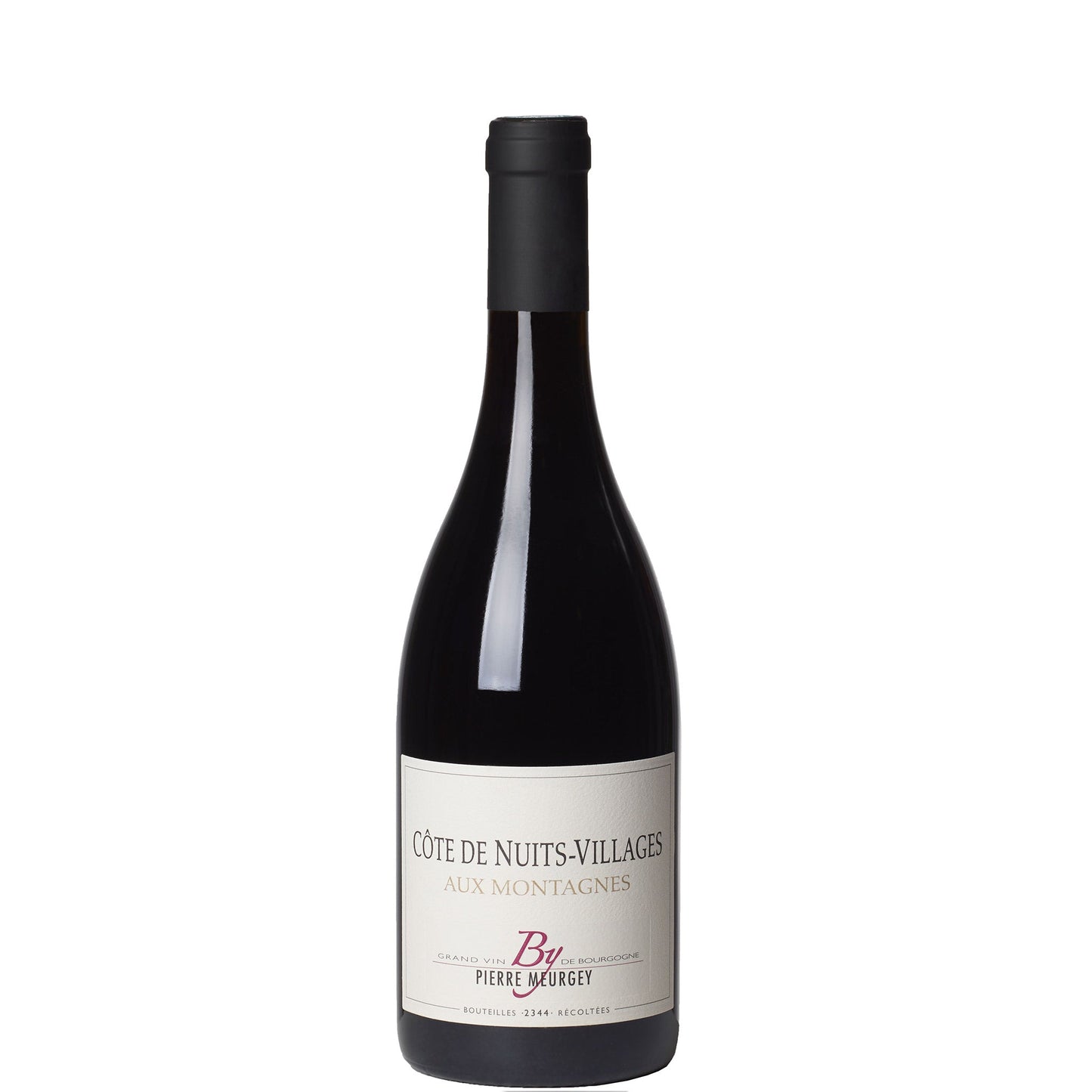
Côtes De Nuits-Villages, Aux Montagnes, Pierre Meurgey, 2021
Côtes De Nuits-Villages, Aux Montagnes, Pierre Meurgey, 2021
- 75cl
- 13%
- Red Still
- Pinot Noir
Couldn't load pickup availability

Optimal drinking window: Now - 2031
About Côtes De Nuits-Villages, Aux Montagnes, Pierre Meurgey, 2021
Pierre Meurgey is a fourth generation winemaker now bottling some incredibly wines under his own name and is only now being discovered (his recent 2020s were very well regarded by Jasper Morris).
Sourced from the single vineyard Aux Montagnes, this Villages is silky and balanced, with vibrant acidity and fine tannins. The palate delivers fresh red fruit flavours, complemented by subtle notes of clove and underbrush. The wine’s mineral backbone and delicate structure lead to a long, graceful finish.
This versatile wine pairs beautifully with roasted duck, grilled salmon, or mushroom-based dishes like risotto or wild mushroom tart. It will also make an excellent partner for charcuterie or soft-ripened cheeses.
The 2021 Aux Montagnes is already drinking well, with its primary red fruit vibrant and the tannins polished enough not to need coaxing. Over the next two to three years, that fruit will begin to integrate further with the mineral and earthy elements, and a more complex, secondary character will start to emerge. By 2028-2029, expect something more composed and savoury, with the underbrush and clove notes stepping forward. The wine's structure suggests it will hold comfortably until 2031 or more, though it is unlikely to gain dramatically from further ageing beyond that point.
Tasting Notes
AppearanceBright, translucent ruby with a garnet edge — the kind of clarity you expect from well-farmed Pinot Noir.
NoseRed cherry and raspberry lead, then a cooler, earthier note comes through — wild strawberry, dried rose petal, and a whisper of clove. There is something almost foresty about it, the way a good Côte de Nuits should smell: like the edge of woodland after rain.
PalateSilky and light on its feet, with vibrant acidity holding everything together and fine-grained tannins that never intrude. Fresh red fruit sits alongside a mineral, almost chalky quality that speaks directly to those upper limestone slopes. The subtle underbrush character adds depth without weight.
FinishLong and graceful, with the acidity carrying the fruit well past what you might expect from a Villages-level wine.
Overall impressionA single-vineyard Côte de Nuits-Villages that punches well above its appellation — precise, mineral, and genuinely satisfying.
Food Pairings
In the villages of the Côte de Nuits, this style of wine has always been the table wine — the bottle opened on a Tuesday without ceremony. Locals would pour it alongside a simple poulet rôti with tarragon butter, or a gratin dauphinois that has been in the oven long enough to catch at the edges. Oeufs en meurette, poached eggs in a red wine reduction with lardons and mushrooms, is a Burgundian classic that suits this wine perfectly. Further into autumn, it works alongside a tarte aux champignons sauvages or a slice of époisses at the end of the meal, when the cheese has softened enough to leave a mark on the board.
We think this wine would go well with
Serve at around 15-16°C — cool enough to keep the acidity lively, warm enough to let the earthy complexity breathe. A short decant of 20-30 minutes will open the wine up nicely, though it is approachable without one. A standard Burgundy glass with a generous bowl will give those red fruit and forest floor aromas the space they need to express themselves properly.
The Aux Montagnes vineyard sits at higher elevation than most Côtes de Nuits-Villages plots, on the upper slopes above Corgoloin at the southern end of the Côte de Nuits. Soils here are limestone-rich with good clay content, giving the wine both its mineral backbone and the body to support ageing. The altitude brings cooler nights, which preserves the natural acidity that defines this wine's freshness and lift. It is this combination of lean soils and cool conditions that keeps the fruit precise rather than plush.
Côtes de Nuits-Villages is the most southerly appellation of the Côte de Nuits, covering five communes including Corgoloin and Prémeaux-Prissey. It sits a rung below the village appellations of Nuits-Saint-Georges and Vosne-Romanée but shares many of the same limestone soils and cool-climate conditions that make this stretch of Burgundy so compelling for Pinot Noir. Yields are regulated and the wines tend toward a leaner, more savoury style than their more celebrated neighbours. At its best, it offers genuine Côte de Nuits character at a fraction of the price.
The 2021 growing season in Burgundy started badly and got worse before pulling off one of wine's great escapes. Spring frost in April devastated vineyards across the Côte d'Or, followed by a summer that alternated between biblical downpours and scorching heat. Many producers lost 50% or more of their crop to the frost alone, then watched hail batter what remained in some unlucky villages. By August, with rot creeping through rain-soaked vineyards, even the most optimistic vignerons were writing off the vintage.
What emerged from this chaos surprised everyone: wines with remarkable freshness and purity, if you can find them. The tiny yields meant those grapes that survived were intensely concentrated, while the September sunshine saved the day with perfect ripening conditions. We find the reds show beautiful fruit clarity without heaviness, drinking with an immediacy that makes them irresistible now but promising a decade or more of evolution. The whites are particularly stunning, with a mineral intensity that cuts through their richness. Yes, there's not much 2021 Burgundy about, and yes, it's expensive, but this is one of those vintages where disaster bred greatness.
FAQs
What does this wine taste like?
Fresh red fruit — cherry, raspberry, wild strawberry — with an earthy, foresty quality and a mineral backbone that gives it real precision. The tannins are fine and the acidity is bright, making it feel elegant rather than weighty. There is a whisper of clove and dried rose that lifts the whole thing.
When should I drink it?
It is drinking very well right now and will continue to do so until around 2031. If anything, a short decant of 20-30 minutes will help it show its best today. It will become a little more savoury and composed with another two or three years in the cellar, but there is no pressing need to wait.
What food should I pair it with?
This is a versatile food wine. Roast duck or chicken are natural matches, as are mushroom-based dishes like risotto or a wild mushroom tart. It also works well alongside charcuterie or a soft-ripened cheese like époisses. Think Burgundian bistro rather than grand occasion.
Is Pierre Meurgey a name I should know?
Increasingly, yes. He is a fourth-generation winemaker only now bottling wine under his own label, and his recent vintages have drawn attention from serious Burgundy writers including Jasper Morris. This is one of those producers worth paying attention to before the wider market catches on.
How does this compare to a village-level Nuits-Saint-Georges?
Côtes de Nuits-Villages sits a step below the named village appellations in Burgundy's hierarchy, but from a single vineyard like Aux Montagnes and in the hands of a careful producer, the gap narrows considerably. You get genuine Côte de Nuits character — mineral, precise, with real structure — at a noticeably friendlier price.
How should I serve it?
Serve at around 15-16°C in a Burgundy glass with a generous bowl. A brief decant of 20-30 minutes is worth the small effort. Avoid serving it too warm — the acidity and freshness are what make it sing, and those qualities fade quickly if the wine gets above 17°C.

Explore related wines


What are you looking for tonight? Tell me the occasion, a grape, a region — or just try a suggestion below.
Your recommendations will appear here.
-
-
Speak to one of our Wine Gurus
Speak to a Wine GuruWith years of experience, our team can help you with all your wine buying and selling needs