
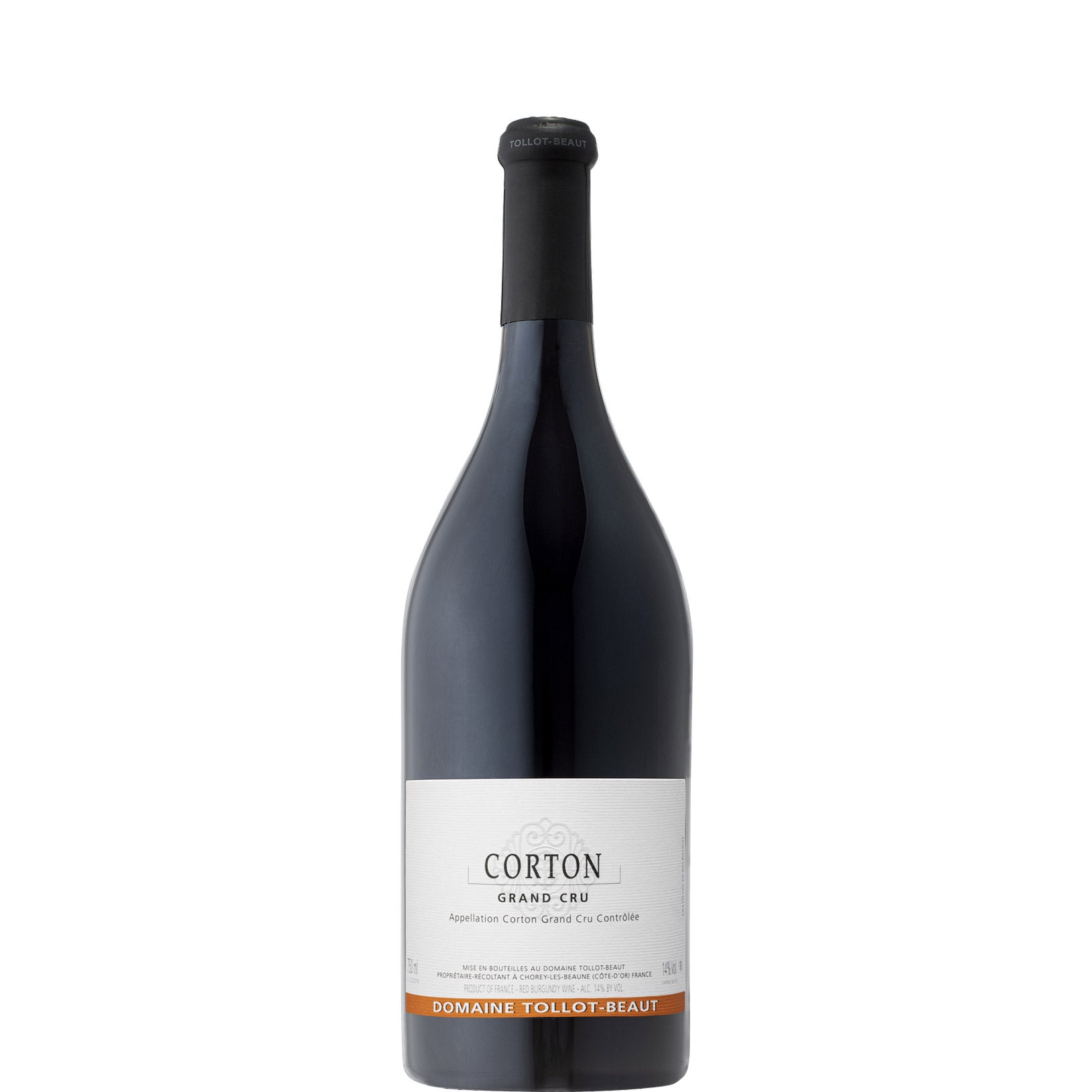
Corton Grand Cru, Domaine Tollot-Beaut, 2024
Corton Grand Cru, Domaine Tollot-Beaut, 2024
- 75cl
- 13%
- Red Still
- Pinot Noir
Couldn't load pickup availability

Optimal drinking window: 2030 - 2045
Corton is Burgundy's only red Grand Cru on the Côte de Beaune, and it plays by its own rules — bigger, darker, and more tannic than anything from Chambolle or Vosne.
"From limestone-rich soils with red earth and iron. Highly expressive, showing rose petal, ripe plum, blueberry and cherry, with depth, polish and real authority."
Ksenia Pashkova, Club Merchandiser
Tollot-Beaut have been farming their parcel here for generations, and they bring the same quiet rigour to this wine as they do to everything else: no tricks, no shortcuts, just very good fruit from a hill that rewards patience. The 2024 vintage, cooler and more precise than several recent years, has given Corton unusual freshness without losing the weight that defines it.
"As to the style, 2024 is definitely a cooler vintage with good freshness and transparency and it makes me think of our 2010s. I was very impressed by the quality I found here and a number of the wines are very much worth your interest."
Allen Meadows, Burghound on Tollot Beaut's 2024 vintage
This is a wine to put down and forget about for a few years. Right now it's a little buttoned up; the tannins are present and purposeful, the fruit dark and concentrated — but beneath that there's real generosity waiting to unfold.
What the critics say:
"The 2024 Corton Grand Cru, which comes from the lieu-dit of Les Combes, has a perfumed nose, more floral and showing a little more complexity than the previous vintage. The palate is medium-bodied with pliant tannins. Precise and quite focused, it offers a lovely, quite sensual finish with cranberry and wild strawberry notes that linger in the mouth and a residual black pepper note on the aftertaste. Applause is deserved in the context of the growing season."
"From Les Combes. This takes me back to tastings early in my career. Just the same aromatics, a fragrant pinot which cannot quite decide which of several red fruits it belongs to. Fruit and oak perfectly in harness. A classic in the making with waves of red berry fruit, almost lacy, which slides across the palate. Nine barrels of this nectar! Drink from 2030-2038. Tasted Oct 2025. *4/5 stars*"
"An interesting hint of kirsch is present on the earthy aromas of plum, the sauvage and a similar touch of forest floor. There is fine intensity and precision to the acceptably dense flavors that flash the expected power of a Corton grand cru, all wrapped in a compact, serious, built-to-age and vaguely rustic finale. This is also very good but a wine that is definitely going to require extended patience."
The Corton hill rises steeply above Aloxe-Corton, Ladoix-Serrigny, and Pernand-Vergelesses, with the Grand Cru band wrapping around its mid-slope. Tollot-Beaut's parcel sits in iron-rich, reddish limestone soils with significant clay content — soils that give Corton its characteristic weight and earthy backbone, quite different from the lighter, more elegant profiles you find further north in the Côte de Nuits. The elevation and south-east to south-west exposure across the hill's different faces means good ripening even in cooler years, while the limestone bedrock keeps the wines from ever feeling heavy or overblown.
Corton is the Côte de Beaune's sole red Grand Cru and one of Burgundy's largest, covering around 160 hectares across three communes. Unlike the Grand Crus of the Côte de Nuits, which tend to be tightly defined and single-village, Corton spans multiple exposures and soil types — which is part of why it can seem so variable and why single-producer wines matter so much here. At its best, Corton sits somewhere between the power of Gevrey-Chambertin and the structure of Pommard, with an earthy, mineral character all its own. The appellation also permits white production under the Corton-Charlemagne name, though Tollot-Beaut's focus here is firmly red.
The 2024 growing season in Burgundy was, frankly, a test of nerve. A wet spring brought significant mildew pressure, and vignerons who stayed sharp in the vineyard — working fast, keeping canopies open, reducing yields where necessary — came out the other side with something worth talking about. Summer brought warmer, drier conditions that helped the fruit recover composure, and harvest arrived broadly on the later side, with growers picking carefully to find phenolic ripeness without sacrificing freshness. Quantity was down across much of the Côte, which concentrates minds as much as it concentrates wine.
What emerged is a vintage that rewards those who put the work in. The Pinots we have tasted carry real precision and translucency — not because they are light, but because the acidity is lively and the fruit unforced. Chardonnays from the Côte de Beaune look particularly promising: taut, mineral, with genuine length. This is not a vintage to panic-open. Most village and premier cru reds want three to five years at minimum, with the better appellations drinking well until 2035 and beyond. The whites are more approachable now, though the best will reward patience too.

Explore related wines


-
-
Speak to one of our Wine Gurus
Speak to a Wine GuruWith years of experience, our team can help you with all your wine buying and selling needs