

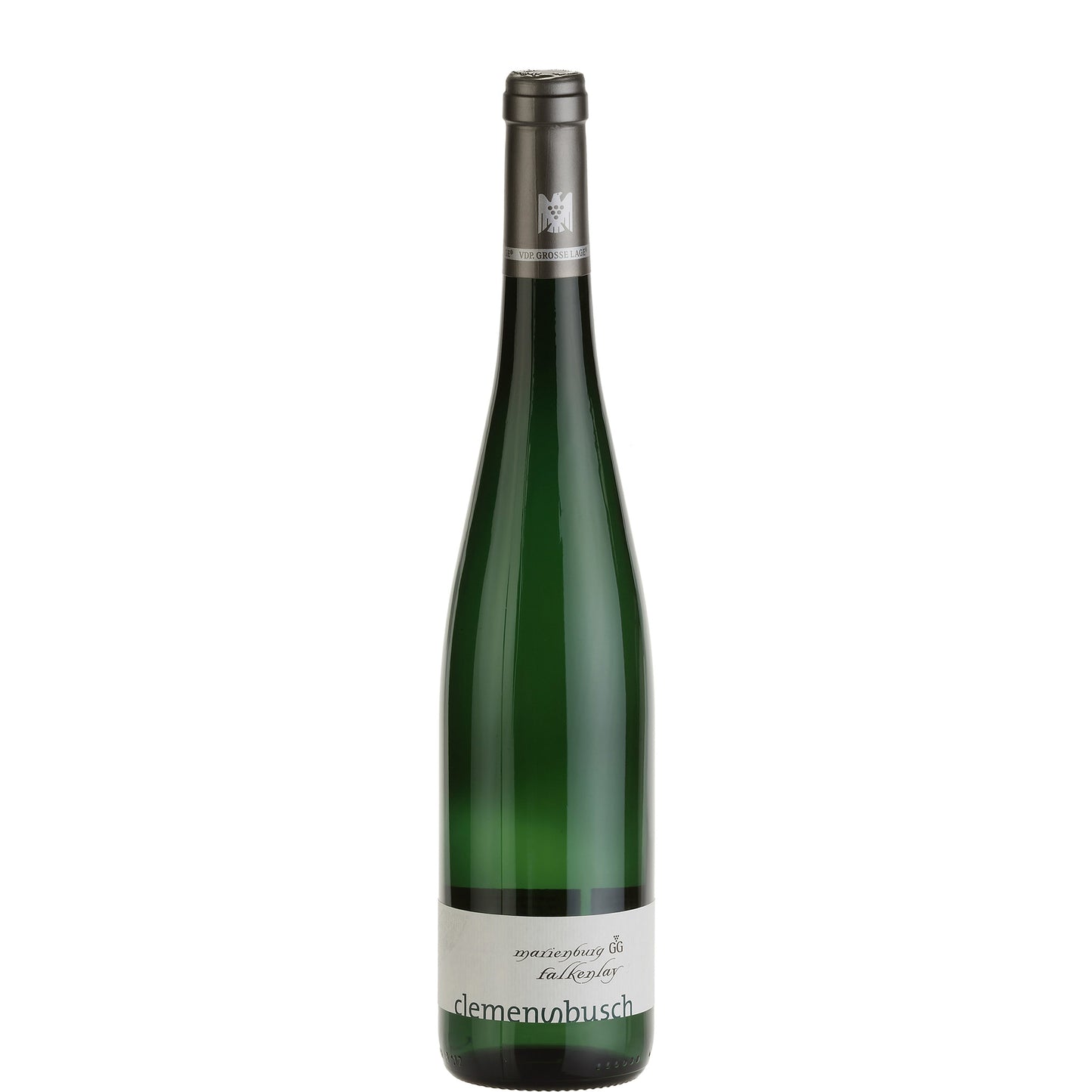
Clemens Busch, Marienburg 'Falkenlay' Riesling Trocken GG, 2021
Clemens Busch, Marienburg 'Falkenlay' Riesling Trocken GG, 2021
- 75cl
- 12.5%
- White Still
- Riesling
- Organic
- Biodynamic
- Vegetarian
- Vegan
Couldn't load pickup availability

Optimal drinking window: Now - 2050
In the glass, the 2021 Falkenlay GG is precise and tightly woven, opening with aromas of white peach, citrus zest, herbs, and a subtle smoky, slate-driven minerality. The palate is firm and linear, with layers of stone fruit, crushed rock, and spice carried by razor-sharp acidity. Structured yet graceful, it shows both intensity and finesse, with a long, saline finish.
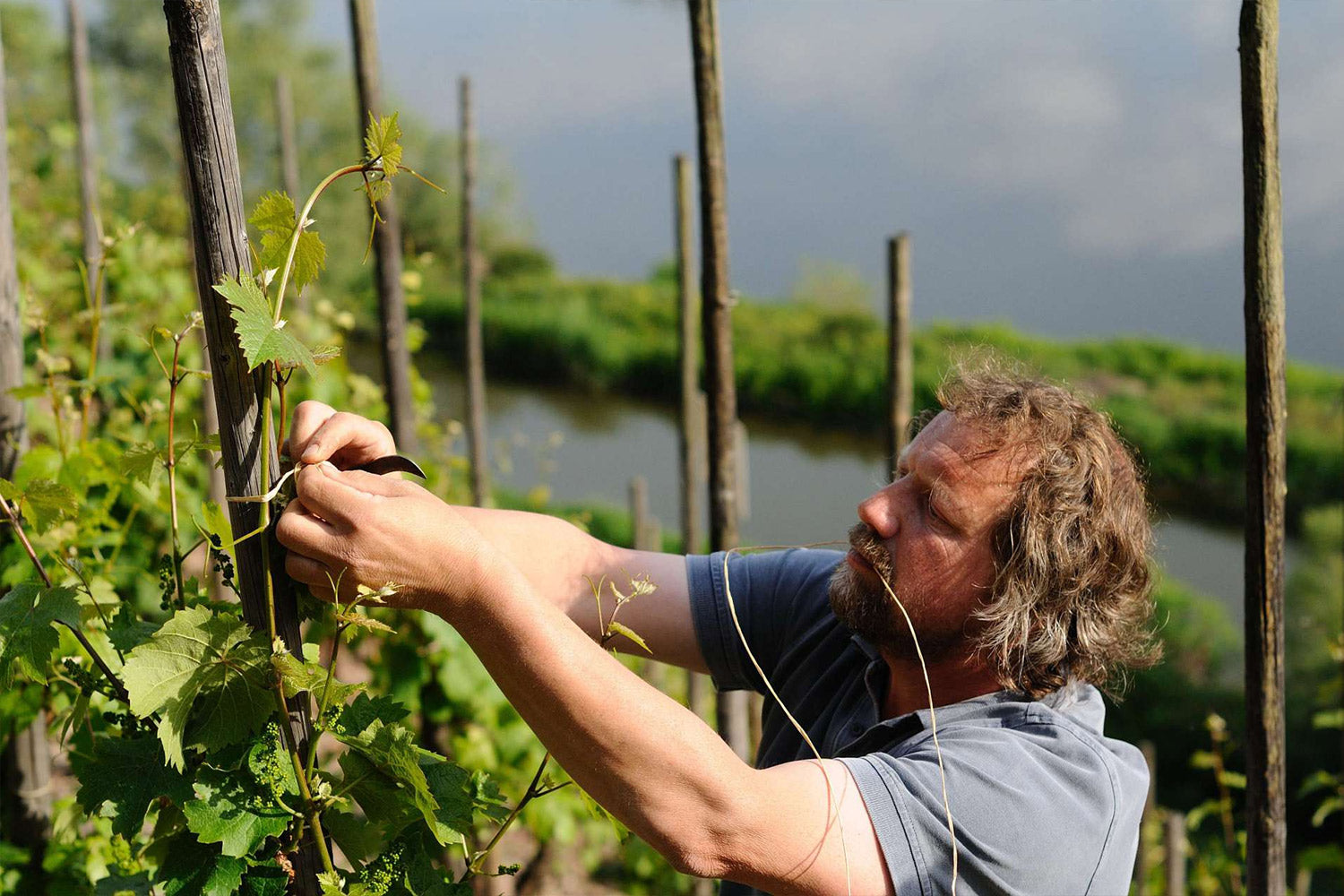
Among the first German winemakers to embrace organic farming in 1984, Clemens Busch is celebrated as one of the leading biodynamic producers of the Mosel, crafting wines that are both pure and expressive of their individual vineyard sites. They are members of the prestigious VDP organisation of the top producers in Germany.
Right now in 2026 the 2021 Falkenlay GG is in an interesting place — approachable but still assembling itself, with primary stone fruit sitting alongside that rocky, iodine-driven mineral core. The real reward is likely to come somewhere between 2028 and 2032, when those secondary notes of petrol, lanolin, and toasted almond that great Mosel Riesling is famous for start to emerge. At peak it should hold for a decade beyond that, 2045 or even 2050 being realistic for a site and producer of this quality. After that, expect it to soften gradually rather than fall off a cliff — old great Riesling rarely dies dramatically.
What the critics say:
"The 2021 Marienburg GG Falkenlay is deep, clear and refined on the complex and flinty, iodine and herbal nose. Round and rich yet elegant and refined on the palate, this is a full-bodied yet delicate and elegant Falkenlay with fine acidity and tannin grip on the long and intense finish. Tasted as a sample at the domaine in July 2022."
"Dark and brooding, savoury aromatics with hints of deep orange and herbal, nearly medicinal. Then like a ray of fruity sunshine, a gentle, round and juicy core emerges from the rocky landscape. Lemon, white currant, and wow that's some serious spice. Perfectly poised. Shockingly approachable in its youth."
Tasting Notes
AppearancePale gold with a faintly green-tinged rim, crystalline and precise in the glass.
NoseThere is a brooding, almost medicinal quality at first — crushed slate, iodine, dried herbs — before white peach, lemon oil, and a whisper of white currant push through. It is the kind of nose that rewards patience; give it ten minutes and it keeps shifting.
PalateFirm and linear, with a full-bodied richness that is never heavy, held taut by acidity that feels almost architectural. Stone fruit, crushed rock, and a pronounced spice note run through the mid-palate, with a tannic grip that is genuinely surprising for a white wine and speaks directly to the slate beneath the vines.
FinishLong, saline, and mineral, with that iodine-edged character returning on the very last breath.
Overall impressionA trocken GG of real seriousness — precise, layered, and built to go the distance.
Food Pairings
Along the Mosel, a wine this structured and mineral would traditionally meet freshwater fish from the river itself — pike-perch or trout, simply pan-fried with brown butter and capers, where the acidity cuts through richness without overwhelming delicate flesh. Riesling trocken of this weight also has a natural affinity with the region's Riesling-braised pork dishes and white asparagus in season, the latter pairing so instinctive that locals barely think of it as a pairing at all. Further up the richness scale, an aged hard cheese like a Mosel-area Tilsiter or even a well-matured Comté would hold its own against the wine's grip and spice. If you are thinking beyond the immediate region, classic Alsatian choucroute or a Munich-style Wiener Schnitzel with lemon would be a very good evening.
We think this wine would go well with
Serve at around 10-12°C — cold enough to preserve the acidity and aromatic precision, but not so cold that the mineral complexity is numbed. No need to decant, but do give it 20-30 minutes in the glass before you commit to an opinion; it genuinely opens up. A tall, narrow white wine glass or a classic Mosel-style flute will keep those aromatics focused, though a larger-bowled white Burgundy glass works well if you want to coax out more of the palate weight.
The Falkenlay is one of three distinct parcels within the Marienburg, Pünderich's great monopole vineyard on the Mosel. The site sits on steep, south-facing blue and red Devonian slate, which retains heat during the day and releases it at night, creating the dramatic diurnal swings that give Mosel Riesling its electric acidity. The slate's mineral composition lends the Falkenlay a distinctive smoky, iodine-edged character that separates it clearly from the sandier Rothenpfad or the volcanic Fahrlay parcels on the same hill. Vines here are old, deeply rooted, and farmed biodynamically, which Busch believes is the only way to let the geology speak without interference.
The Marienburg is classified as a Grosse Lage under the VDP's system, the rough equivalent of a Grand Cru, and the wines bottled under that designation are labelled Grosses Gewächs, or GG, meaning they must be dry, harvested by hand, and held until release the September following the vintage at earliest. The Mosel as a whole is defined by slate-driven minerality, steep slopes, and the cooling influence of the river, producing whites of extraordinary delicacy and longevity from Riesling grown at the very limits of ripeness. Pünderich sits in the middle Mosel, a part of the region less trumpeted than Bernkastel or Wehlen but increasingly recognised as one of its finest addresses.
The 2021 vintage in the Mosel threw curveballs from start to finish, beginning with devastating July floods that wiped out entire vineyard sections and left many producers scrambling. Those who escaped the worst of the flooding faced a completely different challenge: an unusually cool, drawn-out ripening season that demanded patience and nerve. The saving grace came in a glorious September and October, with steady sunshine and crisp nights that allowed the surviving fruit to reach proper ripeness whilst retaining that razor-sharp acidity the Mosel does best.
What emerged is a vintage of surprising depth and precision, though admittedly smaller in volume. The Rieslings show crystalline purity with a mineral backbone that practically hums with tension, whilst the natural acidity levels are sky-high without feeling harsh or green. We find these wines drinking beautifully now for their sheer vibrancy, but the best examples have the structure to develop magnificently until 2035 and beyond. This isn't a blockbuster vintage, but rather one that whispers its brilliance through restraint and electric energy.
FAQs
What does the Falkenlay taste like?
Think white peach and lemon oil meeting crushed slate and iodine, with a firm, almost tannin-like grip from the acidity and a long, saline finish. It is precise and linear rather than lush, with a brooding mineral quality that sets it apart from softer Mosel styles.
When should I drink this wine?
It is approachable now if you are curious, but patience is rewarded. We would aim for 2028 onwards to catch it at its most expressive, and it should hold comfortably until 2045 and beyond for those with the willpower to wait.
Is this wine dry?
Yes, fully dry. GG, or Grosses Gewächs, by definition means a dry wine from a classified Grosse Lage site. There is no residual sweetness here — the fruit impression comes entirely from ripeness and concentration, balanced by the wine's considerable acidity.
What food should I pair with this?
It is a natural with freshwater fish — trout or pike-perch with brown butter — or white asparagus when in season. The grip and spice also make it surprisingly good with pork dishes, aged hard cheese, or a classic Wiener Schnitzel with lemon.
How should I serve it?
Around 10-12°C is ideal. No need to decant, but give it at least 20 minutes in the glass — it opens up considerably. A tall Mosel-style flute or a larger white wine glass both work well.
Is Clemens Busch a reliable producer?
One of the most respected names in the Mosel, full stop. They pioneered organic farming in the region in 1984, converted fully to biodynamics, and are members of the VDP. The track record is as solid as the slate the vines grow in.


What are you looking for tonight? Tell me the occasion, a grape, a region — or just try a suggestion below.
Your recommendations will appear here.
-
-
Speak to one of our Wine Gurus
Speak to a Wine GuruWith years of experience, our team can help you with all your wine buying and selling needs